Artwork
Coeur d'artichaut
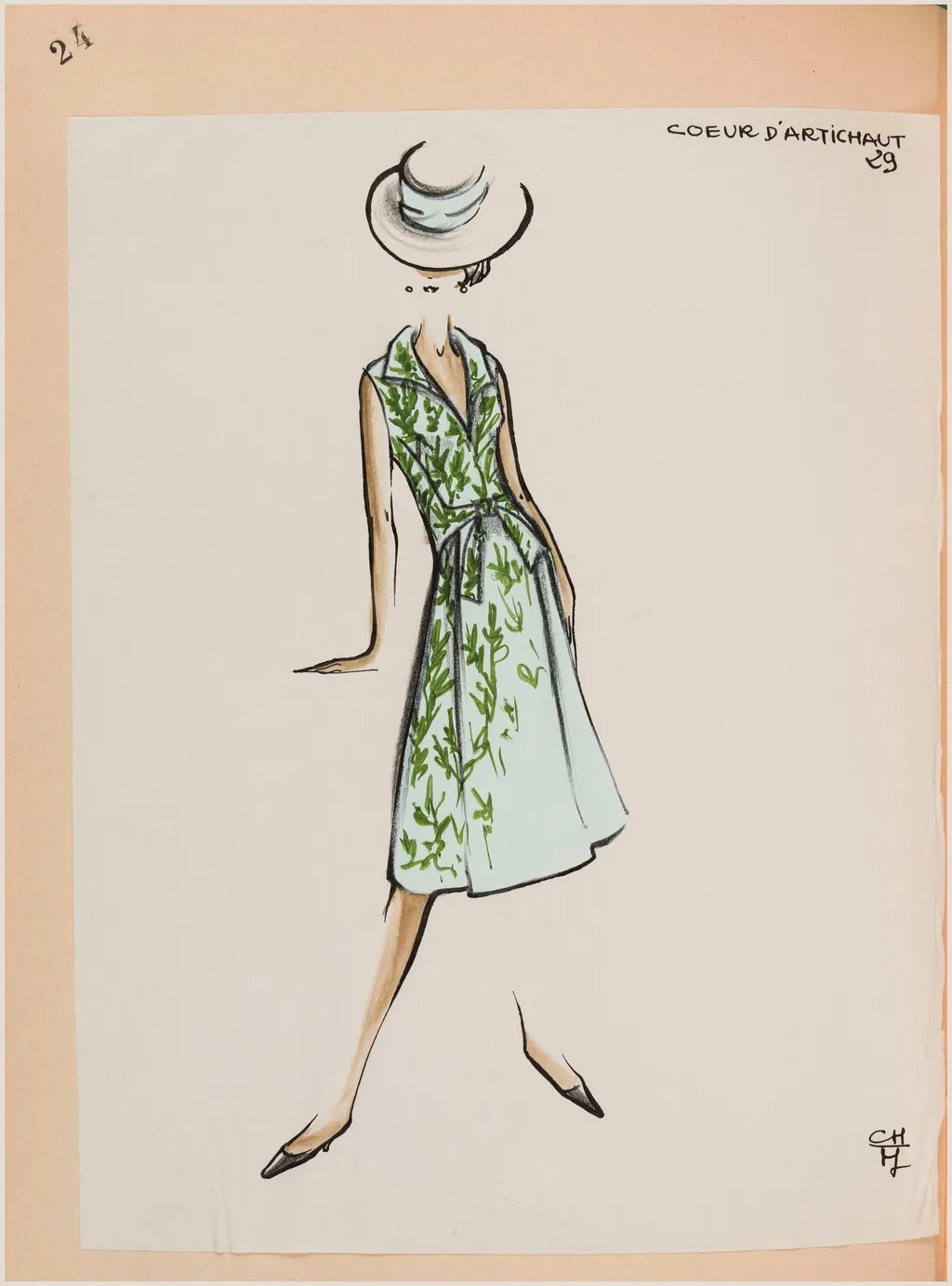
Coeur d'artichaut is a drawing by Carven. It dates from 1963 and is held in the collection of the Palais Galliera - Musée de la Mode de la Ville de Paris.
About this work
Overview
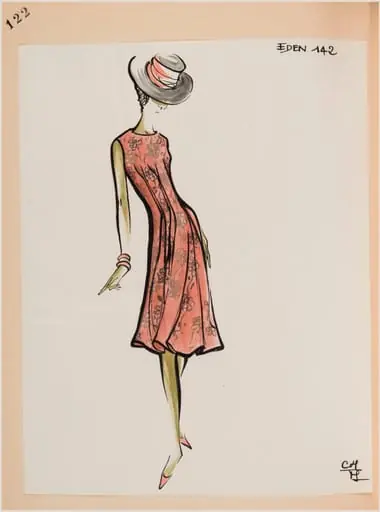
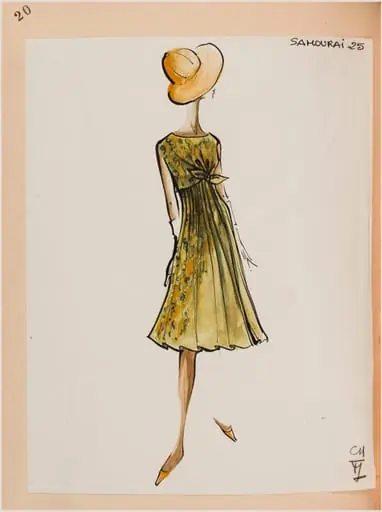
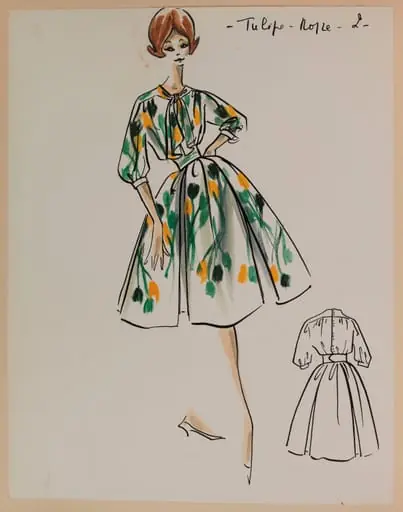
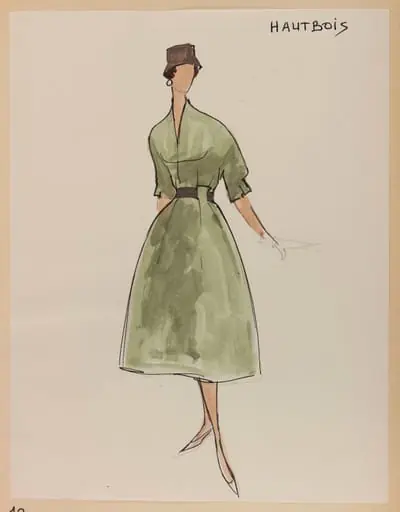
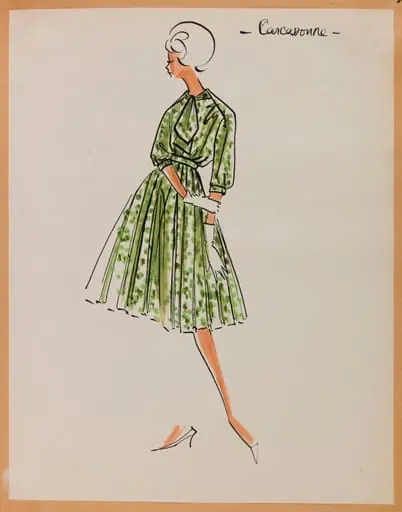
Created in 1963 by the French fashion house Carven, “Coeur d’artichaut” is a sketch preserved in the collection of the Museum of Ethnography. The image portrays a solitary woman strolling in a refined yet unpretentious ensemble, captured with a lightness that emphasizes both movement and the subtle details of her attire.
Subject & Meaning
The figure is rendered in profile, her posture relaxed as she walks. She dons a wide-brimmed hat, a sleeveless top fastened with a neck tie, and a light‑blue dress patterned with hand‑painted green foliage that appears to climb the fabric. The composition suggests a casual elegance, hinting at mid‑century attitudes toward leisure and personal style.
Technique & Style
Carven’s drawing employs delicate line work combined with muted washes, allowing the green floral motif to emerge without overwhelming the composition. The sketch’s loose belt and pointed black shoes are rendered with minimal shading, emphasizing form over texture and reflecting the streamlined aesthetic of 1960s fashion illustration.
History & Provenance
The work entered the Museum of Ethnography’s holdings after being acquired from a private collection in the early 2000s. Its presence in an ethnographic context underscores the institution’s interest in clothing as cultural artefact, positioning the sketch alongside objects that document everyday life and sartorial practices.
Context
Produced during a period when French ready‑to‑wear houses were redefining women’s wardrobes, the sketch aligns with Carven’s reputation for accessible, chic designs. The use of botanical motifs on the dress reflects contemporary trends that favored natural imagery as a decorative element in fashion.
Artist & collection
Artist
These delicate ink-on-paper drawings capture the quiet poetry of everyday things: pinecones, reeds, apples.

Museum
Palais Galliera - Musée de la Mode de la Ville de Paris
Continue through works from the same source collection.