Artwork
'Comète'
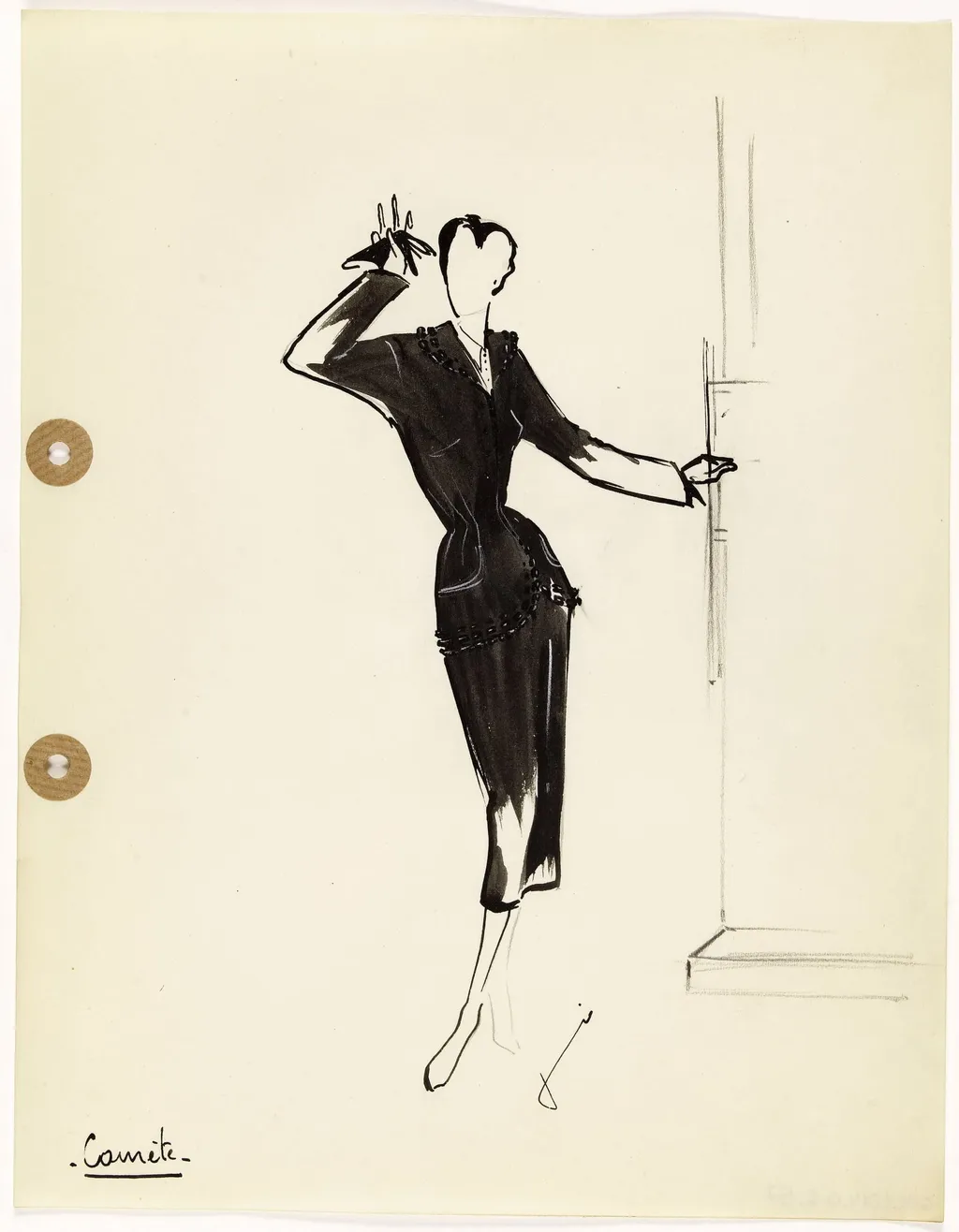
'Comète' is a drawing by Carven. It dates from 1949 and is held in the collection of the Palais Galliera - Musée de la Mode de la Ville de Paris.
About this work
Overview
Its intimate scale and informal quality suggest it was made as a preparatory study rather than a finished piece.
Created around 1949, 'Comète' is a pencil sketch attributed to the French designer Carven. It resides in the collection of the Museum of Ethnography. The work captures a single figure in motion, rendered with swift, economical lines. Its intimate scale and informal quality suggest it was made as a preparatory study rather than a finished piece. The signature 'Carven' appears in the lower corner, affirming authorship.
Subject & Meaning
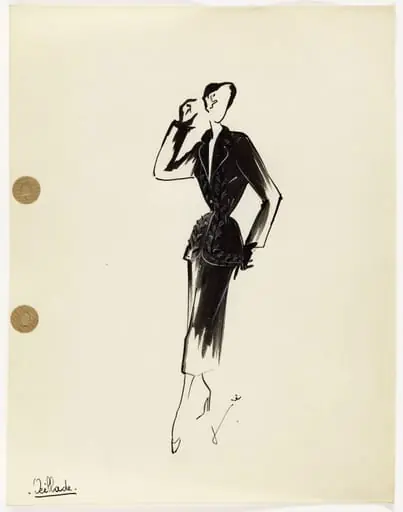
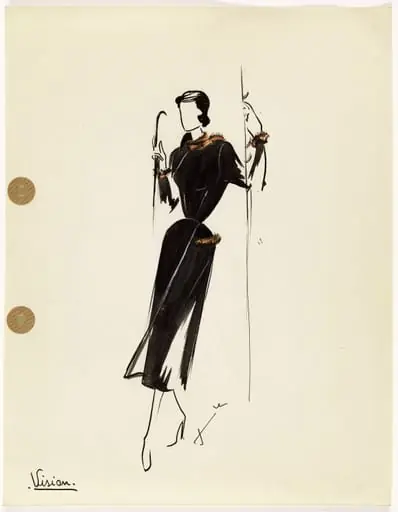
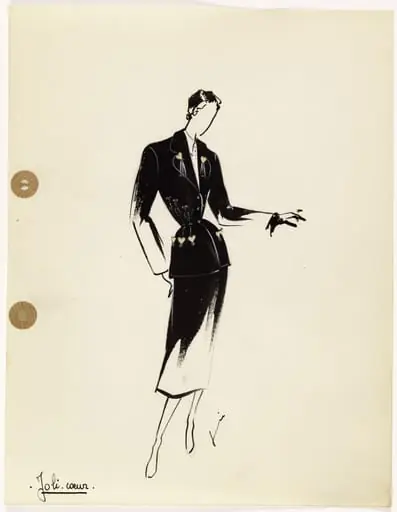
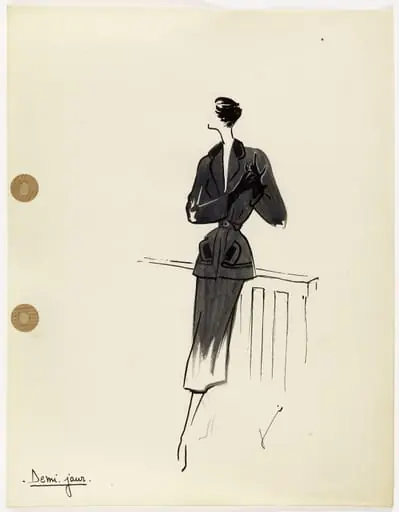
The figure is a woman in a modern, tailored black dress, standing in profile with one arm raised, suggesting a gesture of movement or arrival. Her posture conveys poise and quiet energy, evoking the rhythm of fashion in motion. No narrative context is given, but the pose aligns with mid-century ideals of feminine grace and dynamism. The absence of facial detail universalizes the figure, focusing attention on silhouette and gesture.
Technique & Style
Executed in loose pencil strokes, the drawing emphasizes fluidity over precision. Light, sketchy lines hint at a surrounding environment—a chair, a wall—without defining it. The dress is rendered with clear contours, emphasizing its fitted waist and flared hem, typical of late 1940s silhouettes. The rapid, confident hand suggests the artist worked quickly, capturing a fleeting impression rather than a detailed portrait.
History & Provenance
The sketch entered the Museum of Ethnography’s collection as part of a broader acquisition of fashion-related materials. Its origins before museum acquisition are undocumented. While Carven’s fashion house was active in Paris during this period, this particular drawing has no known exhibition history or documented commission. Its survival as a private study reflects the value placed on design process over finished product.
Context
Made in the immediate postwar era, 'Comète' reflects Paris’s renewed focus on elegant, wearable design. The dress style aligns with the hourglass silhouette popularized by designers like Dior, though Carven’s version is more restrained. As a sketch, it reveals how fashion houses translated ideas from paper to garment—often through rapid, intuitive drawing. The work sits at the intersection of art, design, and daily practice.
Legacy
Though not widely published or exhibited, 'Comète' offers insight into Carven’s design methodology. It contributes to scholarly understanding of how fashion sketches functioned as tools of thought, not merely presentation. Its preservation in an ethnographic museum underscores the cultural significance of everyday design practices. The drawing remains a quiet testament to the artist’s observational skill and tactile engagement with form.
Artist & collection
Artist
These delicate ink-on-paper drawings capture the quiet poetry of everyday things: pinecones, reeds, apples.
Museum
Palais Galliera - Musée de la Mode de la Ville de Paris
Continue through works from the same source collection.