Artwork
'Petites-mains'
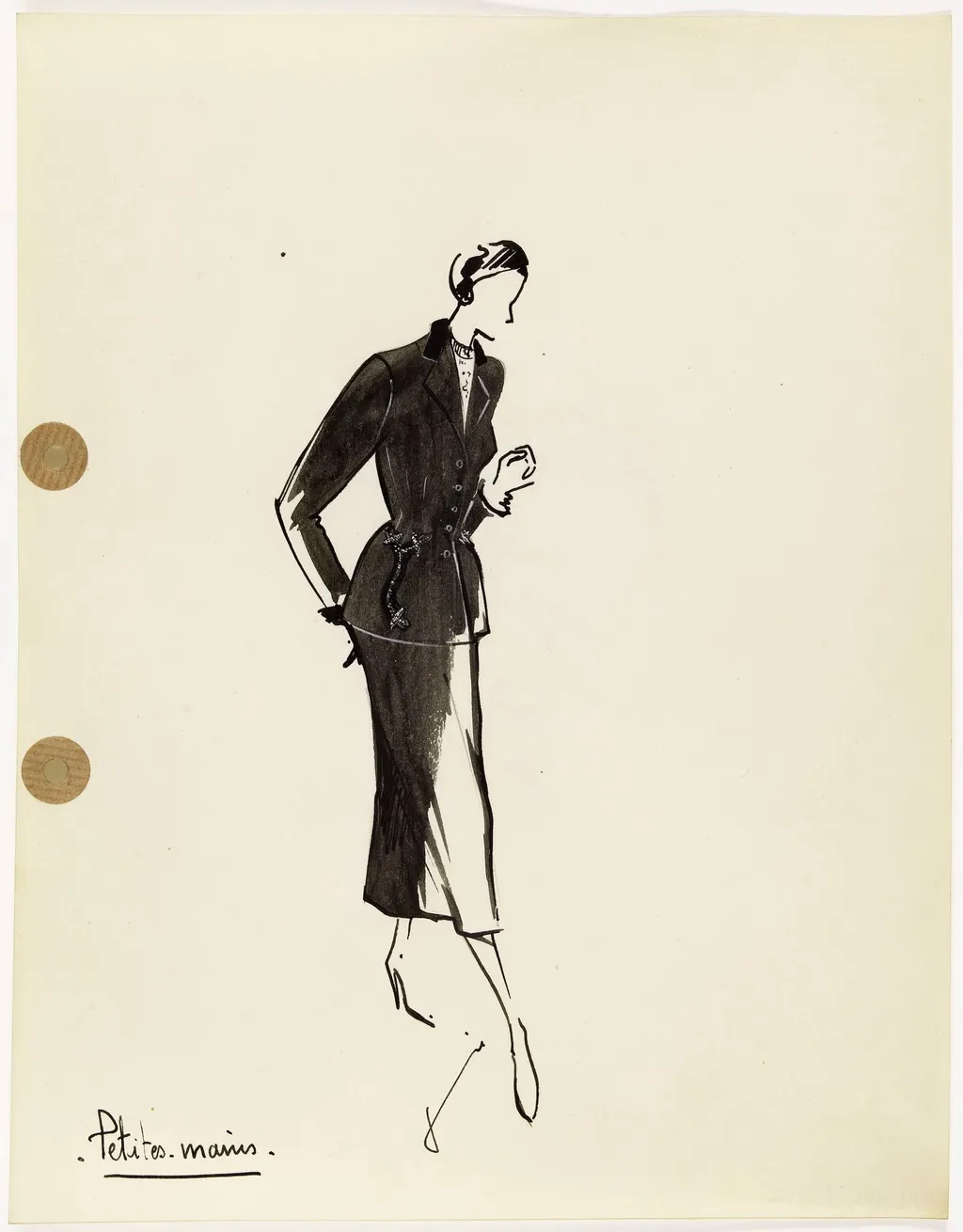
'Petites-mains' is a drawing by Marie-Louise Carven. It dates from 1949 and is held in the collection of the Palais Galliera - Musée de la Mode de la Ville de Paris.
About this work
Overview
Created around 1949, *Petites-mains* is a pencil sketch by French designer Marie-Louise Carven, founder of the fashion house Carven established in 1945.
Created around 1949, *Petites-mains* is a pencil sketch by French designer Marie-Louise Carven, founder of the fashion house Carven established in 1945. The work belongs to a series of preparatory drawings made during the early development of her prêt-à-porter line, reflecting her focus on accessible, well-tailored garments for smaller frames. It is held in the collection of the Museum of Ethnography as a document of postwar French fashion design practice.
Subject & Meaning
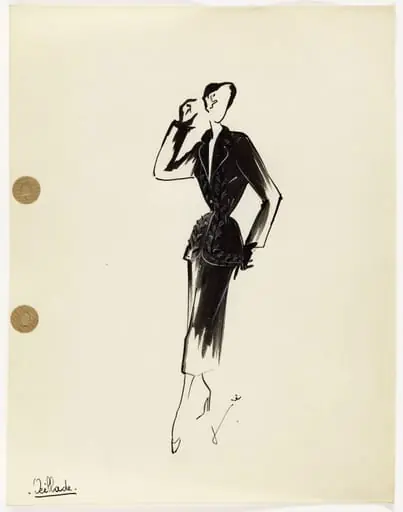
The sketch depicts a woman in a tailored black ensemble—double-breasted jacket, long skirt, and a small white collar—with hands tucked into her pockets and one leg relaxed. The title, meaning 'small hands,' suggests an emphasis on delicate proportions and fine craftsmanship. Rather than a portrait, it functions as a study of posture and garment drape, capturing the quiet elegance Carven sought in everyday wear for modern women.
Technique & Style
Executed in swift, assured pencil strokes, the drawing conveys form through minimal detail. Contours are fluid, avoiding heavy shading, allowing the silhouette and fabric flow to emerge naturally. The loose handling reflects the immediacy of a working sketch—intended for internal reference rather than public display—yet retains precision in the alignment of seams and folds, revealing the designer’s trained eye for structure.
History & Provenance
Made during Carven’s early expansion into ready-to-wear, the sketch predates the widespread adoption of such practices in Parisian couture. It entered the Museum of Ethnography’s collection as part of a broader effort to preserve design artifacts that illustrate the evolution of everyday dress. Its preservation underscores its value as a functional object within the design process, not merely as aesthetic output.
Context
In postwar France, fashion was shifting from exclusive haute couture toward more democratic production. Carven was among the first to bridge this gap, designing garments that retained tailoring quality while being produced in limited series. *Petites-mains* reflects this transition: a private tool used to refine designs meant for a wider market, embodying the practicality and restraint characteristic of her approach.
Legacy
The sketch stands as a quiet testament to Carven’s influence on modern fashion production. By prioritizing fit, mobility, and understated detail, she helped redefine what women’s clothing could be outside the atelier. Though not widely exhibited, such drawings remain critical to understanding how ready-to-wear emerged not as a compromise, but as a deliberate design philosophy.
Artist & collection
Artist
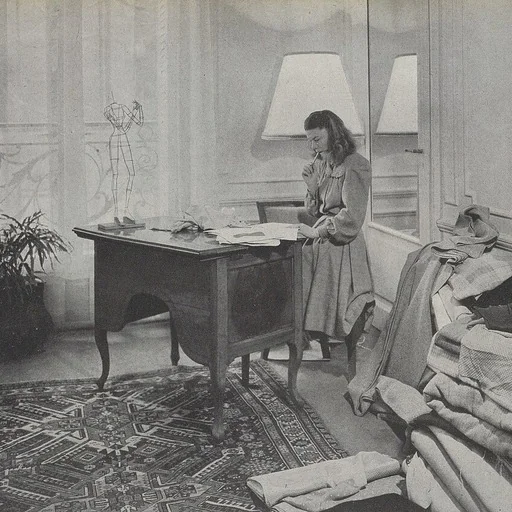
Marie-Louise Carven (31 August 1909 – 8 June 2015), born Carmen de Tommaso, was a French fashion designer who founded the house of Carven in 1945.
Museum
Palais Galliera - Musée de la Mode de la Ville de Paris
Continue through works from the same source collection.
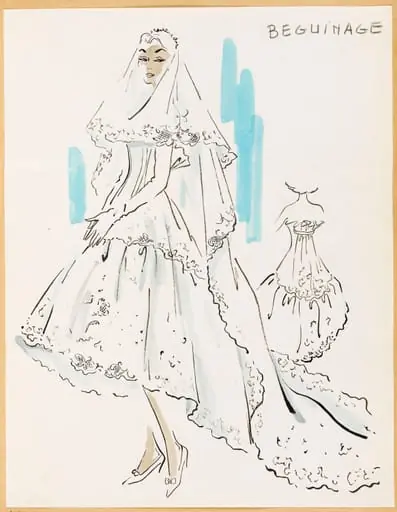
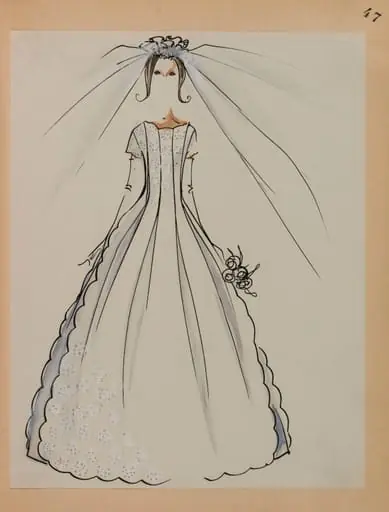 Robe de mariée festonnée et son voile
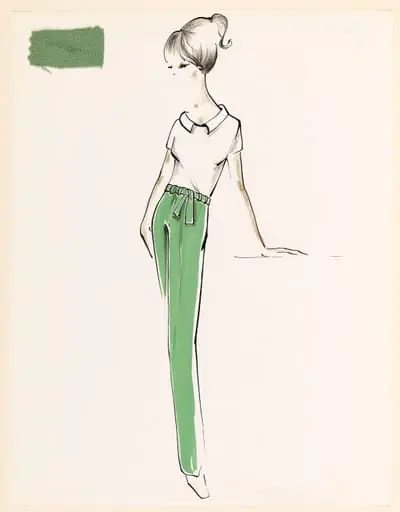 Haut blanc à manches courtes et pantalon vert à ceinture nouée
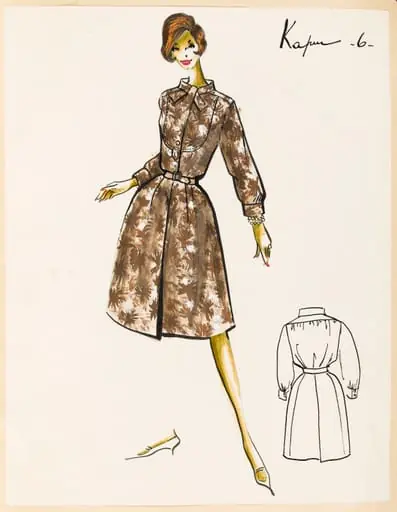 Kapur
Kapur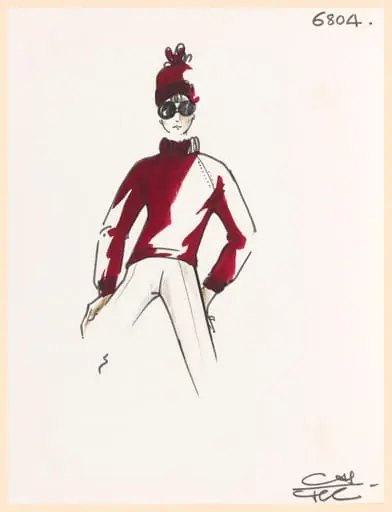 Pull-over à manches longues pourpre, bonnet assorti, pantalon et lunettes de soleil
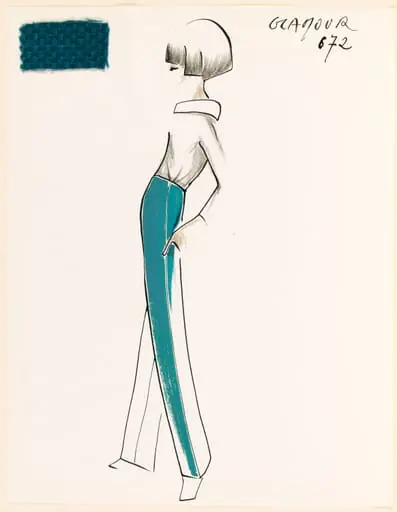 GLAMOUR
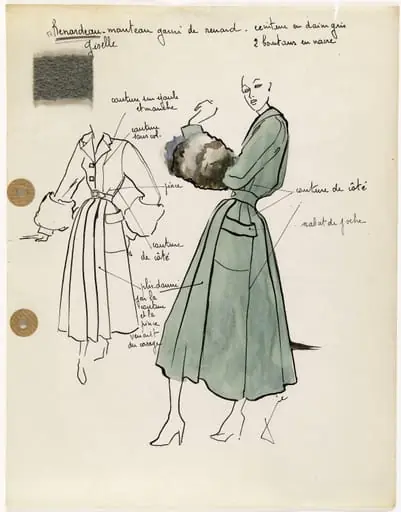 'Renardeau'
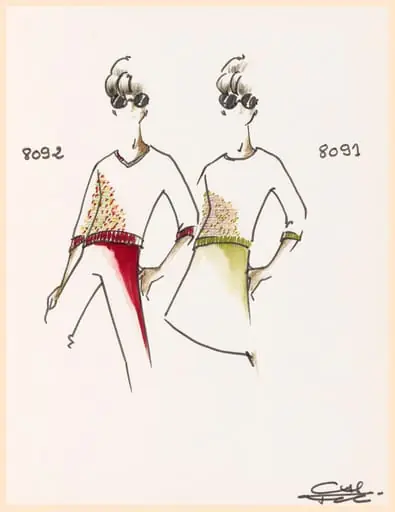 Pull-over à manches trois quarts et à encolure V à motifs multicolores, pantalon cerise et lunettes de soleil
 Béguinage