Artwork
Conquistador
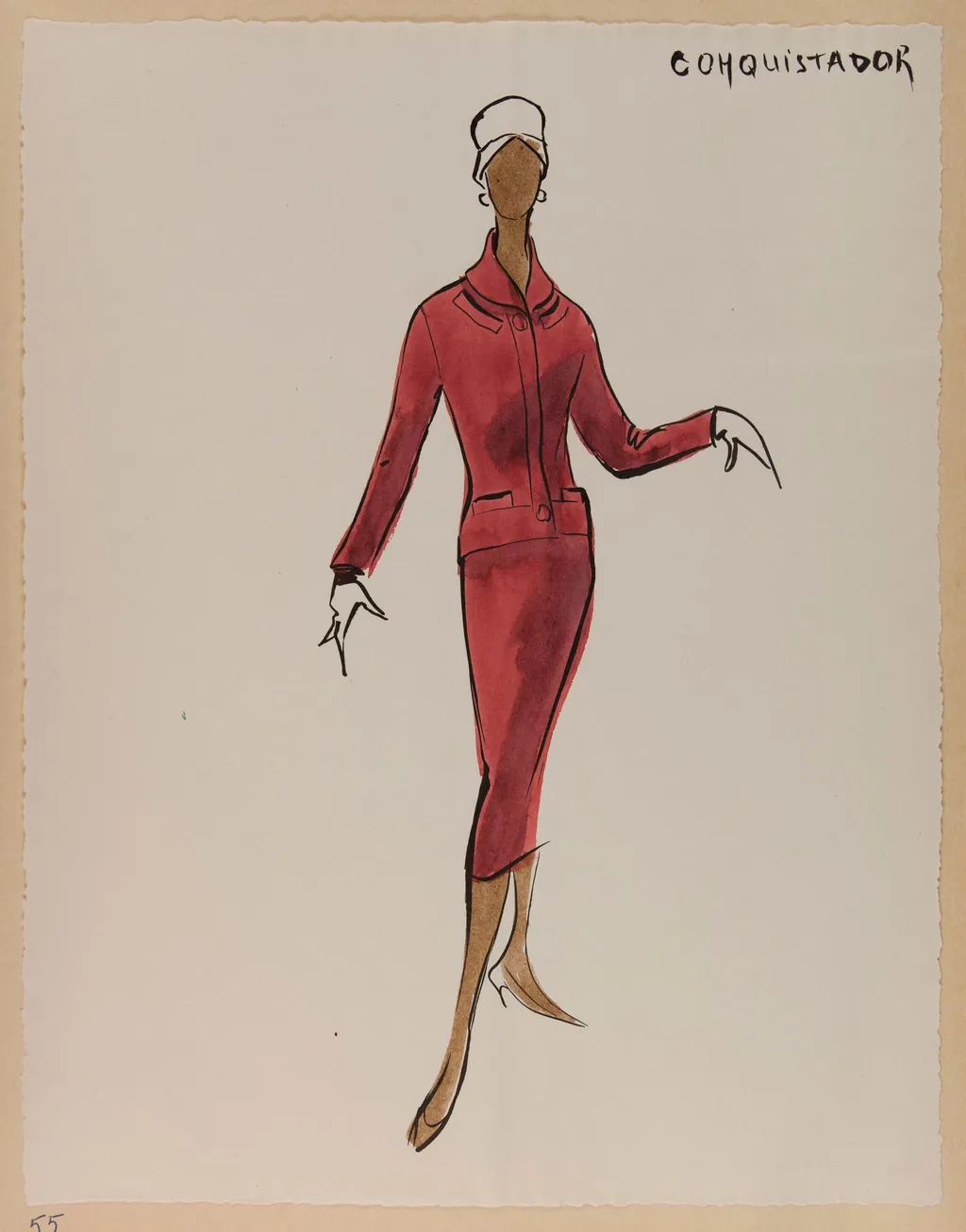
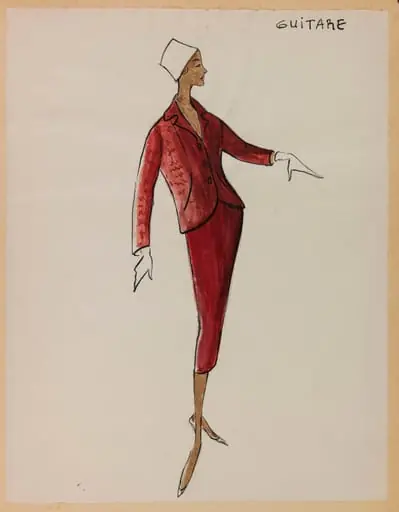
Conquistador is a drawing by Carven. It dates from 1956 and is held in the collection of the Palais Galliera - Musée de la Mode de la Ville de Paris.
About this work
Overview
It depicts a stylized female figure dressed in a coordinated red ensemble, including a long-sleeved jacket, matching skirt, white gloves, and high heels.
Created around 1956 by the designer Carven, this ink drawing is held in the collection of the Museum of Ethnography. It depicts a stylized female figure dressed in a coordinated red ensemble, including a long-sleeved jacket, matching skirt, white gloves, and high heels. The face is concealed beneath a wide white hat, and the composition is defined by clean, confident lines with little to no shading, emphasizing form over detail.
Subject & Meaning
The title 'Conquistador' contrasts with the figure’s elegant, fashion-forward appearance, introducing a tension between historical conquest and contemporary femininity. By obscuring the face and presenting the subject in haute couture, the work may critique or reframe gendered power dynamics, suggesting that authority can be performed through attire rather than weaponry or military presence.
Technique & Style
Rendered in bold, unbroken ink lines, the drawing employs minimal shading and flat color areas to define form. The simplicity of the line work lends a graphic, almost commercial quality, reminiscent of mid-century fashion illustrations. The absence of facial features and background elements focuses attention entirely on the silhouette and costume, reinforcing a sense of stylized anonymity.
History & Provenance
The work entered the Museum of Ethnography’s collection in the late 20th century, likely acquired as part of a broader effort to document fashion as cultural expression. While Carven is primarily known for fashion design, this drawing remains an unusual artifact within the museum’s ethnographic holdings, suggesting an interest in how design reflects social identity.
Context
In the mid-1950s, Parisian fashion was redefining postwar femininity, with designers like Carven emphasizing tailored silhouettes and refined elegance. This drawing aligns with that era’s aesthetic but subverts expectations by assigning a term of imperial conquest to a woman dressed for high society, possibly commenting on the performative nature of power in civilian life.
Legacy
Though not widely reproduced, the drawing continues to provoke discussion in academic circles for its subtle juxtaposition of gender, power, and attire. It stands as a quiet example of how fashion illustration can function as social commentary, bridging the worlds of design and cultural critique without overt narrative.
Artist & collection
Artist
These delicate ink-on-paper drawings capture the quiet poetry of everyday things: pinecones, reeds, apples.
Museum
Palais Galliera - Musée de la Mode de la Ville de Paris
Continue through works from the same source collection.