Artwork
Dauphin
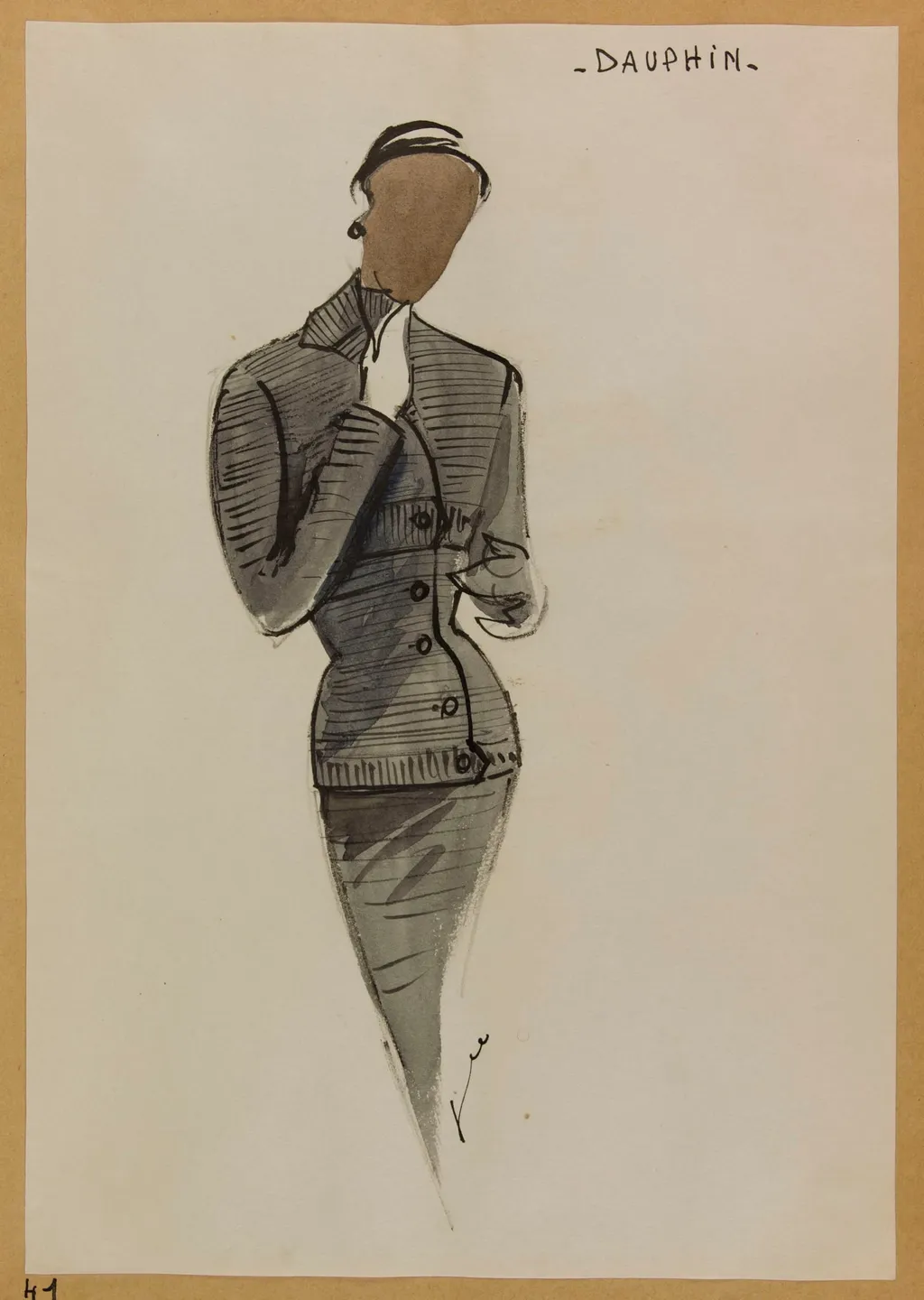
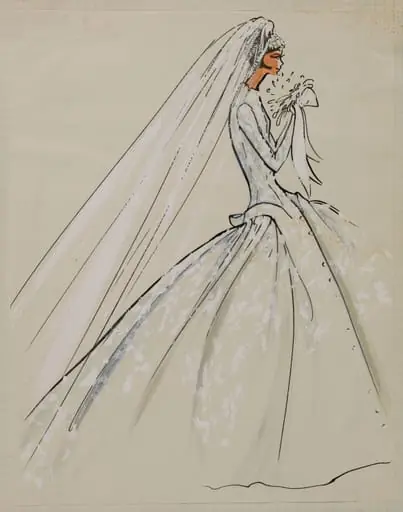
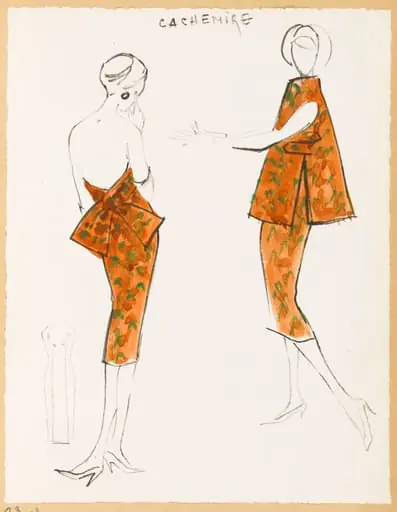
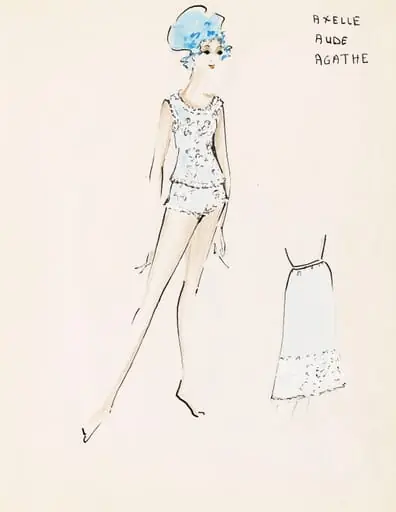
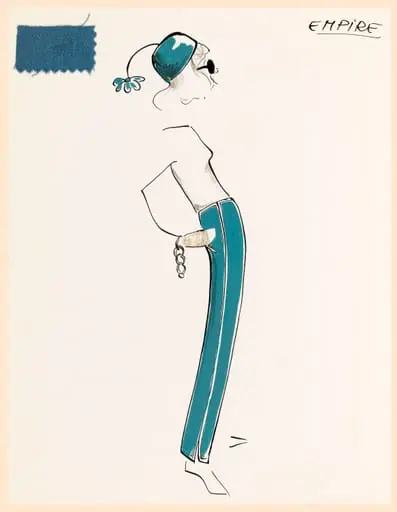
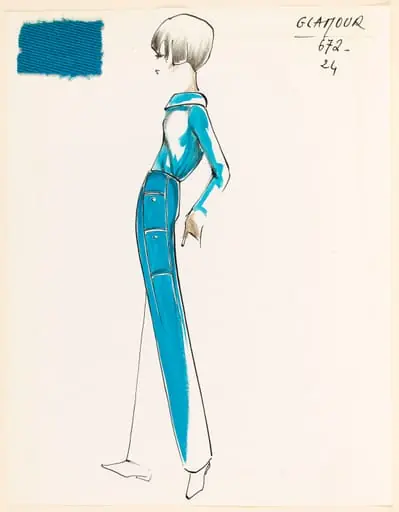
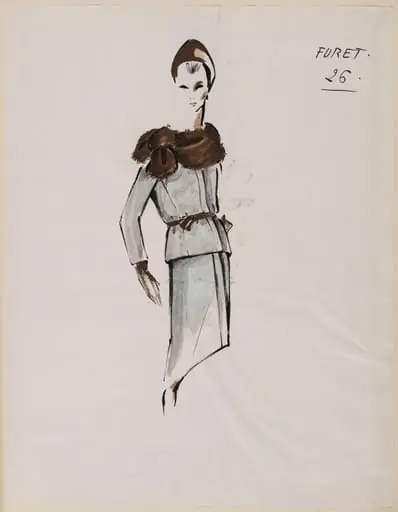
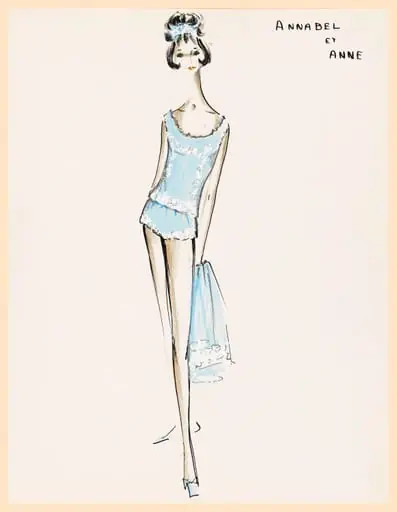
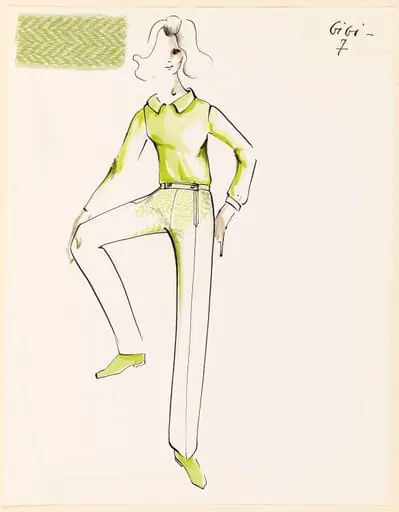
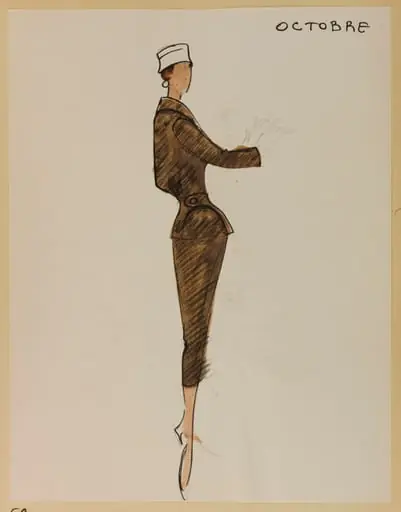
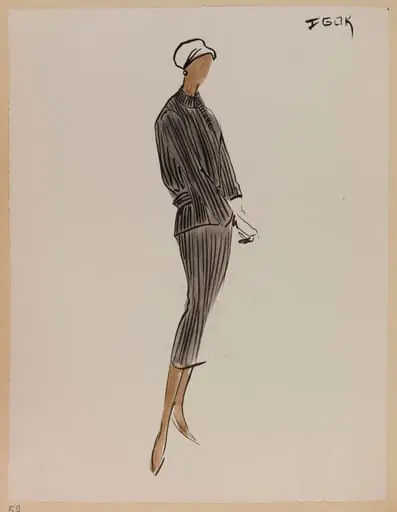
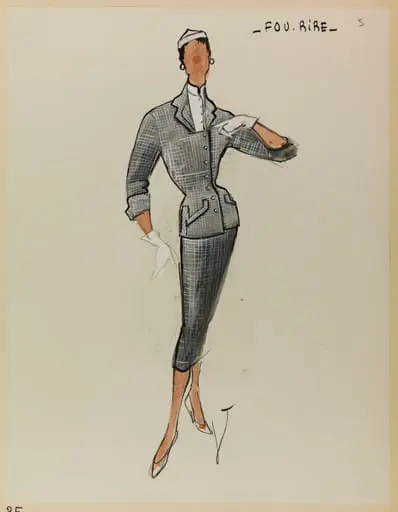
Dauphin is a drawing by Carven. It dates from 1952 and is held in the collection of the Palais Galliera - Musée de la Mode de la Ville de Paris.
About this work
Overview
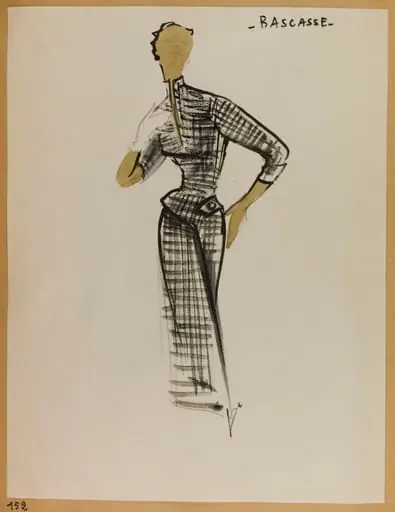
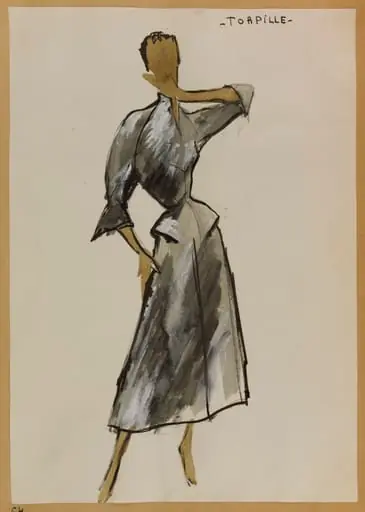
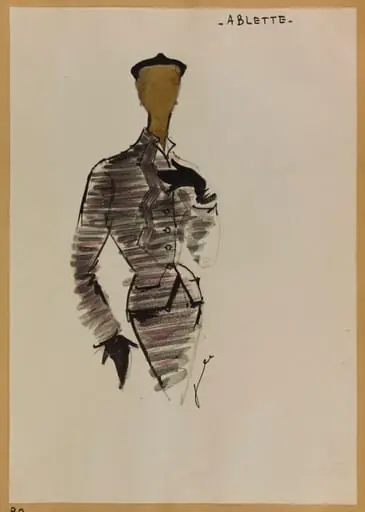
Created in 1952 by the French fashion house Carven, *Dauphin* is a drawing held in the collection of the Museum of Ethnography. The work depicts a woman dressed in a fitted, long‑sleeved garment with a high collar and a row of three front buttons, her silhouette rendered in swift, confident lines.
Subject & Meaning
The figure is presented in a straightforward pose: one hand rests on the hip while the other appears to hold a small object, suggesting a moment of casual elegance. Although the identity of the sitter is unknown, the attire and posture convey a mid‑century fashion sensibility, emphasizing poise and refined simplicity.
Technique & Style
Carven employs bold, rapid strokes to outline the garment’s structure, using cross‑hatching to suggest texture and the weight of the fabric. Thick, parallel lines across the dress convey a sense of materiality, while the slightly flared skirt is hinted at with minimal detail, reflecting the sketch‑like quality of fashion illustration.
History & Provenance
The drawing entered the Museum of Ethnography’s holdings at an unspecified date, where it remains part of the institution’s visual documentation of 20th‑century fashion. Its attribution to Carven and its 1952 date place it within the post‑war era of French haute couture, a period marked by streamlined silhouettes and refined tailoring.
Artist & collection
Artist
These delicate ink-on-paper drawings capture the quiet poetry of everyday things: pinecones, reeds, apples.
Museum
Palais Galliera - Musée de la Mode de la Ville de Paris
Continue through works from the same source collection.