Artwork
Nougatine
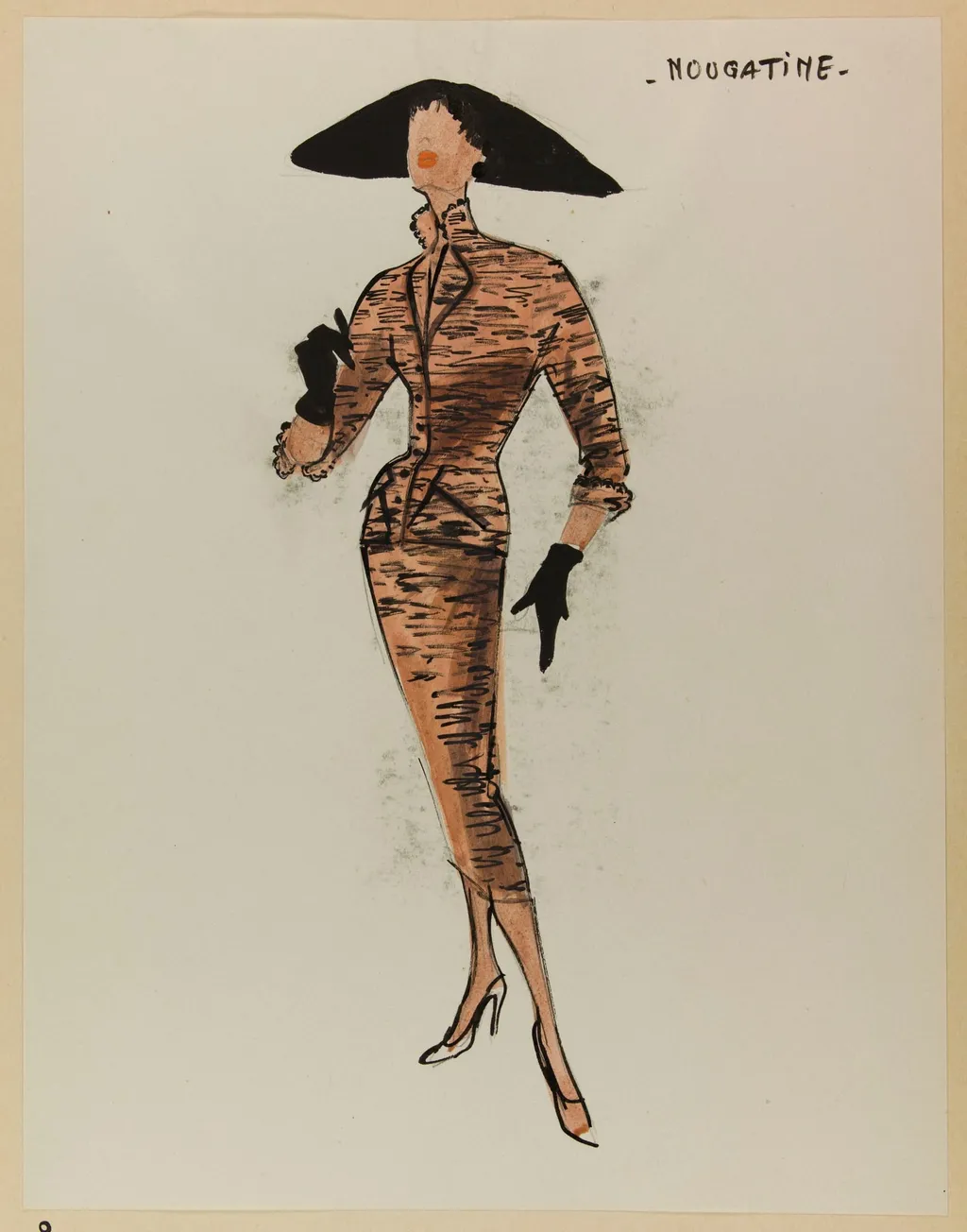
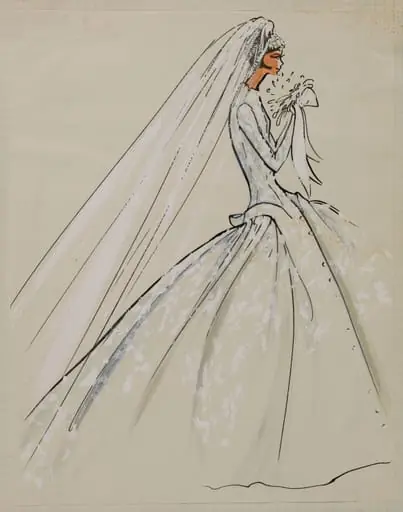
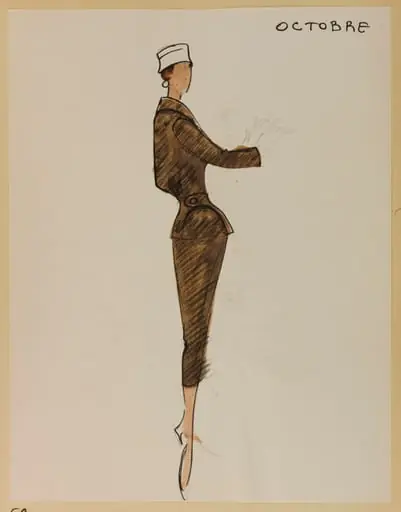
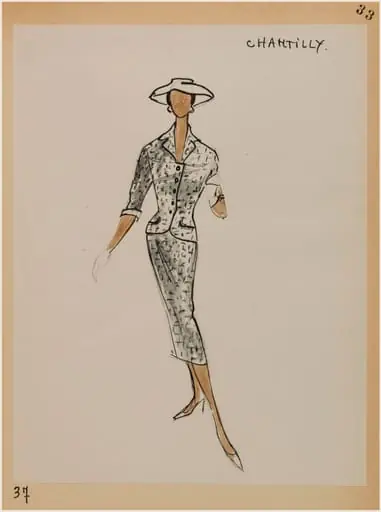
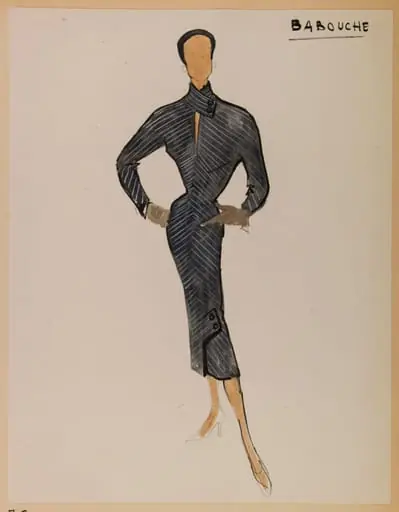
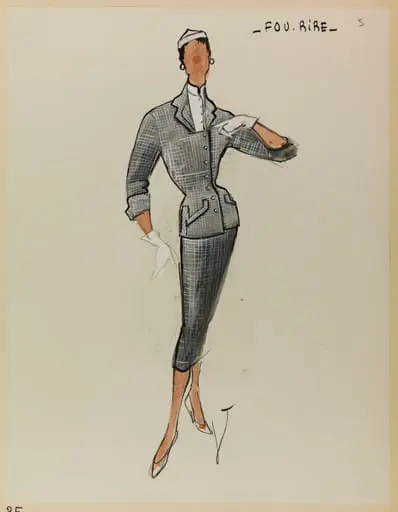
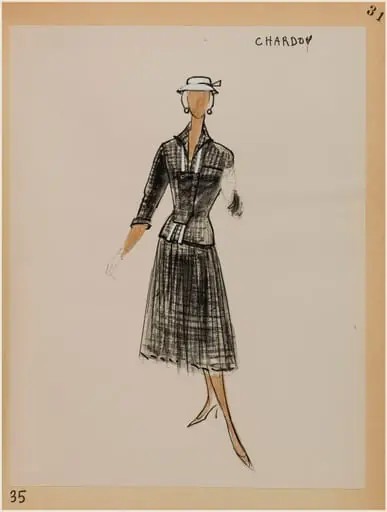
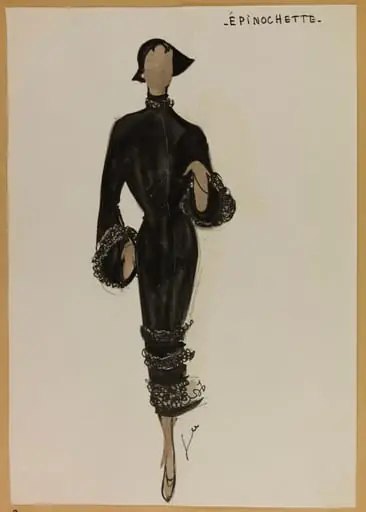
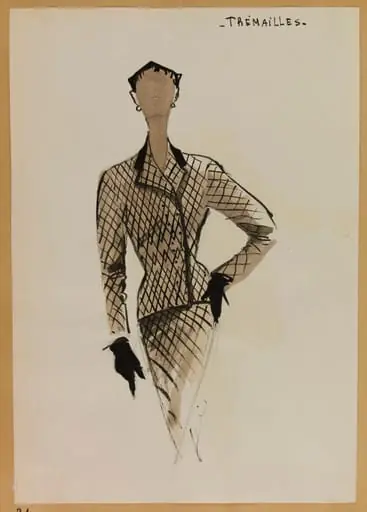
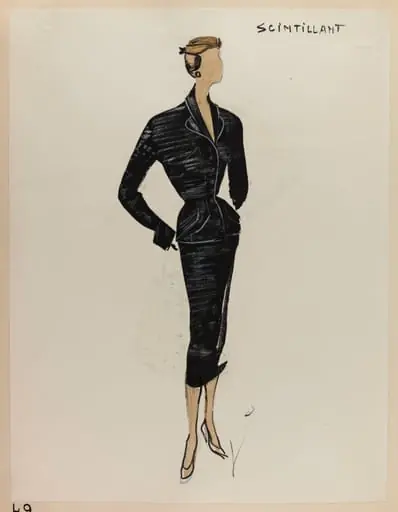
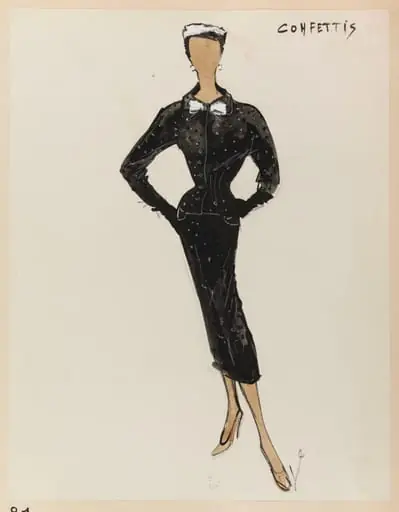
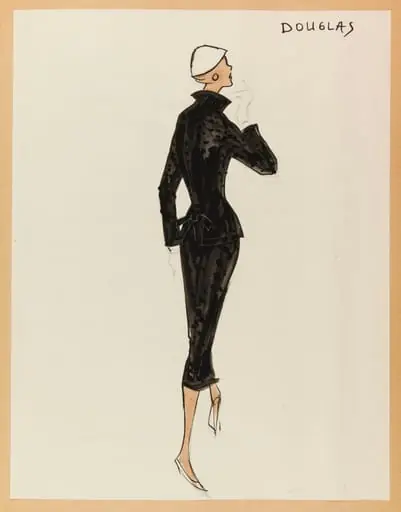
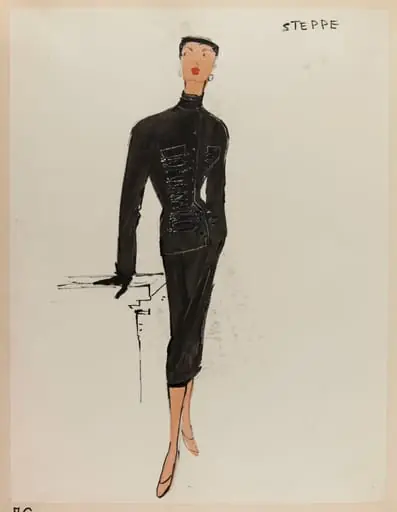
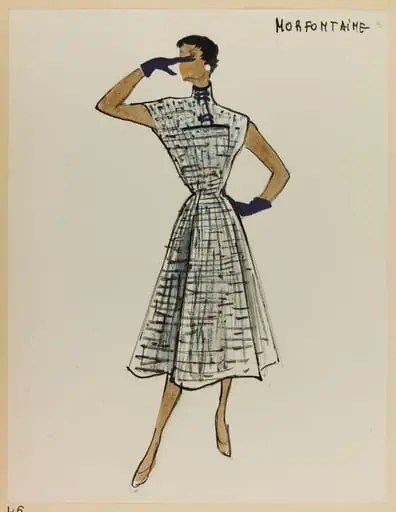
Nougatine is a drawing by Carven. It dates from 1953 and is held in the collection of the Palais Galliera - Musée de la Mode de la Ville de Paris.
About this work
Overview
The work is part of the collection at the Museum of Ethnography, where it is preserved as an example of mid-century fashion illustration.
Nougatine is a pencil drawing attributed to the French fashion designer Carven, dated around 1953. It depicts a woman in formal attire, rendered with clean, confident lines and minimal tonal variation. The work is part of the collection at the Museum of Ethnography, where it is preserved as an example of mid-century fashion illustration. Its simplicity and precision reflect the designer’s approach to visualizing clothing as both functional and expressive.
Subject & Meaning
The figure is a woman dressed in a tailored, high-collared dress with long sleeves, paired with a wide-brimmed hat tilted at an angle, gloves, and high heels. Her stance is upright and composed, suggesting poise and readiness for public appearance. The attire evokes postwar European femininity, where elegance was tied to discipline and refinement. The image does not depict a specific person but rather an archetype of cultivated urban style.
Technique & Style
The drawing employs bold, unbroken outlines with little to no shading, emphasizing form over texture. The absence of background or contextual details focuses attention entirely on the silhouette and garment structure. This stripped-down aesthetic aligns with fashion sketch traditions of the era, prioritizing clarity and wearability over decorative flourish. The line quality conveys both structure and movement, suggesting the fabric’s drape and the figure’s posture.
History & Provenance
Created during Carven’s active years as a couturier, Nougatine likely served as a design study or presentation sketch. It entered the Museum of Ethnography’s collection through documented acquisition, possibly as part of a broader effort to preserve fashion as cultural artifact. The work’s survival in institutional hands underscores its role as a record of mid-century design practice rather than a commercial product.
Context
In the early 1950s, Paris remained a center of haute couture, where designers like Carven balanced innovation with tradition. Fashion illustrations such as this one were used internally to communicate silhouettes to ateliers and externally to convey brand identity. Nougatine reflects the era’s emphasis on structured tailoring and refined accessories, aligning with broader societal norms around public presentation and gendered dress codes.
Legacy
Nougatine remains a quiet testament to the role of drawing in fashion’s creative process. While Carven’s name is less prominent today than some contemporaries, this work illustrates how design thinking was distilled into visual form. Its preservation in an ethnographic context signals a shift in how fashion is valued—not merely as clothing, but as a cultural expression tied to time and place.
Artist & collection
Artist
These delicate ink-on-paper drawings capture the quiet poetry of everyday things: pinecones, reeds, apples.
Museum
Palais Galliera - Musée de la Mode de la Ville de Paris
Continue through works from the same source collection.