Artwork
Divinité
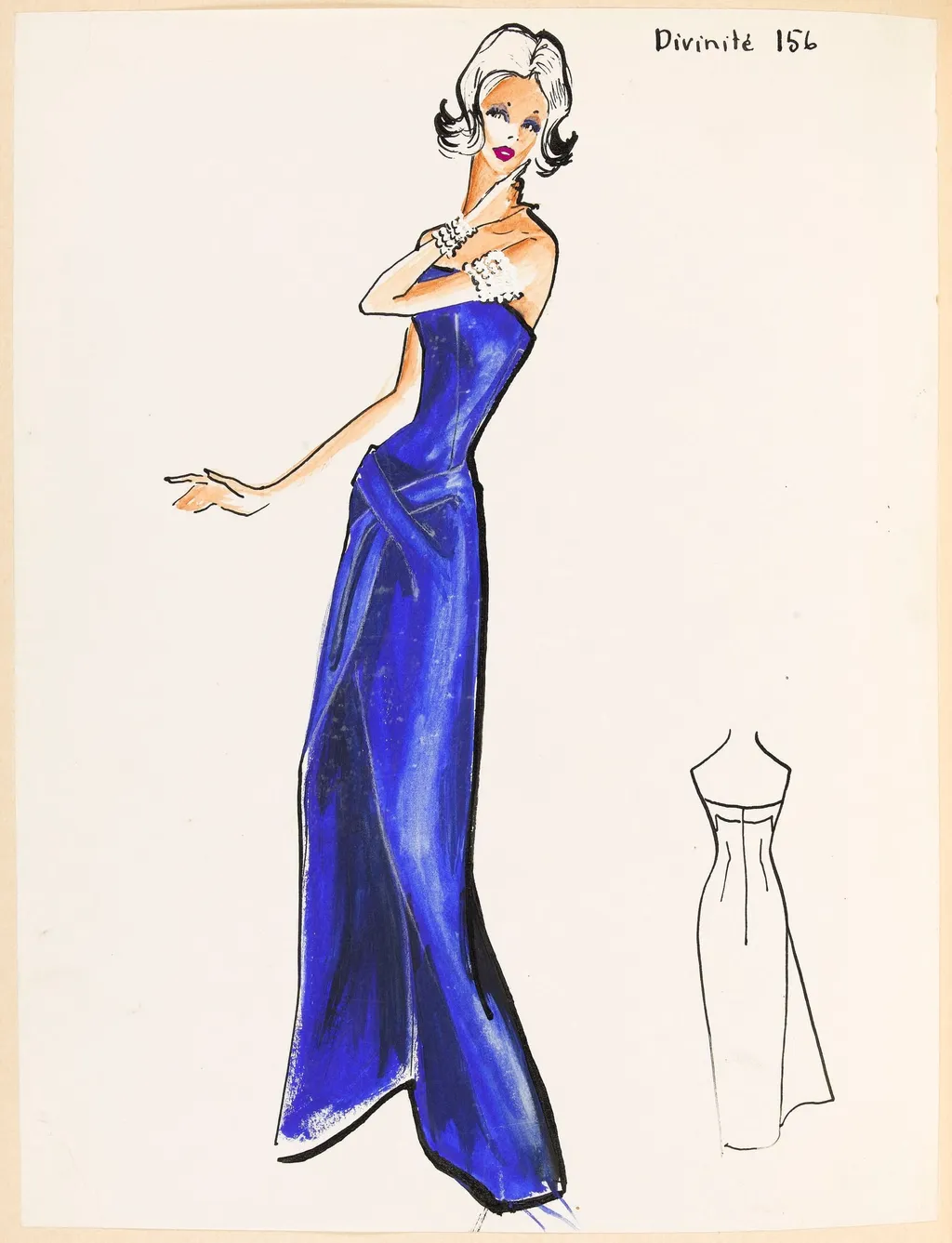
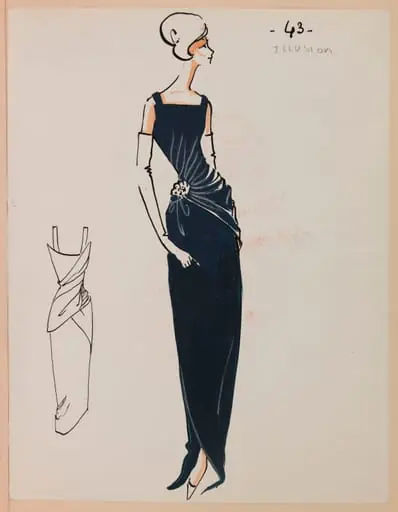
Divinité is a drawing by Carven. It dates from 1959 and is held in the collection of the Palais Galliera - Musée de la Mode de la Ville de Paris.
About this work
Overview
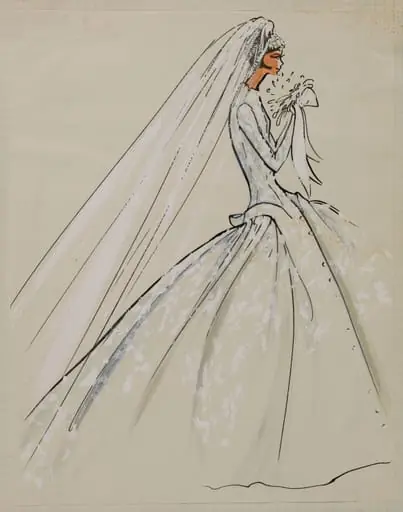
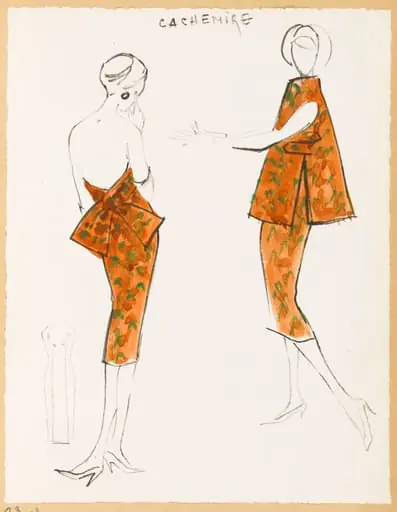
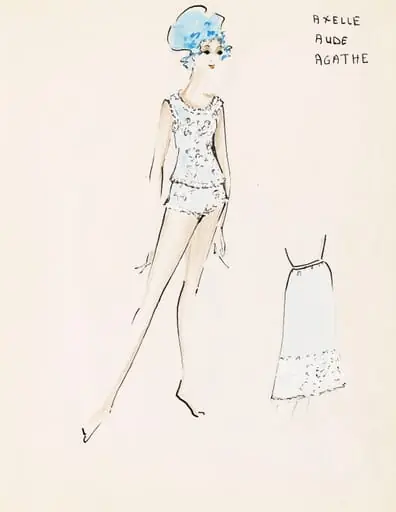
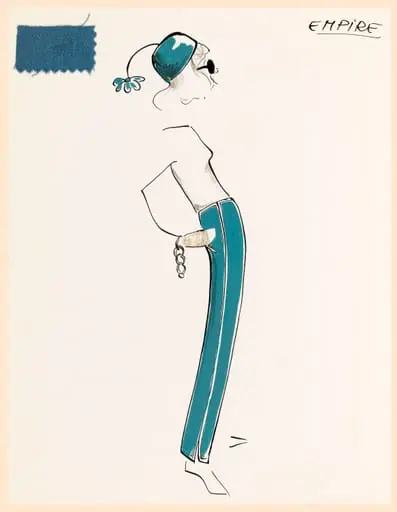
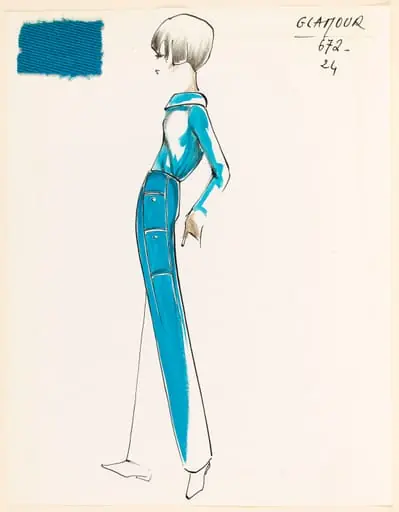
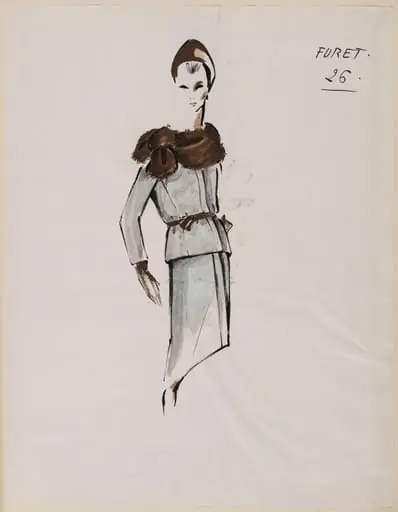
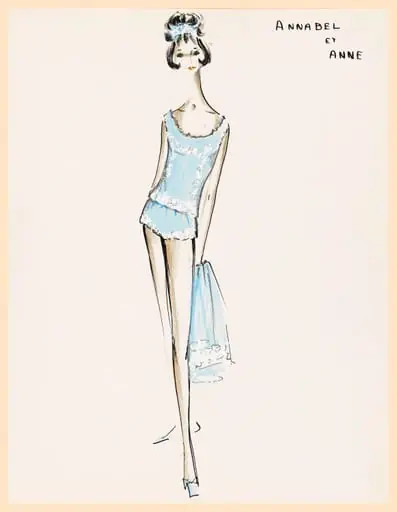
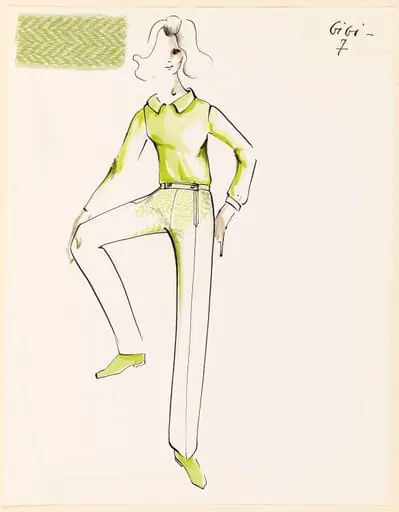
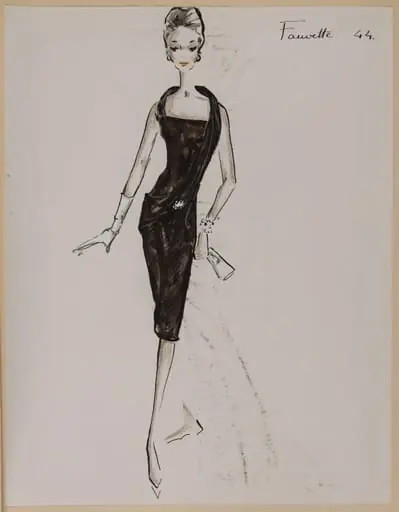
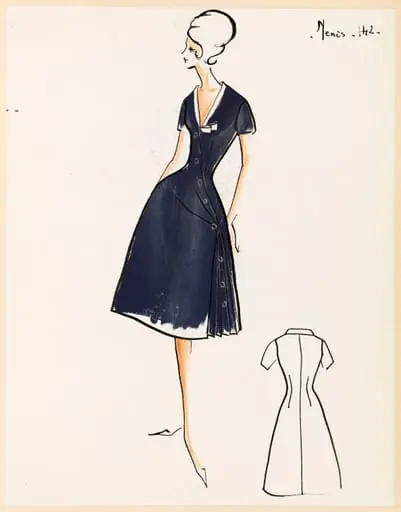
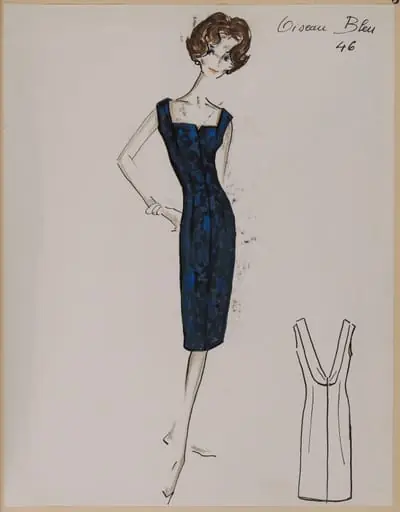
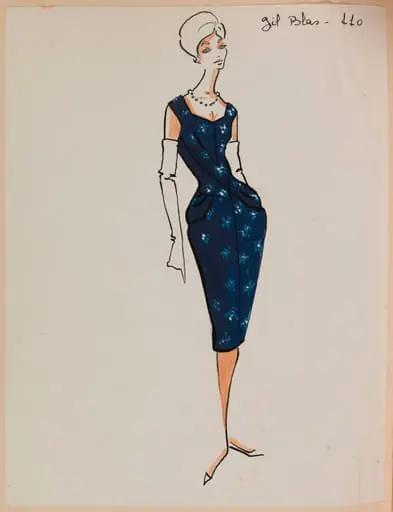
Divinité is a graphite drawing created around 1959 by the fashion designer Carven. It is part of the collection at the Museum of Ethnography. The work presents a solitary female figure in a stylized pose, rendered with minimal background detail. The drawing serves as a study in form and attire, reflecting the designer’s engagement with the human silhouette as a vessel for clothing.
Subject & Meaning
The figure is depicted in a quiet, introspective stance, one hand resting on her shoulder, suggesting contemplation or self-possession. The absence of facial features and the simplified rendering shift focus to the garment and posture. The title, meaning 'divinity,' may imply an idealized or symbolic representation of feminine elegance rather than a literal portrait.
Technique & Style
Carven employed fine, controlled lines to define the figure and dress, using subtle cross-hatching to suggest volume and texture. The dress is rendered with clean contours, emphasizing its strapless structure and flow. The dress form sketched beside the figure acts as a structural reference, grounding the image in fashion design practice rather than pure portraiture.
History & Provenance
The drawing entered the Museum of Ethnography’s collection as part of a broader archive of mid-century fashion sketches. Its preservation there reflects institutional interest in fashion as cultural artifact. No record of public exhibition prior to its acquisition is documented, suggesting it was likely a private design study retained by the artist or her studio.
Context
Created during a period when haute couture studios emphasized hand-drawn presentations, Divinité aligns with the tradition of fashion illustration as a tool for design development. Unlike commercial advertisements, this work lacks branding or context, positioning it as an internal exercise in form and drapery, characteristic of designers refining their visual language.
Legacy
The drawing remains a quiet example of how fashion designers used drawing not merely for presentation, but for exploration. Its presence in an ethnographic museum underscores the shifting recognition of fashion as a cultural practice. While not widely reproduced, it contributes to understanding the quiet, iterative processes behind mid-century design.
Artist & collection
Artist
These delicate ink-on-paper drawings capture the quiet poetry of everyday things: pinecones, reeds, apples.
Museum
Palais Galliera - Musée de la Mode de la Ville de Paris
Continue through works from the same source collection.