Artwork
Gil Blas
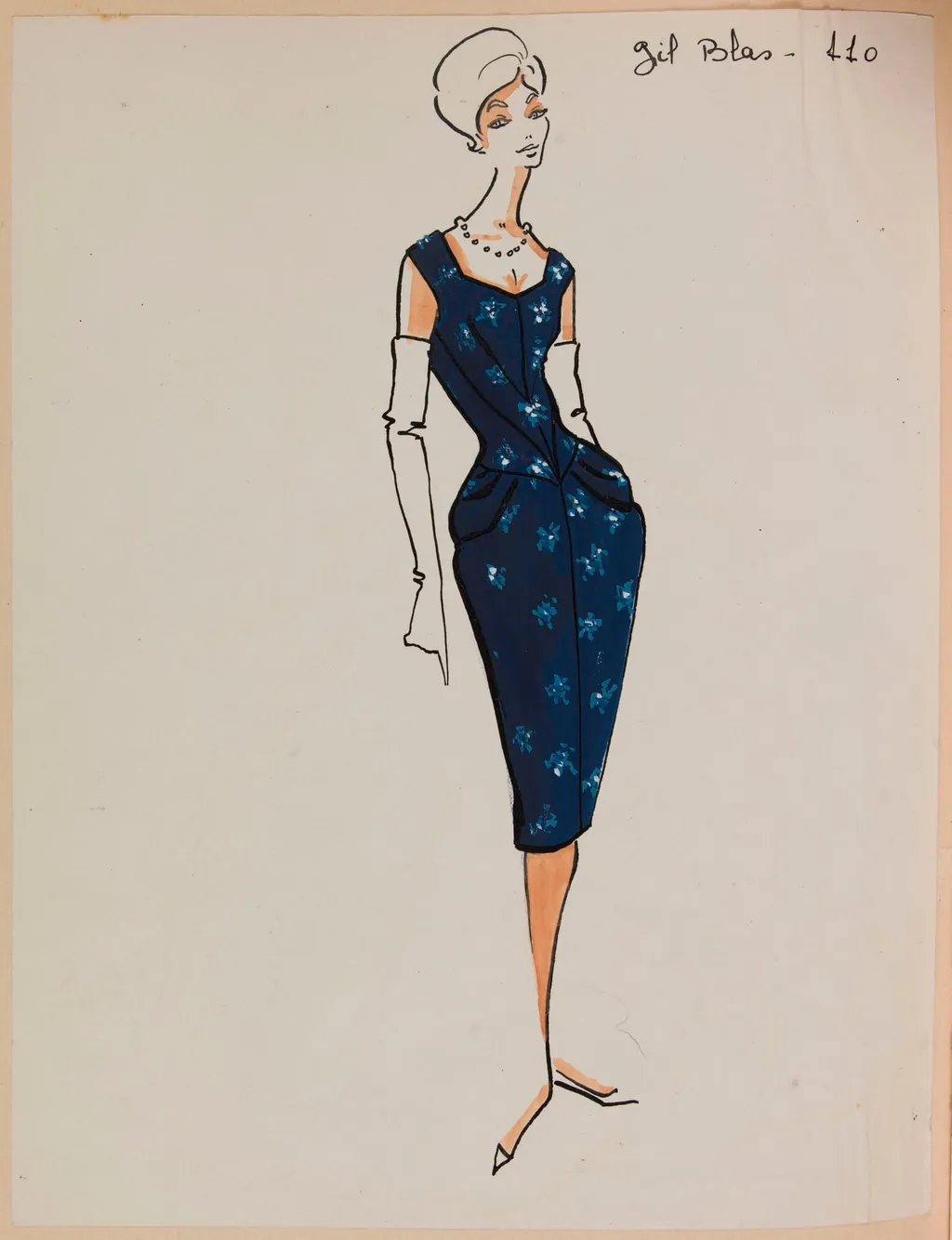
Gil Blas is a drawing by Carven. It dates from 1958 and is held in the collection of the Palais Galliera - Musée de la Mode de la Ville de Paris.
About this work
Overview
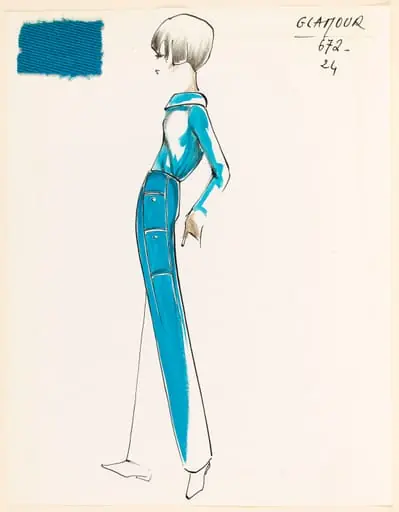
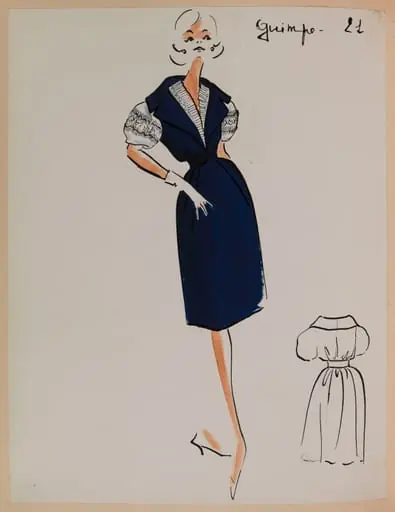
Created around 1958 by the artist known as Carven, this line drawing titled “Gil Blas” is part of the collection of the Museum of Ethnography. The composition presents a solitary female figure rendered in a minimalist style, with the title placed discreetly in the upper‑right corner. The work is executed solely with line work, lacking any background or ornamental elements.
Subject & Meaning
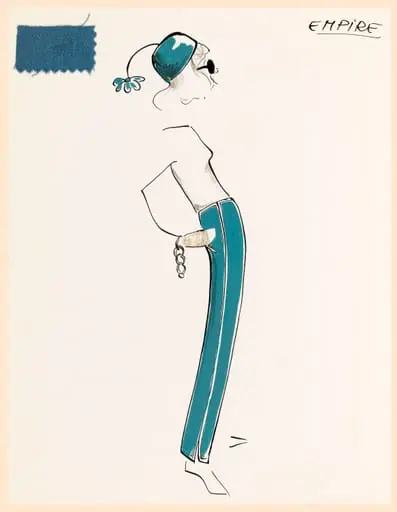
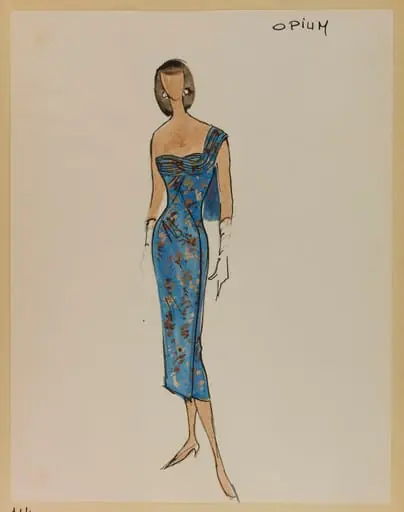
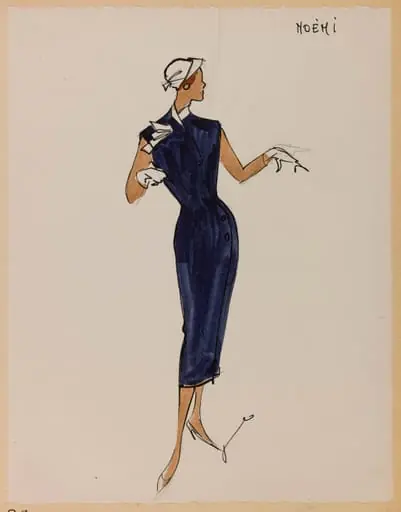
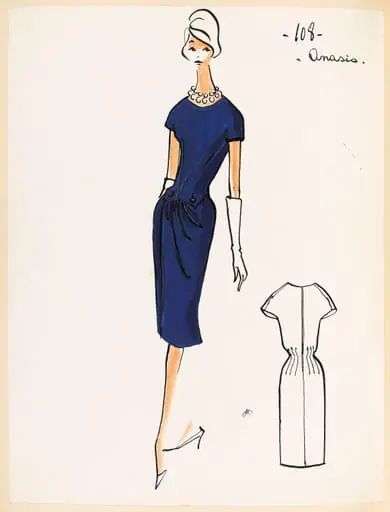
The image depicts a woman viewed in profile, dressed in a dark garment patterned with subtle light‑blue blossoms and wearing black shoes. Her short, neatly styled hair and the pose—one hand placed on her hip—convey a poised, everyday presence, inviting contemplation of ordinary elegance without overt narrative cues.
Technique & Style
Carven employs cross‑hatching to generate tonal variation, building depth through intersecting lines rather than shading washes. The drawing’s clean, unembellished lines emphasize form and texture, while the restrained use of pattern on the dress adds a modest decorative contrast within the overall austerity of the piece.
History & Provenance
The work, dated circa 1958, entered the Museum of Ethnography’s holdings at an unspecified date, where it remains on display. No signature is evident on the surface, and the title appears only in the corner, suggesting a modest presentation typical of mid‑century graphic works.
Context
Produced in the post‑war period, the drawing reflects a broader mid‑twentieth‑century interest in simplified graphic representation and everyday subjects. Carven’s choice of a single figure without contextual background aligns with contemporary trends toward abstraction of the mundane, focusing attention on line, pattern, and compositional balance.
Artist & collection
Artist
These delicate ink-on-paper drawings capture the quiet poetry of everyday things: pinecones, reeds, apples.
Museum
Palais Galliera - Musée de la Mode de la Ville de Paris
Continue through works from the same source collection.