Artwork
Espalier
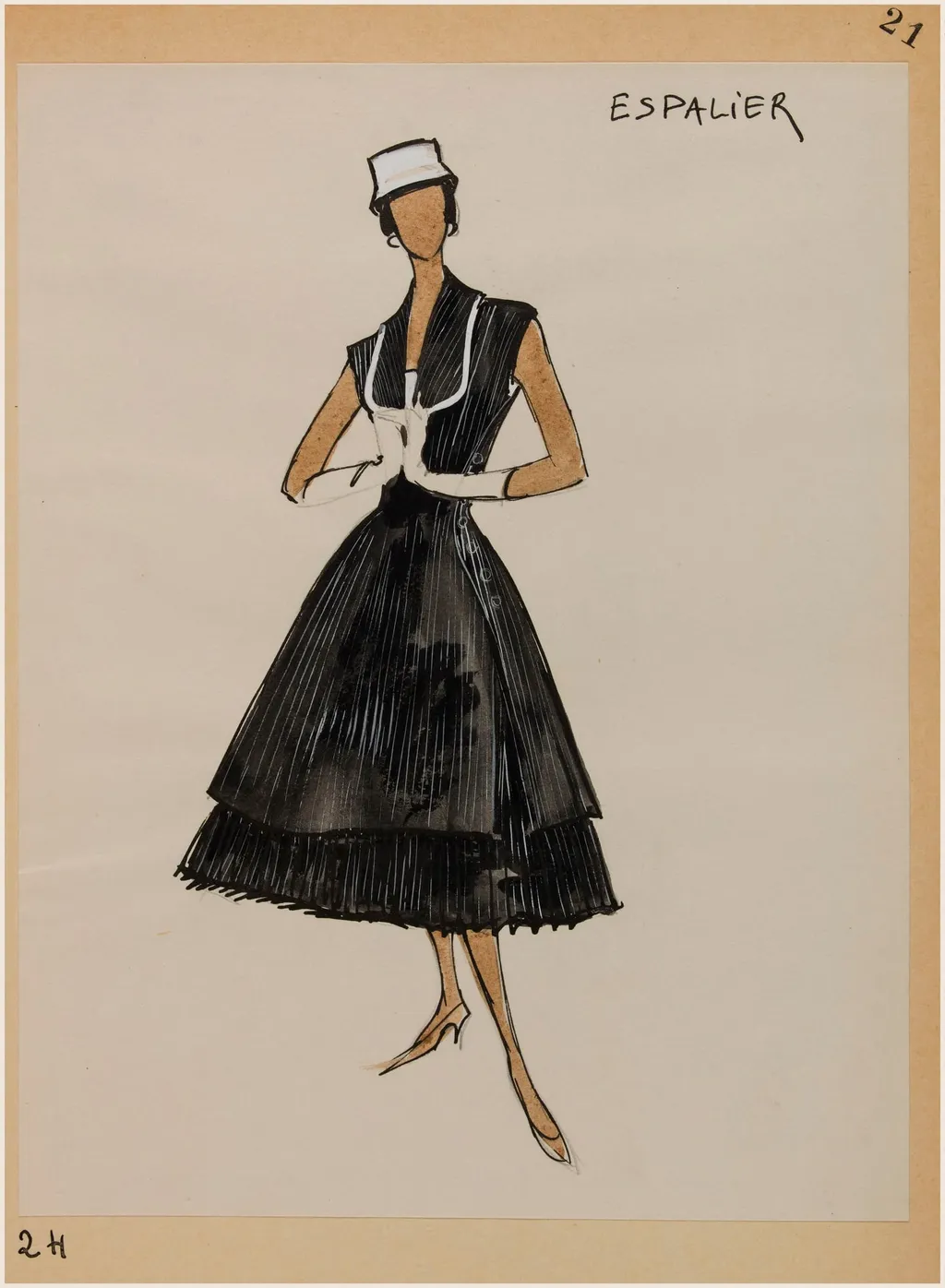
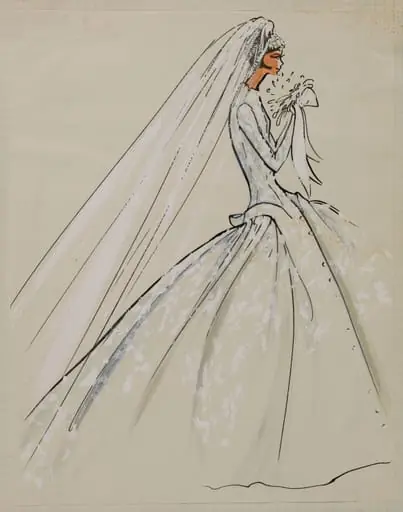
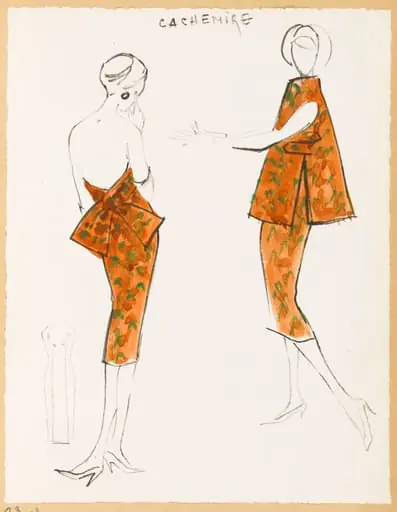
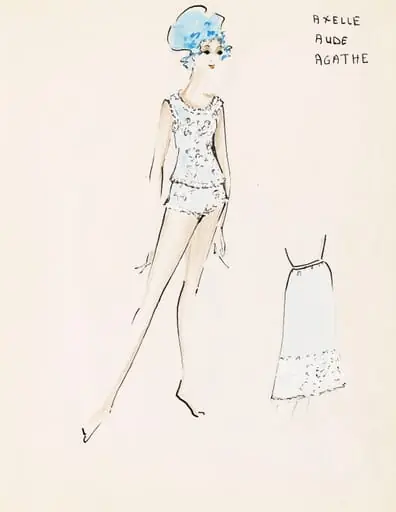
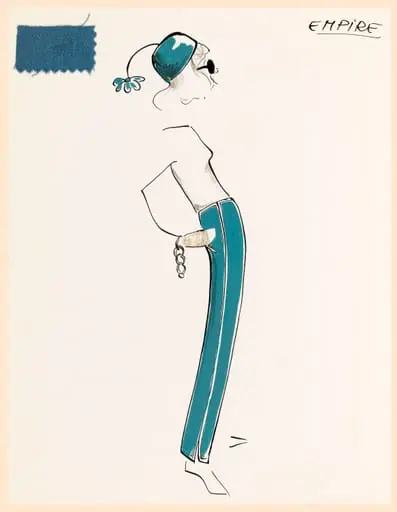
Espalier is a drawing by Carven. It dates from 1956 and is held in the collection of the Palais Galliera - Musée de la Mode de la Ville de Paris.
About this work
Overview
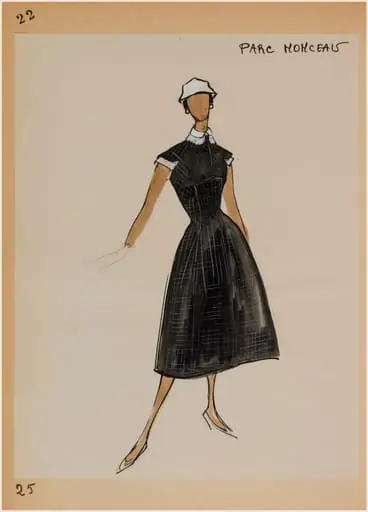
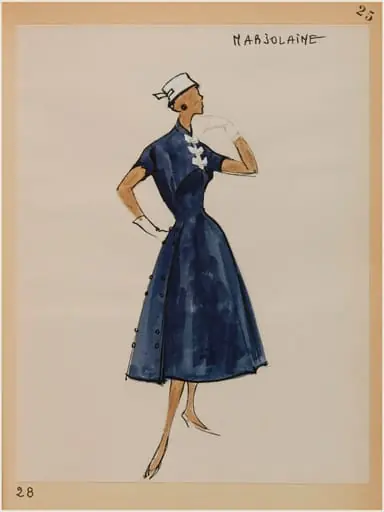
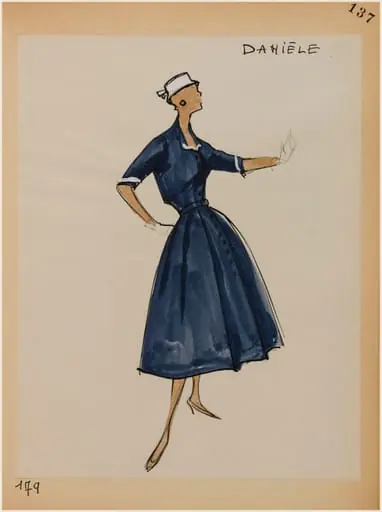
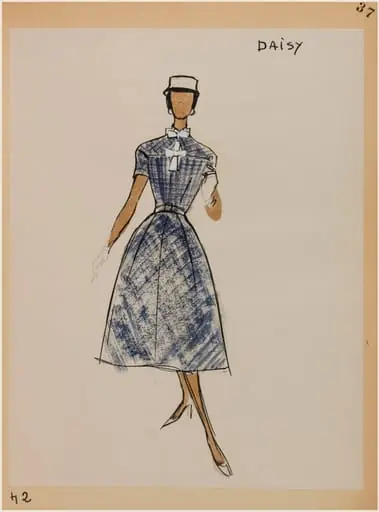
Espalier is a 1956 line drawing by French designer Carven, executed in ink on paper. It resides in the collection of the Museum of Ethnography. The work presents a solitary female figure in a stylized pose, rendered with minimal yet precise contours. Its format and execution suggest it originated as a fashion design sketch, likely intended for garment production rather than fine art display.
Subject & Meaning
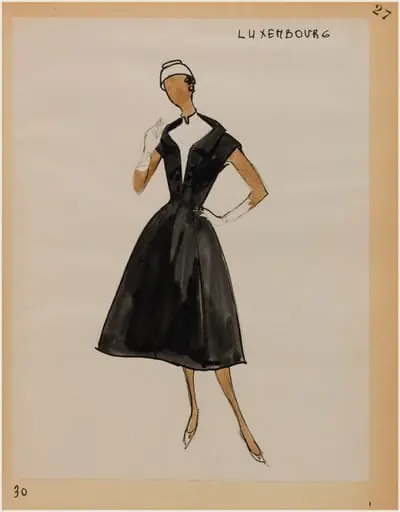
The figure wears a long black dress with a fitted bodice, collar, and front buttons, paired with a wide skirt, a white hat, and a small white handbag.
The figure wears a long black dress with a fitted bodice, collar, and front buttons, paired with a wide skirt, a white hat, and a small white handbag. The title, inscribed at the top, refers to the outfit’s name, not the figure’s identity. The composition emphasizes garment structure over individuality, reflecting the designer’s focus on silhouette and textile form rather than narrative or psychological depth.
Technique & Style
Executed in clean, unmodulated lines, the drawing avoids shading or texture, relying on contour alone to define form. The precision of the strokes and the absence of background elements align with technical fashion illustrations of the mid-20th century. The figure’s posture is static, serving as a neutral carrier for the clothing, prioritizing clarity and reproducibility over expressive movement.
History & Provenance
Created in 1956 during Carven’s active design years, the sketch entered the Museum of Ethnography’s collection as part of a broader effort to document fashion as cultural artifact. Its preservation reflects institutional interest in everyday design practices rather than high art. No public record of prior ownership or exhibition history is documented prior to its acquisition.
Context
In the 1950s, fashion houses like Carven produced detailed sketches to guide ateliers in garment construction. These drawings were functional tools, often discarded after use. Espalier survives as a rare example of such material preserved in a museum setting, offering insight into the quiet, systematic processes behind mid-century French couture.
Legacy
Espalier contributes to the understanding of fashion as a disciplined craft, not merely aesthetic expression. Its presence in an ethnographic museum underscores the cultural significance of utilitarian design objects. While not widely exhibited, it remains a quiet testament to the labor and precision embedded in mid-century dressmaking traditions.
Artist & collection
Artist
These delicate ink-on-paper drawings capture the quiet poetry of everyday things: pinecones, reeds, apples.
Museum
Palais Galliera - Musée de la Mode de la Ville de Paris
Continue through works from the same source collection.