Artwork
Faisceau
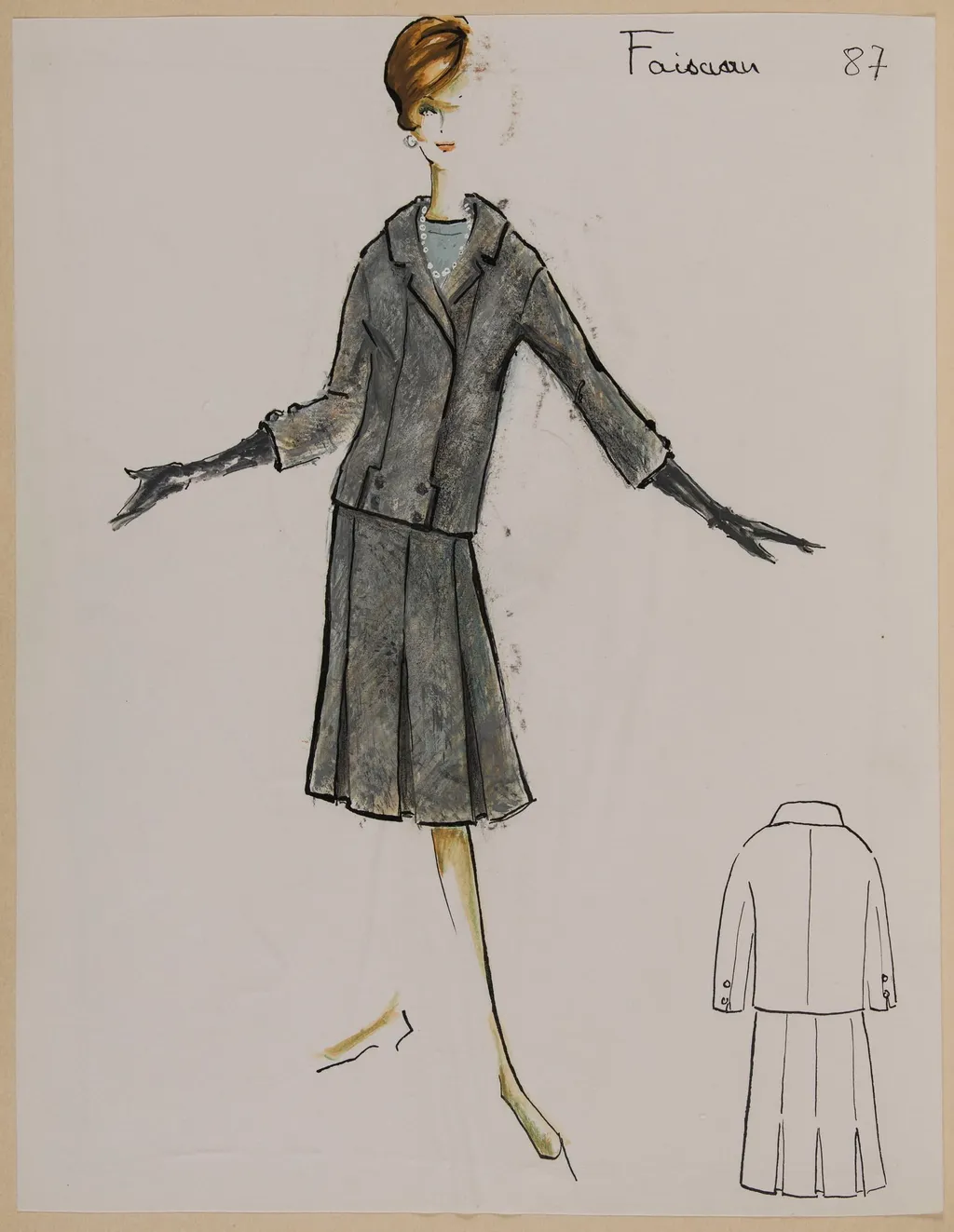
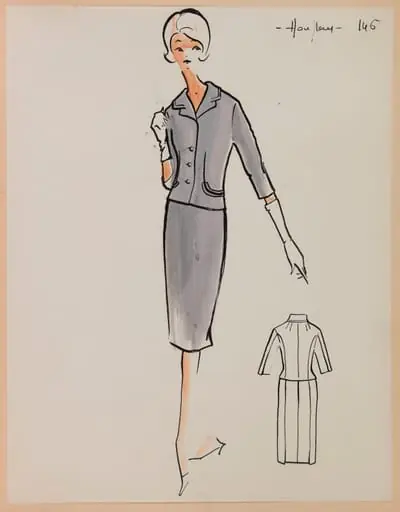
Faisceau is a drawing by Carven. It dates from 1960 and is held in the collection of the Palais Galliera - Musée de la Mode de la Ville de Paris.
About this work
Overview
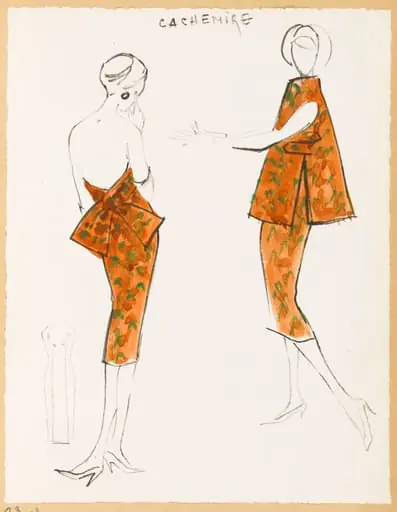
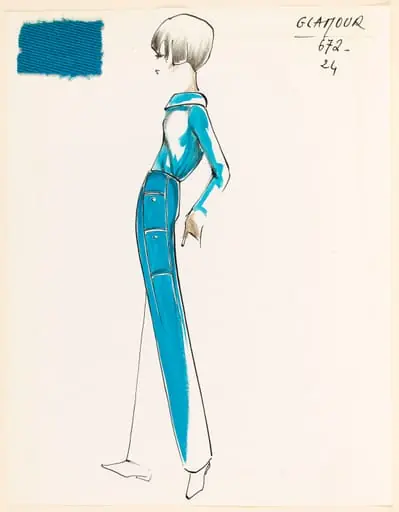
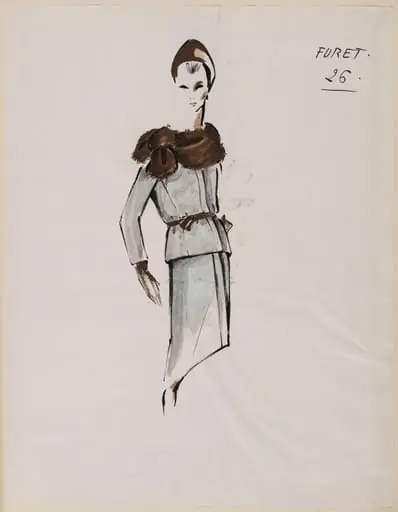
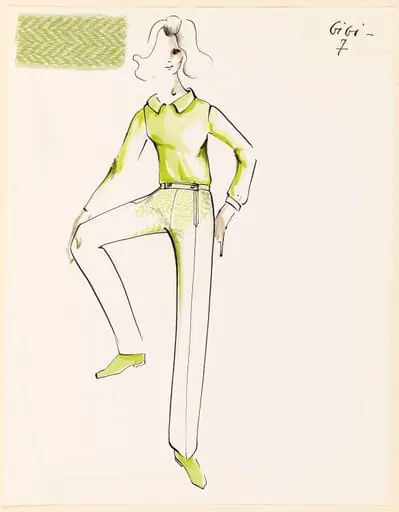
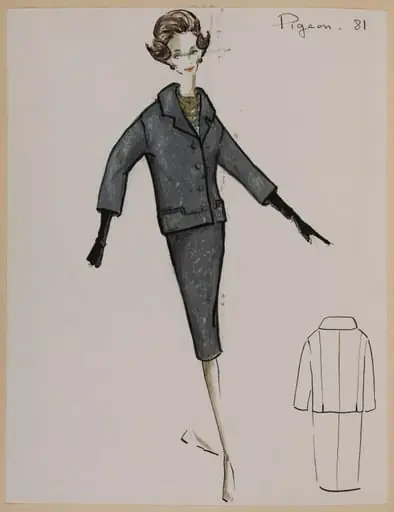
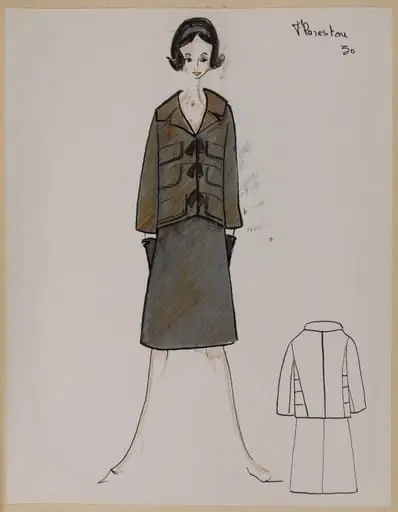
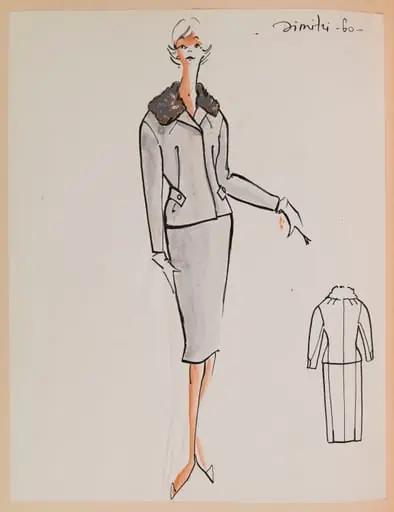
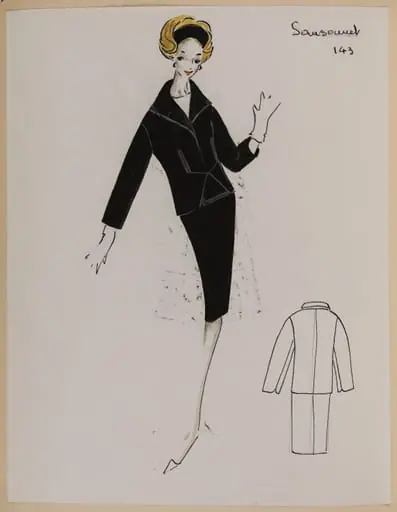
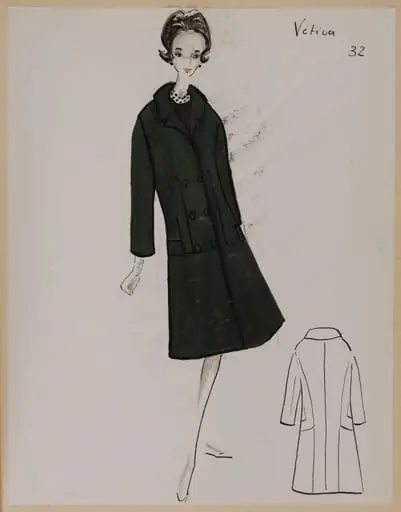
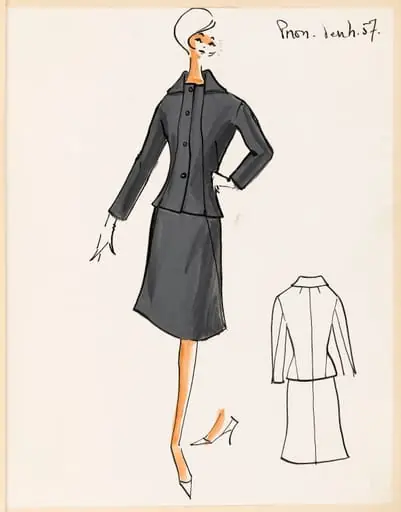
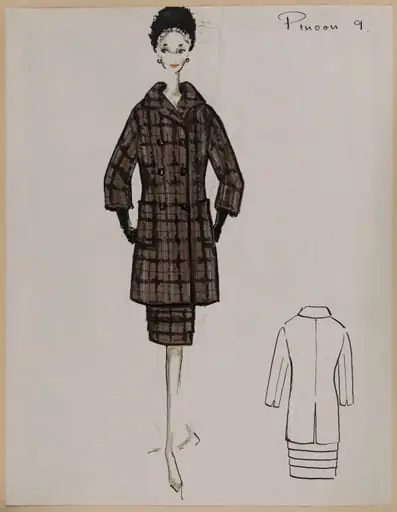
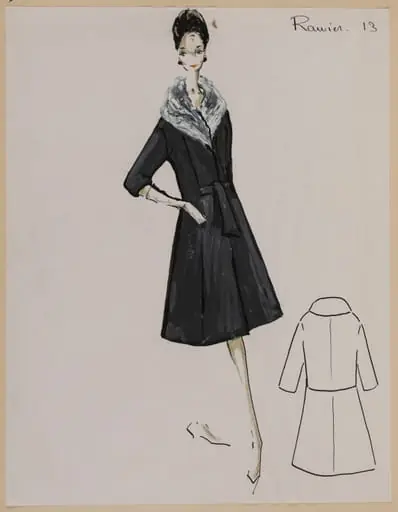
The work presents a figure in motion, rendered with swift, economical lines, alongside a separate outline of her attire.
Faisceau is a pencil sketch dated around 1960, attributed to the French designer Carven. It resides in the collection of the Museum of Ethnography. The work presents a figure in motion, rendered with swift, economical lines, alongside a separate outline of her attire. Its purpose appears functional—likely a study for garment construction—rather than a finished illustration. The minimal use of shading suggests an emphasis on form over ornamentation.
Subject & Meaning
The figure is a woman dressed in a tailored jacket and straight skirt, arms extended as if adjusting her posture or testing the garment’s drape. Jewelry is present but subdued, indicating attention to silhouette rather than embellishment. The accompanying schematic of the clothing implies a focus on structural accuracy. The title, 'Faisceau'—French for 'bundle' or 'ray'—may allude to the way fabric gathers or flows, hinting at movement within restraint.
Technique & Style
Executed in loose, confident pencil strokes, the drawing balances spontaneity with precision. Outlines are unembellished, and shading is used sparingly to suggest volume without modeling. The dual presentation—figure and garment separated—reflects a designer’s method of isolating form from the body. The clean, uncluttered aesthetic aligns with mid-century modernist sensibilities, prioritizing clarity and functionality in visual communication.
History & Provenance
The sketch entered the Museum of Ethnography’s collection as part of a broader acquisition of design materials from Carven’s studio. Its date, circa 1960, places it within a period when the designer was refining her signature minimalist aesthetic. While no documentation confirms its original use, its format suggests it was part of an internal design archive, possibly used to communicate patterns or cuts to tailors.
Context
In early 1960s Paris, fashion design increasingly emphasized clean lines and wearable structure, moving away from overt ornamentation. Carven, known for her tailored silhouettes, operated within this shift. Faisceau reflects a broader trend among designers to document garments as functional objects, prioritizing fit and movement. The sketch’s presence in an ethnographic museum underscores its value as a cultural artifact of postwar design practice.
Legacy
Faisceau remains a quiet example of how fashion design was documented at a time when sketches served as technical tools rather than artistic statements. Its preservation in an ethnographic context highlights the growing recognition of fashion as material culture. Though not widely exhibited, it contributes to understanding the quiet, methodical processes behind mid-century French couture.
Artist & collection
Artist
These delicate ink-on-paper drawings capture the quiet poetry of everyday things: pinecones, reeds, apples.
Museum
Palais Galliera - Musée de la Mode de la Ville de Paris
Continue through works from the same source collection.