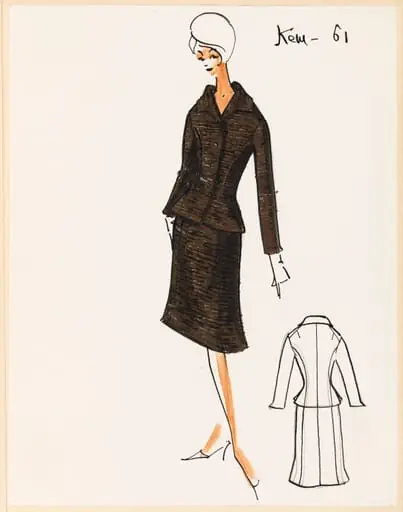
Artwork
Pnon Penh
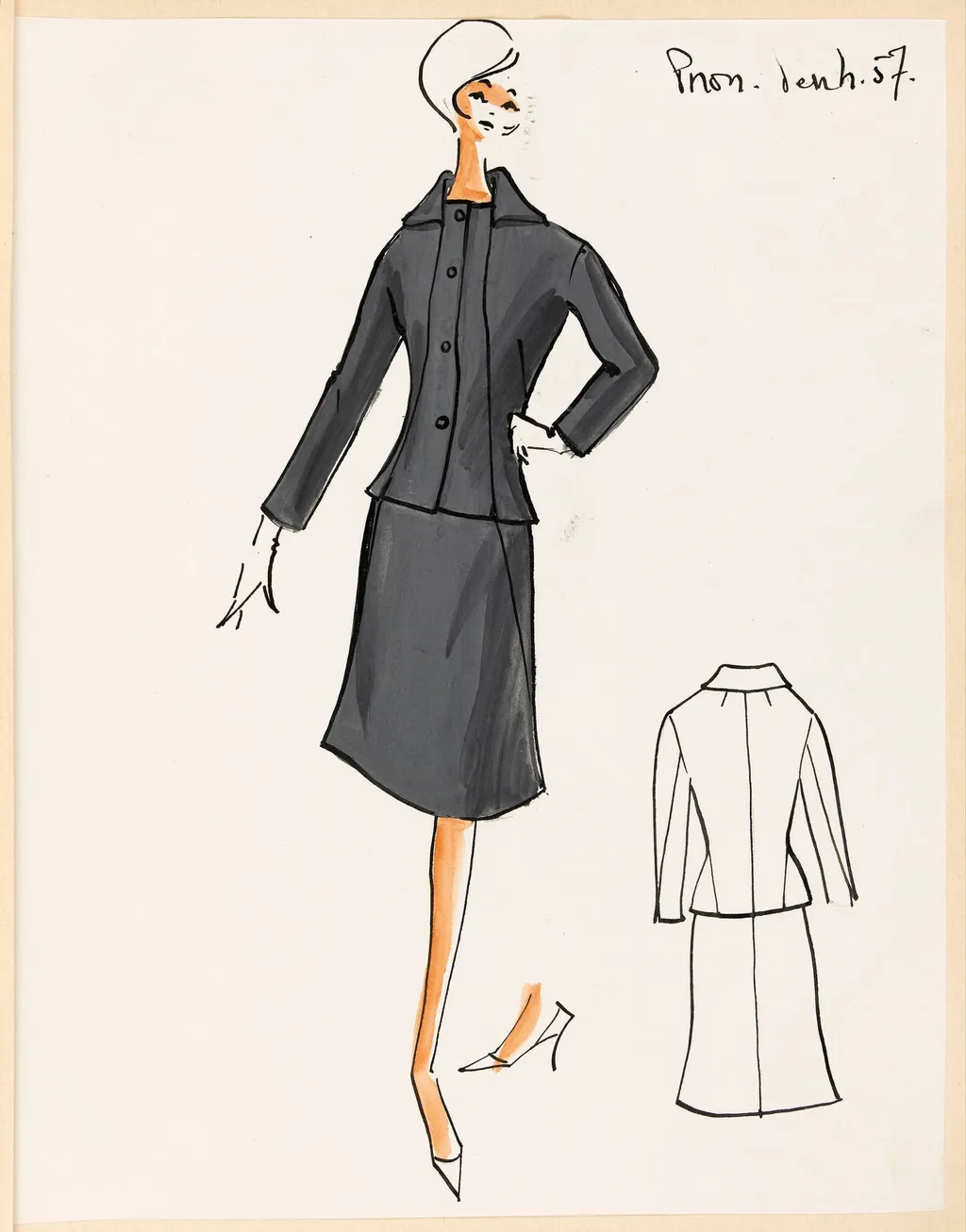
Pnon Penh is a drawing by Marie-Louise Carven. It dates from 1959 and is held in the collection of the Palais Galliera - Musée de la Mode de la Ville de Paris.
About this work
Overview
The piece reflects Carven’s interest in wearable, modest silhouettes and her focus on the female form in everyday contexts.
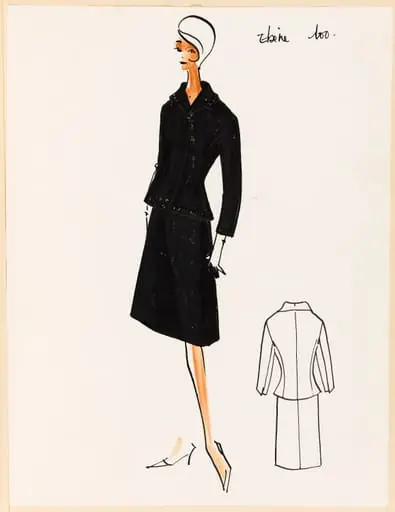
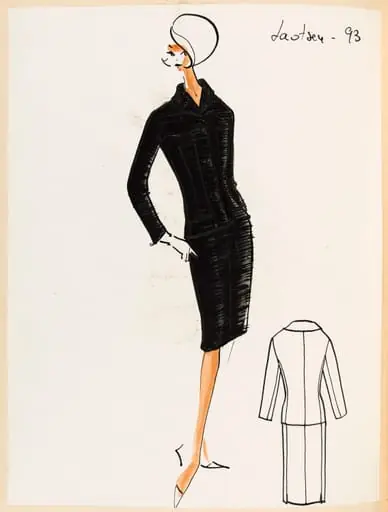
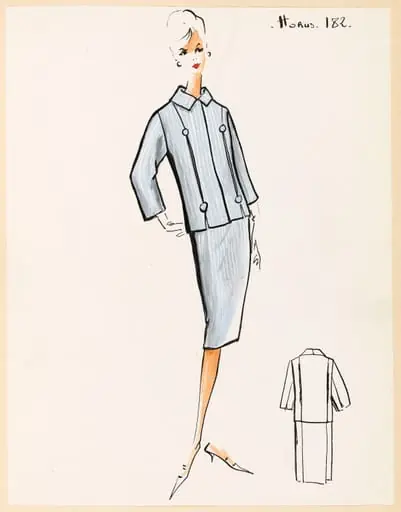
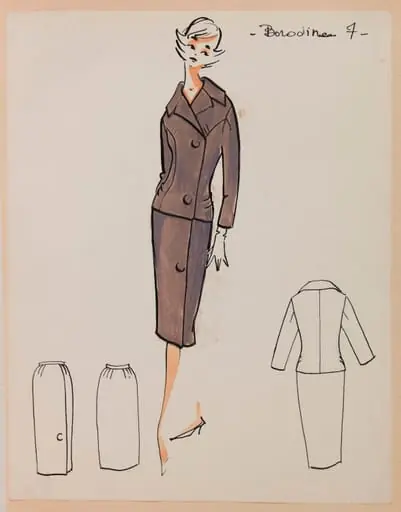
Created around 1959, *Phnom Penh* is a fashion sketch by Marie-Louise Carven, founder of the Parisian house Carven. Though labeled as an image, it functions as a design study rather than a finished artwork. The piece reflects Carven’s interest in wearable, modest silhouettes and her focus on the female form in everyday contexts. It resides in the Museum of Ethnography, where its placement suggests an anthropological interest in mid-century dress.
Subject & Meaning
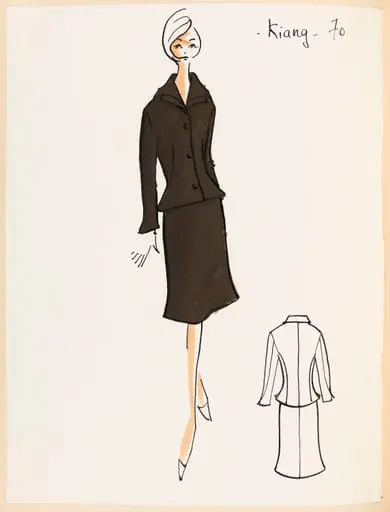
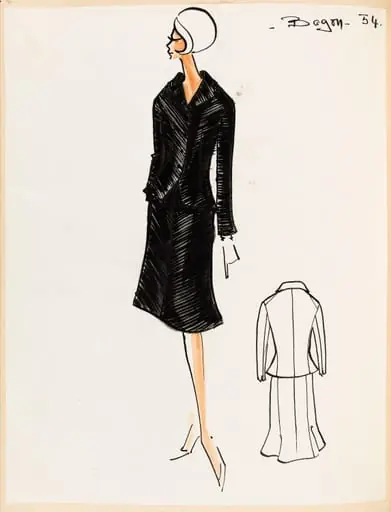
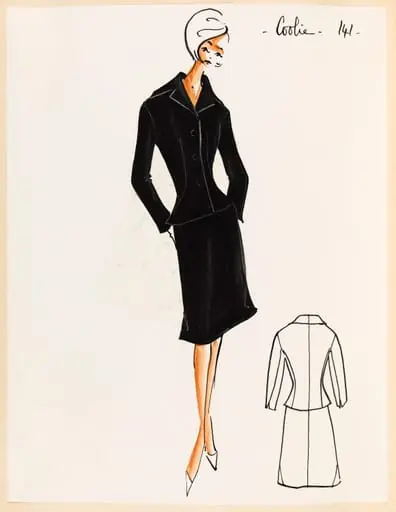
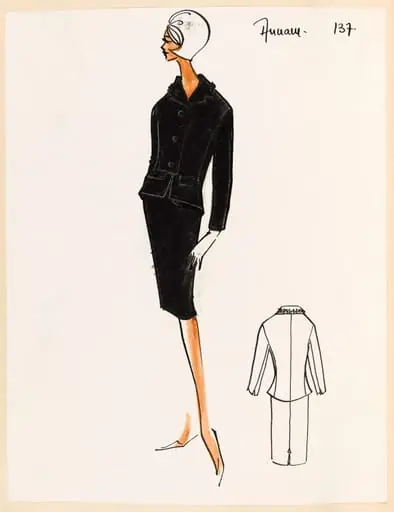
The sketch depicts a woman in a minimalist black ensemble—a long coat, matching skirt, and small handbag—posed with casual ease. The relaxed posture and unadorned styling suggest an emphasis on practicality over ornamentation. The inclusion of a rear view indicates Carven’s attention to how garments behave on the body in motion. The title, referencing Cambodia’s capital, may hint at an interest in global influences, though the design remains rooted in Parisian simplicity.
Technique & Style
Carven rendered the outfit with bold, clean lines and flat areas of color, avoiding shading or texture. Facial features and footwear are suggested with minimal strokes, directing focus entirely to the clothing’s structure. The back view, drawn in the same style, demonstrates her methodical approach to garment construction. This restrained technique aligns with her broader design philosophy: clarity, proportion, and function over decorative excess.
History & Provenance
Marie-Louise Carven established her fashion house in 1945 and was among the first Parisian designers to develop a ready-to-wear line. *Phnom Penh* dates from the late 1950s, a period when she was refining her approach to accessible, petite-friendly fashion. The sketch entered the Museum of Ethnography’s collection, likely as part of a broader effort to document the cultural significance of modern dress. Its preservation reflects institutional recognition of fashion as material culture.
Context
In postwar Europe, fashion was shifting toward democratization and practicality. Carven’s work responded to this by designing for the average woman, not just the elite. *Phnom Penh* emerges within this context—its simplicity contrasts with the elaborate couture of the time. The sketch’s ethnographic placement suggests curators viewed such designs as artifacts of everyday life, documenting how women dressed beyond the runway.
Legacy
Carven’s emphasis on wearable design and her pioneering role in prêt-à-porter influenced later generations of designers seeking to bridge couture and commerce. *Phnom Penh* exemplifies her quiet innovation: garments designed for movement, comfort, and quiet elegance. Though not widely exhibited, the sketch remains a testament to her belief that fashion should serve the wearer, not the spectacle.
Artist & collection
Artist
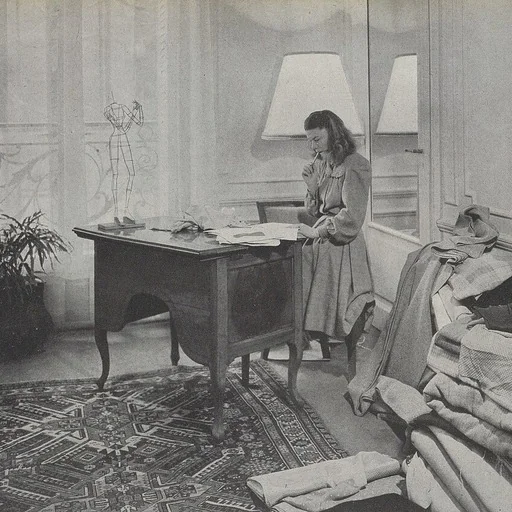
Marie-Louise Carven (31 August 1909 – 8 June 2015), born Carmen de Tommaso, was a French fashion designer who founded the house of Carven in 1945.
Museum
Palais Galliera - Musée de la Mode de la Ville de Paris
Continue through works from the same source collection.
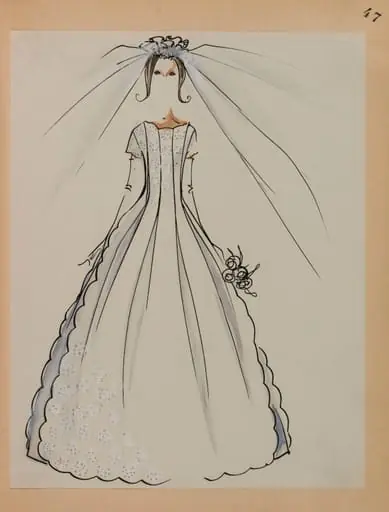 Robe de mariée festonnée et son voile
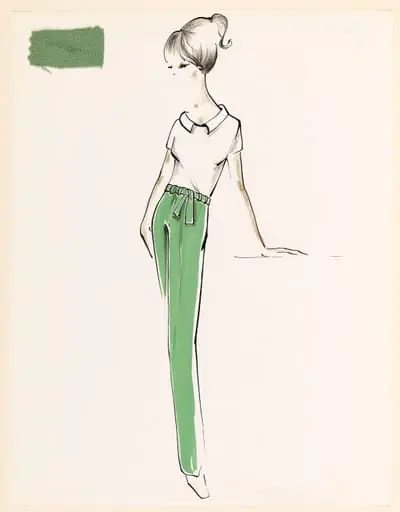 Haut blanc à manches courtes et pantalon vert à ceinture nouée
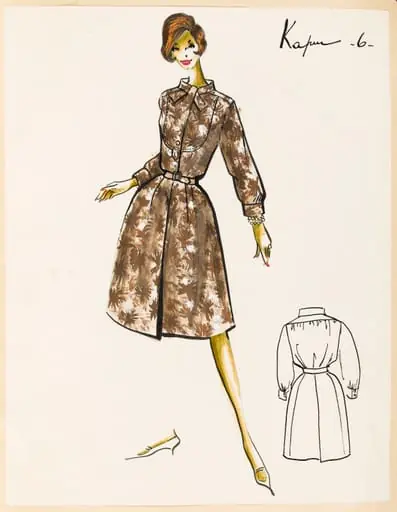 Kapur
Kapur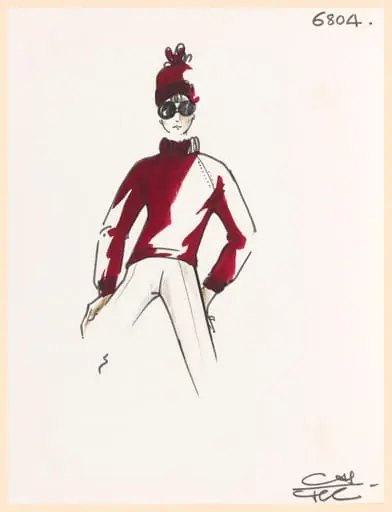 Pull-over à manches longues pourpre, bonnet assorti, pantalon et lunettes de soleil
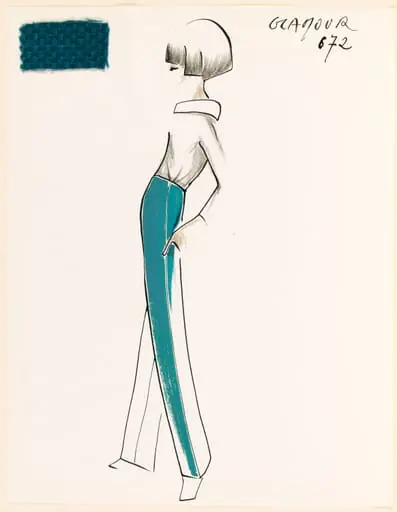 GLAMOUR
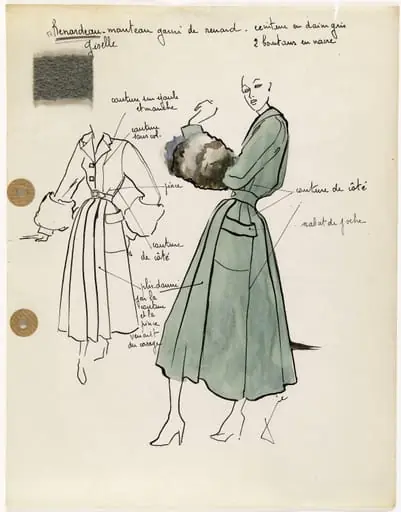 'Renardeau'
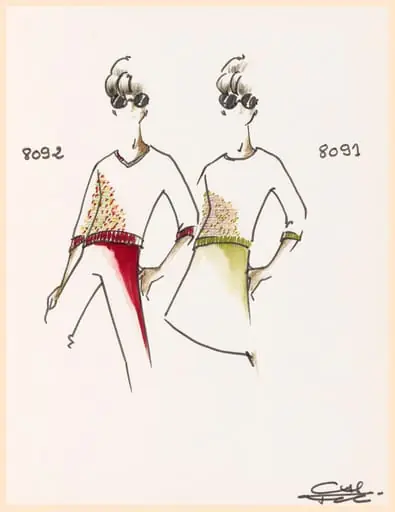 Pull-over à manches trois quarts et à encolure V à motifs multicolores, pantalon cerise et lunettes de soleil
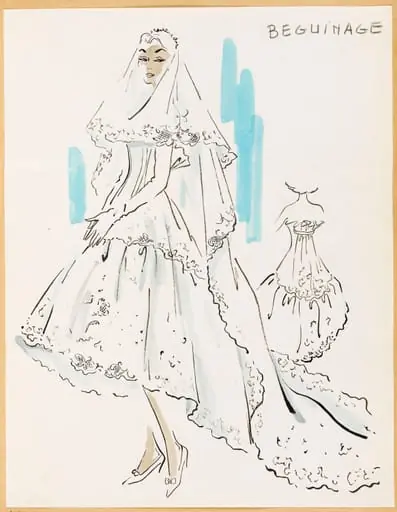 Béguinage