Artwork
Flèche d'or
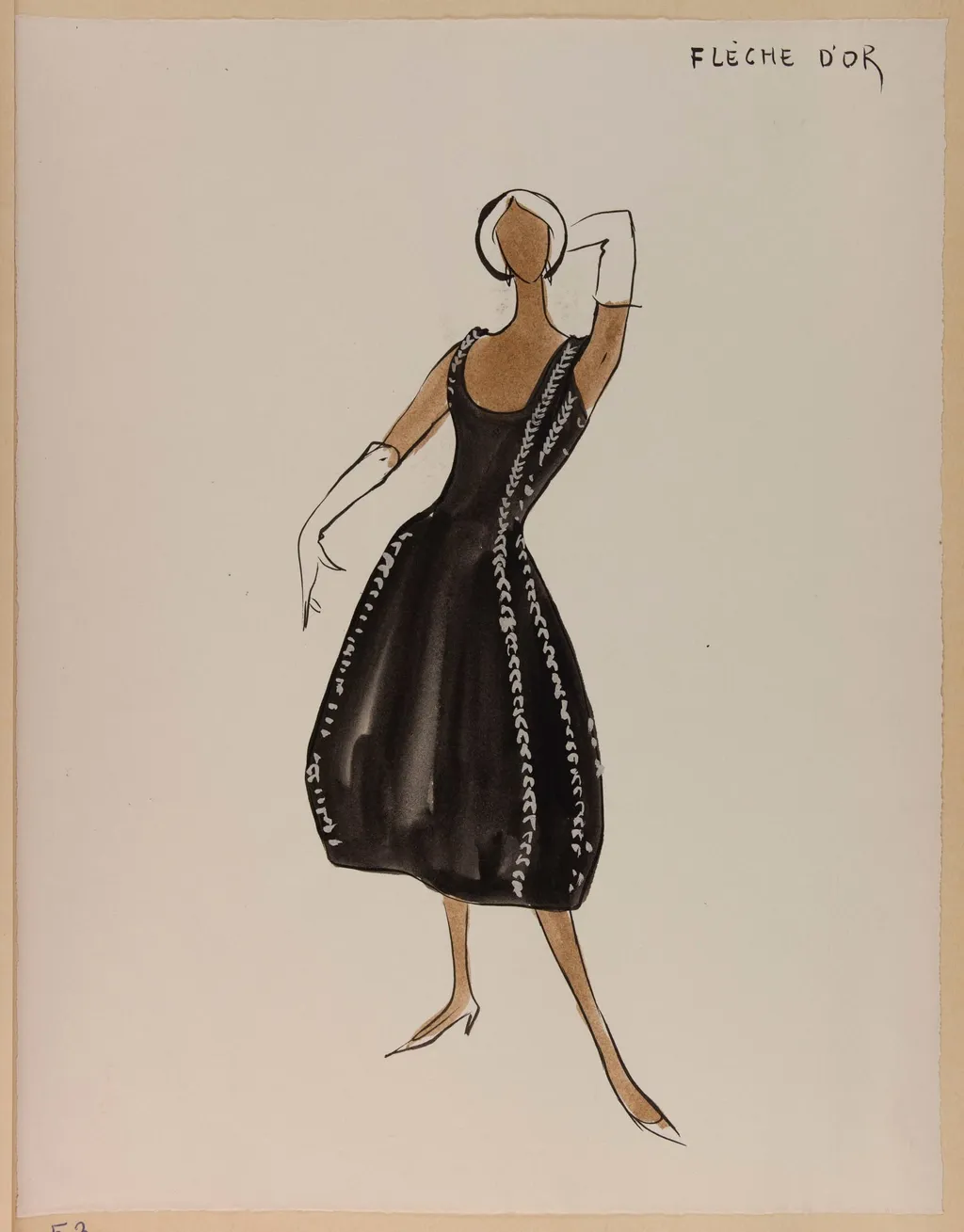
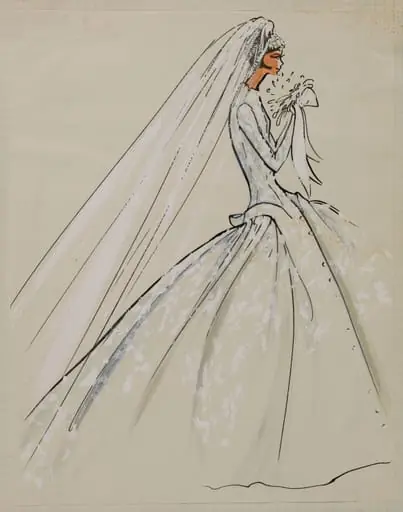
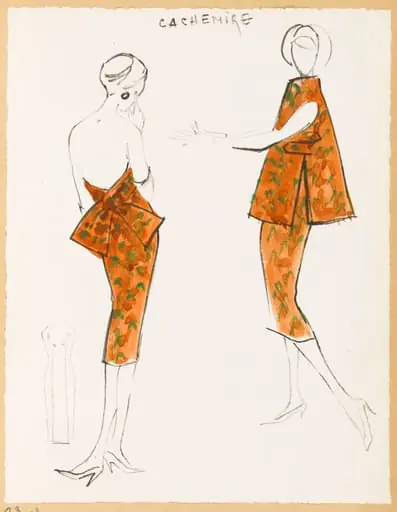
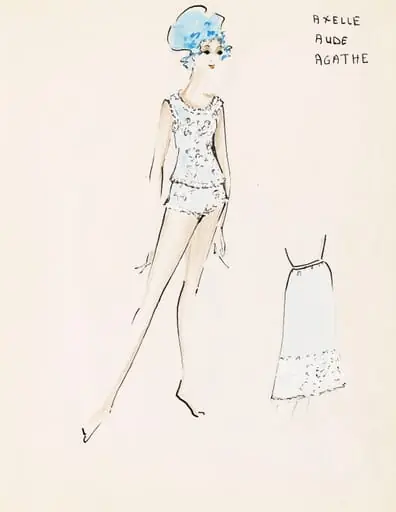
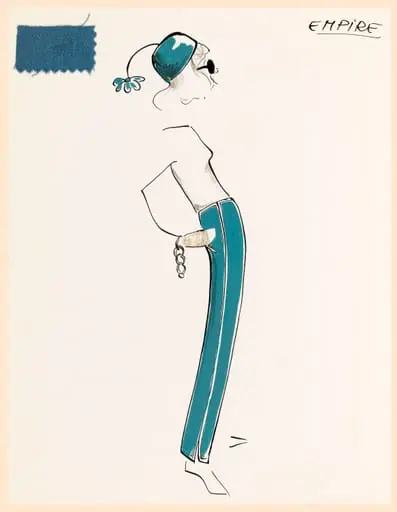
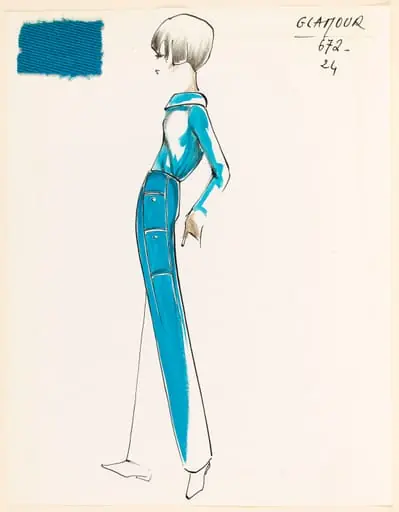
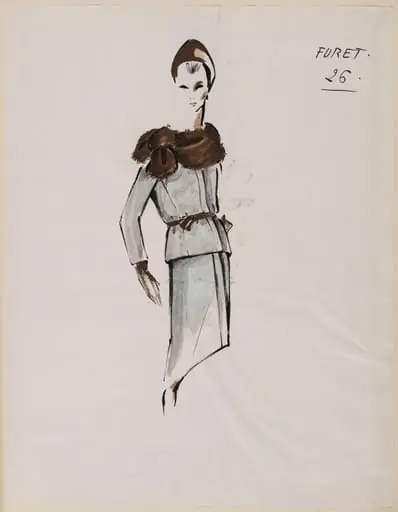
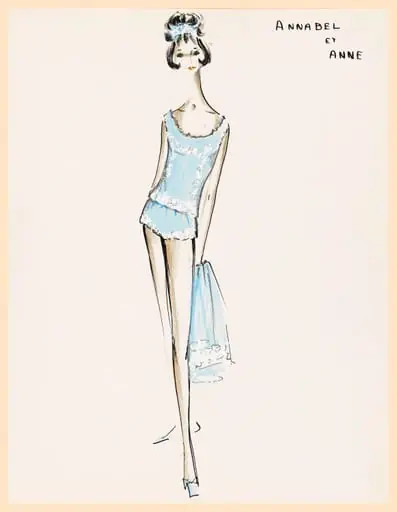
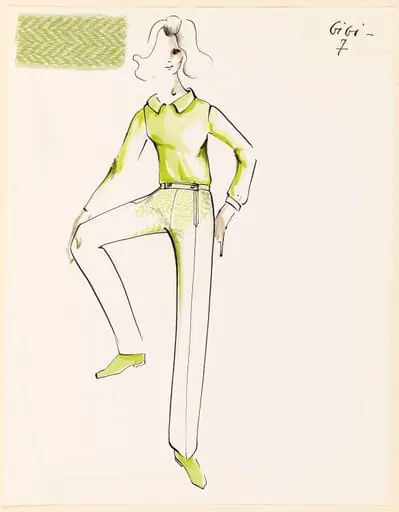
Flèche d'or is a drawing by Carven. It dates from 1956 and is held in the collection of the Palais Galliera - Musée de la Mode de la Ville de Paris.
About this work
Overview
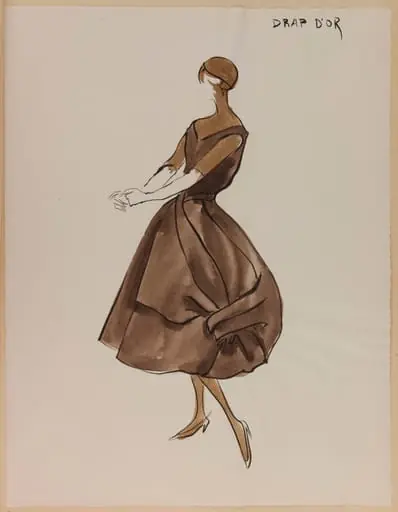
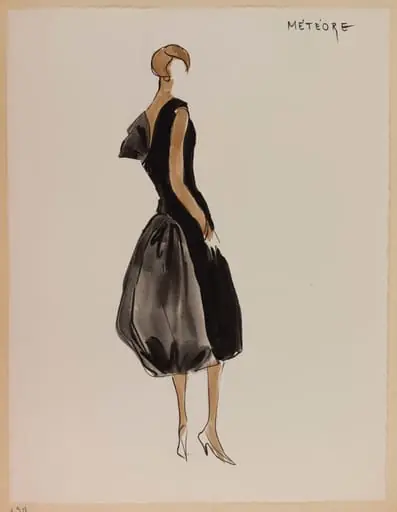
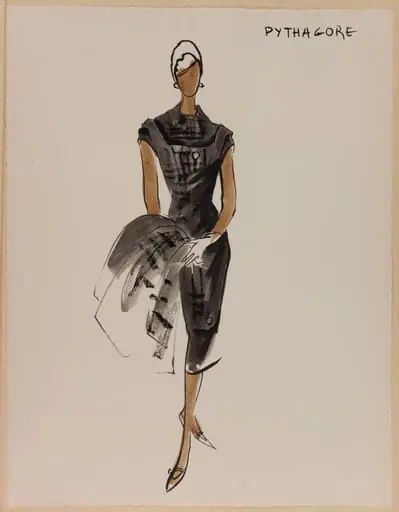
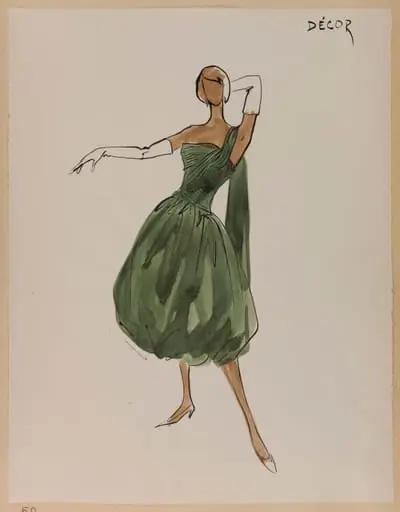
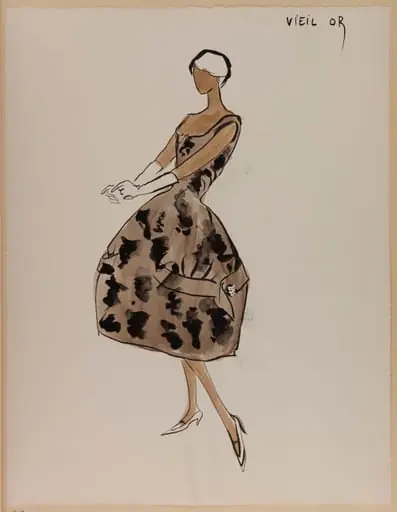
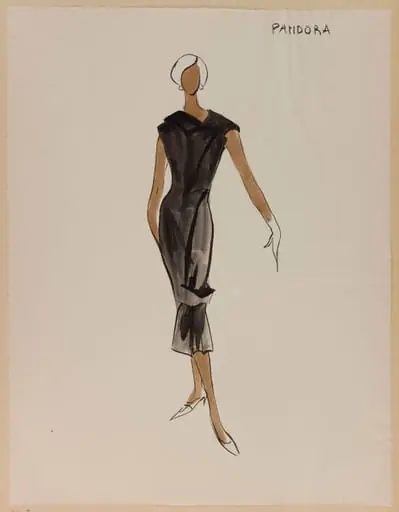
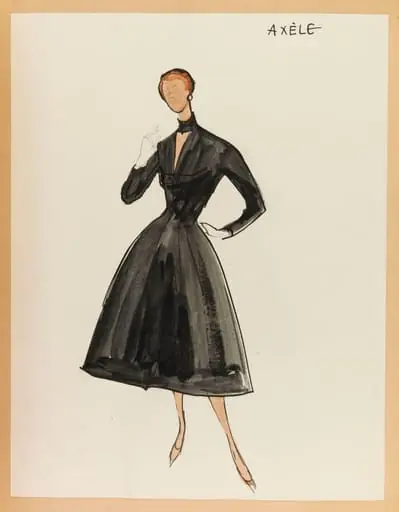
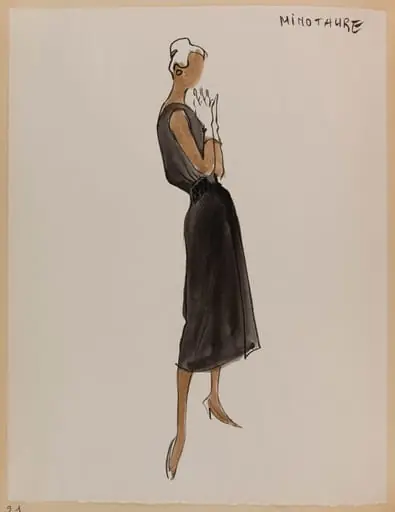
Flèche d’or, attributed to the French fashion house Carven and dated to around 1956, is a monochrome drawing preserved in the Museum of Ethnography. The image presents a solitary figure in a stylised pose, rendered in stark black and white, and measures roughly the size of a typical fashion sketch sheet.
Subject & Meaning
The central figure is a woman dressed in a sleek black gown accented with white details, including gloves and a headpiece. Her right arm is lifted while the left is bent at the elbow, a posture that conveys both poise and movement, suggesting the work functions as a fashion illustration rather than a narrative scene.
Technique & Style
Executed in line drawing, the piece relies on contrast between deep black silhouettes and crisp white highlights to define form. The artist employs a clean, minimal line quality, emphasizing the garment’s silhouette, scoop neckline, and knee‑length skirt, while the white accessories provide visual balance and a sense of refined elegance.
History & Provenance
Created in the mid‑1950s, the drawing entered the collection of the Museum of Ethnography, where it remains accessible to scholars of fashion history. Its attribution to Carven aligns it with the house’s post‑war revival of Parisian couture, reflecting the brand’s aesthetic during that period.
Context
During the 1950s, fashion illustration served as a primary means of communicating new designs to clients and press. Carven, known for modern, accessible elegance, frequently employed such sketches to preview collections, situating Flèche d’or within the broader practice of mid‑century couture promotion.
Artist & collection
Artist
These delicate ink-on-paper drawings capture the quiet poetry of everyday things: pinecones, reeds, apples.
Museum
Palais Galliera - Musée de la Mode de la Ville de Paris
Continue through works from the same source collection.