Artwork
Pythagore
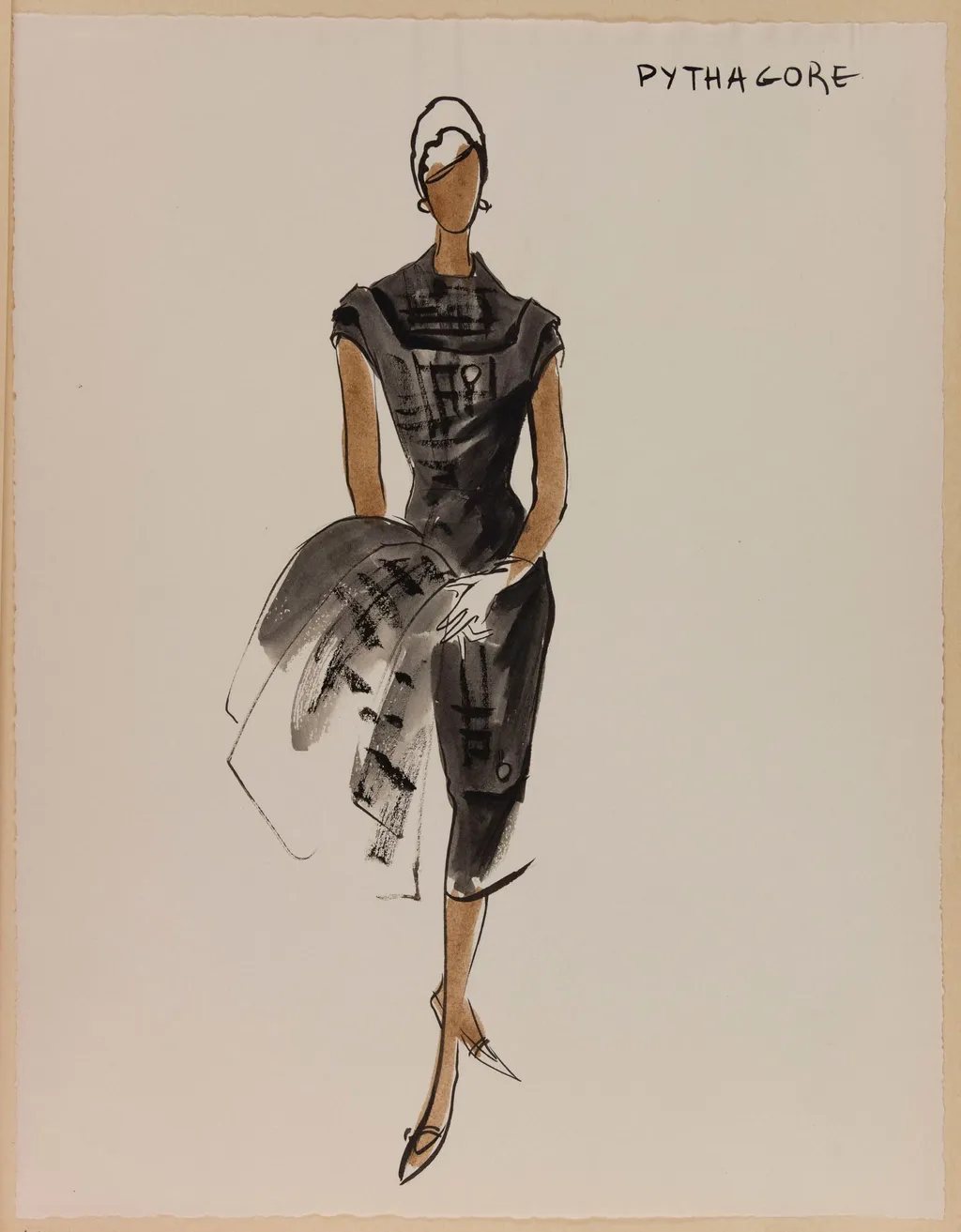
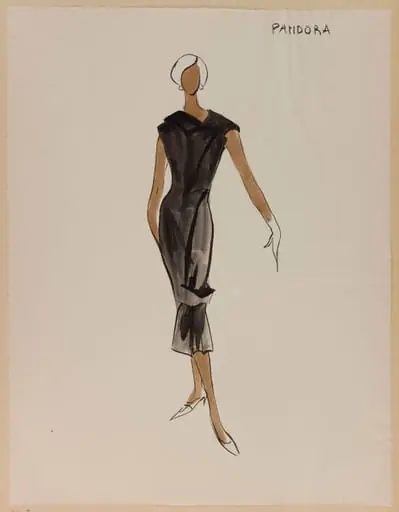
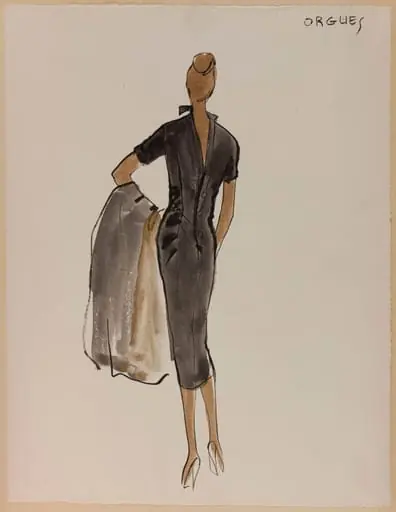
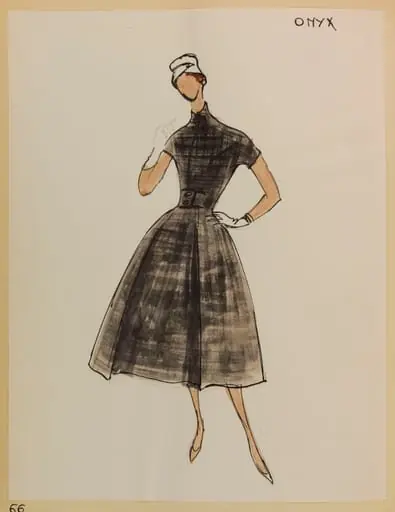
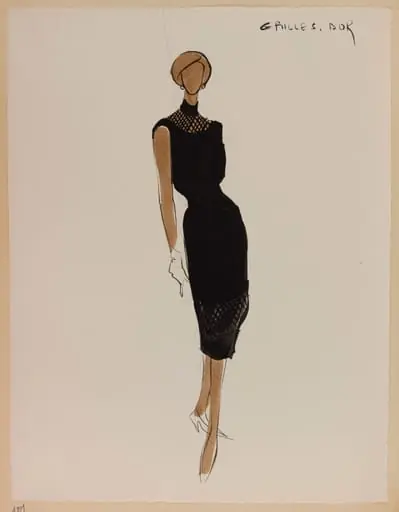
Pythagore is a drawing by Marie-Louise Carven. It dates from 1956 and is held in the collection of the Palais Galliera - Musée de la Mode de la Ville de Paris.
About this work
Overview
This piece, held in the Museum of Ethnography, reflects her interest in elegant, wearable forms for the modern woman, blending structure with subtle movement.
Created around 1956, *Pythagore* is a fashion illustration by Marie-Louise Carven, founder of the Parisian house Carven. Though often associated with textile design and ready-to-wear innovation, Carven also produced detailed drawings to communicate her aesthetic. This piece, held in the Museum of Ethnography, reflects her interest in elegant, wearable forms for the modern woman, blending structure with subtle movement.
Subject & Meaning
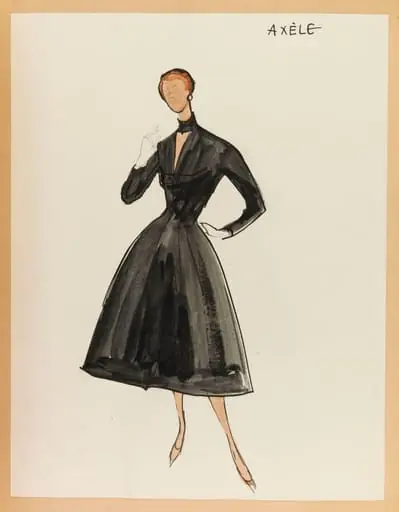
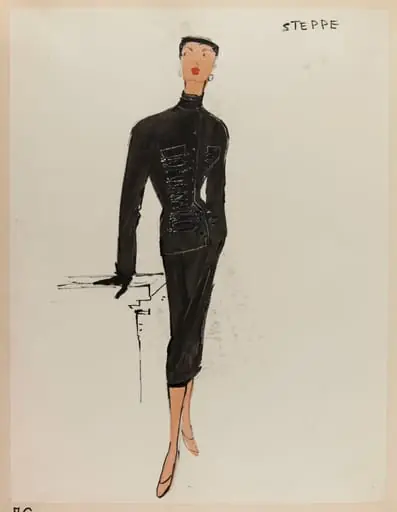
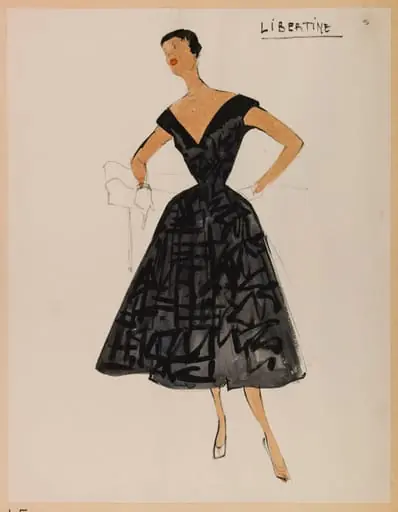
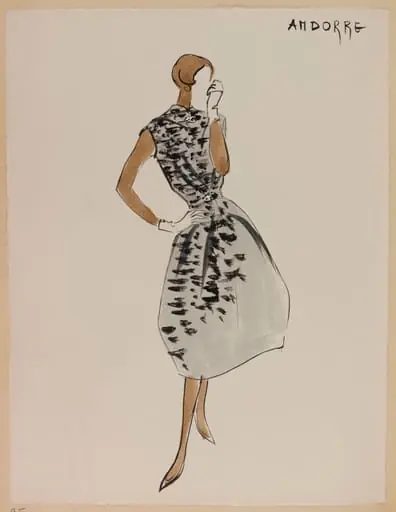
The figure in *Pythagore* is depicted in poised stillness, dressed in a tailored dark dress with a high neckline and short sleeves. White gloves and a hat suggest formality, while the draped scarf adds fluidity. The weight shift in her stance conveys quiet confidence, not performative glamour. The title, referencing the ancient Greek mathematician, may allude to proportion and balance—values central to Carven’s design philosophy.
Technique & Style
Rendered in ink or pencil, the drawing employs clean, precise lines typical of mid-century fashion illustrations. Shading is minimal, emphasizing silhouette over texture. The figure’s elongated proportions and simplified features align with contemporary editorial styles, yet retain a personal, hand-drawn quality. The contrast between the dark dress and light accessories creates visual rhythm without ornamentation.
History & Provenance
The illustration entered the Museum of Ethnography’s collection as part of a broader effort to document 20th-century fashion as cultural artifact. Carven’s role in pioneering prêt-à-porter made her work significant beyond haute couture circles. While the exact provenance of *Pythagore* is not fully documented, its preservation suggests recognition of its role in illustrating the evolution of accessible, feminine design.
Context
In the 1950s, Parisian designers increasingly responded to postwar demands for practicality and mobility. Carven’s designs catered to petite figures often overlooked by mainstream couture. *Pythagore* reflects this shift—its modest silhouette, functional accessories, and understated elegance mirror the tastes of urban women seeking both style and ease in daily life.
Legacy
Though Carven’s name is less prominent today, her contributions to democratizing fashion endure. *Pythagore* stands as a quiet testament to her belief that elegance need not be extravagant. The drawing’s preservation in an ethnographic context underscores its value as a document of social change, capturing how clothing reflected evolving notions of femininity and autonomy in mid-century Europe.
Artist & collection
Artist
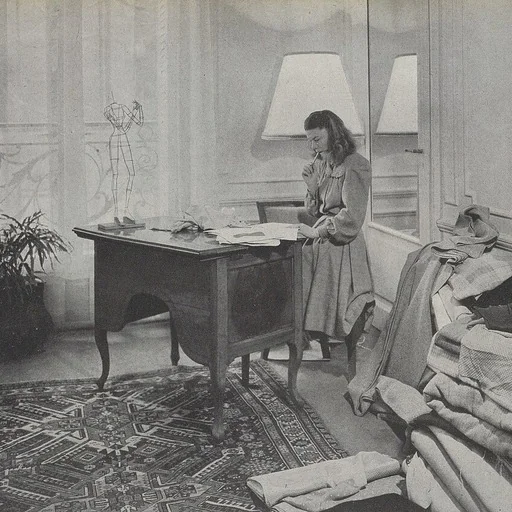
Marie-Louise Carven (31 August 1909 – 8 June 2015), born Carmen de Tommaso, was a French fashion designer who founded the house of Carven in 1945.
Museum
Palais Galliera - Musée de la Mode de la Ville de Paris
Continue through works from the same source collection.
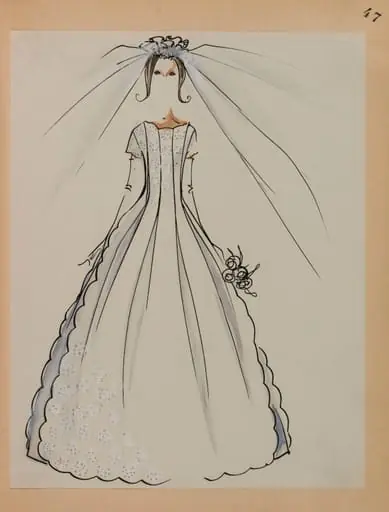 Robe de mariée festonnée et son voile
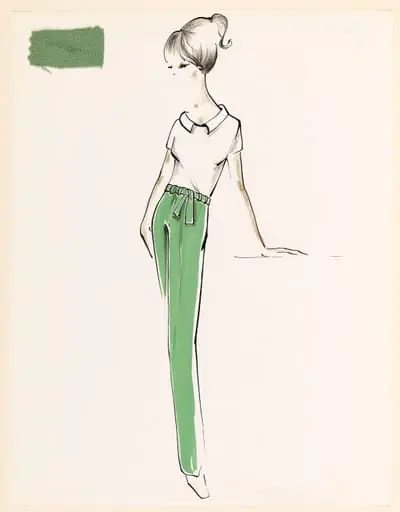 Haut blanc à manches courtes et pantalon vert à ceinture nouée
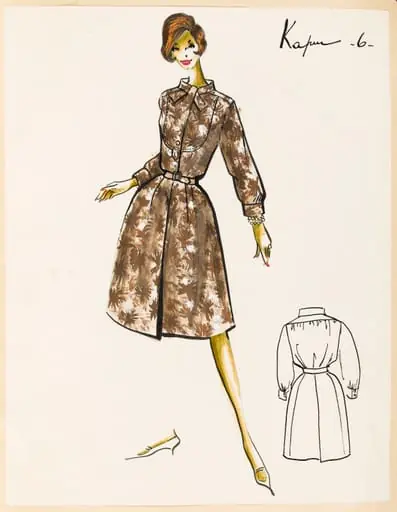 Kapur
Kapur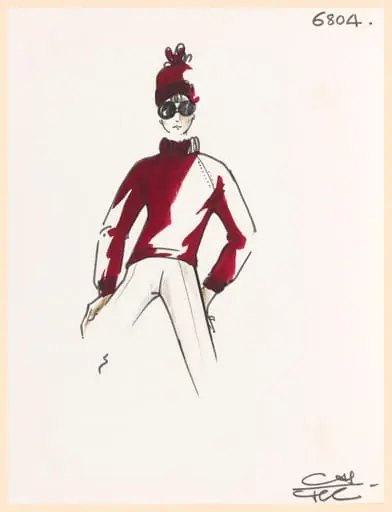 Pull-over à manches longues pourpre, bonnet assorti, pantalon et lunettes de soleil
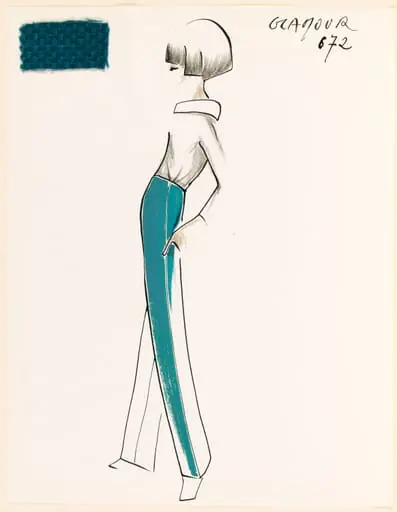 GLAMOUR
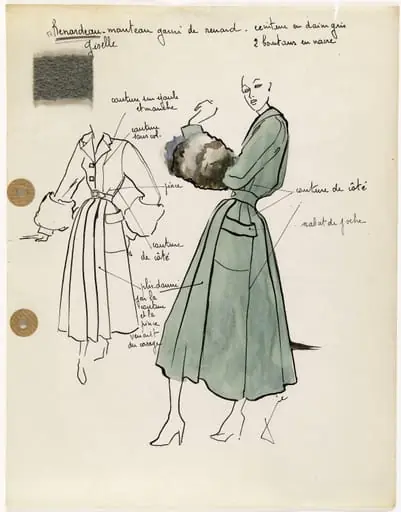 'Renardeau'
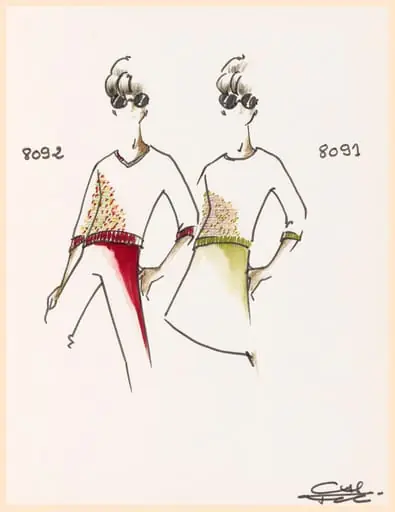 Pull-over à manches trois quarts et à encolure V à motifs multicolores, pantalon cerise et lunettes de soleil
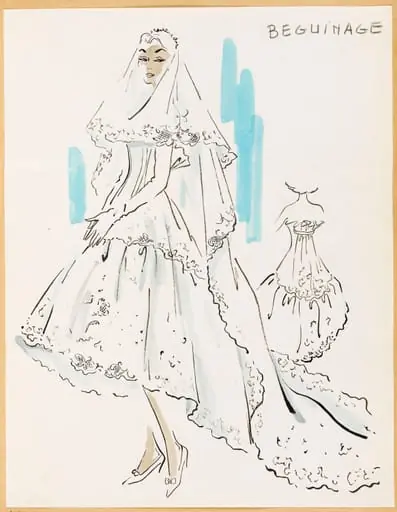 Béguinage