Artwork
Perles noires
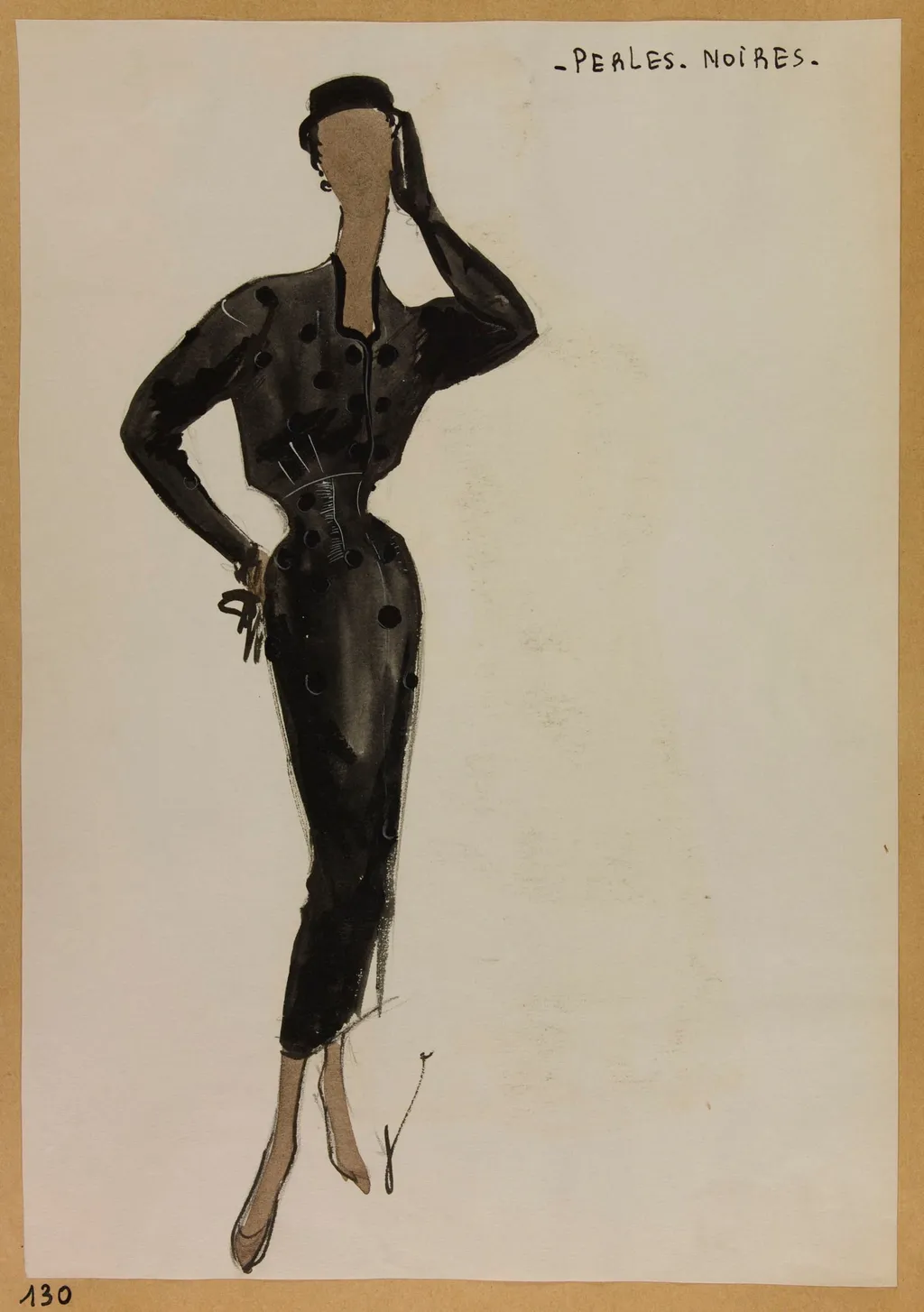
Perles noires is a drawing by Carven. It dates from 1952 and is held in the collection of the Palais Galliera - Musée de la Mode de la Ville de Paris.
About this work
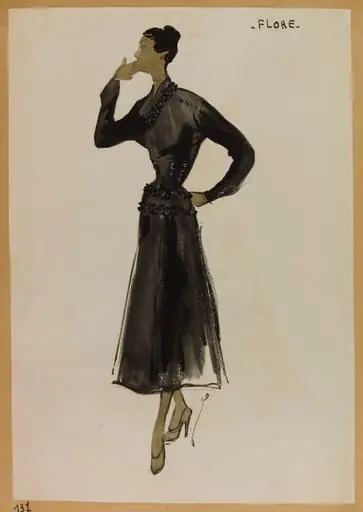
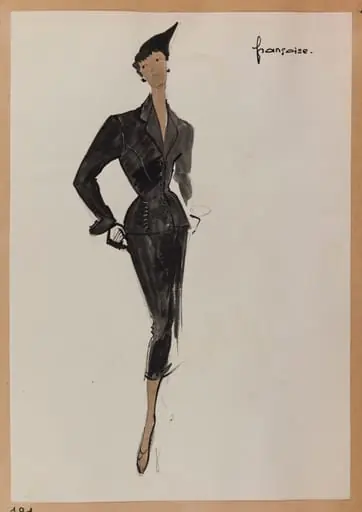
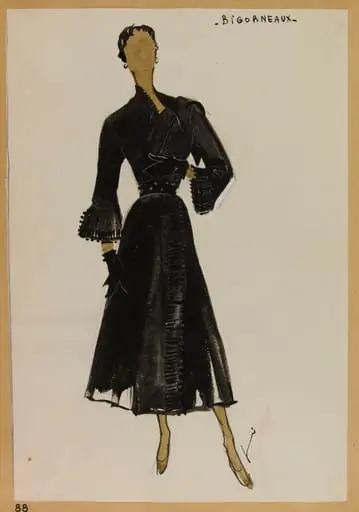
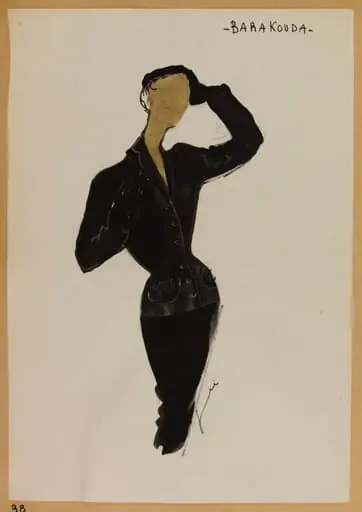
This image showcases a drawing of a woman in a black dress, with her left hand resting on her hip and her right hand touching her head.
This image showcases a drawing of a woman in a black dress, with her left hand resting on her hip and her right hand touching her head. The dress features a long-sleeved top and a long skirt, adorned with black dots. The woman's face is not visible.
The drawing is rendered in black and white, with a focus on the woman's attire. The overall style of the drawing suggests a fashion illustration from the mid-20th century.
The level of detail in the drawing highlights the artist's attention to the subject's clothing. To learn more about the artist's work, explore the drawings of Carven.
Overview
Perles noires is a black-and-white fashion drawing from 1952, attributed to the designer Carven. It depicts a female figure in a full-length dress covered in small circular motifs, rendered with precise linework. The figure’s face is obscured, directing focus to the garment’s structure and ornamentation. The work is held in the collection of the Museum of Ethnography, where it is preserved as an example of mid-century fashion design rather than fine art.
Subject & Meaning
The figure in Perles noires is anonymous, her identity erased by the absence of facial features. This abstraction emphasizes the clothing as the central subject, reflecting a design philosophy that prioritized form and texture over individual expression. The black dots adorning the dress may reference beadwork or embroidery, suggesting a connection between haute couture and traditional textile decoration, though no specific cultural reference is confirmed.
Technique & Style
Rendered in monochrome ink, the drawing employs clean, controlled lines to define the silhouette and pattern of the dress. The sleeves and skirt are rendered with subtle gradations of tone to suggest volume and fold, while the dotted pattern is applied with uniform precision. The style aligns with fashion illustration of the period, where clarity and detail in garment construction took precedence over expressive gesture or emotional narrative.
History & Provenance
Created in 1952, Perles noires was likely produced as part of Carven’s design archive, possibly for client presentations or editorial use. It entered the Museum of Ethnography’s collection at an unspecified date, likely through donation or acquisition focused on 20th-century dress. The institution’s interest in the piece underscores its value as a material artifact of postwar French fashion rather than as a standalone artistic statement.
Context
In the early 1950s, Parisian fashion houses like Carven emphasized tailored silhouettes and refined detailing, often drawing inspiration from historical dress and non-Western textiles. Perles noires reflects this trend, blending modernist minimalism with decorative elements that evoke craft traditions. The work exists within a broader context of fashion design as both art and industry, where drawings served as blueprints and promotional tools.
Legacy
Perles noires remains a quiet example of mid-century fashion illustration, valued for its technical precision and understated elegance. It contributes to scholarly understanding of how designers documented their work before the digital age. While not widely exhibited, its presence in an ethnographic museum signals an evolving recognition of fashion as cultural artifact, worthy of preservation alongside other material traditions.
Artist & collection
Artist
These delicate ink-on-paper drawings capture the quiet poetry of everyday things: pinecones, reeds, apples.
Museum
Palais Galliera - Musée de la Mode de la Ville de Paris
Continue through works from the same source collection.