Artwork
'Flèches d'or'
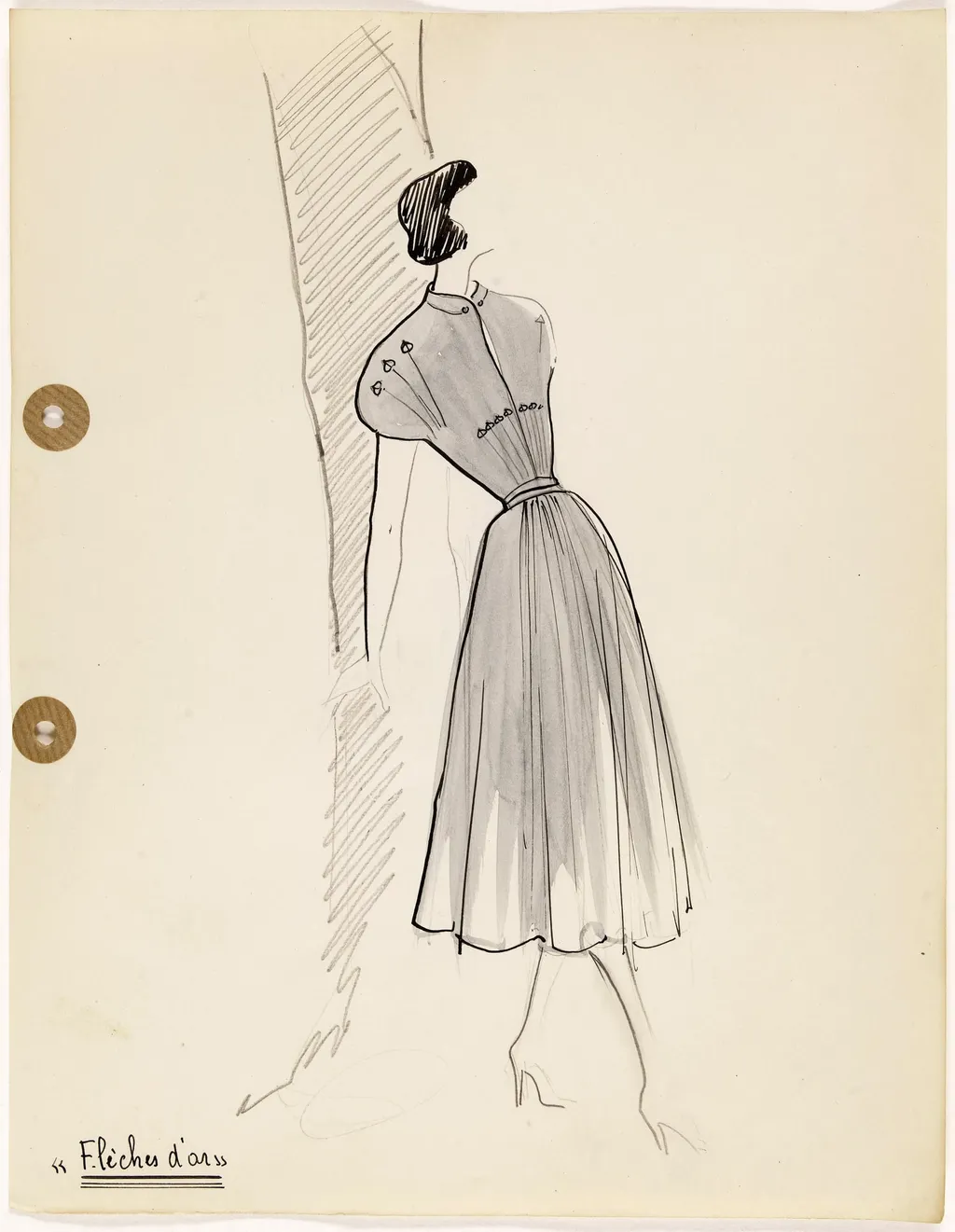
'Flèches d'or' is a drawing by Carven. It dates from 1949 and is held in the collection of the Palais Galliera - Musée de la Mode de la Ville de Paris.
About this work
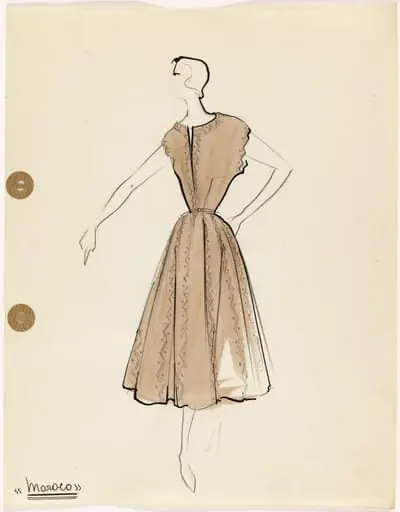
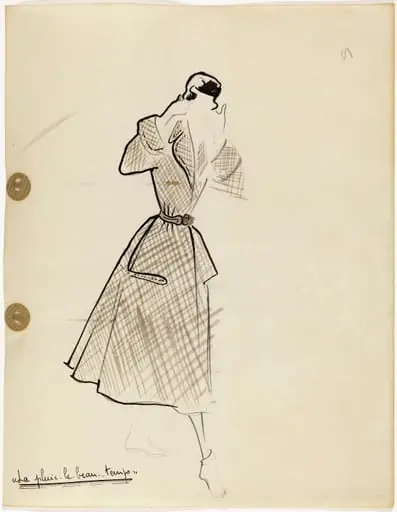
The woman's dark hair is styled in a neat updo, and she wears a dress with a high neckline and short sleeves.
This image presents a drawing of a woman in a dress, with her back turned towards the viewer. The woman's dark hair is styled in a neat updo, and she wears a dress with a high neckline and short sleeves. The dress features a decorative element on the right shoulder and a belt around the waist.
The woman stands with her left leg slightly bent, and her right arm is raised, with her hand resting on a vertical line that extends from the top of the image to the bottom. The background of the image is a plain beige color, with two small circular marks on the left side.
The drawing is titled "Flèches d'or" and was created by Carven in 1949. The artist's use of simple lines and minimal shading creates a sense of elegance and sophistication. To learn more about the artist's technique, explore the world of cross-hatching.
Overview
Flèches d'or is a 1949 drawing by Carven, currently housed at the Museum of Ethnography. The work depicts a woman in profile, distinguished by her poised posture and intricately detailed attire.
Subject & Meaning
The subject is a woman with her back to the viewer, conveying a sense of introspection or inaccessibility. Her formal, high-necked dress with decorative shoulder element and belted waist suggests a focus on elegance and restraint.
Technique & Style
Carven employs simple, precise lines and minimal shading, emphasizing clarity over depth. The plain beige background further accentuates the subject's contours, highlighting the artist's restraint in composition.
History & Provenance
Created in 1949 by Carven, the drawing is part of the Museum of Ethnography's collection, though its acquisition history and exhibition record are not detailed here.
Context
While specific contextual influences are not immediately apparent, the work's emphasis on fashion detail and poised femininity may reflect post-war European aesthetics, blending traditional formality with emerging modern sensibilities.
Legacy
The enduring significance of 'Flèches d'or' lies in its representation of late 1940s fashion aesthetics and its contribution to Carven's body of work, though its broader impact on art historical movements is not prominently defined.
Artist & collection
Artist
These delicate ink-on-paper drawings capture the quiet poetry of everyday things: pinecones, reeds, apples.
Museum
Palais Galliera - Musée de la Mode de la Ville de Paris
Continue through works from the same source collection.