Artwork
Froufrou
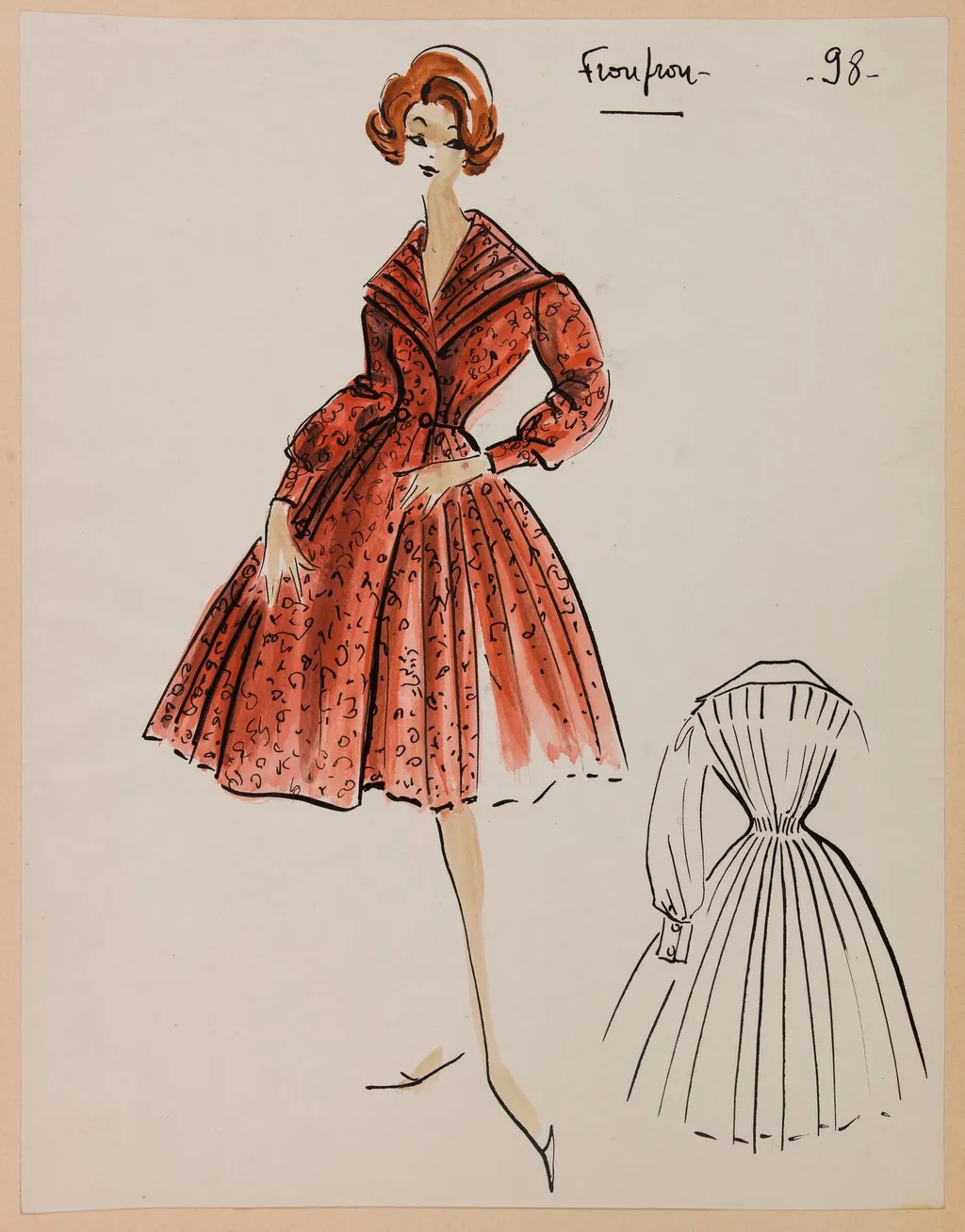
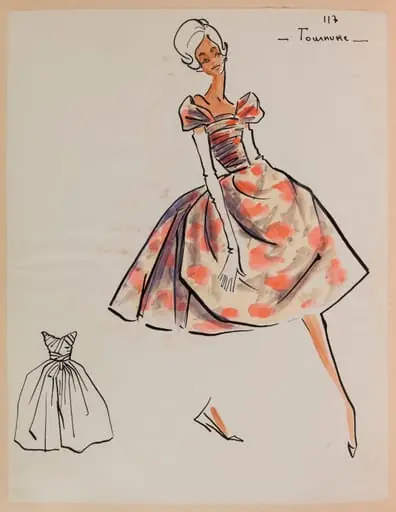
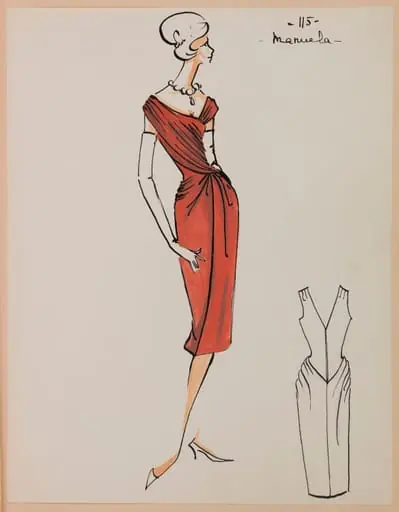
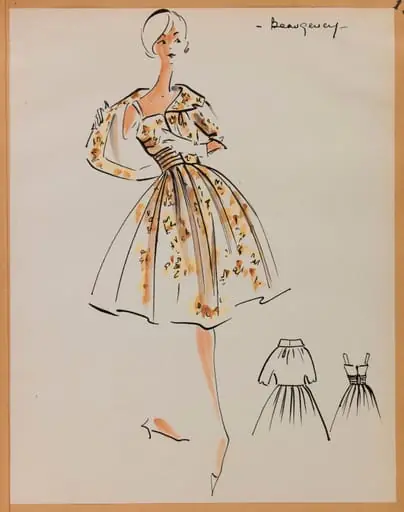
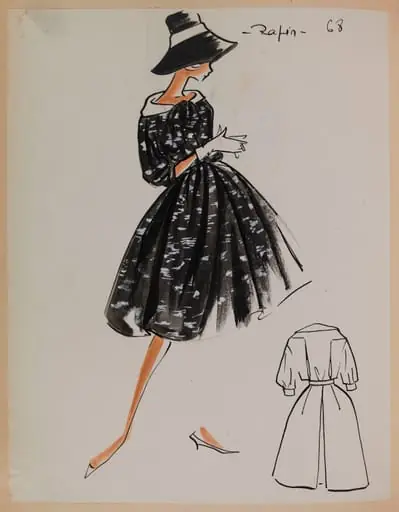
Froufrou is a drawing by Carven. It dates from 1958 and is held in the collection of the Palais Galliera - Musée de la Mode de la Ville de Paris.
About this work
Overview
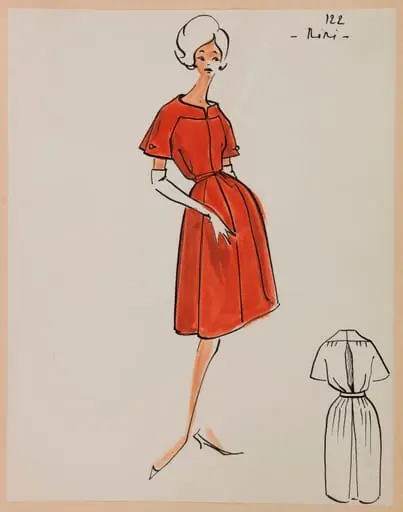
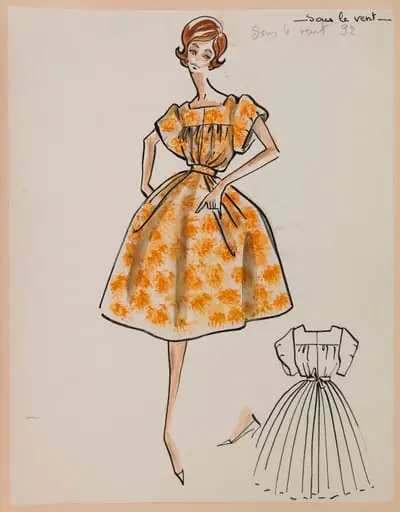
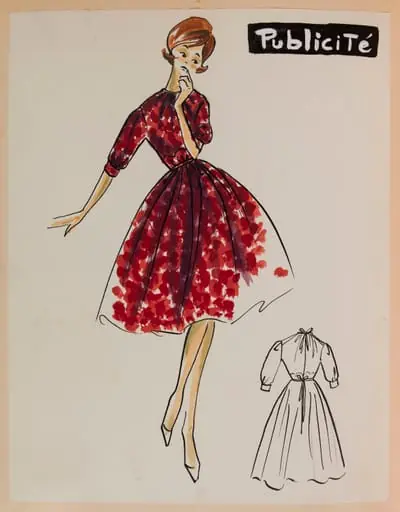
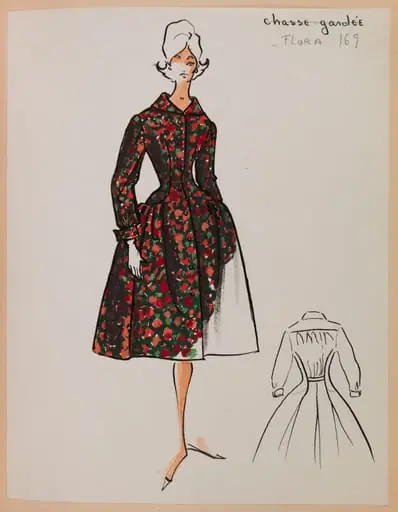
Executed in ink and pencil, it captures a woman in a voluminous dress with a defined waist and flared hem.
Froufrou is a circa 1958 fashion sketch by designer Carven, preserved in the Museum of Ethnography. Executed in ink and pencil, it captures a woman in a voluminous dress with a defined waist and flared hem. The drawing includes a secondary frontal view of the garment, emphasizing its silhouette. The title, inscribed in the corner, likely refers to the dress’s design or informal designation, reflecting the playful nomenclature common in mid-century fashion.
Subject & Meaning
The figure depicted stands with casual poise, one hand resting on her hip, suggesting confidence and ease. The dress, adorned with swirling black patterns on a warm reddish-brown ground, conveys movement and rhythm. The inclusion of a technical front view indicates an intent to document both aesthetic and structural qualities. The name 'Froufrou' evokes the rustle of fabric, aligning the garment with notions of feminine grace and auditory texture in fashion.
Technique & Style
The sketch employs loose, rapid brushwork and minimal pencil outlines, conveying spontaneity rather than polished finish. The fluidity of the lines suggests the artist worked quickly, capturing the essence of form over detail. The contrast between the expressive figure and the precise garment diagram reveals a dual focus: on the wearer’s presence and the garment’s construction. This blend of impressionistic and technical modes was typical of fashion illustrators of the era.
History & Provenance
Created around 1958, the drawing originated in Carven’s design studio and entered the Museum of Ethnography’s collection as part of a broader effort to preserve mid-century fashion artifacts. Its inclusion reflects institutional interest in everyday design practices rather than haute couture alone. The sketch’s informal quality and handwritten label suggest it was a working document, later recognized for its cultural significance.
Context
In late 1950s Paris, fashion illustration served as both creative tool and commercial record. Designers like Carven used such sketches to communicate ideas to ateliers and clients. The emphasis on silhouette and fabric movement aligns with postwar trends favoring structured yet fluid silhouettes. The term 'froufrou,' used colloquially to describe ornate, rustling fabrics, reveals how language shaped aesthetic perception in ready-to-wear culture.
Legacy
Froufrou endures as an example of how fashion sketches functioned beyond mere representation—they documented design intent, cultural language, and the rhythm of daily style. Its preservation in an ethnographic context underscores the value placed on vernacular fashion artifacts. The work contributes to understanding how designers translated tactile experiences into visual form during a period of rapid change in women’s clothing.
Artist & collection
Artist
These delicate ink-on-paper drawings capture the quiet poetry of everyday things: pinecones, reeds, apples.
Museum
Palais Galliera - Musée de la Mode de la Ville de Paris
Continue through works from the same source collection.