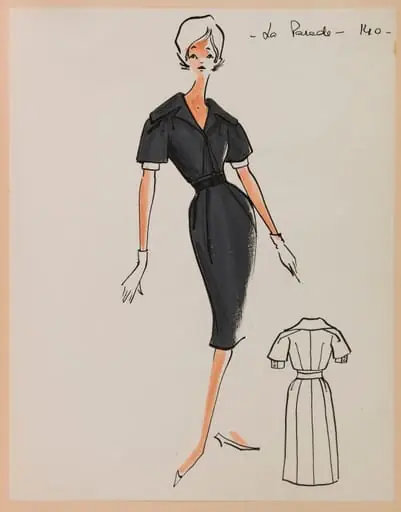
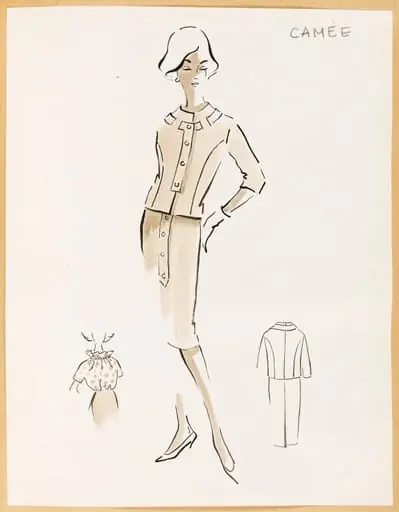
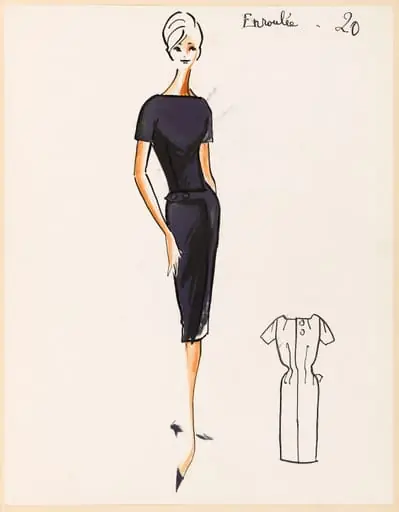
Artwork
Gageure
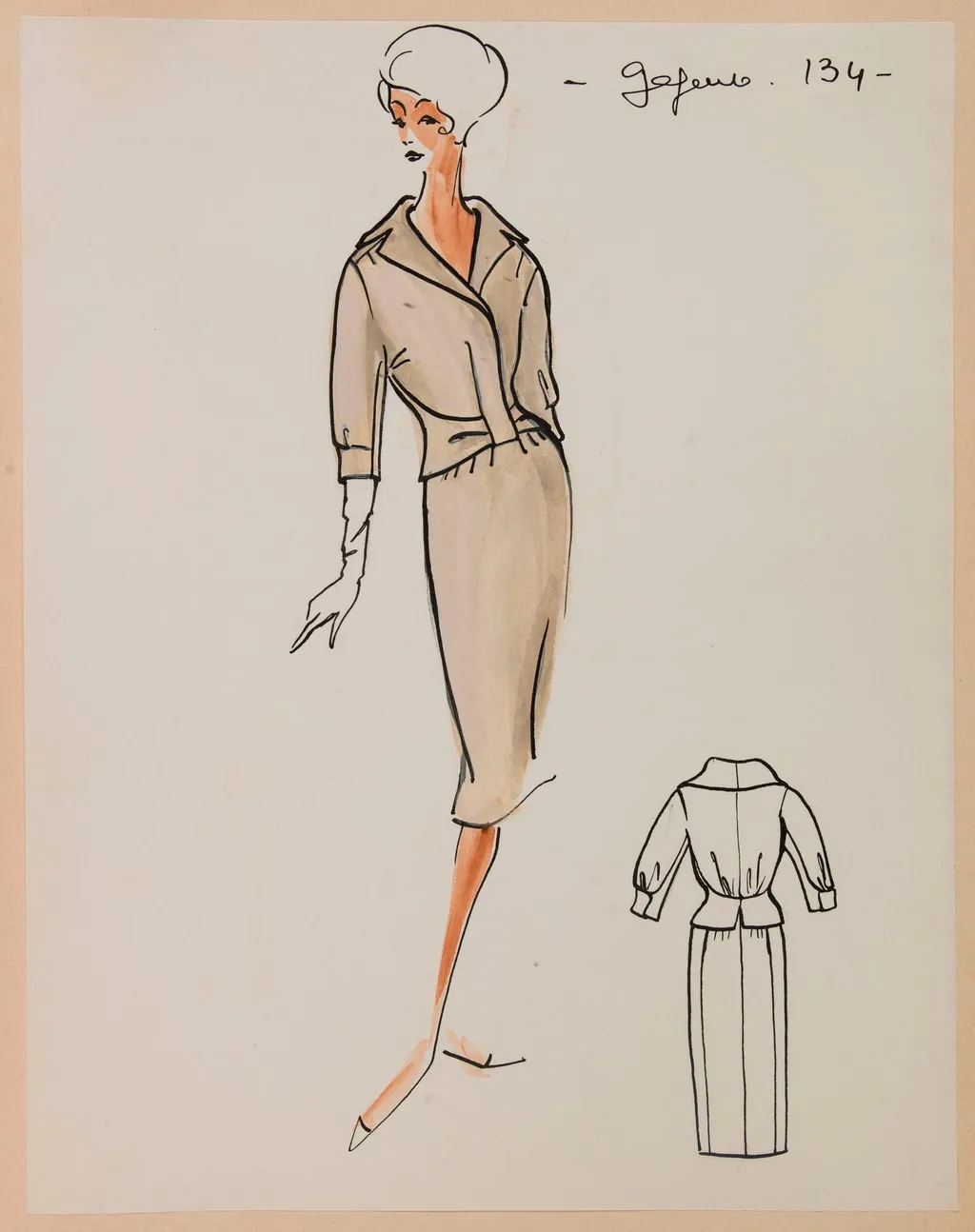
Gageure is a drawing by Carven. It dates from 1958 and is held in the collection of the Palais Galliera - Musée de la Mode de la Ville de Paris.
About this work
Overview
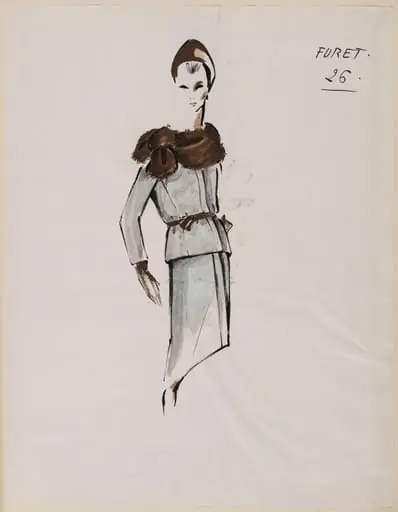
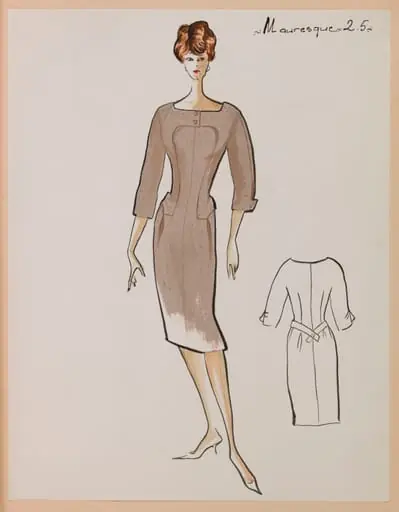
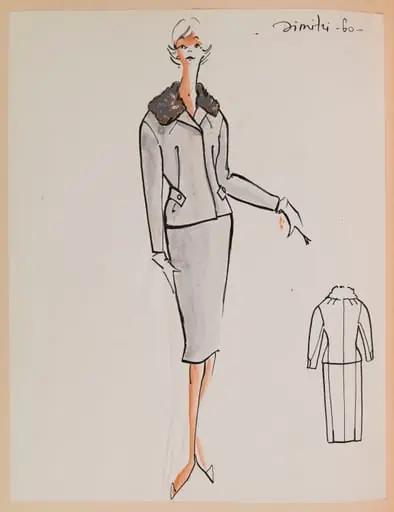
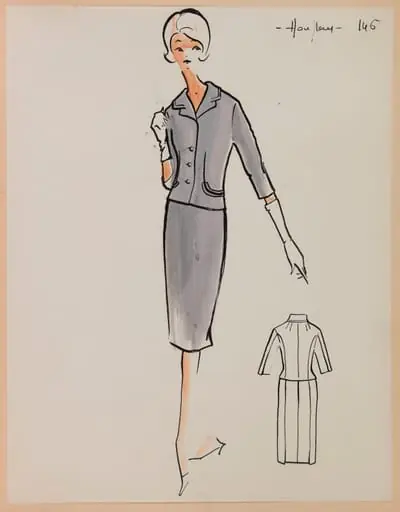
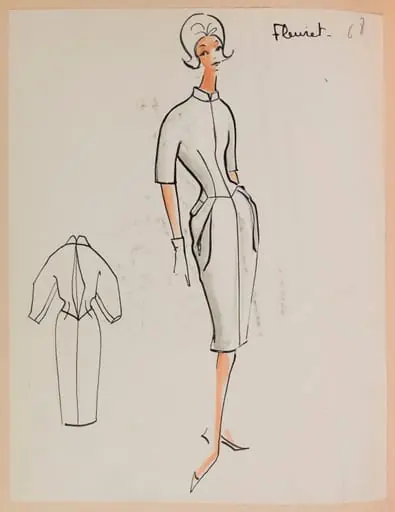
Gageure, attributed to the French fashion house Carven and dated to around 1958, is a modestly sized drawing preserved in the Museum of Ethnography. The work records a single female figure dressed in a coordinated ensemble of a light gray‑beige knee‑length dress and matching jacket, rendered in a quick, gestural style.
Subject & Meaning
The figure is presented in a poised stance, one hand placed on the hip and the other relaxed at her side, suggesting a casual confidence typical of mid‑century women’s attire. The simplicity of the outfit—straight dress, pointed‑collar jacket, three front buttons—reflects the era’s shift toward streamlined, functional elegance in everyday wear.
Technique & Style
Carven employs a loose, sketch‑like line that leaves portions of the paper untouched, allowing the viewer to infer folds and shadows rather than delineate them fully. A secondary, smaller sketch of the same costume from the back appears in the corner, offering a complementary view and emphasizing the designer’s interest in the garment’s full construction.
History & Provenance
Created circa 1958, the drawing entered the Museum of Ethnography’s collection at an unspecified date, where it remains part of the institution’s holdings on fashion and material culture. Its preservation alongside ethnographic objects underscores the museum’s broader interest in clothing as a cultural artifact.
Context
The late 1950s marked a period of transition in women’s fashion, moving away from the highly structured silhouettes of the post‑war years toward more relaxed, ready‑to‑wear designs. Carven, known for accessible elegance, contributed to this trend, and the sketch exemplifies the brand’s approach to everyday sophistication.
Artist & collection
Artist
These delicate ink-on-paper drawings capture the quiet poetry of everyday things: pinecones, reeds, apples.

Museum
Palais Galliera - Musée de la Mode de la Ville de Paris
Continue through works from the same source collection.