Artwork
Enroulée
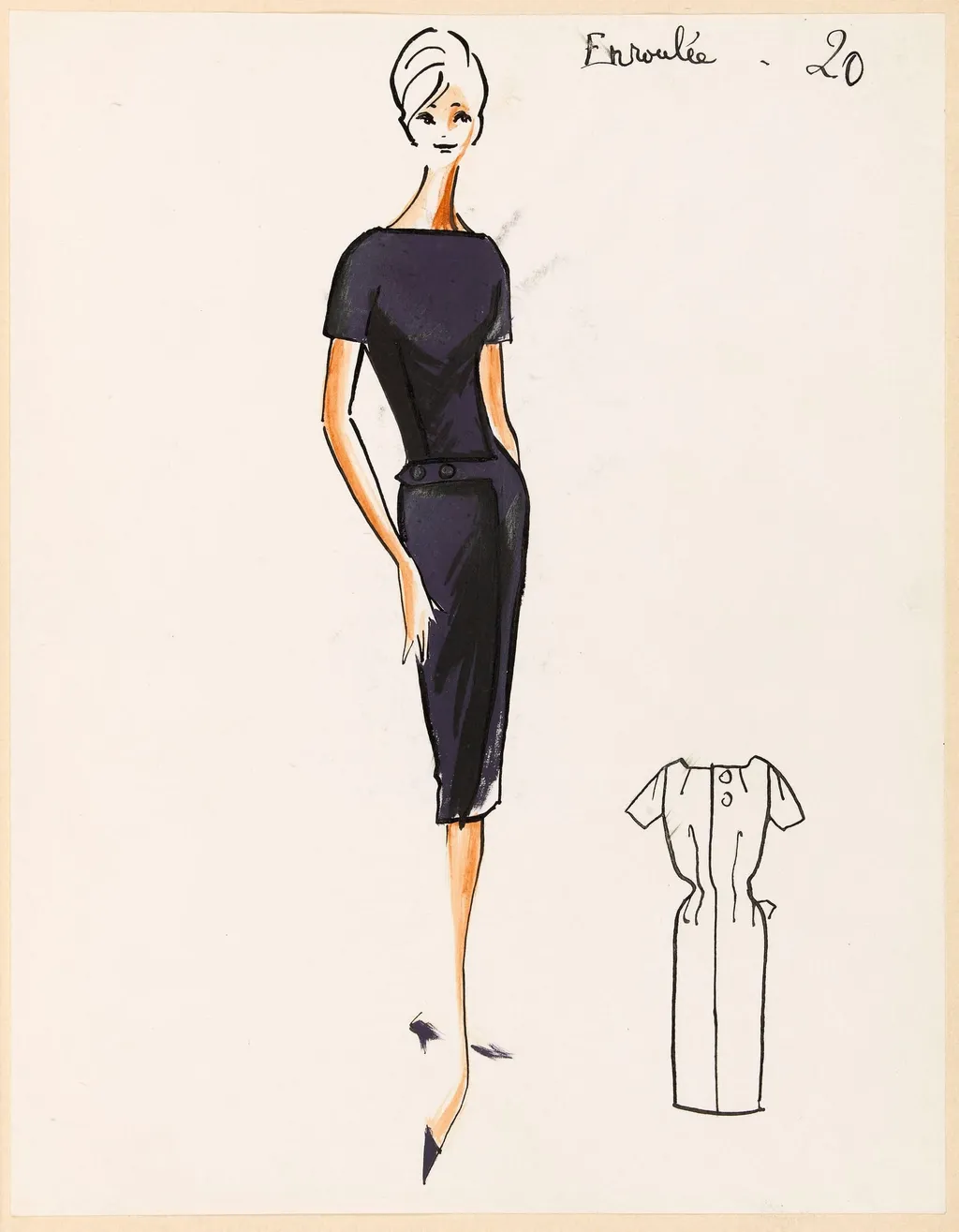
Enroulée is a drawing by Marie-Louise Carven. It dates from 1959 and is held in the collection of the Palais Galliera - Musée de la Mode de la Ville de Paris.
About this work
Overview
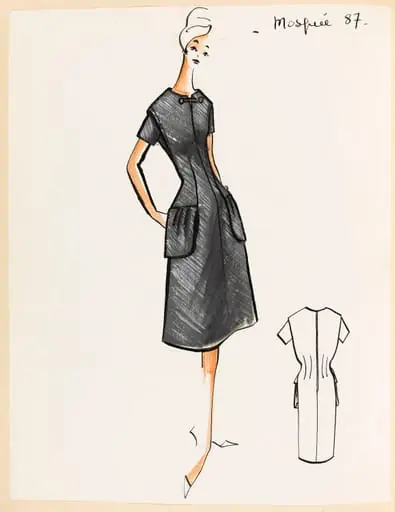
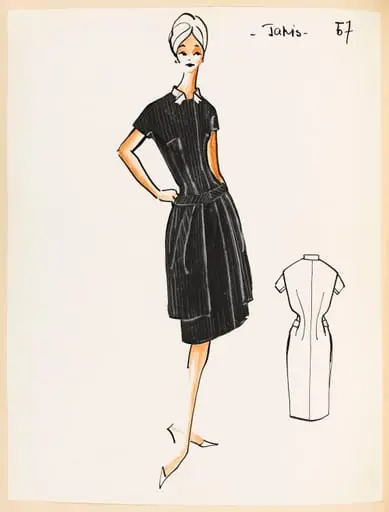
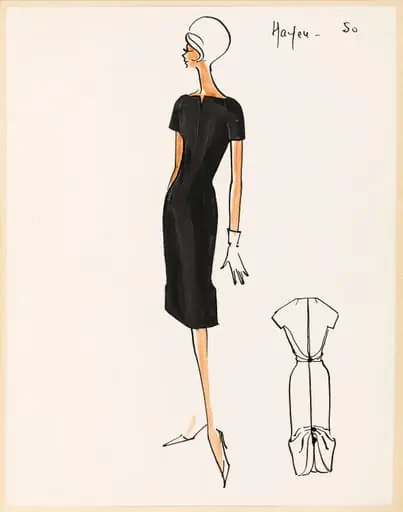
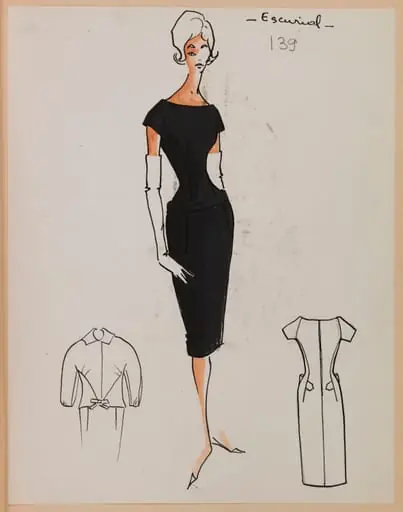
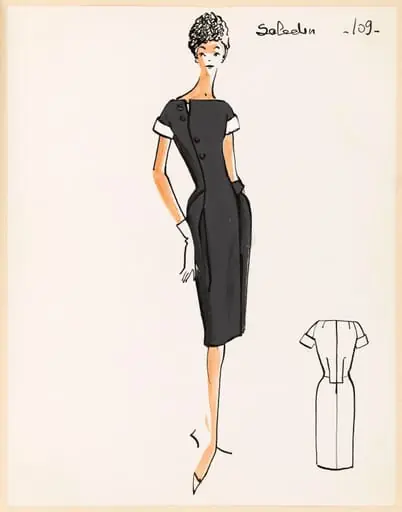
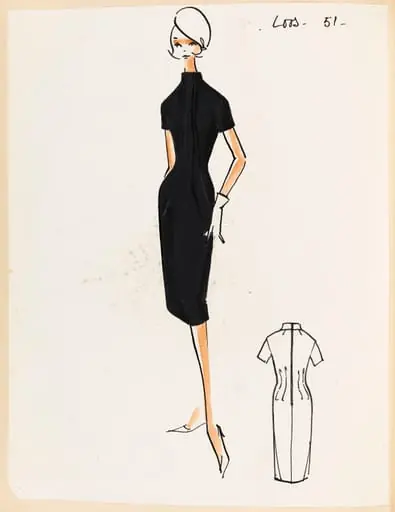
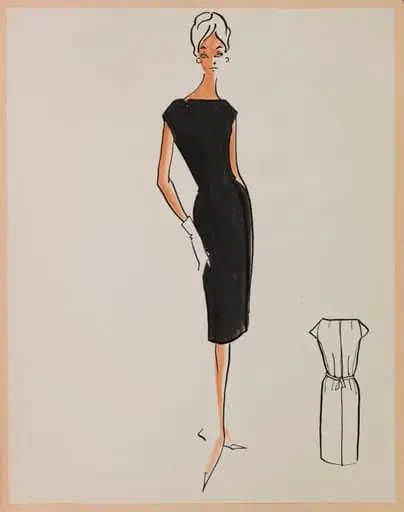
Created around 1959, *Enroulée* is a pencil sketch by French designer Marie-Louise Carven, capturing a simple black dress with short sleeves and a straight hem.
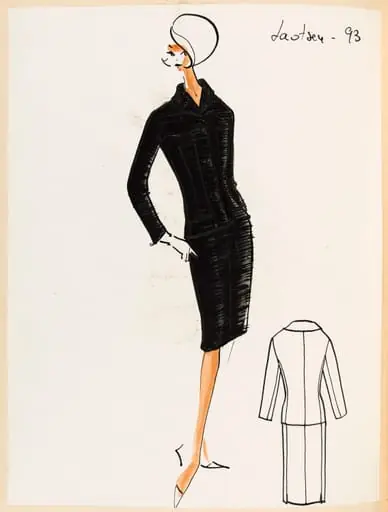
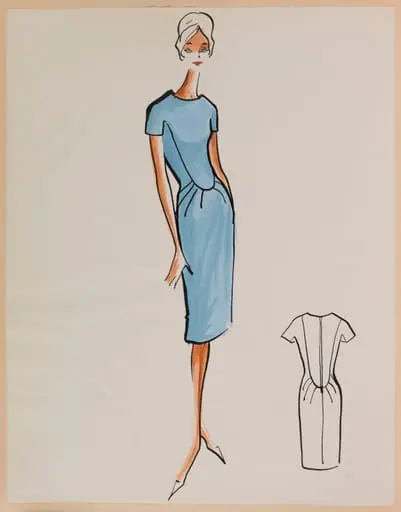
Created around 1959, *Enroulée* is a pencil sketch by French designer Marie-Louise Carven, capturing a simple black dress with short sleeves and a straight hem. The drawing emphasizes form over detail, rendered in loose, economical lines. It reflects Carven’s focus on wearable, tailored garments for smaller frames and was likely a preparatory study for a garment in her emerging prêt-à-porter line, which she pioneered in the postwar era.
Subject & Meaning
The figure in the sketch stands calmly, dressed in a snug, wrap-style dress that suggests movement through its smooth contours. The title *Enroulée*, meaning 'wrapped' or 'twisted,' points to the garment’s construction, likely featuring a front-buttoned closure that allows the fabric to drape or fold around the body. The restrained posture and neat hairstyle reinforce an aesthetic of quiet elegance, aligning with Carven’s philosophy of understated sophistication.
Technique & Style
Carven’s sketch employs minimal linework to suggest volume and structure, avoiding ornamental detail. The back view of the dress, drawn separately to the right, functions as a technical annotation, clarifying the garment’s closure system. The loose, rapid execution indicates it was a working drawing, prioritizing clarity and proportion over finish. This approach reflects the practical needs of design development in a rapidly evolving fashion industry.
History & Provenance
The sketch resides in the collection of the Museum of Ethnography, a rare institutional home for fashion design studies. Carven founded her eponymous house in 1945 and was among the first French couturiers to transition into ready-to-wear, making her work historically significant. While the sketch’s exact origin within her studio is undocumented, its preservation suggests recognition of its role in documenting mid-century design practices.
Context
In the late 1950s, Parisian fashion was shifting from exclusive haute couture toward accessible, mass-produced clothing. Carven’s designs responded to changing lifestyles and economic realities, favoring simplicity and fit over ornamentation. *Enroulée* embodies this transition, reflecting a broader cultural move toward practicality and modernity in women’s attire, particularly for urban, working women.
Legacy
Carven’s emphasis on tailored, petite-friendly designs influenced later generations of designers who prioritized inclusivity and wearability. Though *Enroulée* is a modest sketch, it represents a pivotal moment in fashion history: the legitimization of ready-to-wear as a serious design discipline. Its preservation in a museum context underscores its value as a document of industrial and aesthetic change in postwar Europe.
Artist & collection
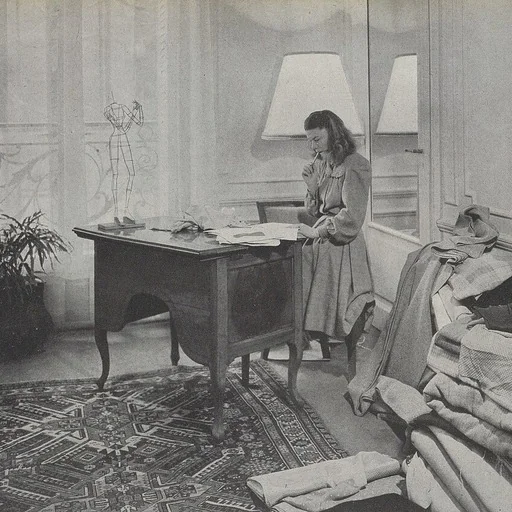
Artist
Marie-Louise Carven (31 August 1909 – 8 June 2015), born Carmen de Tommaso, was a French fashion designer who founded the house of Carven in 1945.
Museum
Palais Galliera - Musée de la Mode de la Ville de Paris
Continue through works from the same source collection.
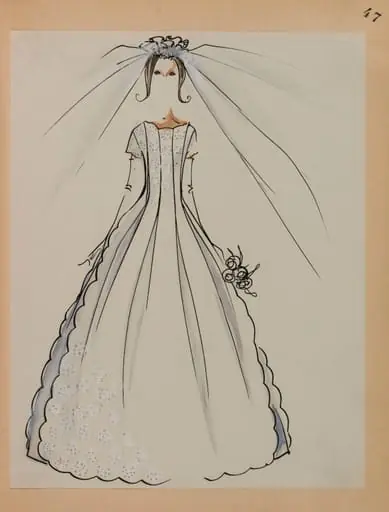 Robe de mariée festonnée et son voile
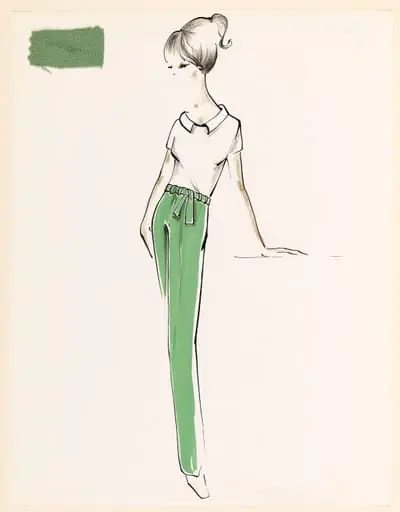 Haut blanc à manches courtes et pantalon vert à ceinture nouée
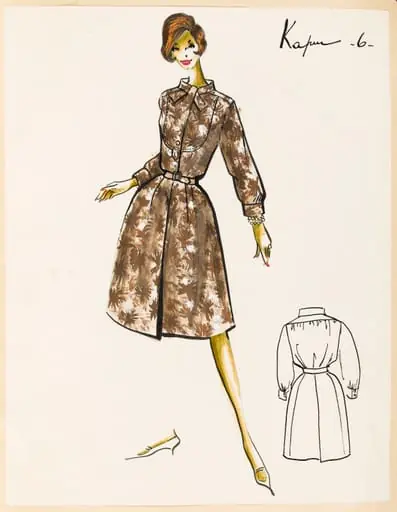 Kapur
Kapur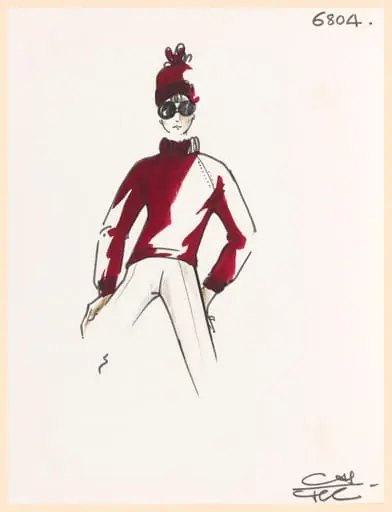 Pull-over à manches longues pourpre, bonnet assorti, pantalon et lunettes de soleil
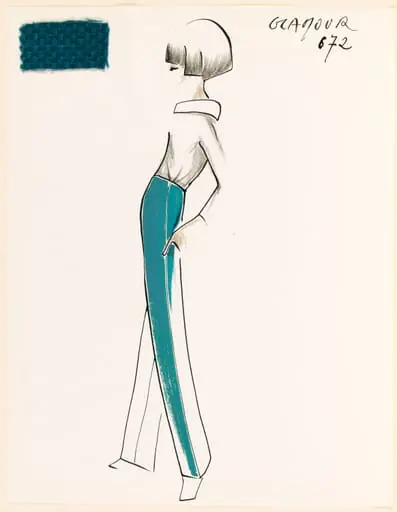 GLAMOUR
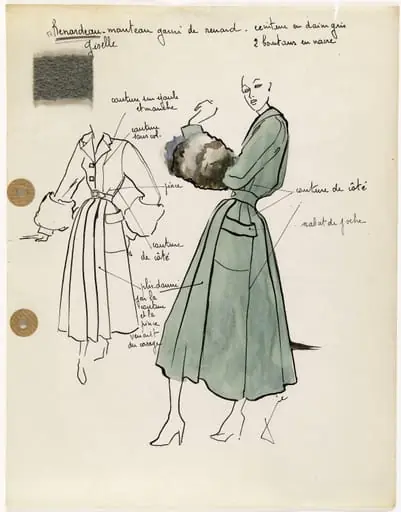 'Renardeau'
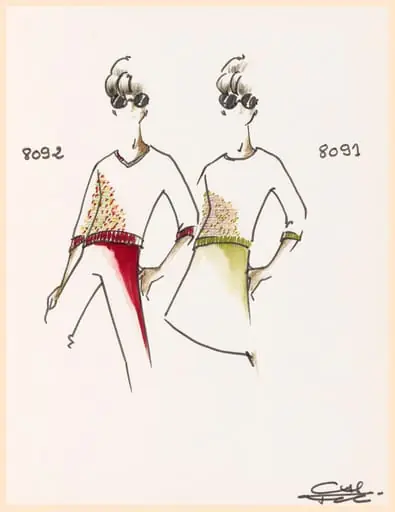 Pull-over à manches trois quarts et à encolure V à motifs multicolores, pantalon cerise et lunettes de soleil
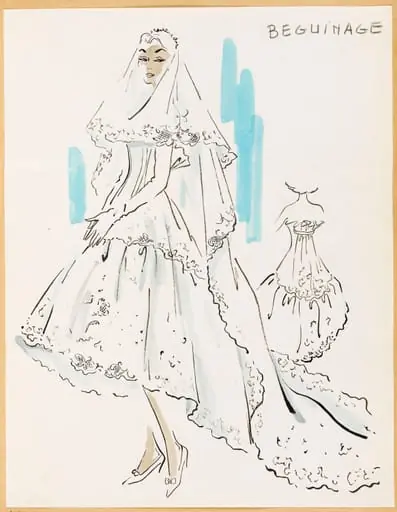 Béguinage