Artwork
Guimpe
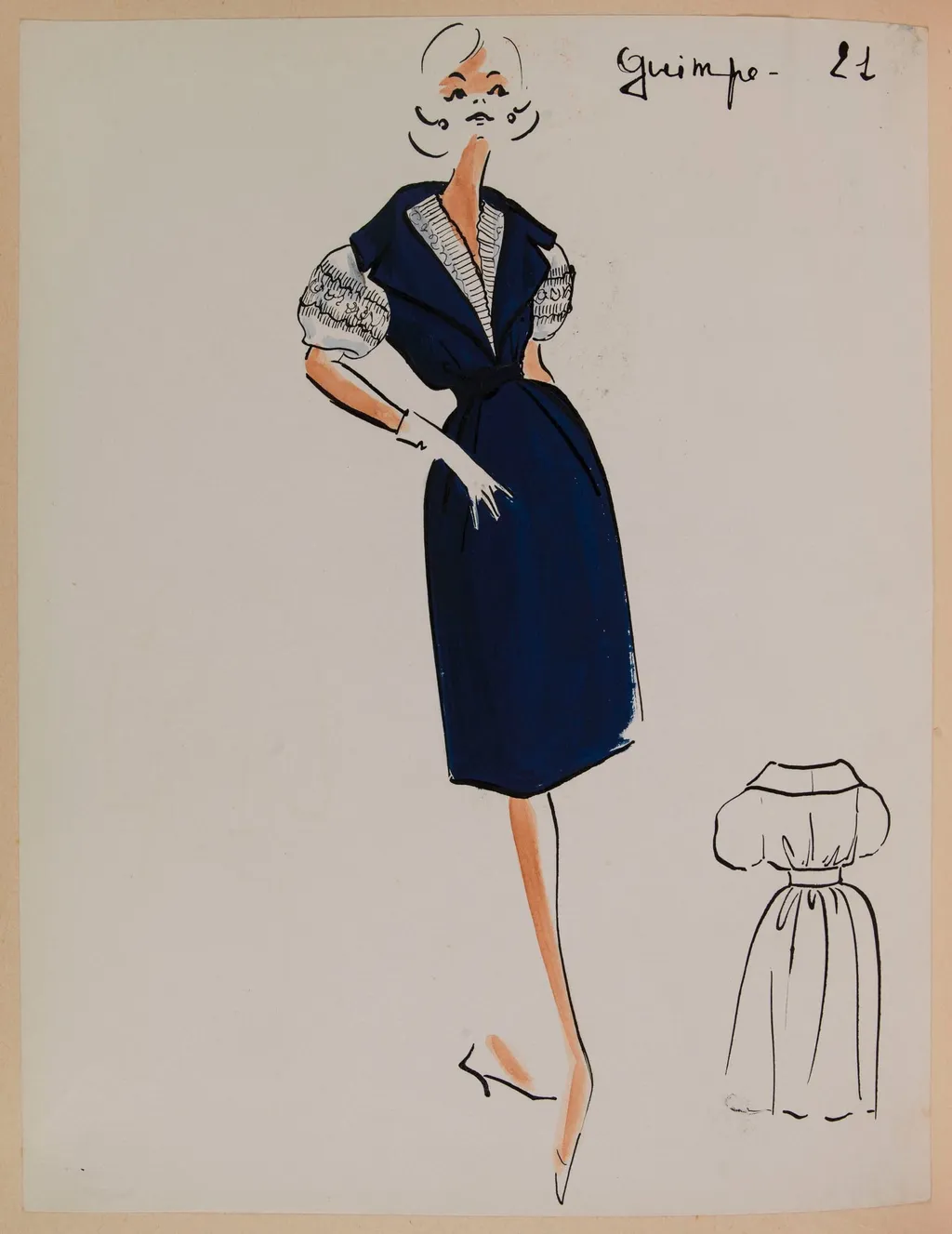
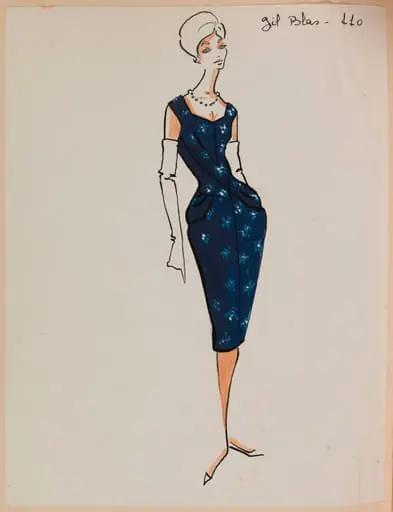
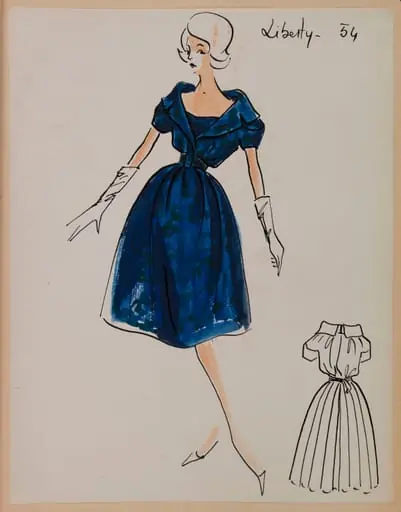
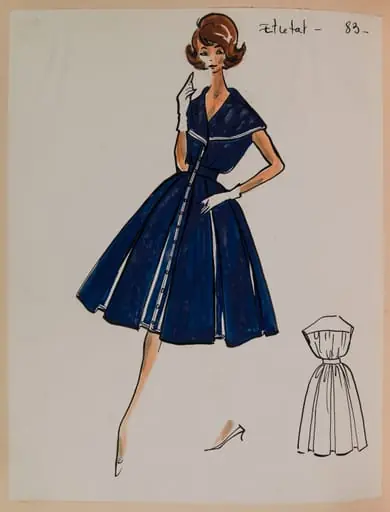
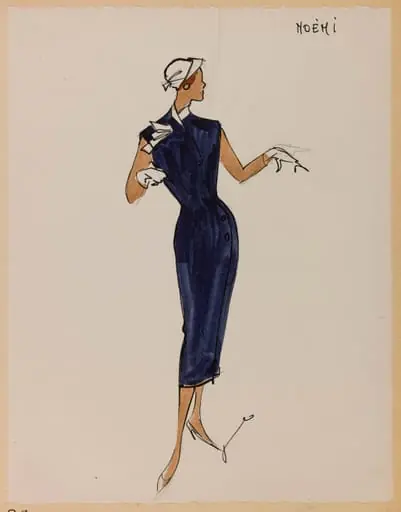
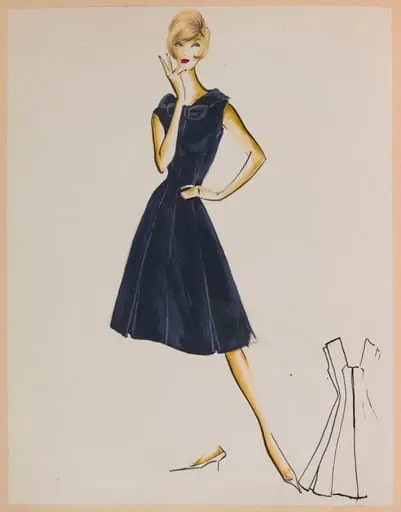
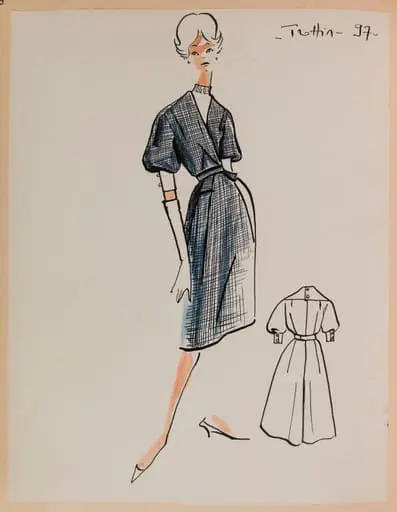
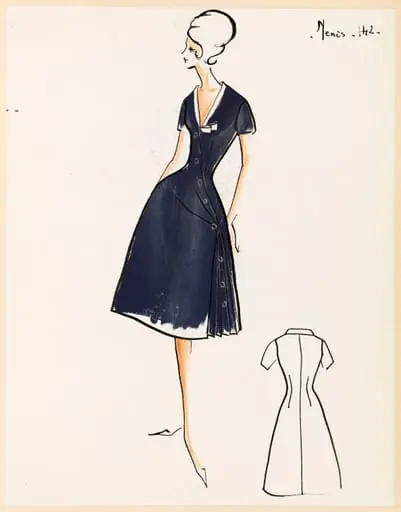
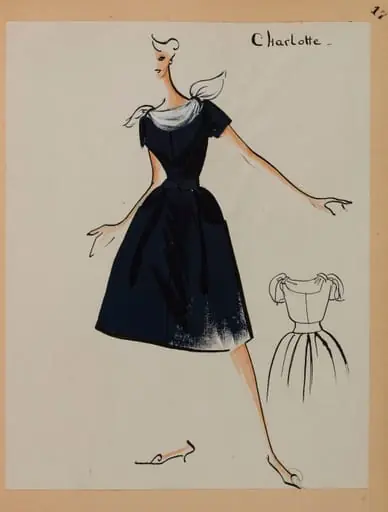
Guimpe is a drawing by Carven. It dates from 1958 and is held in the collection of the Palais Galliera - Musée de la Mode de la Ville de Paris.
About this work
Overview
Created around 1958 by the French fashion house Carven, this ink drawing captures a woman’s attire with restrained precision. Executed in monochrome, the piece focuses on the silhouette and textile details of a mid-century ensemble. It resides in the collection of the Museum of Ethnography, where it functions as a record of postwar French fashion design rather than a standalone fine art object.
Subject & Meaning
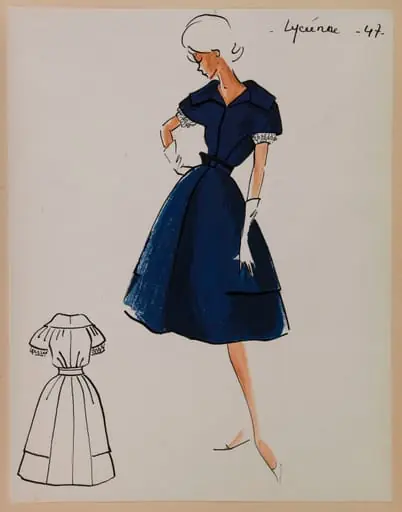
White gloves and heels suggest formality, while the bob hairstyle reflects 1950s urban style.
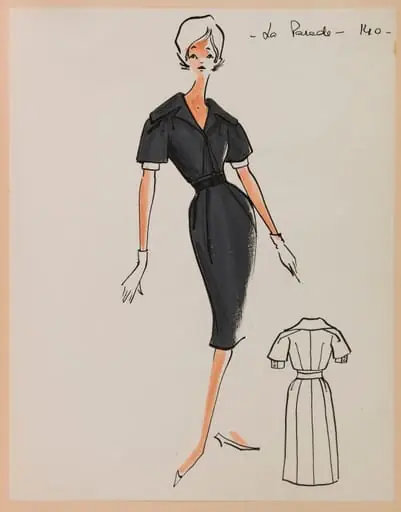
The figure wears a knee-length dress in dark blue, featuring a V-neck, puffed sleeves, and a white lace collar — elements typical of Carven’s refined, feminine aesthetic of the era. White gloves and heels suggest formality, while the bob hairstyle reflects 1950s urban style. The supplementary sketch of the dress’s back reveals an interest in construction, indicating the drawing’s role as both fashion illustration and design documentation.
Technique & Style
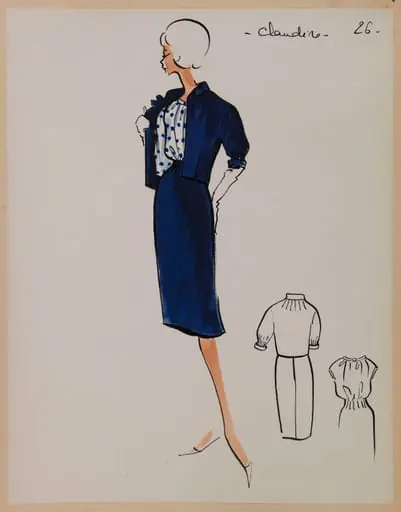
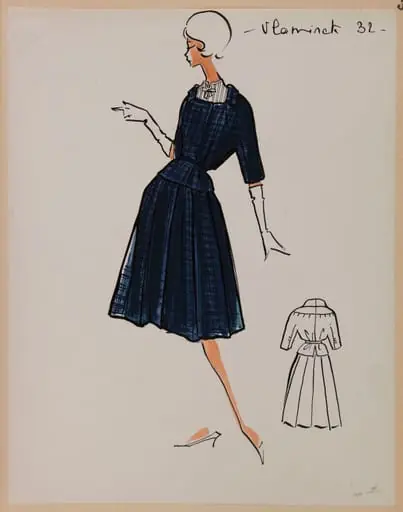
The drawing employs clean, linear ink strokes with minimal shading, emphasizing form over texture. The contrast between the dark blue garment and the white lace and accessories creates visual clarity. Details are selectively rendered — facial features are omitted, and the background is empty — allowing the clothing to dominate the composition. This economy of line reflects the functional purpose of fashion sketches in design studios.
History & Provenance
The work originated in Carven’s design atelier during the late 1950s, likely used internally to communicate garment details to tailors or clients. It entered the Museum of Ethnography’s collection as part of a broader effort to preserve everyday fashion as cultural artifact. Its journey from studio to museum underscores a shift in how fashion was valued as material culture rather than merely commercial product.
Context
In postwar France, fashion houses like Carven emphasized elegance and accessibility, responding to a growing middle-class market. This drawing aligns with the era’s emphasis on structured yet wearable silhouettes. Unlike haute couture sketches intended for elite clients, this piece suggests a more democratic approach to design, reflecting the brand’s identity as a purveyor of chic, attainable style.
Legacy
As a preserved example of mid-century fashion drafting, the drawing contributes to scholarly understanding of how design was communicated before digital tools. Its presence in an ethnographic museum signals recognition of fashion as a cultural practice. While not widely exhibited, it remains a quiet testament to the craftsmanship and visual language of a significant French label of its time.
Artist & collection
Artist
These delicate ink-on-paper drawings capture the quiet poetry of everyday things: pinecones, reeds, apples.

Museum
Palais Galliera - Musée de la Mode de la Ville de Paris
Continue through works from the same source collection.