Artwork
Grand duc
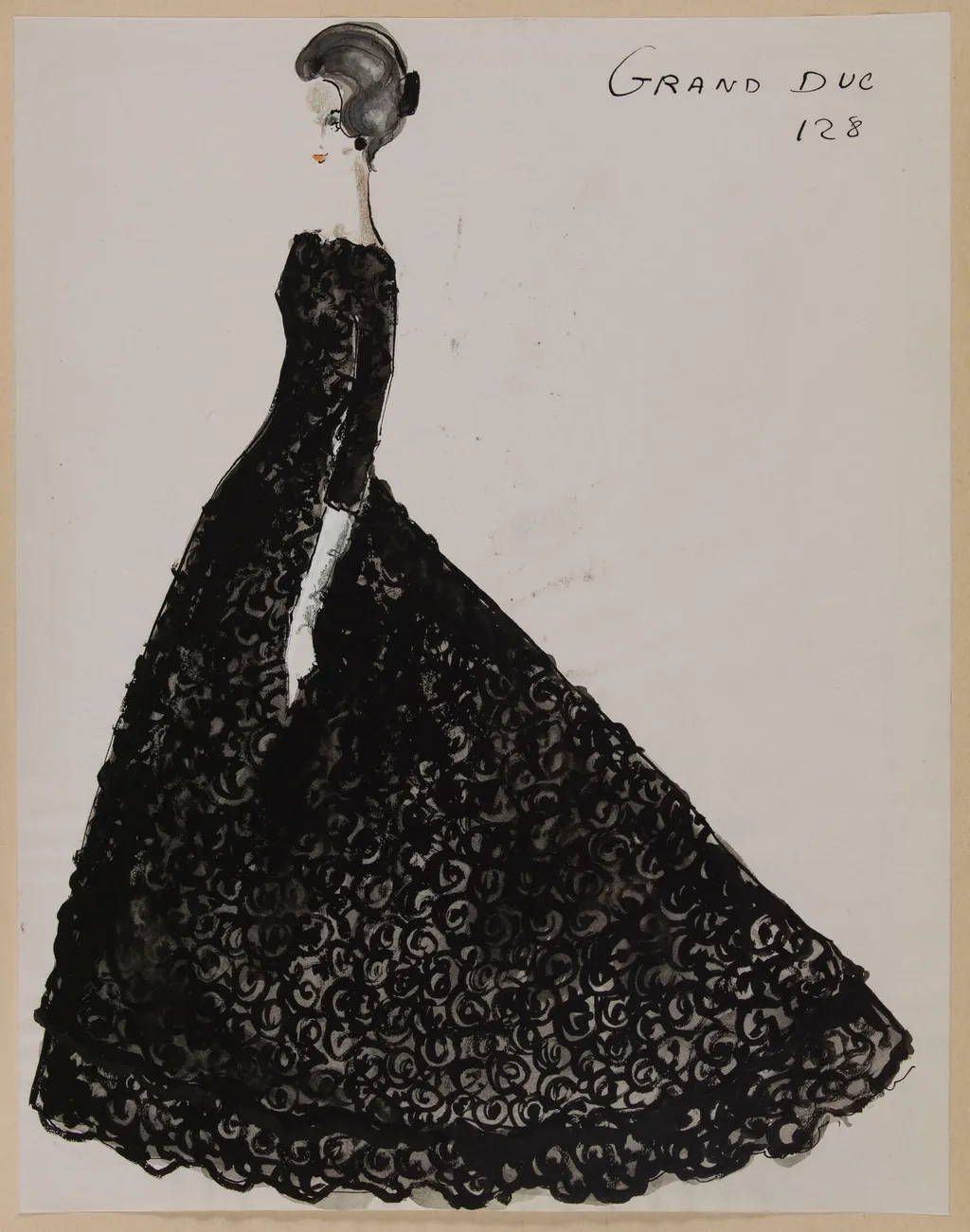
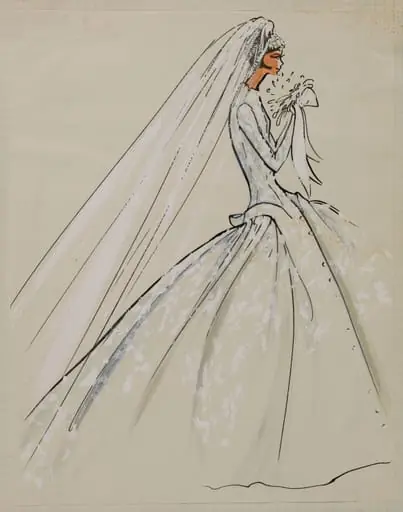
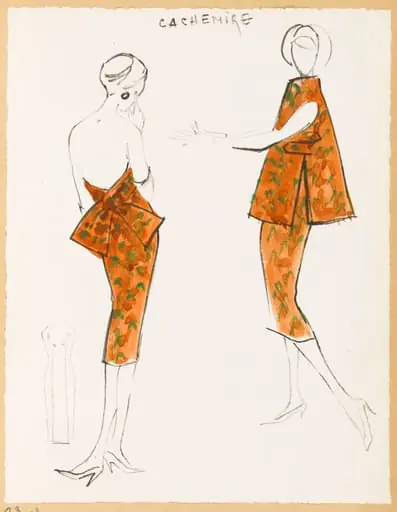
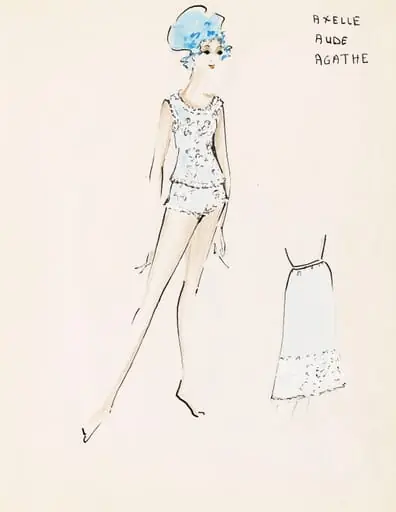
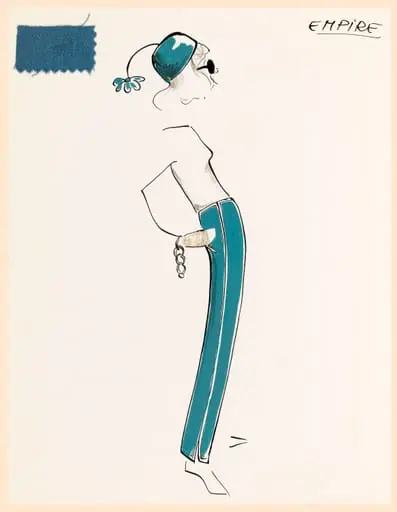
Grand duc is a drawing by Carven. It dates from 1960 and is held in the collection of the Palais Galliera - Musée de la Mode de la Ville de Paris.
About this work
The woman's attire suggests a formal or elegant occasion, and the style of the drawing is reminiscent of fashion illustrations from the early 20th century.
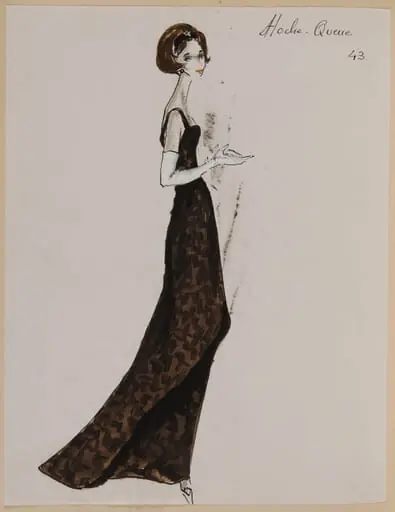
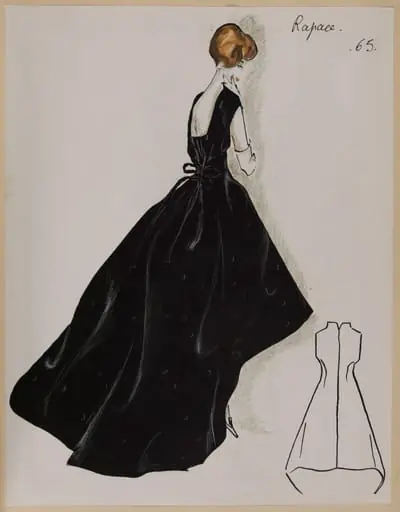
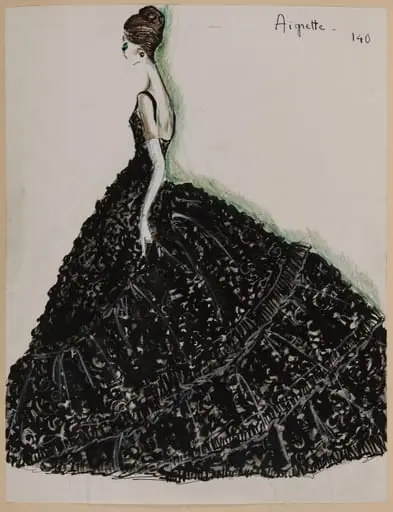
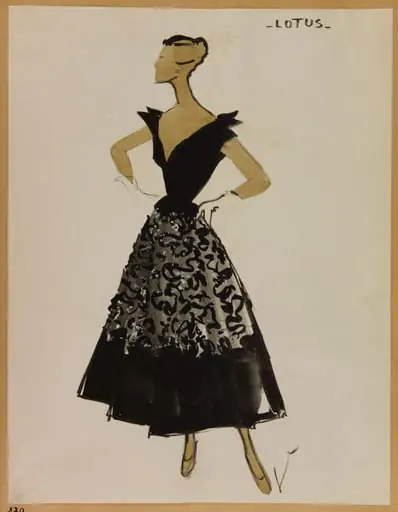
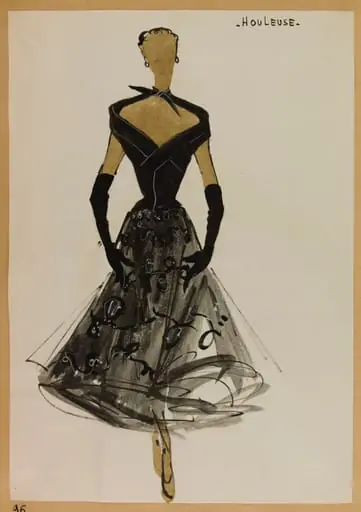
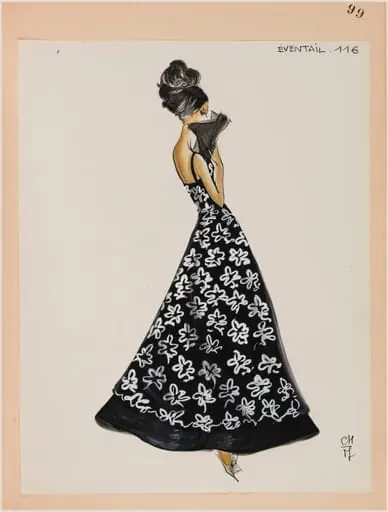
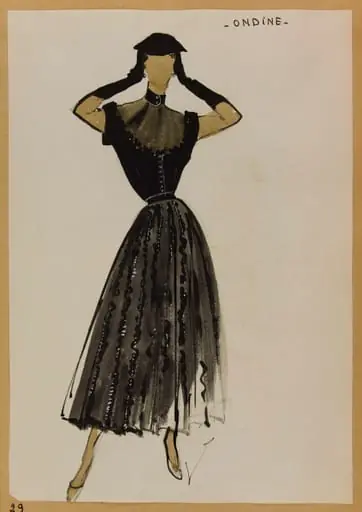
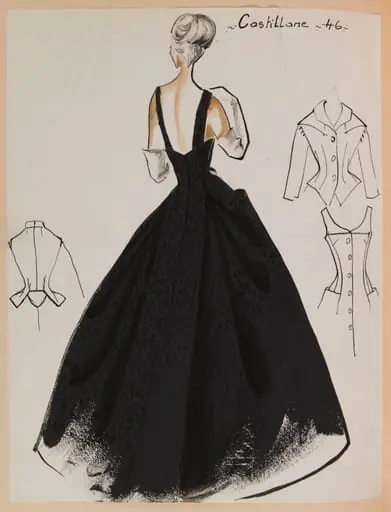
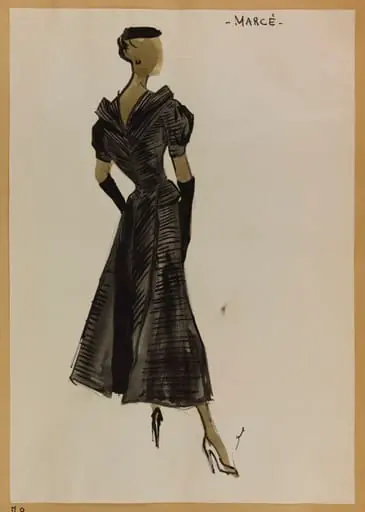
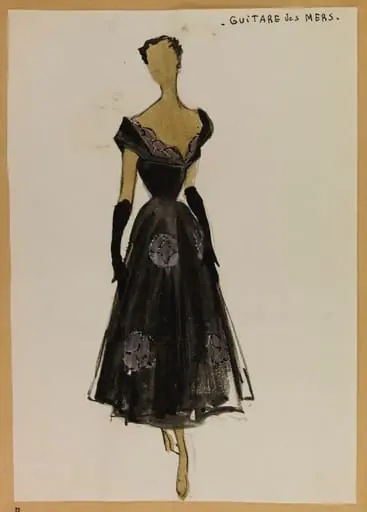
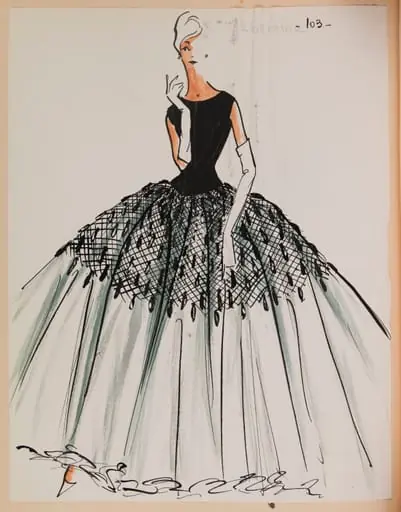
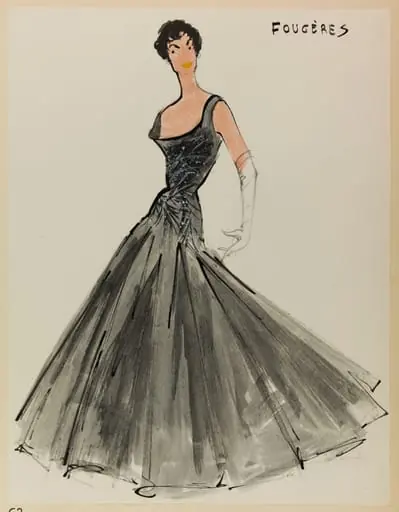
This drawing features a woman in a long, dark dress with a full skirt and a high neckline. The dress is adorned with a pattern of swirls and curls, and the woman's hair is styled in an updo. Her face is turned to the side, and she appears to be wearing a hat or headpiece.
The woman's attire suggests a formal or elegant occasion, and the style of the drawing is reminiscent of fashion illustrations from the early 20th century. The use of bold lines and expressive brushstrokes adds a sense of energy and movement to the piece.
To learn more about the artist's technique, explore the world of cross-hatching.
Overview
Grand duc is a drawing attributed to the designer Carven, dated around 1960. It resides in the collection of the Museum of Ethnography. The work presents a stylized female figure in formal attire, rendered with dynamic linework and a sense of rhythmic motion. Though labeled as an image, its execution suggests a fashion study rather than a fine art piece, reflecting the designer’s engagement with silhouette and ornament.
Subject & Meaning
The figure depicts a woman in an elegant, high-necked dress with a voluminous skirt, adorned in swirling decorative patterns. Her updo and headpiece imply a ceremonial or refined social context. The profile view and restrained facial expression emphasize posture and garment over individual identity, aligning with fashion illustration traditions that prioritize attire as a cultural signifier rather than psychological depth.
Technique & Style
Carven employs bold, fluid brushstrokes and confident contours to define the dress’s form and pattern. The swirling motifs on the fabric are rendered with rhythmic repetition, suggesting movement and texture. The drawing’s energy comes from expressive line work rather than shading or color, evoking the immediacy of fashion sketches. Cross-hatching is subtly used to suggest volume, particularly in the folds of the skirt.
History & Provenance
The drawing entered the Museum of Ethnography’s collection in the late 20th century, likely as part of a broader acquisition of fashion-related materials. Its attribution to Carven is based on stylistic parallels with known designs from the designer’s mid-century work. No documentation of its original commission or exhibition history survives, suggesting it may have been a preparatory study or personal sketch.
Context
Created during a period when haute couture houses emphasized distinctive silhouettes and handcrafted detail, Grand duc reflects the influence of early 20th-century fashion illustration. Its emphasis on pattern and form aligns with postwar European design sensibilities, where elegance was conveyed through structure rather than ornamentation. The work sits at the intersection of commercial fashion and ethnographic documentation of dress as cultural artifact.
Legacy
Though not widely exhibited, Grand duc contributes to the understanding of Carven’s approach to textile design and figure representation. It exemplifies how fashion sketches functioned as both creative tools and records of aesthetic values. In the context of the Museum of Ethnography, it serves as a material trace of mid-century French fashion’s relationship to identity, form, and tradition.
Artist & collection
Artist
These delicate ink-on-paper drawings capture the quiet poetry of everyday things: pinecones, reeds, apples.
Museum
Palais Galliera - Musée de la Mode de la Ville de Paris
Continue through works from the same source collection.