Artwork
Castillane
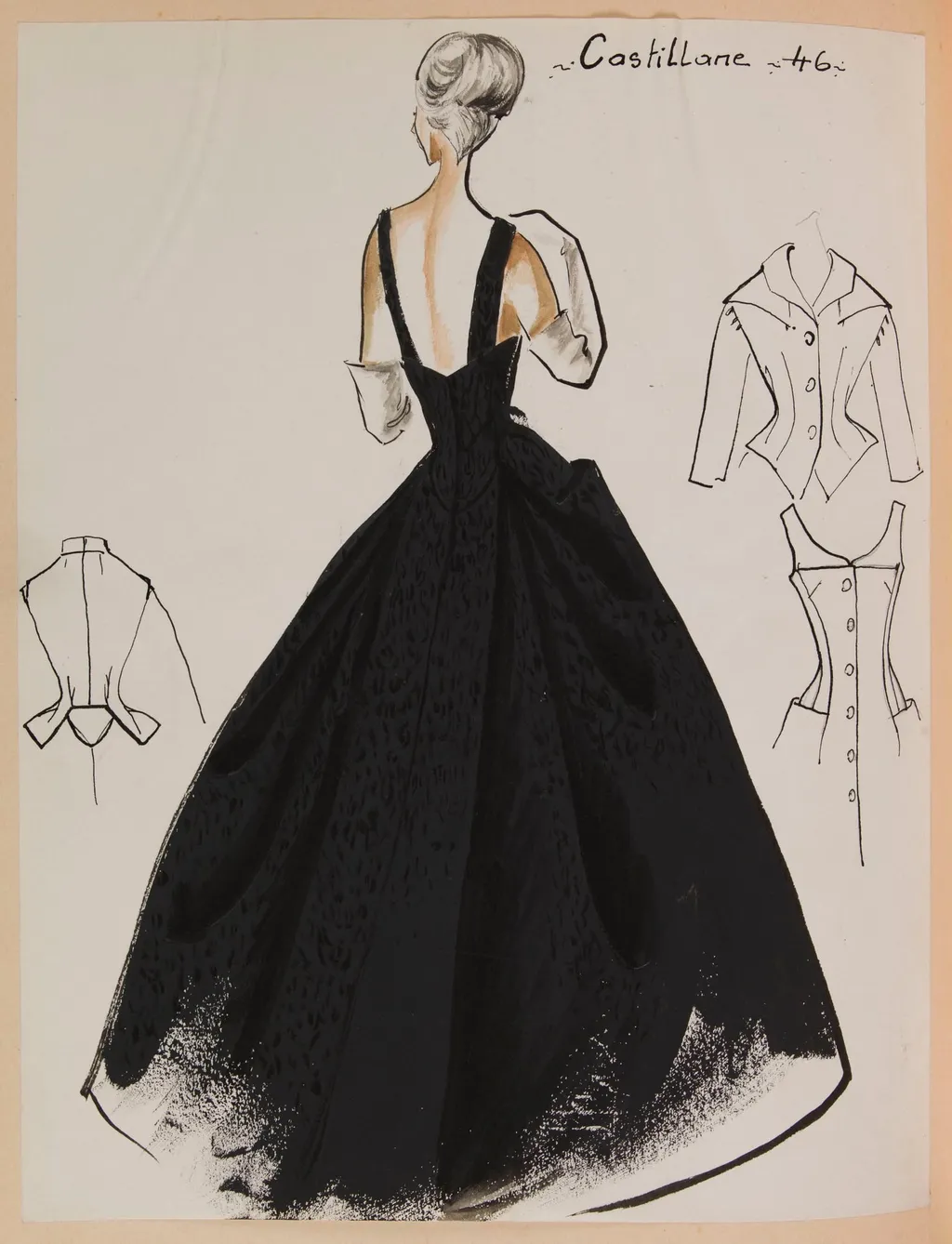
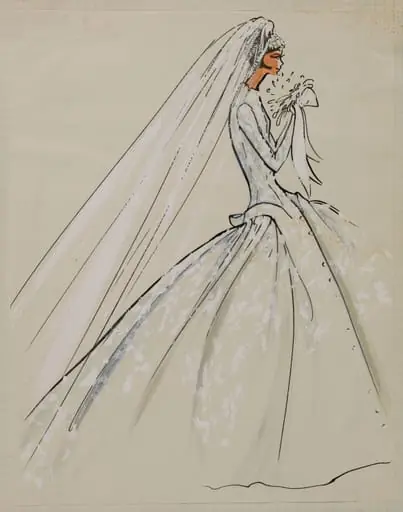
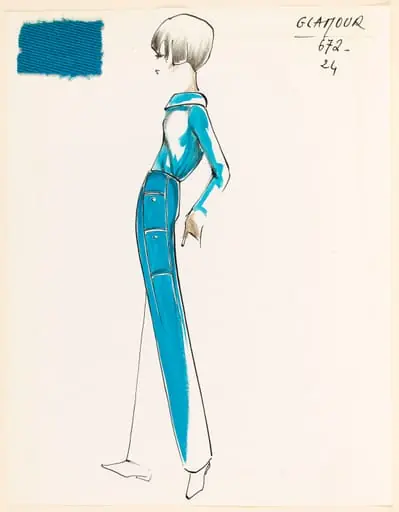
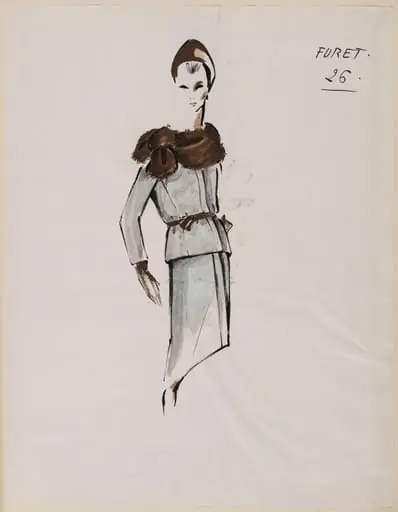
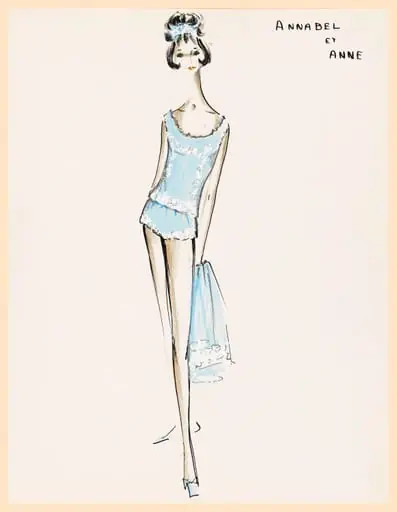
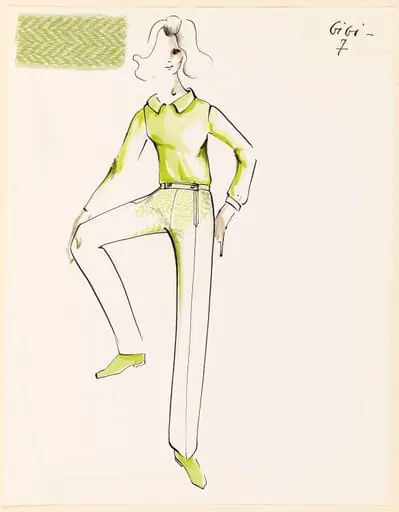
Castillane is a drawing by Carven. It dates from 1958 and is held in the collection of the Palais Galliera - Musée de la Mode de la Ville de Paris.
About this work
Overview
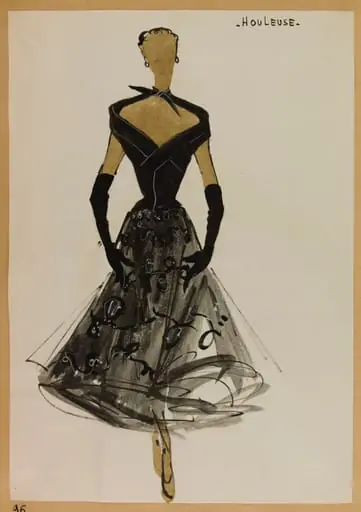
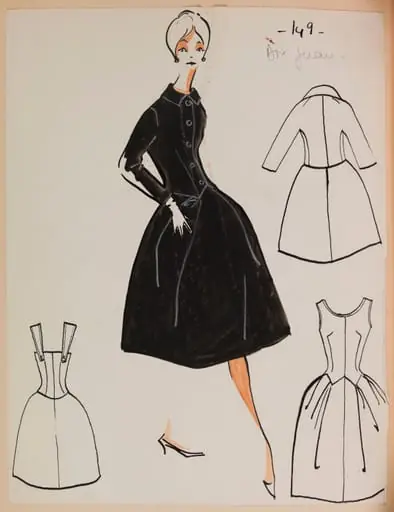
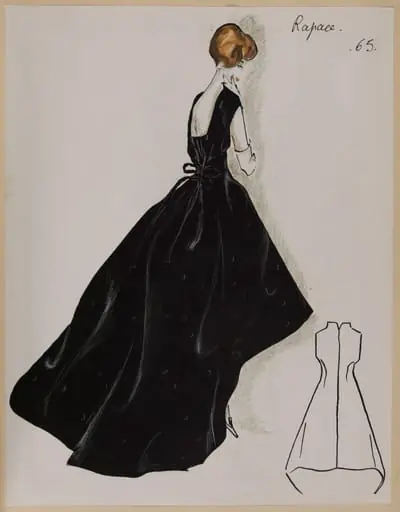
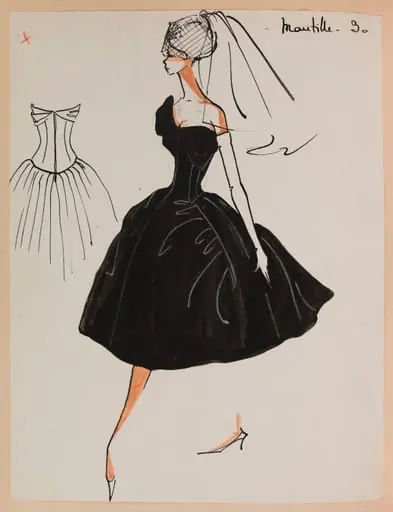
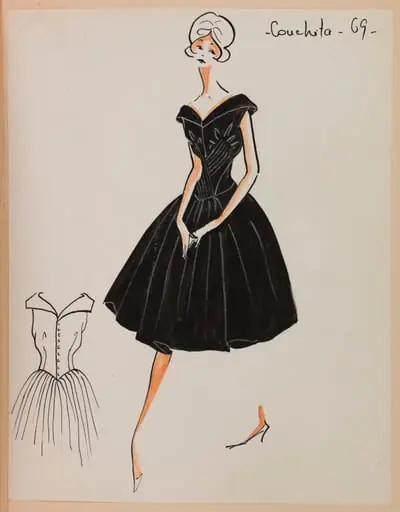
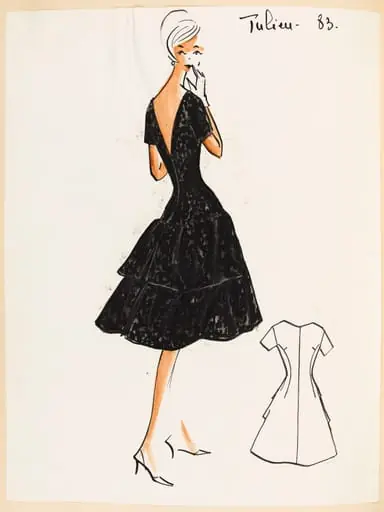
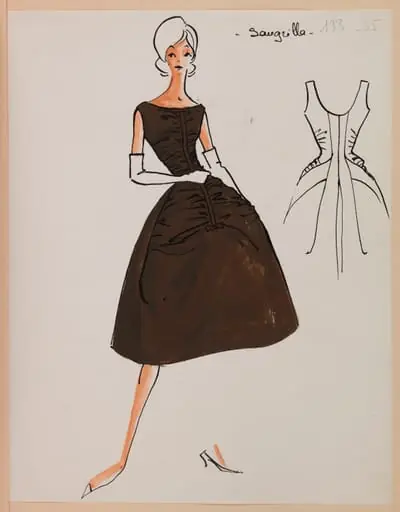
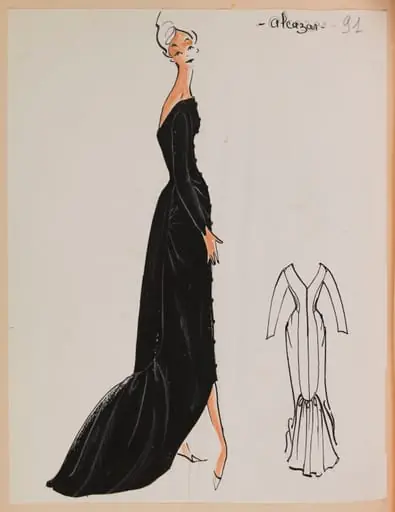
Castillane is a pencil drawing by French designer Carven, dated around 1958. It resides in the collection of the Museum of Ethnography. The work functions as a technical fashion study, combining a full-figure sketch with annotated garment components. Its purpose appears to be documentation rather than artistic display, reflecting the designer’s process in developing a specific silhouette.
Subject & Meaning
The drawing implies a ceremonial or evening context, where the dress’s volume and drape convey elegance through restraint.
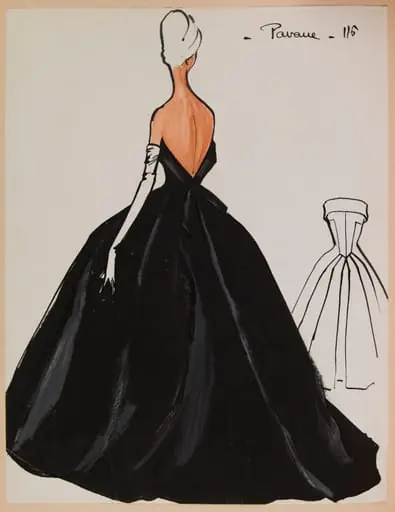
The figure depicts a woman viewed from behind, dressed in a long black gown with a deep V-neck and narrow straps. Her posture is still, hands clasped before her, suggesting formality or ritual. The absence of facial features shifts focus to the garment’s structure and movement. The drawing implies a ceremonial or evening context, where the dress’s volume and drape convey elegance through restraint.
Technique & Style
Carven employed swift, fluid lines to define the figure’s posture, contrasting with meticulous shading to render the fabric’s folds and weight. Smaller auxiliary sketches on the page illustrate the dress’s construction—front and back panels—revealing the designer’s attention to pattern layout. The interplay between loose gesture and precise detail reflects a working method rooted in functional design rather than expressive drawing.
History & Provenance
The drawing entered the Museum of Ethnography’s collection as part of a broader archive of mid-century fashion sketches. Its preservation suggests institutional interest in the material culture of postwar European design. No record of public exhibition prior to its acquisition is documented, indicating it remained within Carven’s studio or private circles until its transfer to the museum.
Context
Created in the late 1950s, Castillane aligns with a period when haute couture houses emphasized structured silhouettes and handcrafted construction. Carven, known for refined tailoring and subtle innovation, used such studies to translate aesthetic ideals into wearable forms. The sketch reflects a design culture where technical precision and visual poetry coexisted in the drafting process.
Legacy
Castillane remains a quiet testament to the labor behind fashion’s visible forms. It contributes to scholarly understanding of how designers translated vision into garment, preserving the intermediary steps often lost to public view. As a document of process, it offers insight into the discipline of mid-century French fashion design beyond finished pieces.
Artist & collection
Artist
These delicate ink-on-paper drawings capture the quiet poetry of everyday things: pinecones, reeds, apples.
Museum
Palais Galliera - Musée de la Mode de la Ville de Paris
Continue through works from the same source collection.