Artwork
'Grand hotel'
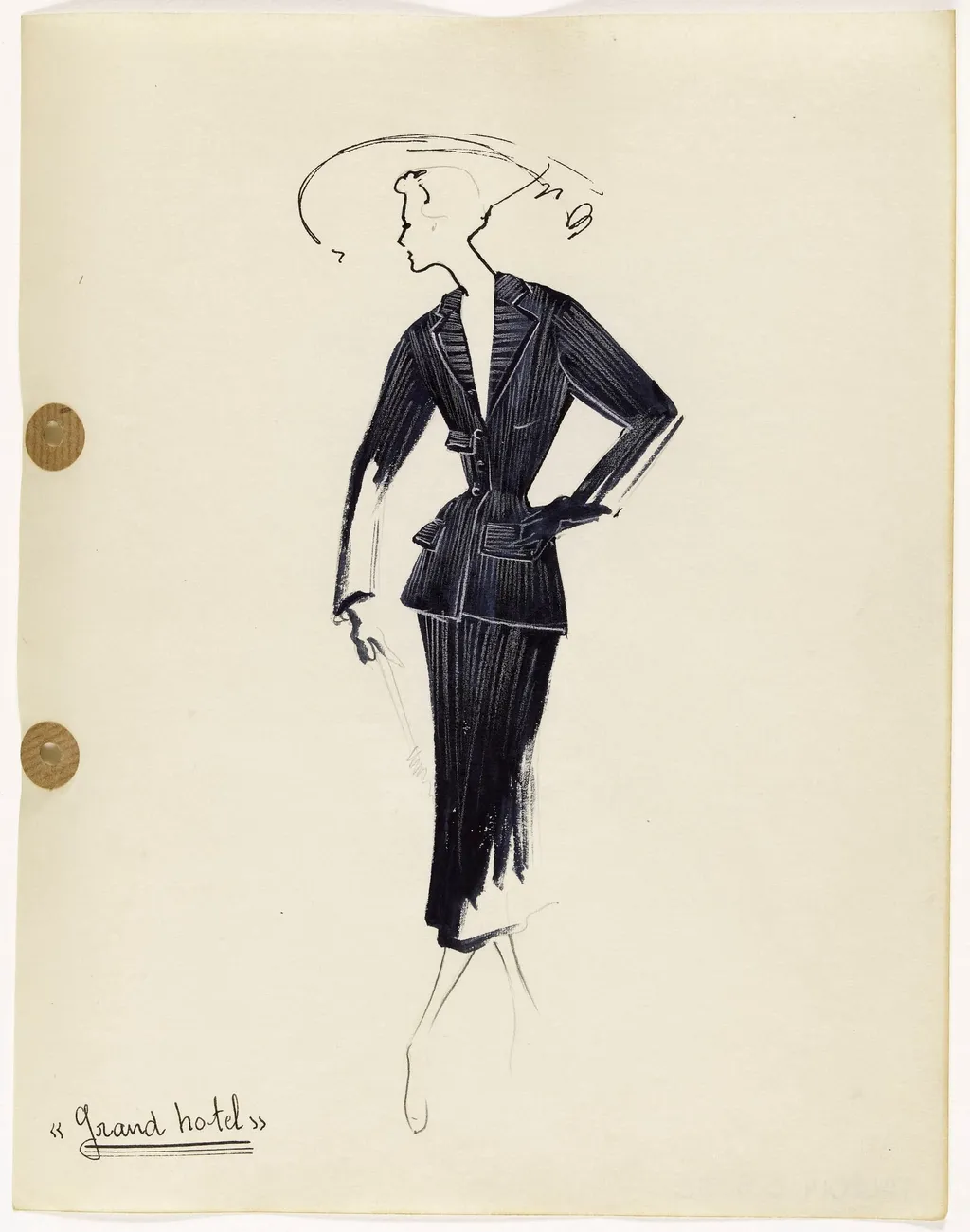
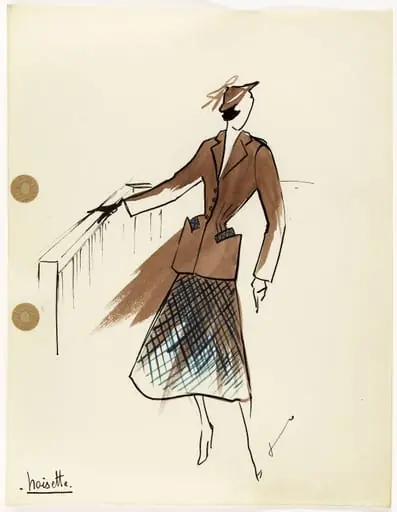
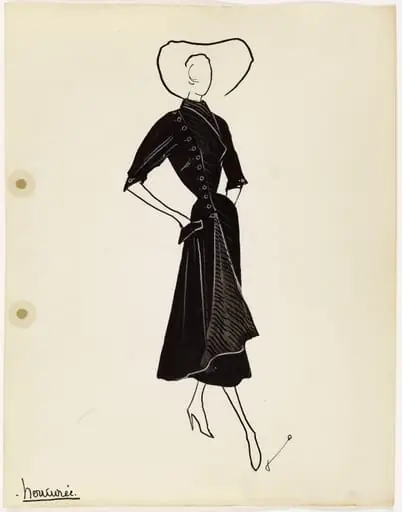
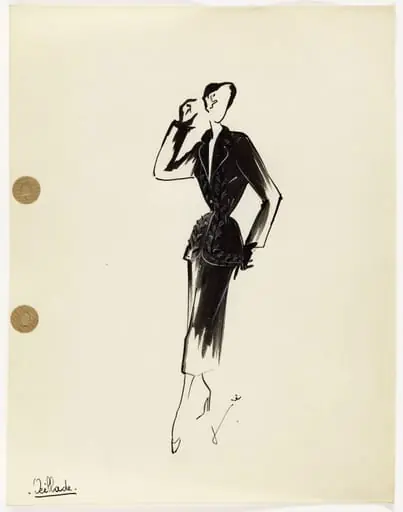
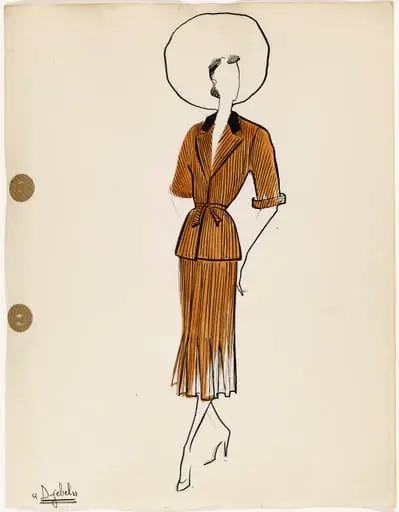
'Grand hotel' is a drawing by Carven. It dates from 1949 and is held in the collection of the Palais Galliera - Musée de la Mode de la Ville de Paris.
About this work
Overview
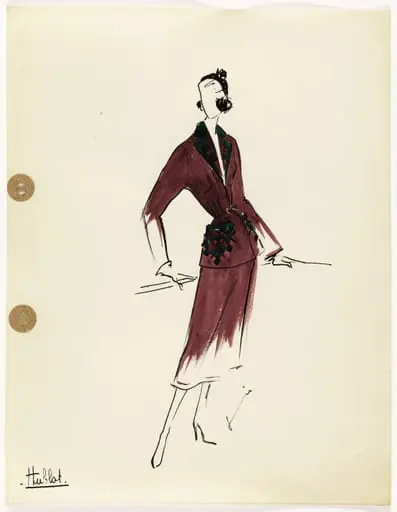
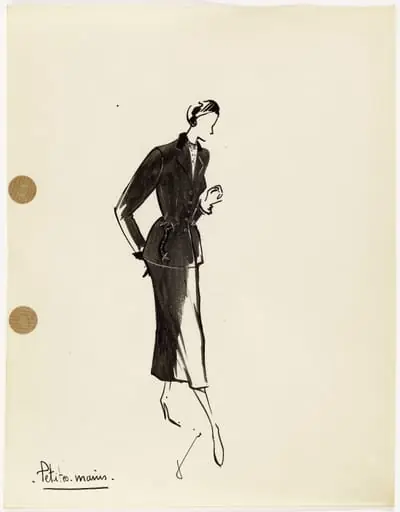
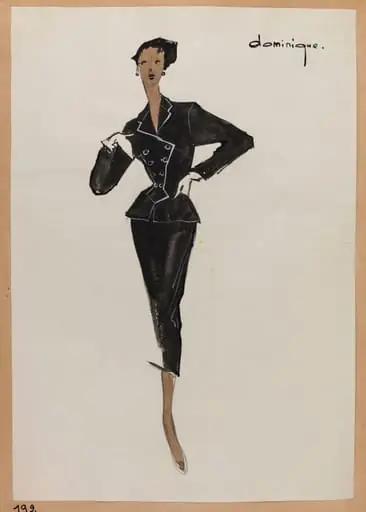
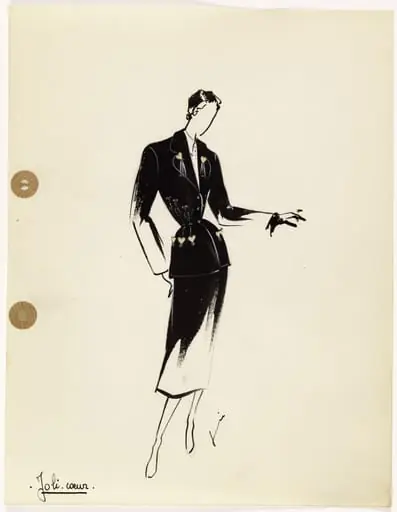
Created in 1949 by the French designer Carven, this ink sketch captures a woman’s attire with swift, assured strokes. Executed as a working drawing rather than a finished illustration, it reflects the designer’s process of capturing form and movement. The piece resides in the Museum of Ethnography, where it contributes to a broader collection documenting mid-century fashion design practices.
Subject & Meaning
The figure wears a tailored dark suit with broad lapels and a defined waist, suggesting an outfit intended for urban sophistication. The low-set hat and small purse imply preparation for evening or travel, aligning with the title 'Grand hotel.' The pose—hand on hip, purse held loosely—conveys casual confidence, evoking the self-assured demeanor of a woman navigating postwar social spaces.
Technique & Style
Carven employed rapid, fluid lines to define the silhouette, using minimal shading to suggest the weight and fold of fabric. The sketch avoids detail in favor of gesture, emphasizing rhythm and structure over precision. This approach reflects the immediacy of fashion drafting, where form is captured in moments rather than refined through layers.
History & Provenance
The drawing entered the Museum of Ethnography’s collection as part of a broader acquisition of design materials from mid-20th century French fashion houses. Its preservation underscores its value as a record of design methodology rather than a commercial product. No earlier ownership records are publicly documented, suggesting it remained within Carven’s studio until institutional acquisition.
Context
In postwar Paris, fashion design increasingly emphasized wearable elegance for modern women. Carven’s sketches from this period reflect a shift toward practical luxury—clothing suited for travel, dining, and social engagement. This drawing aligns with broader trends in French couture that prioritized movement, comfort, and understated refinement over ornate decoration.
Legacy
As a working sketch, it offers insight into Carven’s design thinking, revealing how ideas were distilled into wearable forms. While not a finished garment, it remains a significant artifact in understanding the transition from concept to creation in mid-century fashion. Its presence in an ethnographic museum highlights fashion’s role as cultural expression beyond the runway.
Artist & collection
Artist
These delicate ink-on-paper drawings capture the quiet poetry of everyday things: pinecones, reeds, apples.
Museum
Palais Galliera - Musée de la Mode de la Ville de Paris
Continue through works from the same source collection.