Artwork
Guimauve
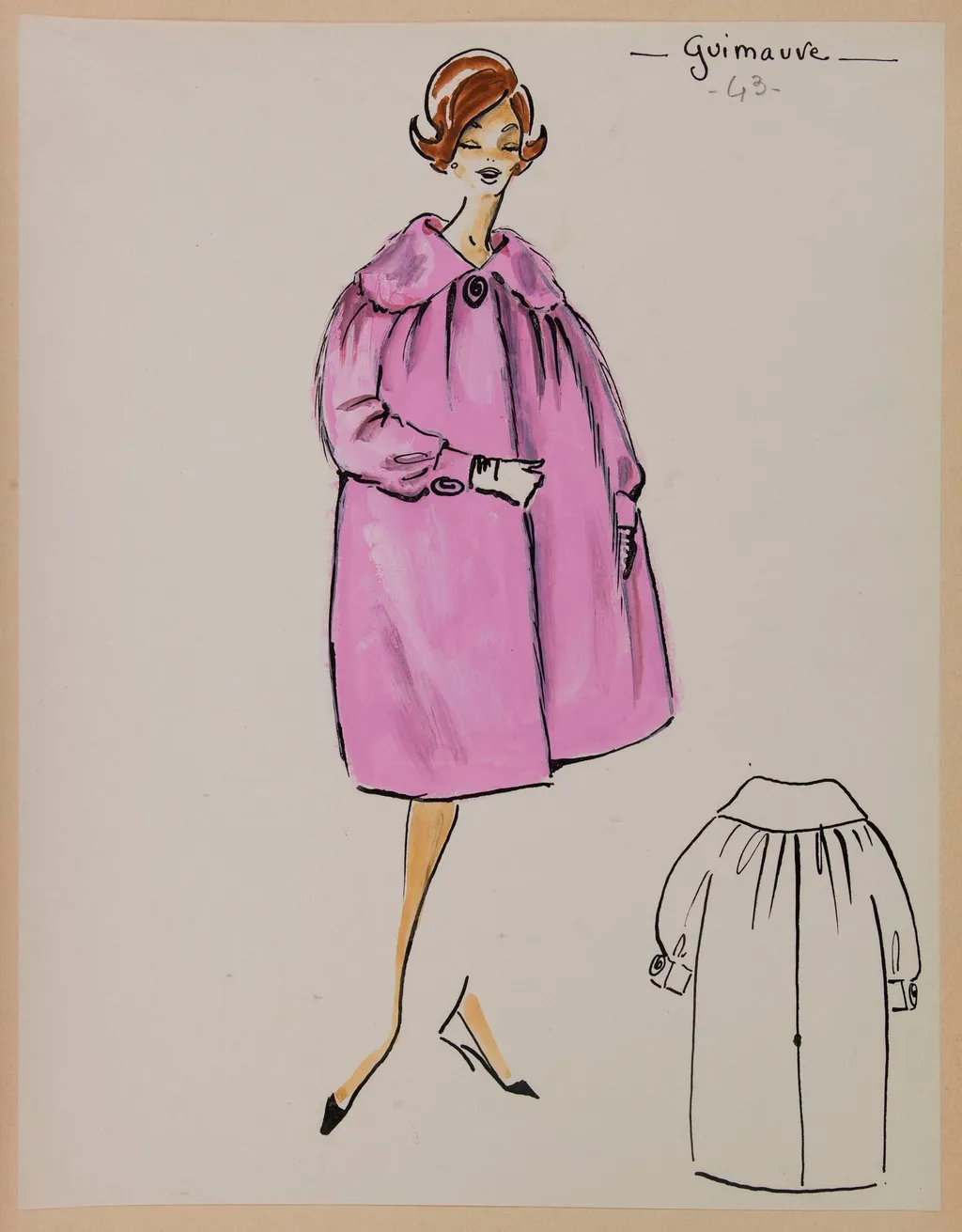
Guimauve is a drawing by Carven. It dates from 1958 and is held in the collection of the Palais Galliera - Musée de la Mode de la Ville de Paris.
About this work
Overview
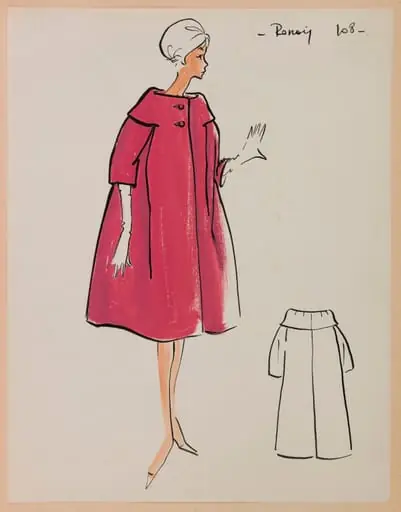
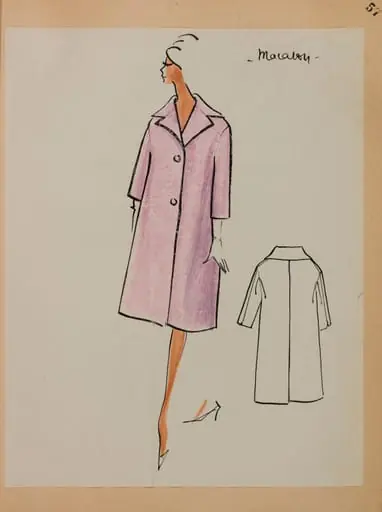
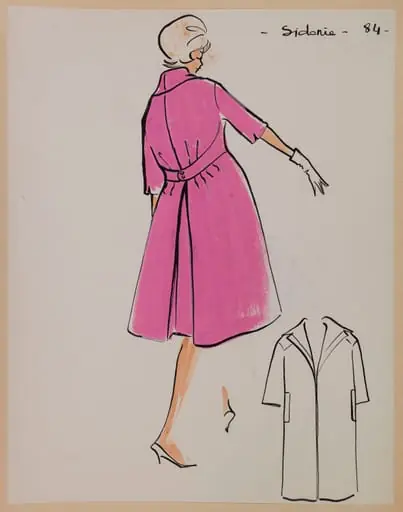
It depicts a woman in motion wearing a pastel pink coat with exaggerated lapels and a puffed collar, paired with matching gloves and a simple skirt.
Guimauve is a circa 1958 fashion sketch by the French designer Carven, rendered in ink or pencil on paper. It depicts a woman in motion wearing a pastel pink coat with exaggerated lapels and a puffed collar, paired with matching gloves and a simple skirt. A separate, flattened outline of the coat appears beside the figure, suggesting a study in garment structure. The work is held in the collection of the Museum of Ethnography.
Subject & Meaning
The figure in Guimauve walks with a casual, forward-leaning posture, suggesting everyday movement rather than staged performance. The coat’s soft, marshmallow-like hue—referenced by the title—evokes lightness and gentleness, aligning with mid-century ideals of feminine elegance. The inclusion of the isolated garment sketch implies an interest in design clarity, separating form from the body to emphasize silhouette and detail.
Technique & Style
Executed with swift, fluid lines, the sketch conveys immediacy and spontaneity. Details like button placement and lapel shape are suggested rather than meticulously rendered, prioritizing gesture over precision. The flat outline of the coat beside the figure functions as a technical annotation, revealing Carven’s method of exploring garment construction through rapid, iterative drawing.
History & Provenance
Created around 1958, Guimauve originates from Carven’s personal design archive, likely used during the development of a seasonal collection. It entered the Museum of Ethnography’s holdings through donation or acquisition, possibly as part of a broader effort to document mid-century French fashion as cultural artifact. Its preservation reflects institutional interest in fashion as material culture.
Context
In late 1950s Paris, fashion design emphasized tailored femininity with playful details. Carven, known for accessible yet refined styles, often blended practicality with whimsy. Guimauve reflects this ethos: the coat’s volume and soft color contrast with the restrained skirt, balancing novelty with wearability. The sketch’s informal quality aligns with design practices of the time, where rapid drawings guided production.
Legacy
Guimauve remains a quiet example of how fashion designers used sketching not just for presentation, but as a tool for thinking through form. Its presence in an ethnographic museum underscores the shift toward recognizing fashion as a cultural practice. While not widely published, it contributes to understanding the iterative, hands-on nature of mid-century design processes.
Artist & collection
Artist
These delicate ink-on-paper drawings capture the quiet poetry of everyday things: pinecones, reeds, apples.
Museum
Palais Galliera - Musée de la Mode de la Ville de Paris
Continue through works from the same source collection.