Artwork
Haute fidélité
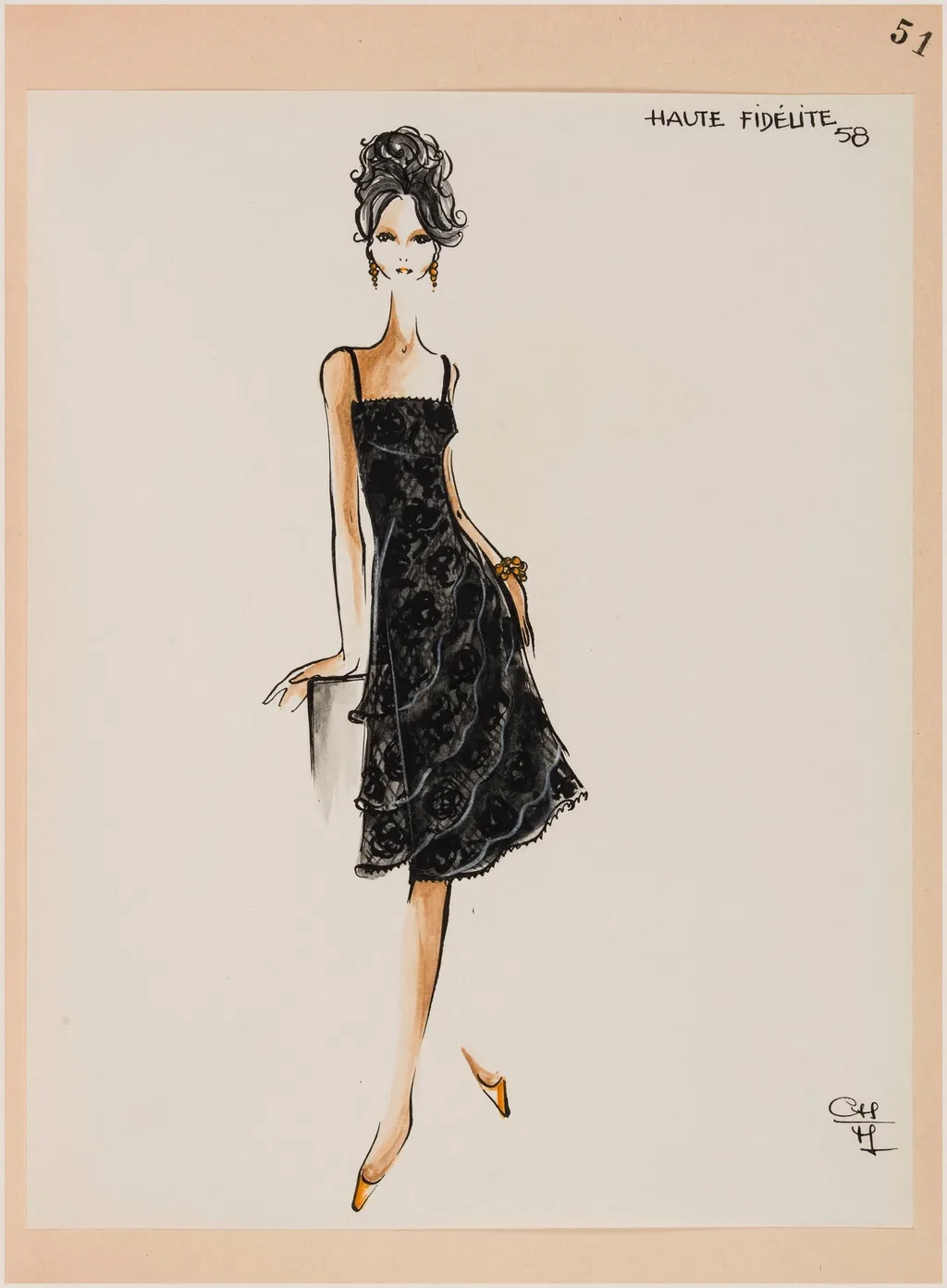
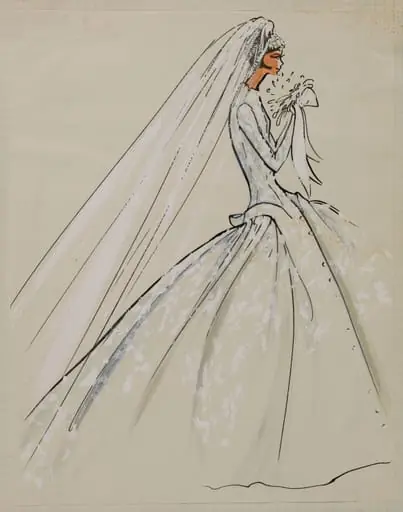
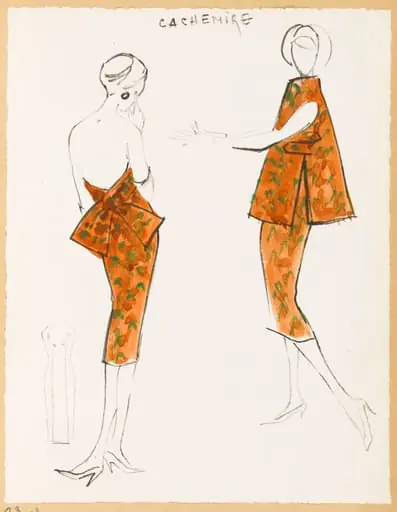
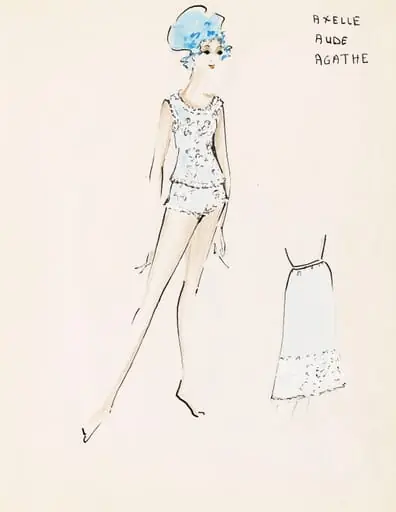
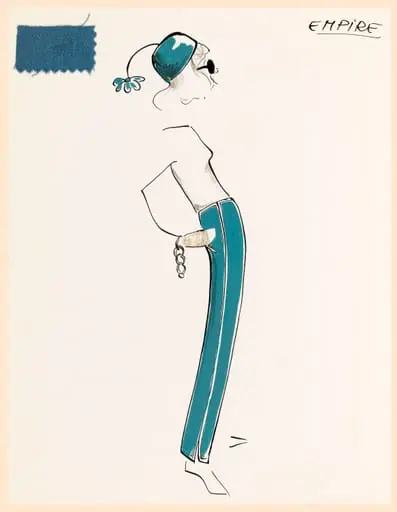
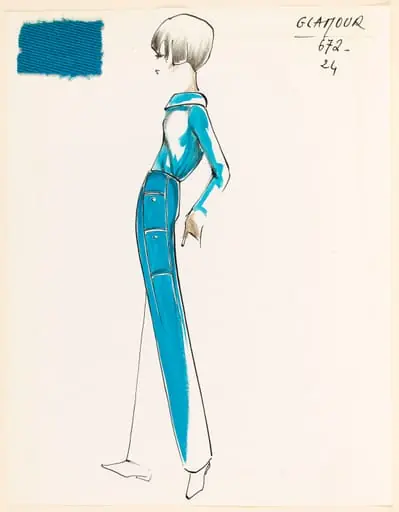
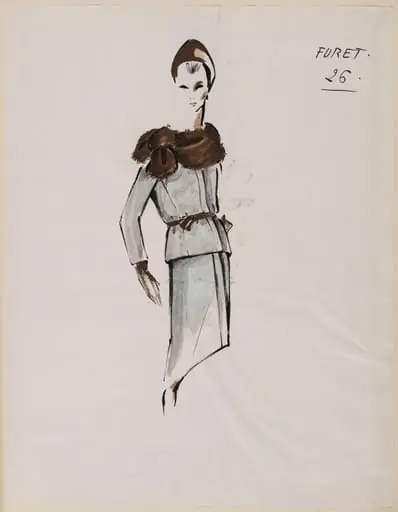
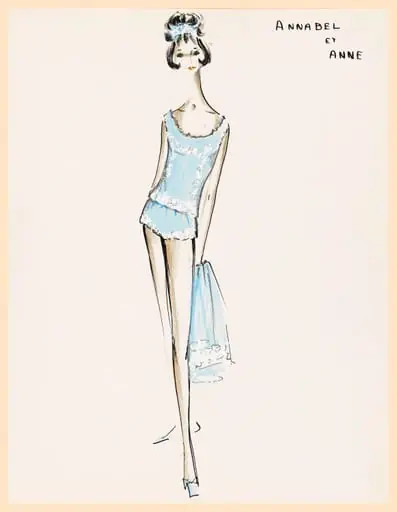
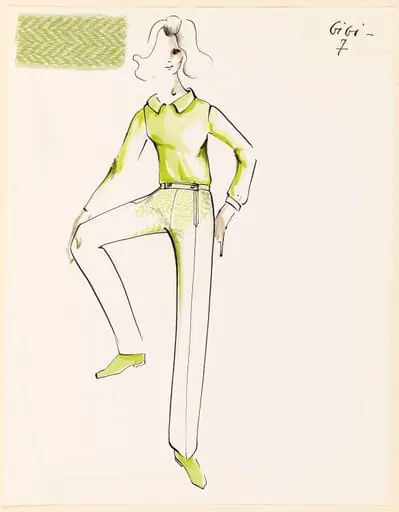
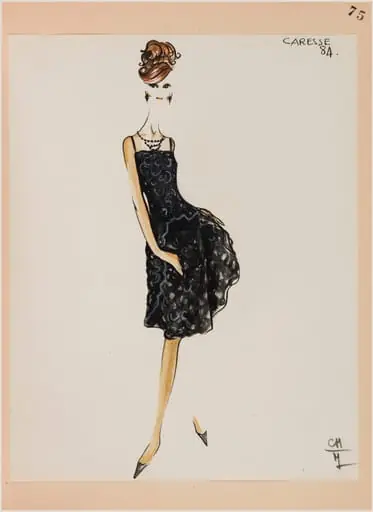
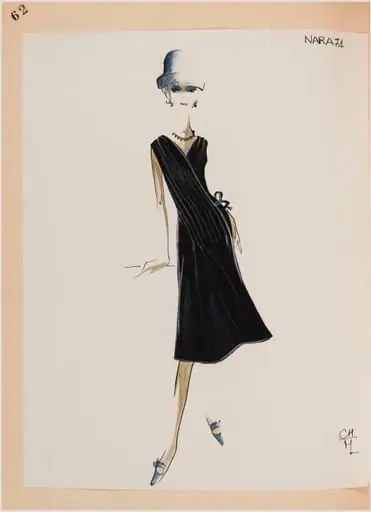
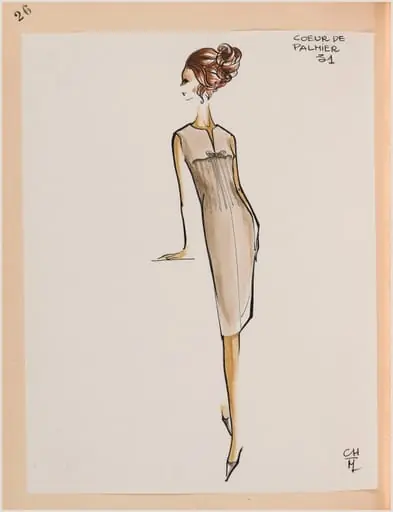
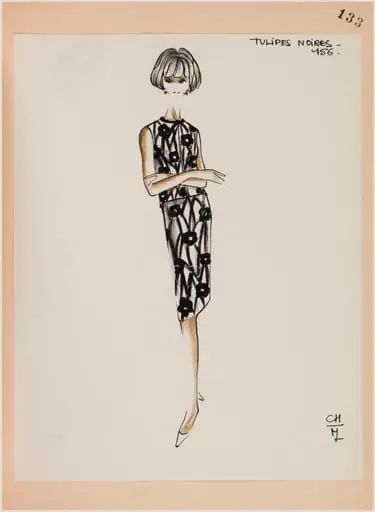
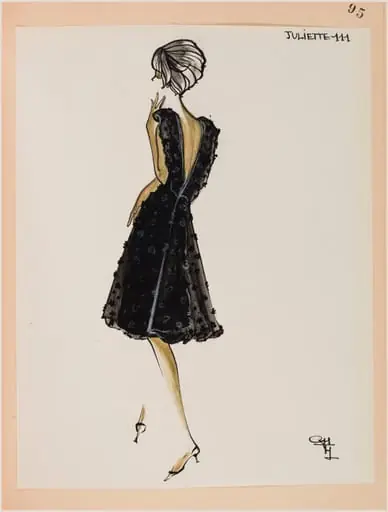
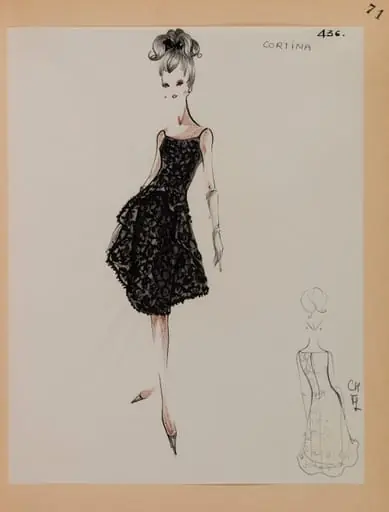
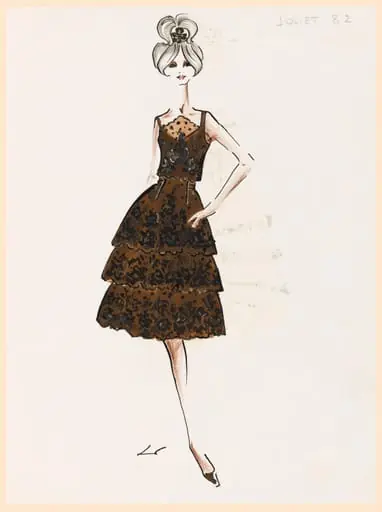
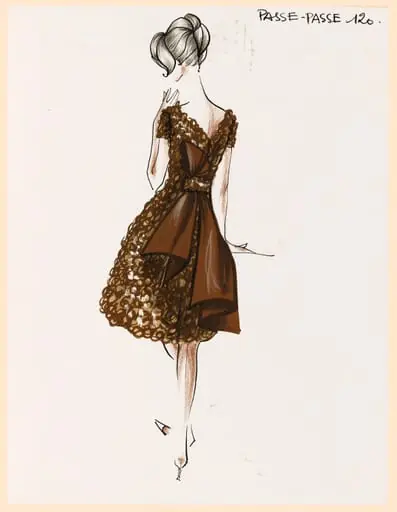
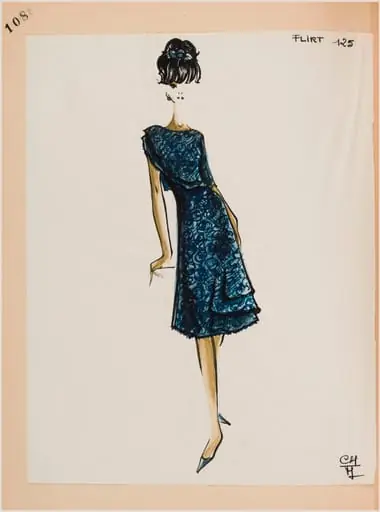
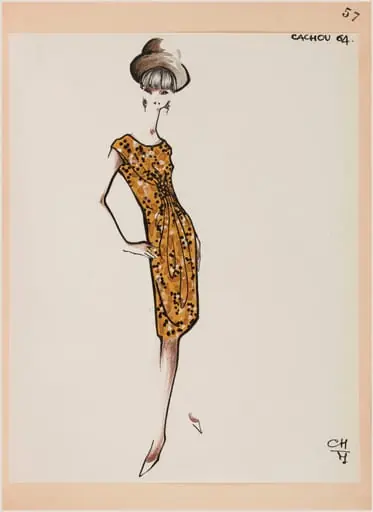
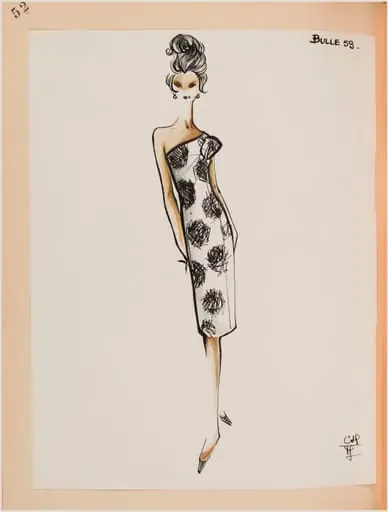
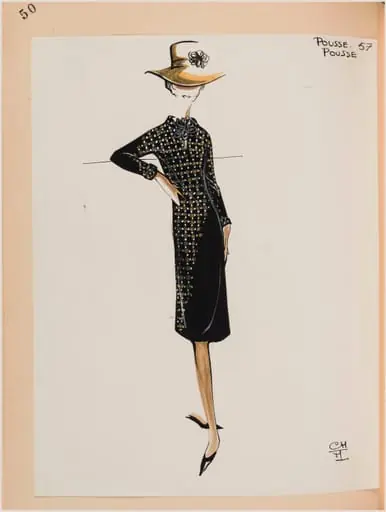
Haute fidélité is a drawing by Carven. It dates from 1963 and is held in the collection of the Palais Galliera - Musée de la Mode de la Ville de Paris.
About this work
Overview
The work resides in the Museum of Ethnography, where it is cataloged as part of a collection documenting mid-century style.
Created in 1963 by the designer Carven, this ink drawing captures a woman in formal attire with swift, expressive lines. Executed as a fashion study, it emphasizes silhouette and motion rather than detail. The work resides in the Museum of Ethnography, where it is cataloged as part of a collection documenting mid-century style. Its title, *Haute fidélité*, appears in the corner, suggesting a deliberate reference to precision in representation.
Subject & Meaning
The figure is a woman dressed in a black ensemble featuring a tailored bodice and a flared skirt edged with lace. Her elevated hairstyle, gold earrings, and clutch convey an air of evening elegance. The drawing does not depict a specific person but rather an archetype of postwar femininity—refined, composed, and attuned to contemporary fashion codes. The title hints at fidelity to form, aligning the image with ideals of sartorial accuracy.
Technique & Style
Rendered in loose, confident ink strokes, the drawing prioritizes rhythm over refinement. Minimal shading defines volume, while bold contours outline the dress’s structure and movement. The lace trim and pointed heels are suggested with economical lines, not meticulously rendered. This approach mirrors fashion illustration of the era, where speed and suggestion conveyed style more effectively than detailed realism.
History & Provenance
The work was produced during Carven’s active years as a couturier, likely as a preparatory sketch or personal study. It entered the Museum of Ethnography’s collection through documented acquisition, possibly as part of a broader effort to preserve design artifacts. Its preservation reflects institutional interest in fashion as cultural expression, not merely as clothing.
Context
In the early 1960s, Parisian fashion emphasized sculpted silhouettes and refined detailing, particularly in eveningwear. Carven’s sketches from this period often focused on how fabric moved and draped, aligning with broader trends in fashion drawing. The use of lace and structured forms in this piece reflects both haute couture conventions and the era’s fascination with texture and form.
Legacy
This drawing contributes to the understanding of how fashion designers documented their work before digital tools. Its presence in an ethnographic museum signals a shift in how fashion is valued—as cultural artifact rather than mere commodity. It remains a quiet example of how design intent was communicated through rapid, intuitive mark-making.
Artist & collection
Artist
These delicate ink-on-paper drawings capture the quiet poetry of everyday things: pinecones, reeds, apples.
Museum
Palais Galliera - Musée de la Mode de la Ville de Paris
Continue through works from the same source collection.