Artwork
Joliet
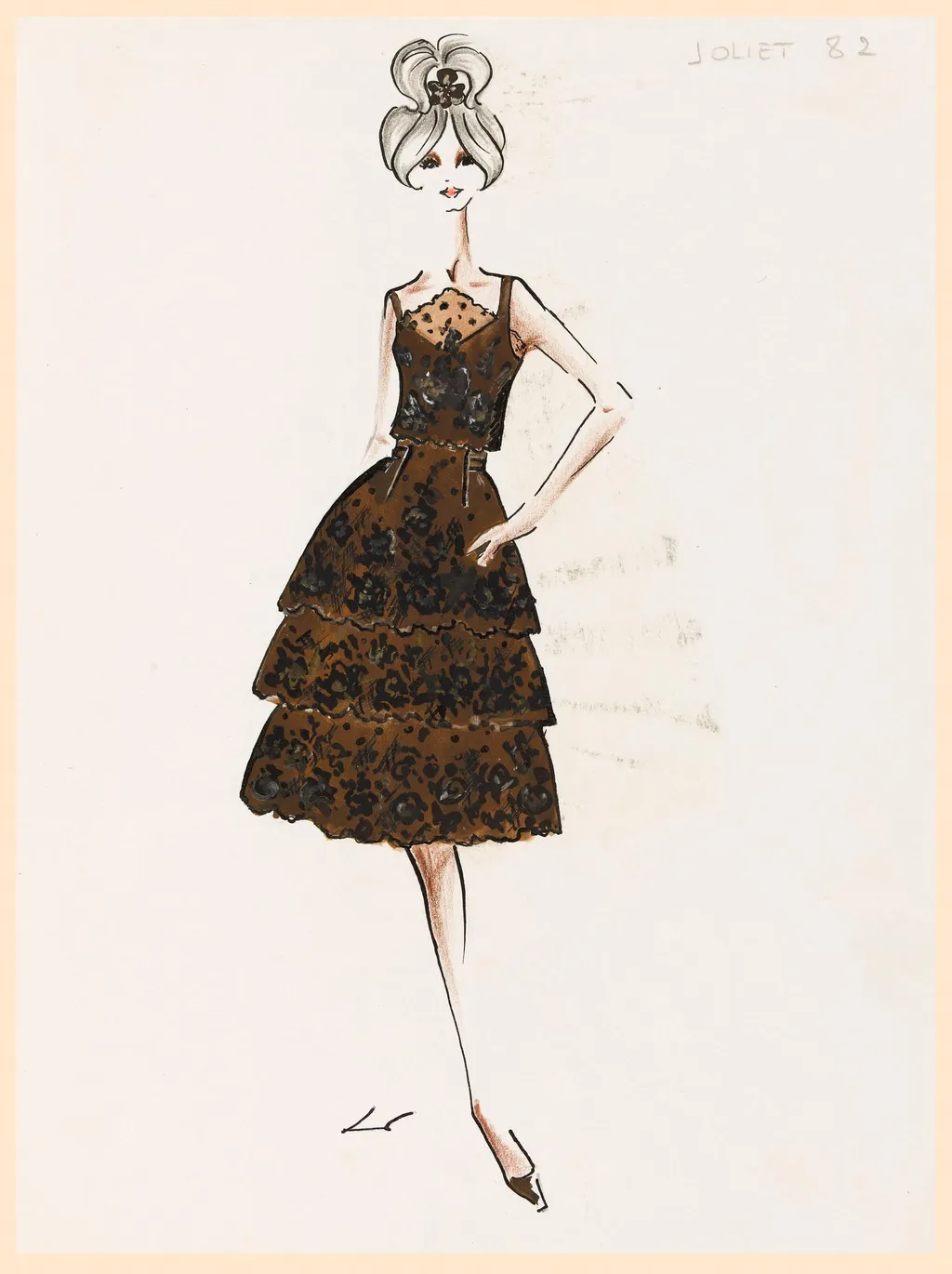
Joliet is a drawing by Marie-Louise Carven. It dates from 1962 and is held in the collection of the Palais Galliera - Musée de la Mode de la Ville de Paris.
About this work
Overview
Created around 1962, *Joliet* is a fashion sketch by French designer Marie-Louise Carven, founder of the eponymous house established in 1945.
Created around 1962, *Joliet* is a fashion sketch by French designer Marie-Louise Carven, founder of the eponymous house established in 1945. The drawing captures a dress design intended for a petite silhouette, reflecting Carven’s focus on accessible, wearable elegance. Executed in ink with minimal shading, it belongs to the Museum of Ethnography’s collection and exemplifies the transition from haute couture to ready-to-wear in mid-century fashion.
Subject & Meaning
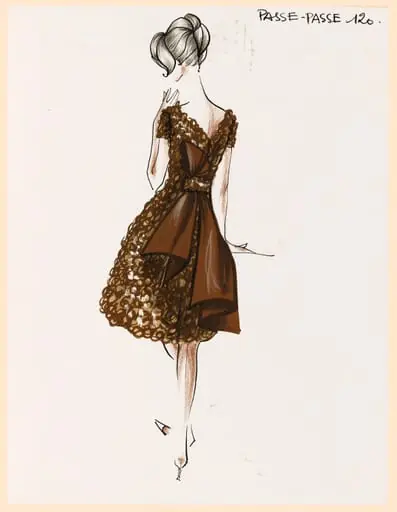
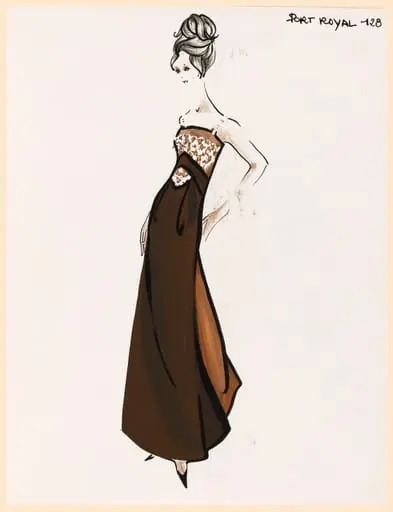
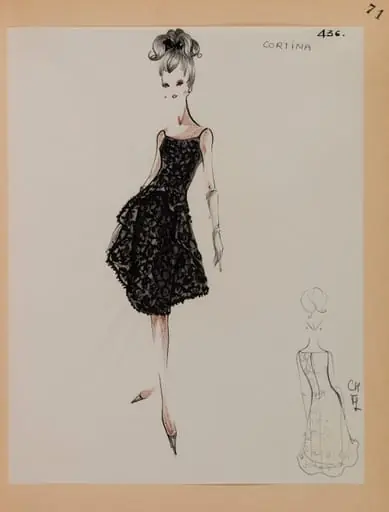
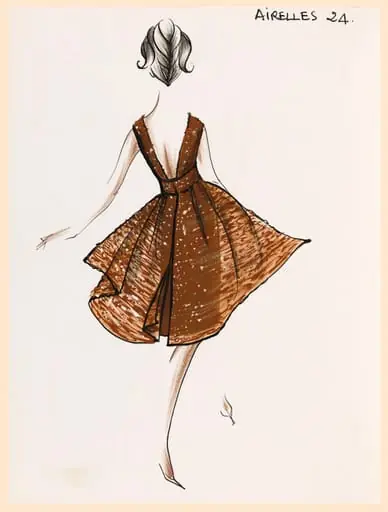
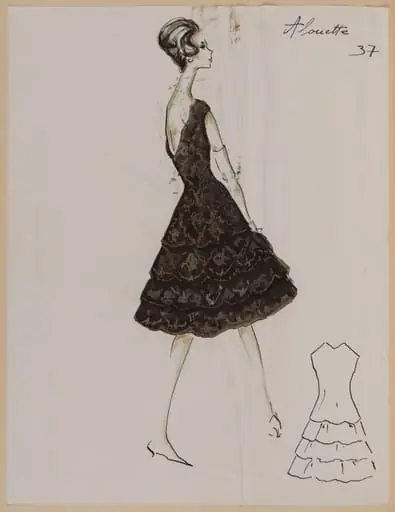
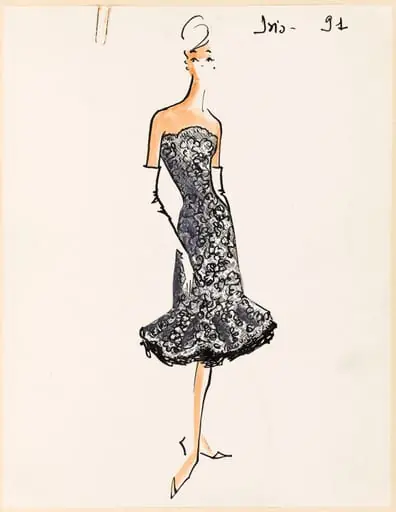
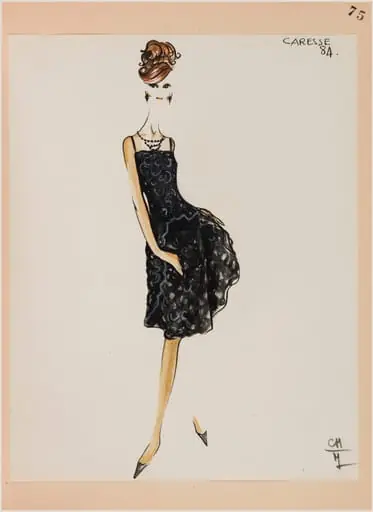
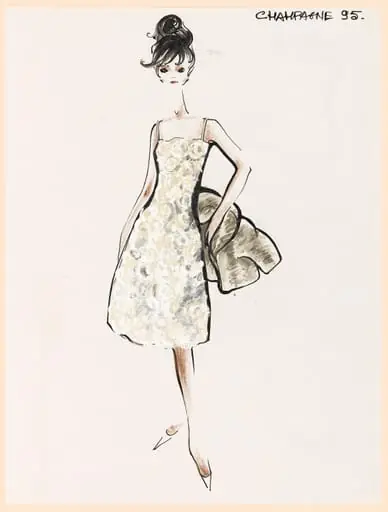
The sketch depicts a woman wearing a brown dress with a floral motif, featuring a tailored bodice and a knee-length flared skirt. The loose updo crowned with a single flower suggests a casual, feminine aesthetic. The label 'Joliet 82' in the corner likely identifies the design or a production code, not a person. The image functions as a design record rather than a portrait, emphasizing utility and style over individual identity.
Technique & Style
Carven rendered *Joliet* with swift, fluid lines and restrained tonal shading, typical of fashion illustrators prioritizing clarity over detail. The absence of facial features and the stylized posture focus attention on the garment’s structure and movement. The drawing’s spontaneity reflects its role as a working sketch—intended for pattern makers or clients, not as a finished artwork.
History & Provenance
Carven pioneered one of the earliest prêt-à-porter lines in French fashion, making her designs accessible beyond elite clients. *Joliet* was likely produced during the early 1960s, a period when her brand expanded its commercial reach. The sketch entered the Museum of Ethnography’s collection as part of a broader effort to document everyday fashion as cultural artifact, rather than solely as high art.
Context
In the early 1960s, Parisian fashion was shifting toward democratization, with designers like Carven responding to changing lifestyles and demand for practical clothing. *Joliet* aligns with this trend—its modest length, simple pattern, and lightweight fabric suited postwar urban women seeking both style and ease. The sketch reflects a broader movement away from rigid couture traditions toward more flexible, market-driven design.
Legacy
Though Carven’s name is less prominent today, her early adoption of ready-to-wear influenced generations of designers who prioritized wearability. *Joliet* survives as a quiet testament to this shift—unadorned, functional, and rooted in the daily lives of its intended wearers. Its preservation in an ethnographic museum underscores its value as a cultural document of mid-century fashion practice.
Artist & collection
Artist
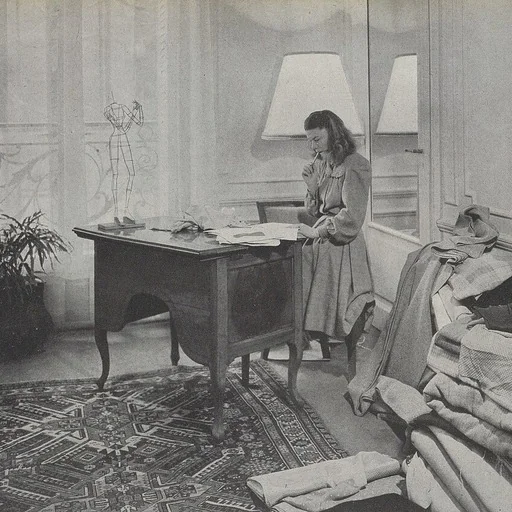
Marie-Louise Carven (31 August 1909 – 8 June 2015), born Carmen de Tommaso, was a French fashion designer who founded the house of Carven in 1945.
Museum
Palais Galliera - Musée de la Mode de la Ville de Paris
Continue through works from the same source collection.
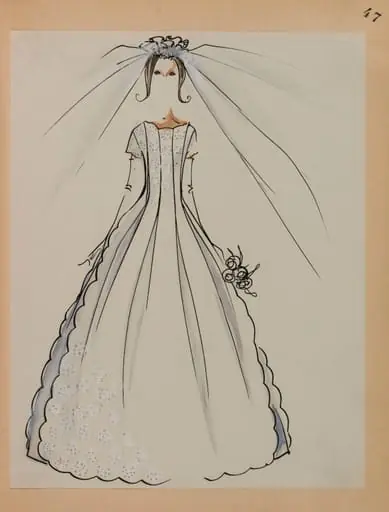 Robe de mariée festonnée et son voile
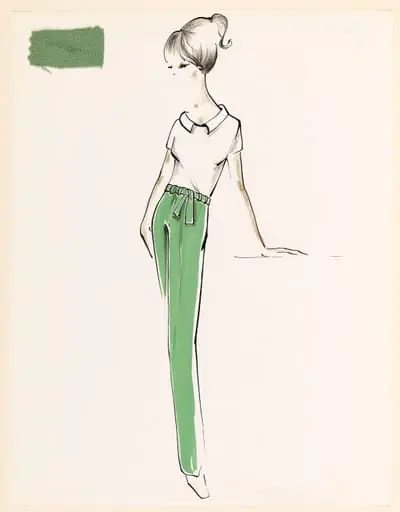 Haut blanc à manches courtes et pantalon vert à ceinture nouée
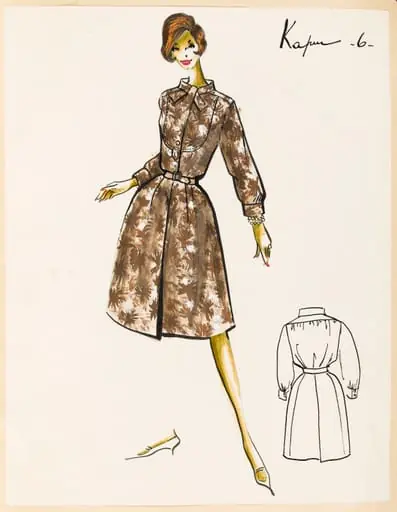 Kapur
Kapur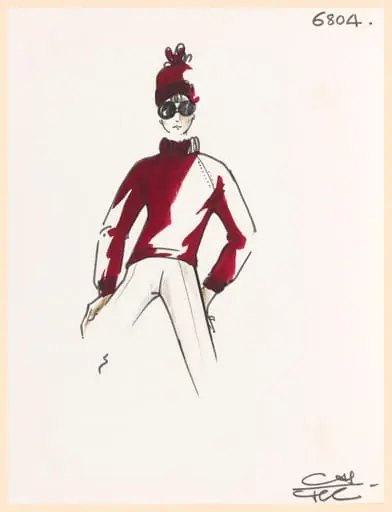 Pull-over à manches longues pourpre, bonnet assorti, pantalon et lunettes de soleil
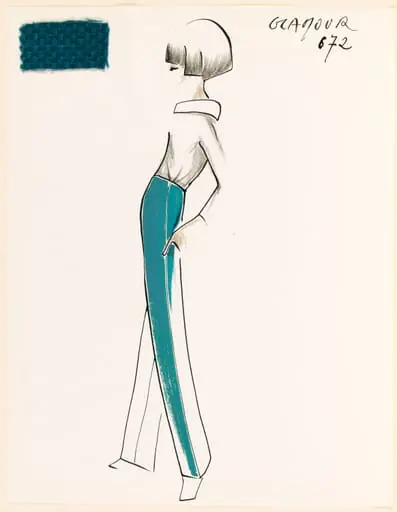 GLAMOUR
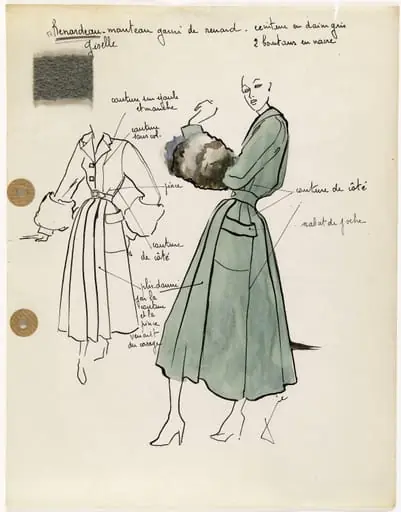 'Renardeau'
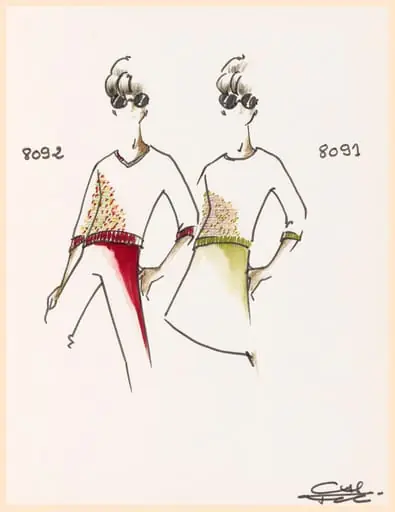 Pull-over à manches trois quarts et à encolure V à motifs multicolores, pantalon cerise et lunettes de soleil
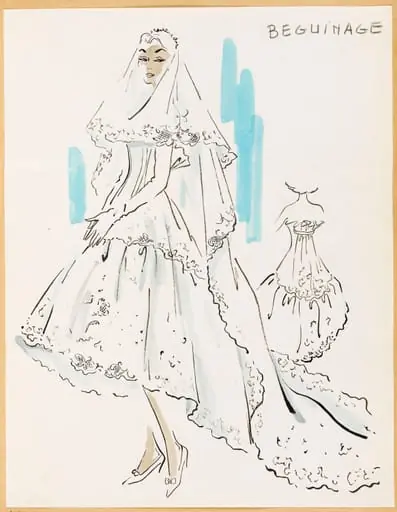 Béguinage