Artwork
'Incas'
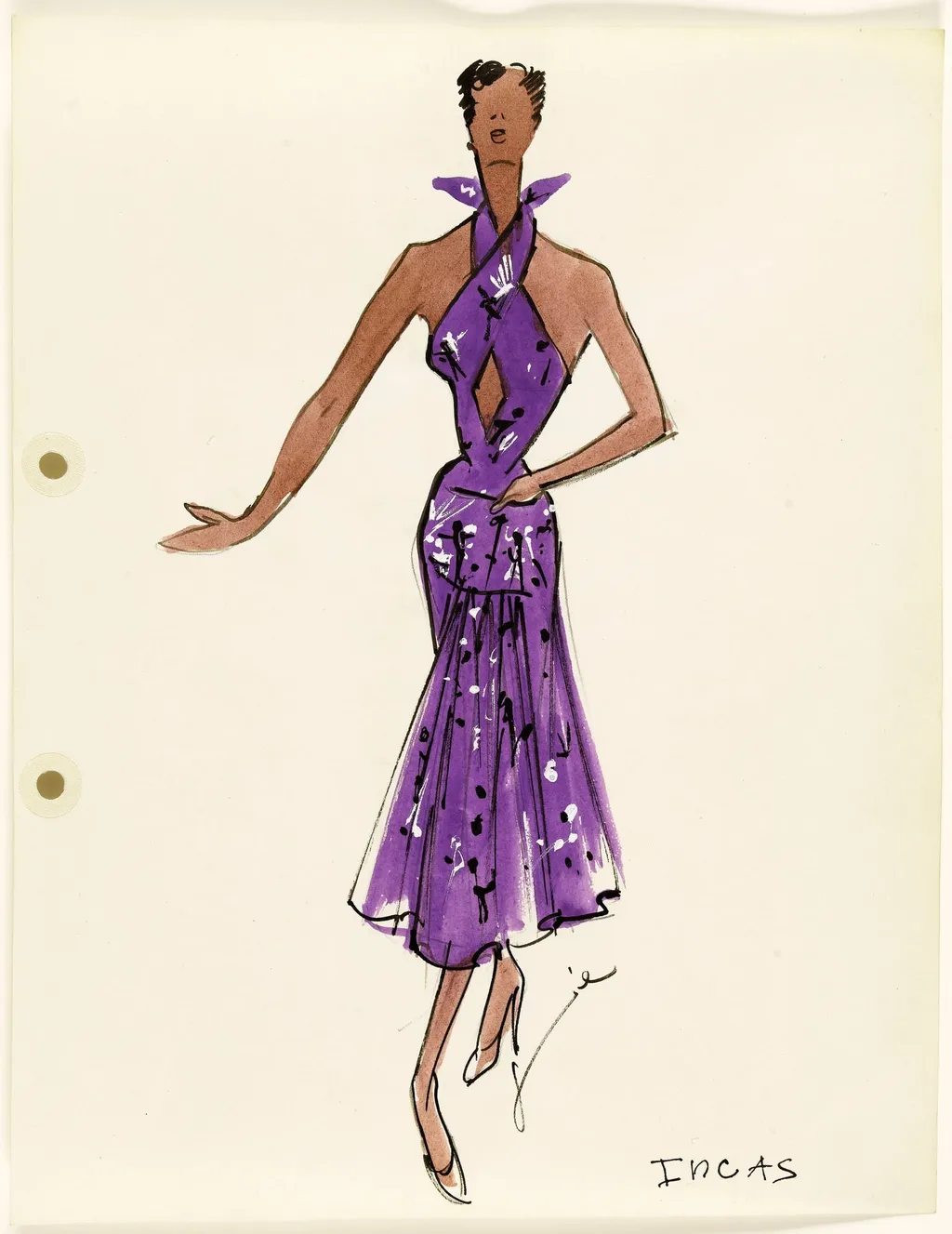
'Incas' is a drawing by Carven. It dates from 1951 and is held in the collection of the Palais Galliera - Musée de la Mode de la Ville de Paris.
About this work
Overview
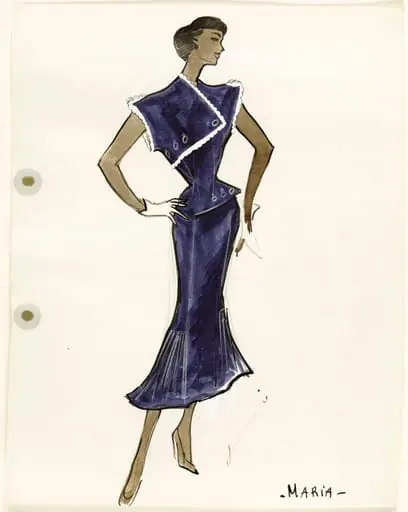
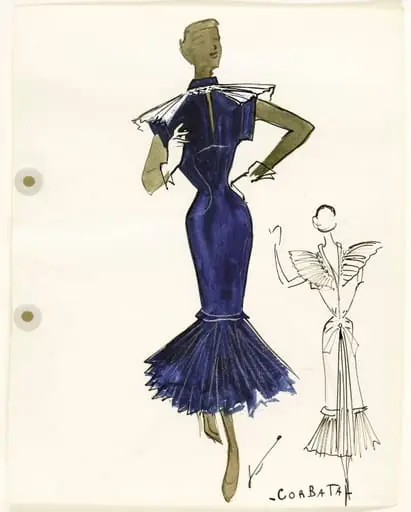
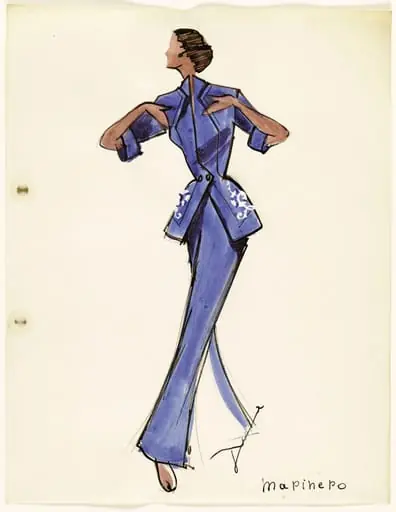
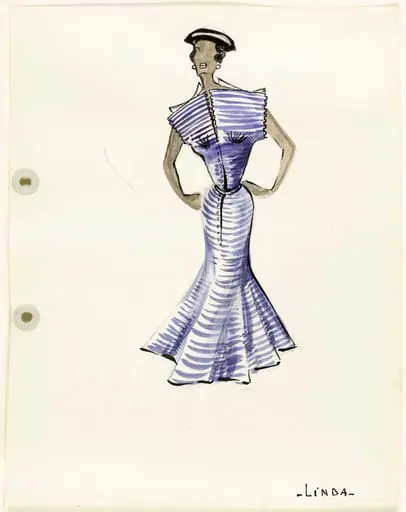
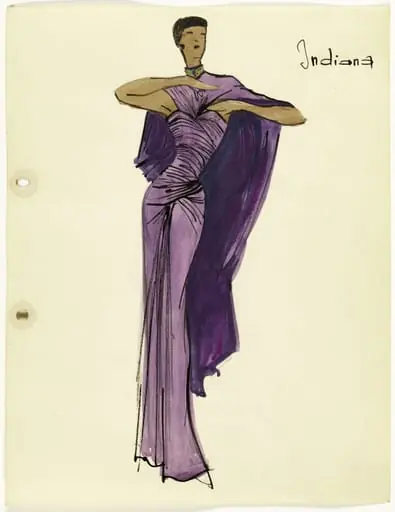
Created in 1951 by Carven, this ink sketch is part of the Museum of Ethnography’s collection. Though titled 'Incas,' it is not a depiction of Andean people but a fashion illustration. The work captures a woman in a flowing purple gown, rendered with swift, expressive lines. The signature 'Incas' appears in the corner, reflecting the designer’s naming choice rather than cultural subject matter.
Subject & Meaning
The figure is a stylized model in haute couture, her posture poised and self-assured, one hand resting on her hip. The garment’s draped silhouette and dark, fluid patterns suggest movement and drama, typical of postwar fashion design. The title 'Incas' evokes exoticism, aligning with mid-century trends that borrowed non-Western names to lend mystique to luxury apparel.
Technique & Style
Carven employed loose, rapid ink strokes to convey the fluidity of fabric and the energy of a fashion sketch. Cross-hatching and sparse washes define shadow and texture without detail, emphasizing form over realism. The plain background isolates the figure, directing attention to the garment’s silhouette and the artist’s confident line work.
History & Provenance
The drawing entered the Museum of Ethnography’s holdings after being acquired from Carven’s personal archive. Though created as a fashion study, its aesthetic and cultural references led to its classification within ethnographic collections, reflecting mid-century museum practices that blurred boundaries between art, fashion, and cultural representation.
Context
In the early 1950s, Parisian fashion houses frequently invoked non-European motifs to evoke romance and rarity. Carven’s use of 'Incas' as a title fits this trend, where indigenous names were repurposed as branding tools. The sketch reflects how fashion designers engaged with global imagery, often detached from its original cultural context.
Legacy
This sketch remains a quiet example of how fashion illustration intersected with ethnographic collecting practices. It invites reflection on the appropriation of cultural symbols in design and the ways institutions categorize objects whose intent and context may not align with their display.
Artist & collection
Artist
These delicate ink-on-paper drawings capture the quiet poetry of everyday things: pinecones, reeds, apples.
Museum
Palais Galliera - Musée de la Mode de la Ville de Paris
Continue through works from the same source collection.