Artwork
Institution Barral
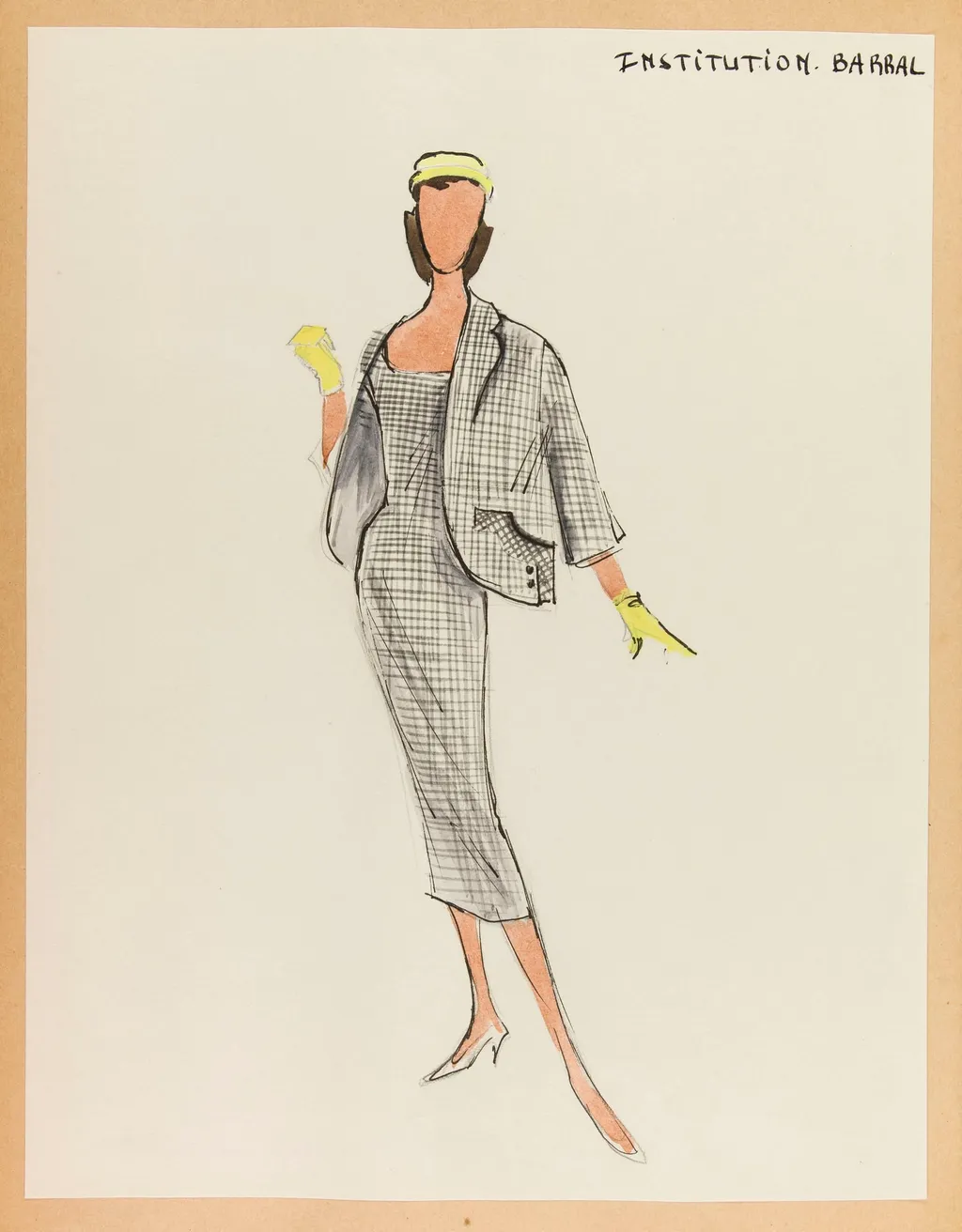
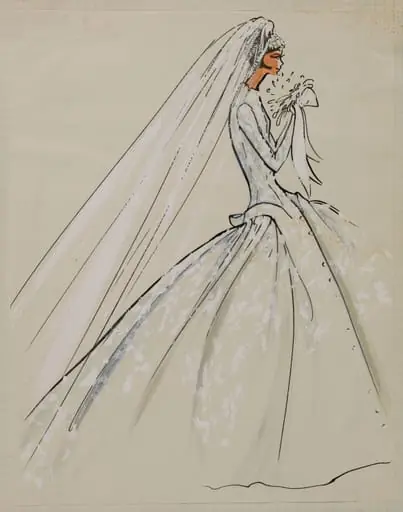
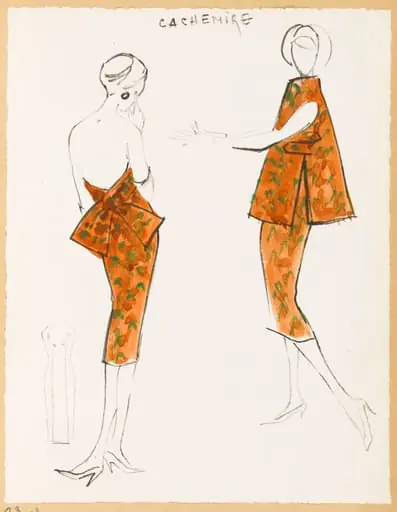
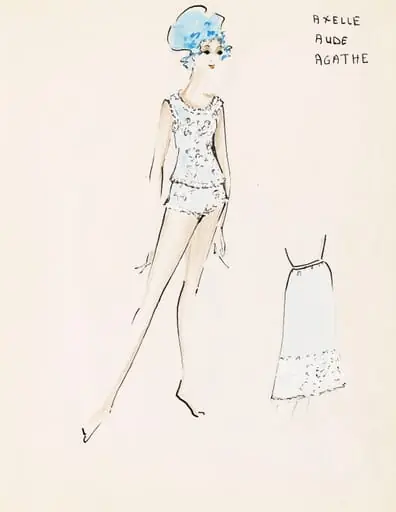
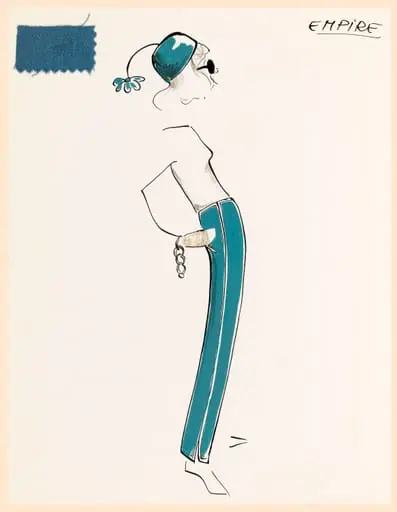
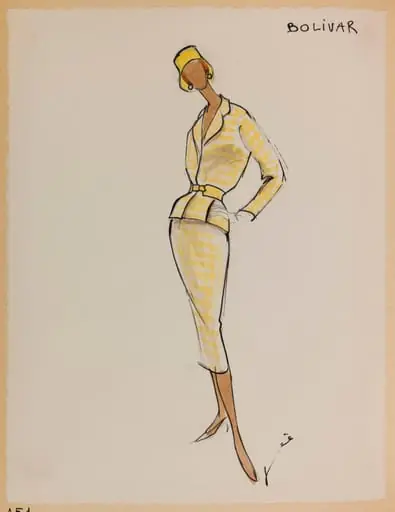
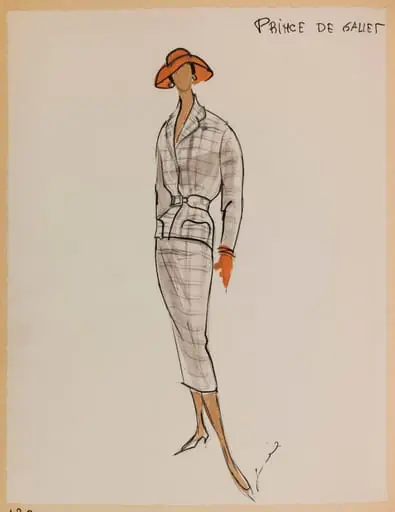
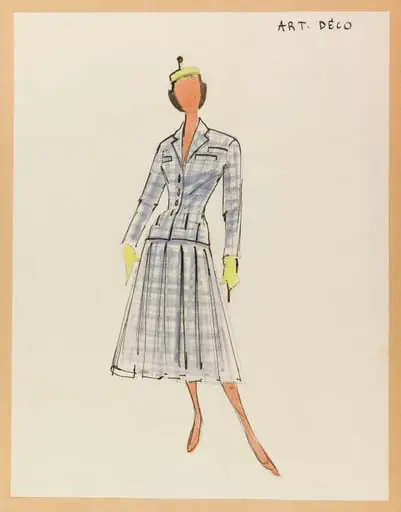
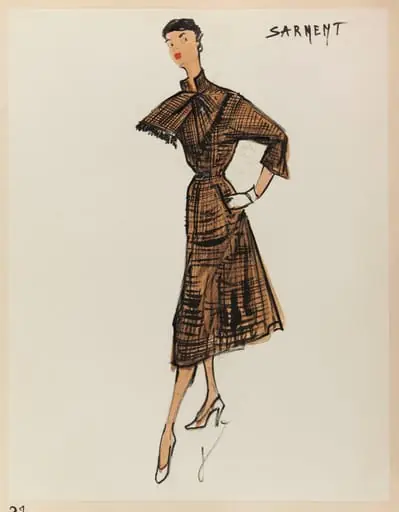
Institution Barral is a drawing by Carven. It dates from 1955 and is held in the collection of the Palais Galliera - Musée de la Mode de la Ville de Paris.
About this work
Overview
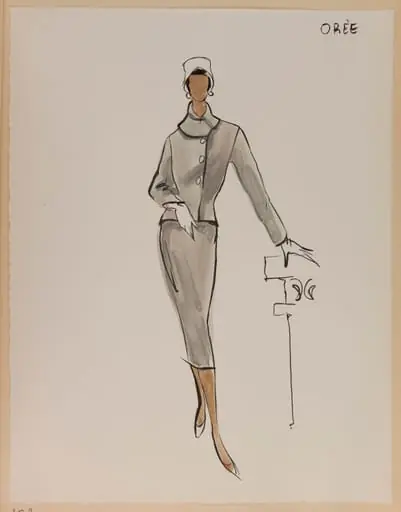
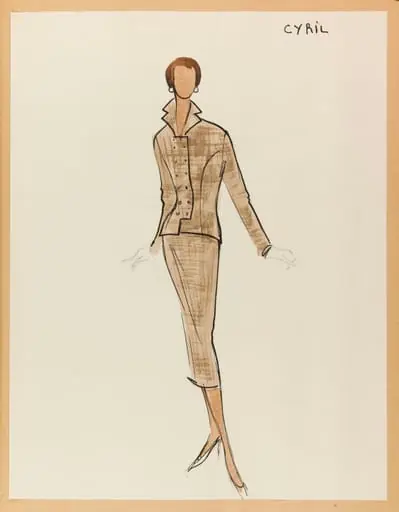
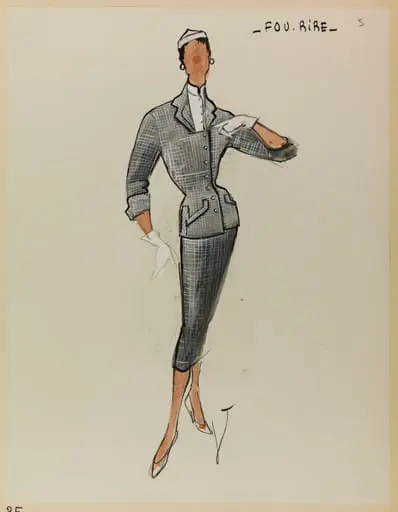
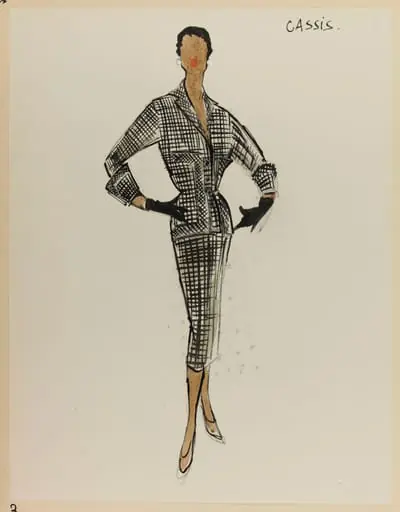
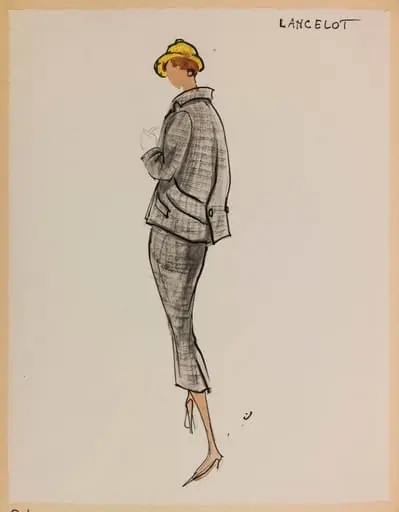
The work presents a single figure in a composed, upright stance, rendered with clean lines and restrained detail.
Institution Barral is a pencil drawing attributed to the French designer Carven, dated around 1955. It is part of the collection at the Museum of Ethnography. The work presents a single figure in a composed, upright stance, rendered with clean lines and restrained detail. Though labeled as an image, its function appears tied to fashion documentation rather than fine art, reflecting Carven’s broader engagement with style and identity in postwar France.
Subject & Meaning
The subject is a woman dressed in a coordinated plaid outfit, including a jacket, dress, headband, yellow gloves, and white heels. Her posture is upright and self-possessed, suggesting composure and quiet authority. The attire, while fashionable, is not overtly theatrical; it reflects everyday elegance of the era. The drawing does not depict a named individual but rather embodies a type—urban, refined, and consciously dressed—aligned with mid-century ideals of feminine poise.
Technique & Style
Carven employed a minimalist line technique, using pencil to define form without shading or texture. The color palette—limited to the natural tones of the paper and the muted plaid pattern—is deliberately restrained, drawing focus to silhouette and structure. Details like gloves and headband are rendered with precision, indicating an interest in garment construction. The absence of background or context isolates the figure, emphasizing costume as the primary subject.
History & Provenance
The drawing entered the Museum of Ethnography’s collection as part of a broader acquisition of fashion-related materials from Carven’s studio. Its date, circa 1955, coincides with the designer’s peak influence in Parisian couture. While no record of its original commission exists, its inclusion in a museum of ethnography suggests it was valued as a cultural artifact representing postwar French social norms and aesthetic values.
Context
Created during a period when French fashion houses were reasserting global influence, Institution Barral reflects the era’s emphasis on tailored, feminine silhouettes. Unlike haute couture sketches intended for clients, this drawing appears more observational, possibly used for internal reference or editorial purposes. Its presence in an ethnographic museum signals a shift in how fashion was being interpreted—not merely as design, but as cultural expression.
Legacy
The work remains a quiet example of how fashion illustration functioned beyond advertising—as a tool for documenting social identity. While Carven is better known for garments, this drawing offers insight into her visual language and attention to detail. It contributes to scholarly understanding of mid-century French dress culture, particularly the interplay between personal style and societal expectation.
Artist & collection
Artist
These delicate ink-on-paper drawings capture the quiet poetry of everyday things: pinecones, reeds, apples.
Museum
Palais Galliera - Musée de la Mode de la Ville de Paris
Continue through works from the same source collection.