Artwork
Sarment
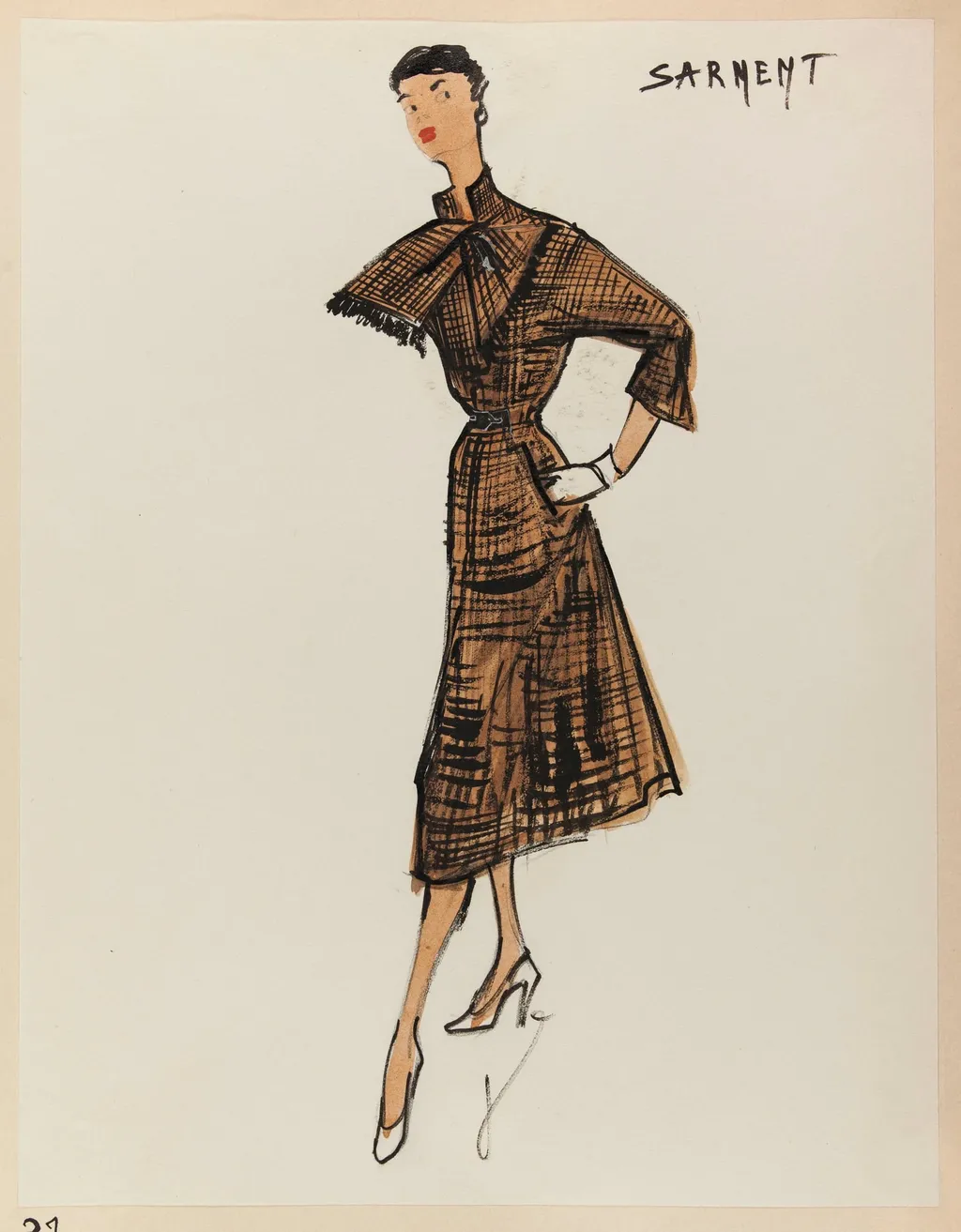
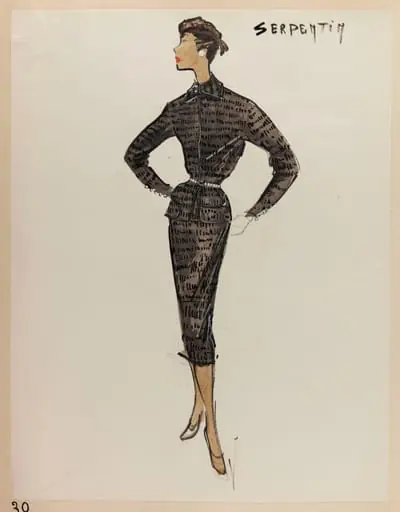
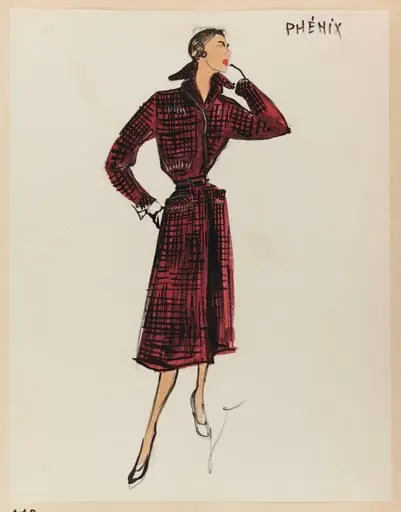
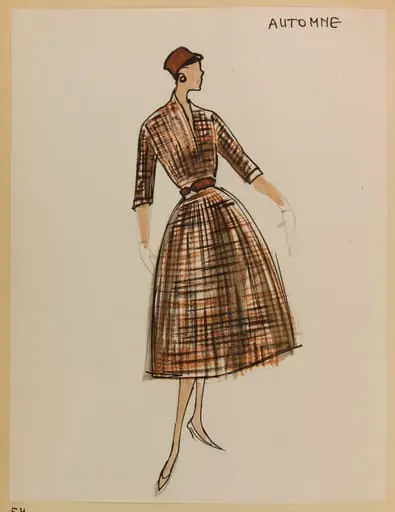
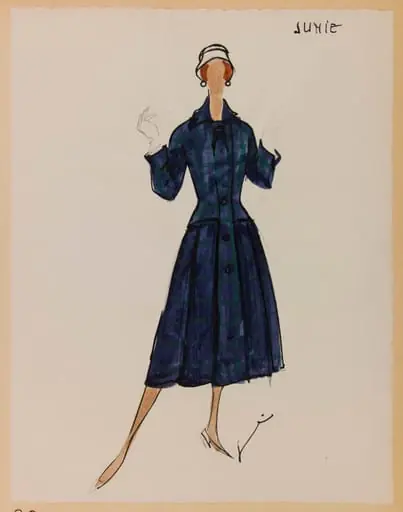
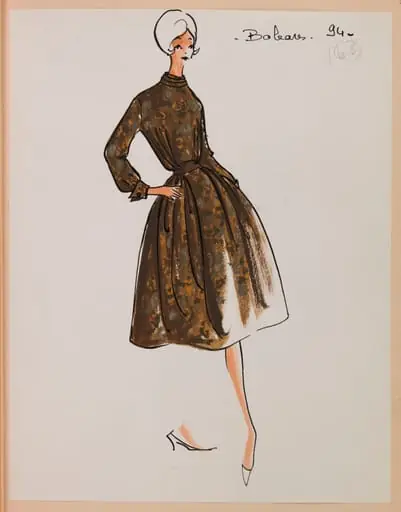
Sarment is a drawing by Carven. It dates from 1952 and is held in the collection of the Palais Galliera - Musée de la Mode de la Ville de Paris.
About this work
Overview
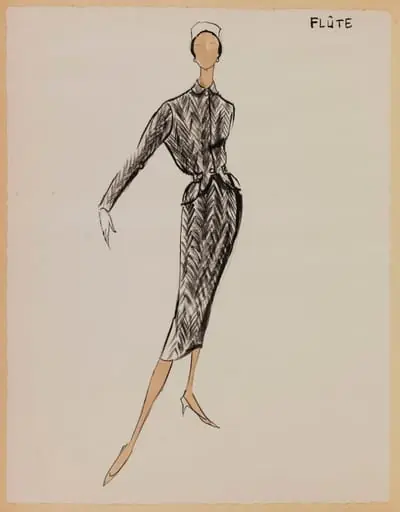
Sarment, attributed to the French fashion illustrator Carven around 1952, is a modestly scaled drawing preserved in the Museum of Ethnography’s collection. The work records a single female figure dressed in a coordinated ensemble, offering a snapshot of mid‑century sartorial design.
Subject & Meaning
The figure is portrayed in a long, patterned dress of dark brown and black plaid, complemented by a matching jacket with a draped collar. She wears high‑heeled shoes, her short hair neatly arranged, and holds the jacket closed at the waist, suggesting a poised, everyday elegance.
Technique & Style
Executed with swift, assured strokes, the drawing conveys the folds and texture of the fabric through minimal line work. The confidence of the hand captures the weight and movement of the cloth without elaborate shading, characteristic of Carven’s illustrative approach.
History & Provenance
Created circa 1952, the piece entered the Museum of Ethnography’s holdings at an unspecified date, where it remains part of the institution’s documentation of fashion illustration. The inscription “Sarment” appears in the lower corner, likely denoting the garment’s name or serving as a working title.
Context
The drawing reflects post‑war French fashion, a period when designers emphasized practicality blended with refined aesthetics. Carven’s focus on a single garment and its coordinated accessories mirrors contemporary trends toward cohesive, ready‑to‑wear ensembles.
Artist & collection
Artist
These delicate ink-on-paper drawings capture the quiet poetry of everyday things: pinecones, reeds, apples.
Museum
Palais Galliera - Musée de la Mode de la Ville de Paris
Continue through works from the same source collection.