Artwork
Jonquille
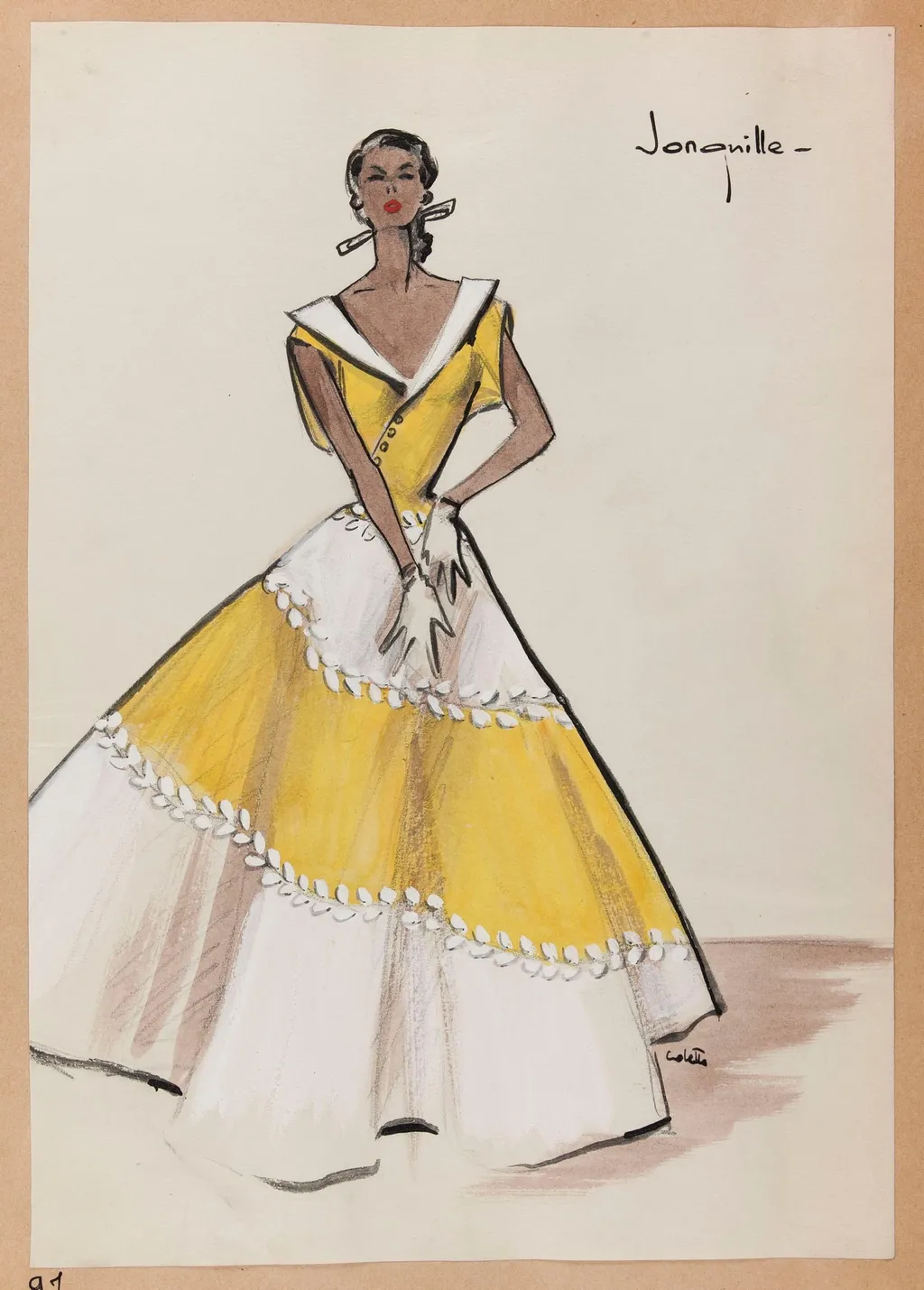
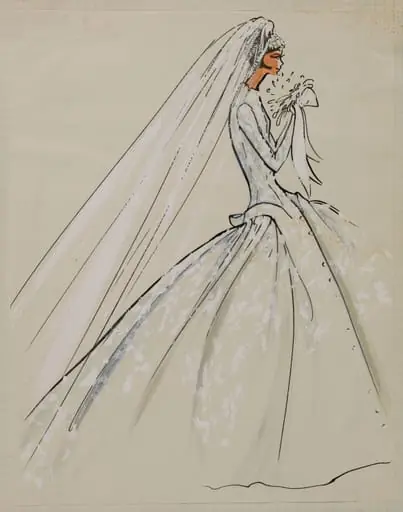
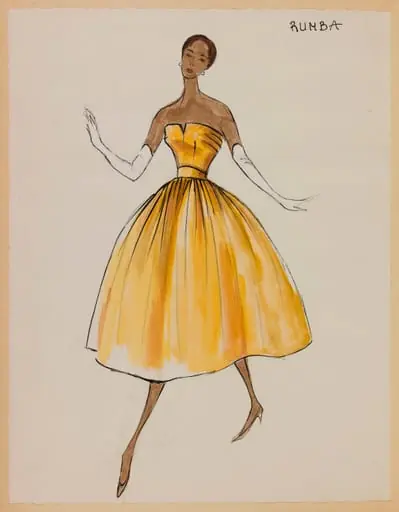
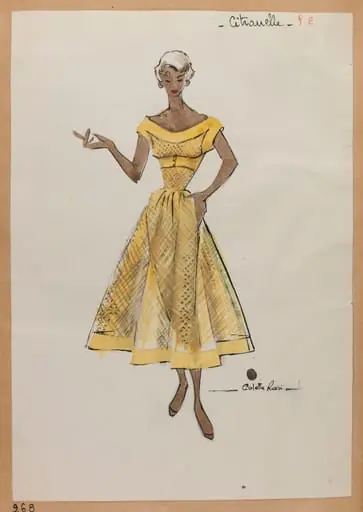
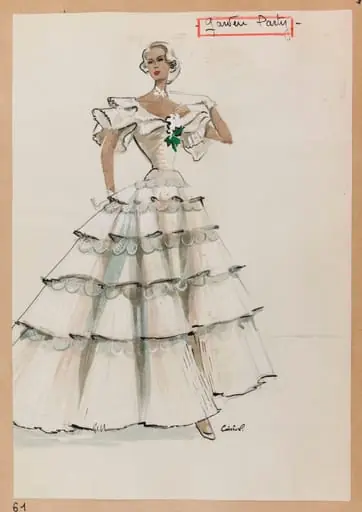
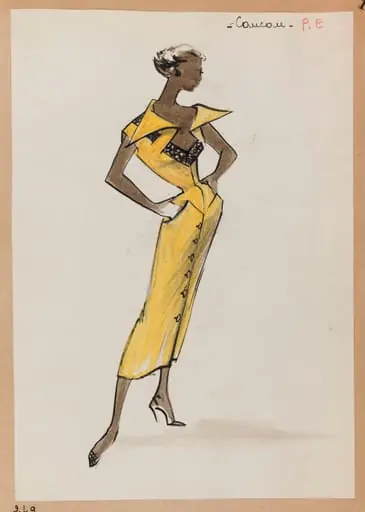
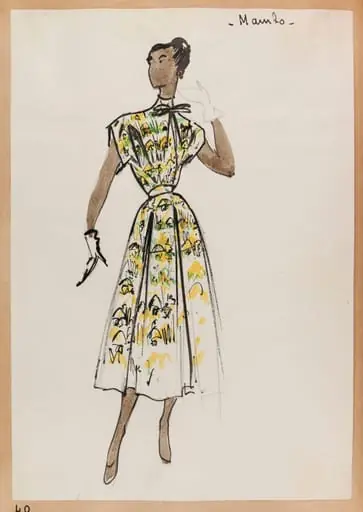
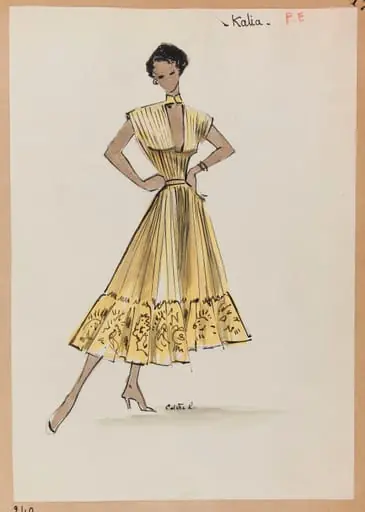
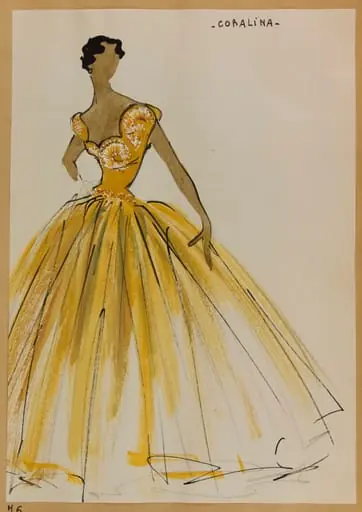
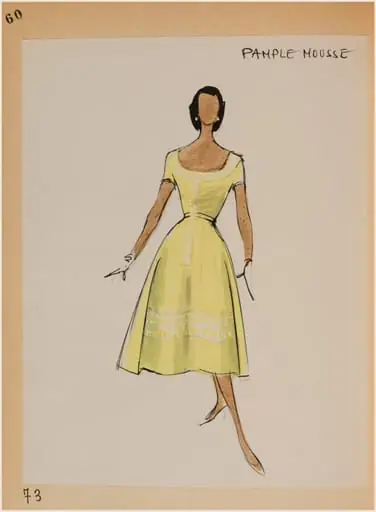
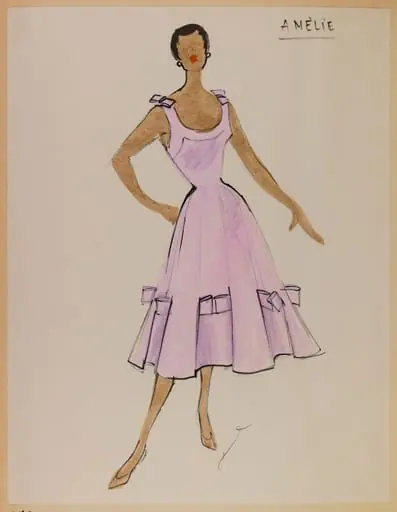
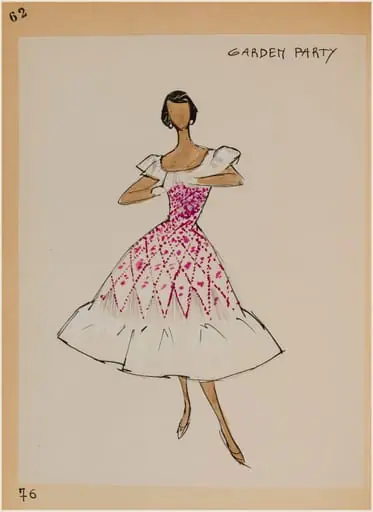
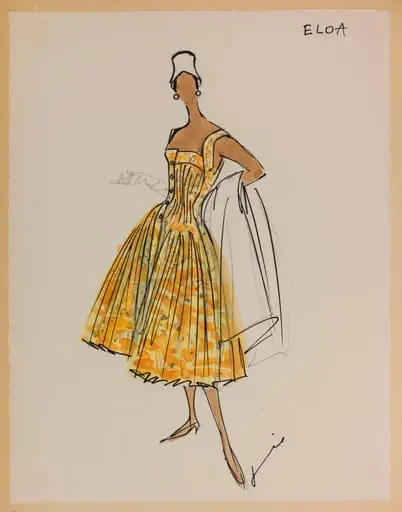
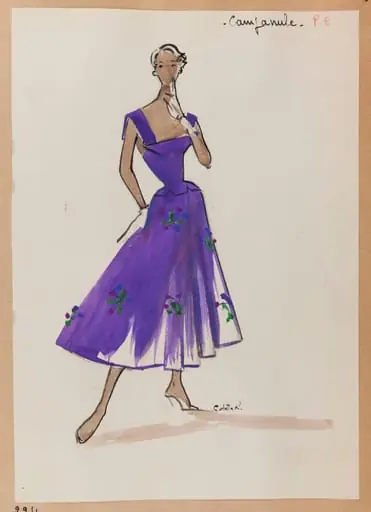
Jonquille is a drawing by Carven. It dates from 1951 and is held in the collection of the Palais Galliera - Musée de la Mode de la Ville de Paris.
About this work
Overview
The work presents a solitary female figure in formal attire, rendered with careful attention to textile detail and posture.
Jonquille is a painted portrait attributed to the designer and artist Carven, dated around 1951. It is part of the collection at the Museum of Ethnography. The work presents a solitary female figure in formal attire, rendered with careful attention to textile detail and posture. Though labeled as an image, its execution suggests a painted surface rather than a photograph or print, aligning it with mid-20th-century portraiture practices associated with fashion illustration.
Subject & Meaning
The subject is a woman dressed in a yellow and white ensemble, her hands gently clasped, gaze directed forward. The attire—white collar, trimmed skirt, and gloves—suggests a ceremonial or formal occasion, possibly tied to cultural or social rituals of the period. Her composed posture and refined dress convey dignity, but the absence of contextual clues leaves the specific narrative ambiguous, inviting interpretation grounded in fashion history rather than personal biography.
Technique & Style
The painting employs soft, even brushwork to render the dress’s fabric and trim, emphasizing texture without overt modeling. The light beige background isolates the figure, focusing attention on the garment’s pattern and silhouette. Color is restrained yet deliberate: the yellow dress contrasts subtly with white accents, avoiding vibrancy in favor of quiet harmony. The style reflects a blend of fashion illustration and portrait tradition, prioritizing clarity and elegance over emotional expression.
History & Provenance
Jonquille entered the Museum of Ethnography’s collection in the latter half of the 20th century, likely through acquisition related to Carven’s work in fashion design. Its classification as an ethnographic object suggests it was valued for its cultural representation of mid-century dress norms rather than as fine art. No documented exhibition history or prior ownership is publicly available, limiting its provenance to institutional records.
Context
Created in the early 1950s, the work coincides with a period when fashion designers like Carven blurred lines between couture and visual art. Portraits of dressed figures were common in fashion magazines and design archives, serving as both advertisement and cultural record. Jonquille reflects this intersection, capturing a moment when clothing functioned as a marker of identity, class, and aesthetic ideals in postwar Europe.
Legacy
Jonquille remains a quiet example of how fashion design intersected with portraiture in the mid-20th century. While not widely exhibited or studied, it contributes to the Museum of Ethnography’s documentation of dress as cultural artifact. Its preservation underscores the value placed on everyday elegance, offering insight into how personal adornment was codified and represented during a time of social reconstruction.
Artist & collection
Artist
These delicate ink-on-paper drawings capture the quiet poetry of everyday things: pinecones, reeds, apples.
Museum
Palais Galliera - Musée de la Mode de la Ville de Paris
Continue through works from the same source collection.