Artwork
Amélie
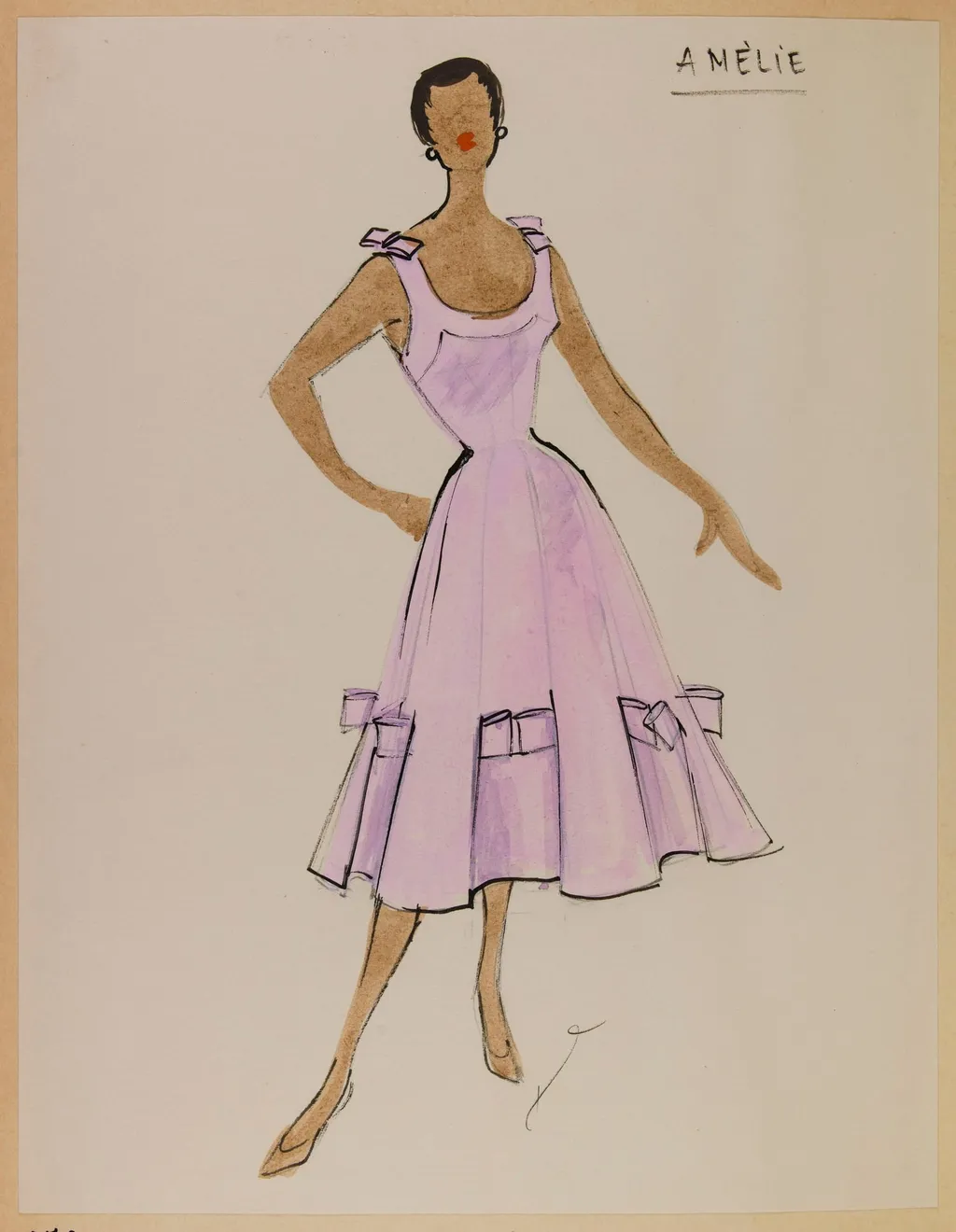
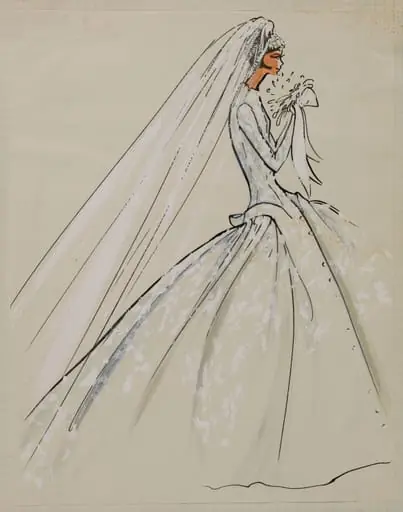
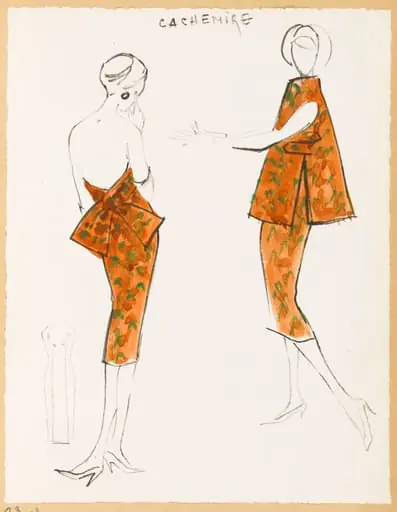
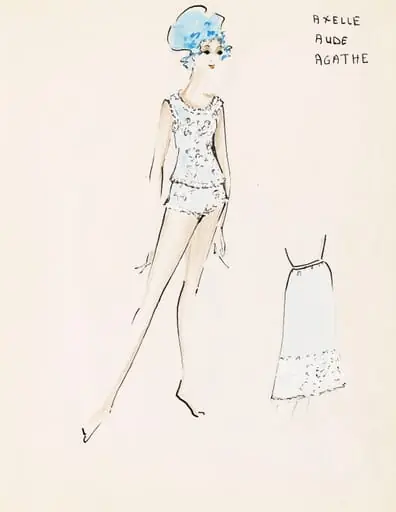
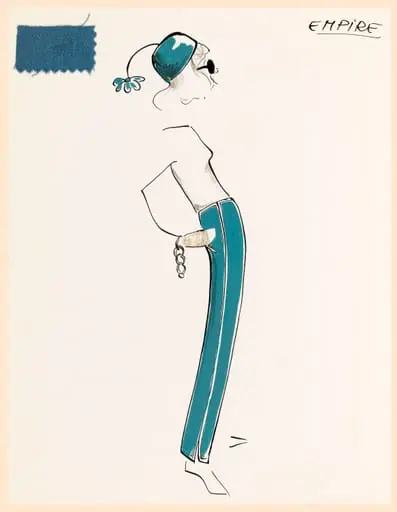
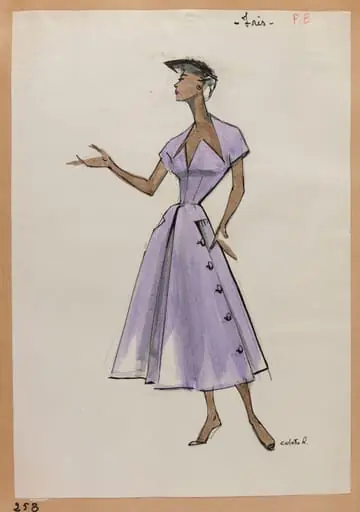
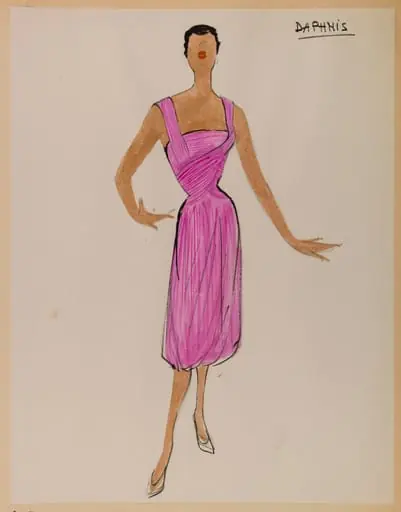
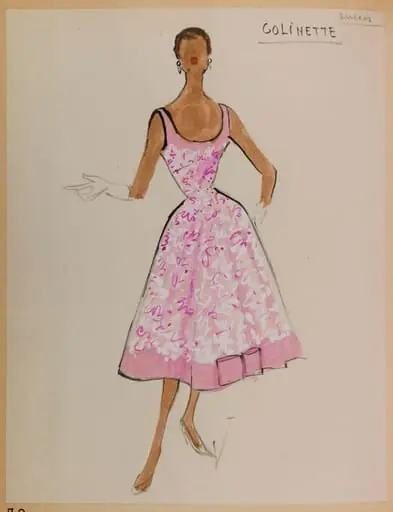
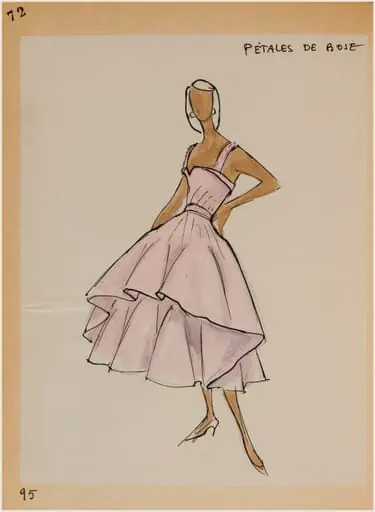
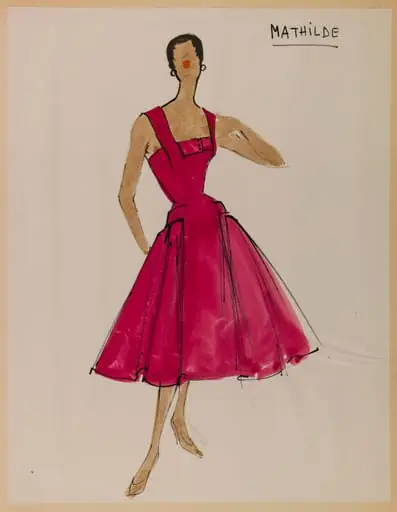
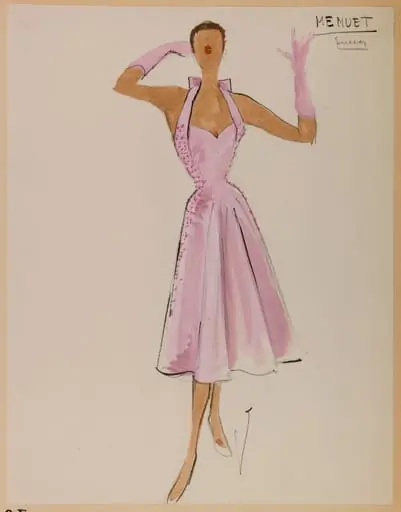
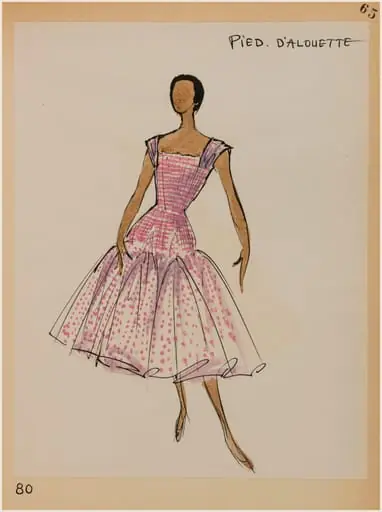
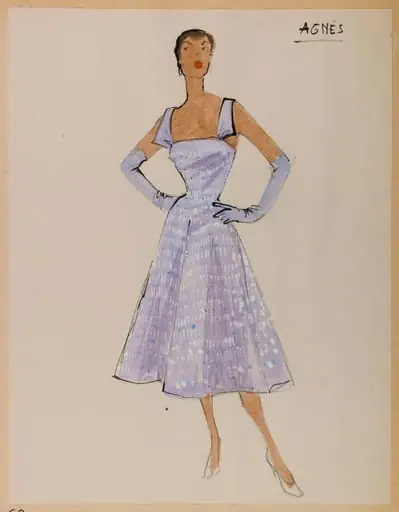
Amélie is a drawing by Carven. It dates from 1953 and is held in the collection of the Palais Galliera - Musée de la Mode de la Ville de Paris.
About this work
Overview
The painting reflects Carven’s interest in fashion and feminine identity during the postwar era.
Amélie is a portrait painted around 1953 by the French designer and artist Carven. The work is part of the collection at the Museum of Ethnography. It presents a single figure against a plain beige background, emphasizing the subject’s presence through composition and detail rather than environmental context. The painting reflects Carven’s interest in fashion and feminine identity during the postwar era.
Subject & Meaning
The subject is a woman depicted in a poised, self-assured stance: one hand on her hip, the other extended outward. Her attire—a pink dress with a low neckline and ruffled hem—suggests a blend of domestic elegance and modern femininity. The dark bob haircut and red lipstick align with mid-century beauty standards, while her direct gaze and relaxed posture convey quiet self-possession, free from overt theatricality.
Technique & Style
Carven employed a restrained palette and smooth, controlled brushwork to render the figure. The dress’s texture is suggested through subtle tonal shifts rather than detailed patterning. The background is uniformly flat, isolating the subject and focusing attention on form and gesture. While cross-hatching is sometimes referenced in relation to Carven’s work, this piece relies more on soft modeling and clean contours to achieve its refined aesthetic.
History & Provenance
The painting entered the Museum of Ethnography’s collection in the late 20th century, likely through acquisition from the artist’s estate or a private donor. Its classification within an ethnographic institution reflects an interest in cultural representations of identity rather than fine art traditions. Documentation from the period is limited, and the work’s exhibition history remains sparse.
Context
Created in the early 1950s, Amélie emerges from a period when French fashion designers increasingly influenced visual culture. Carven, known primarily for couture, extended her design sensibilities into portraiture, capturing the idealized modern woman of the time. The painting resonates with broader societal shifts toward celebrating independent femininity, though it avoids overt political or social commentary.
Legacy
Amélie remains a quiet example of Carven’s interdisciplinary practice, bridging fashion and painting. Though not widely exhibited, it contributes to scholarly discussions on how designers documented cultural ideals through visual art. Its preservation in an ethnographic museum underscores its value as a cultural artifact, offering insight into mid-century aesthetics beyond the runway.
Artist & collection
Artist
These delicate ink-on-paper drawings capture the quiet poetry of everyday things: pinecones, reeds, apples.
Museum
Palais Galliera - Musée de la Mode de la Ville de Paris
Continue through works from the same source collection.