Artwork
'Kankan'
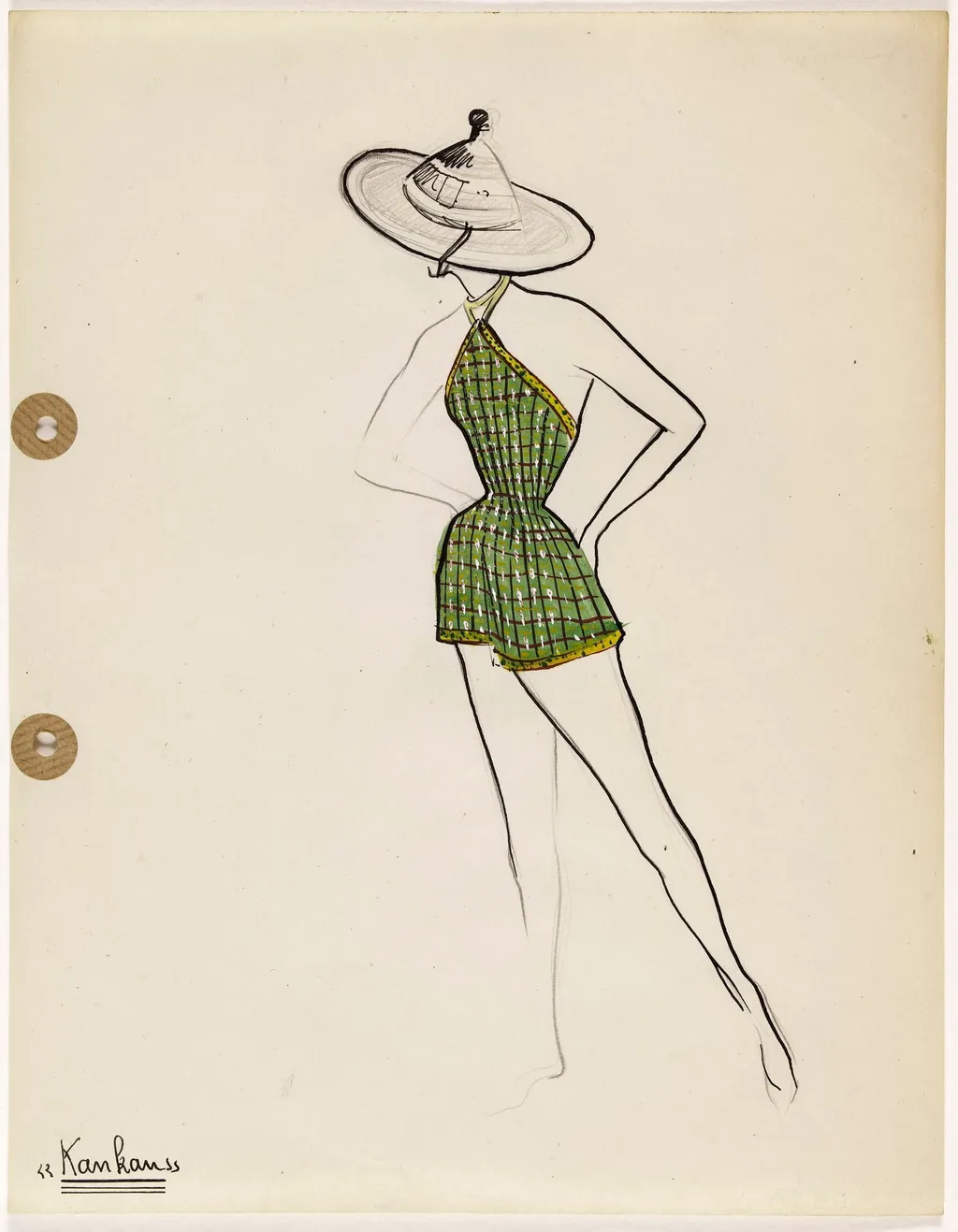
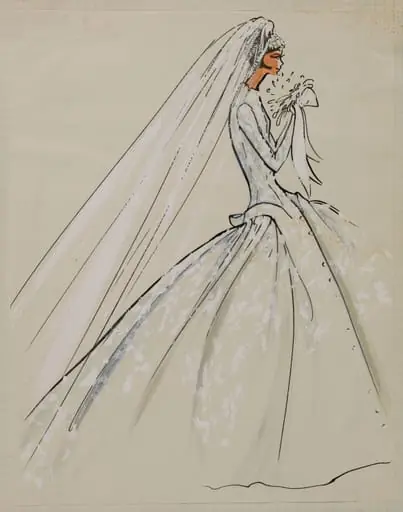
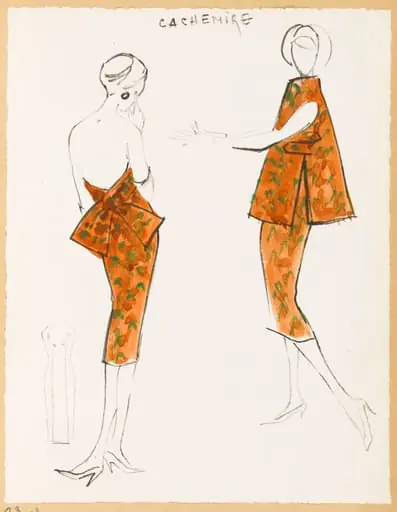
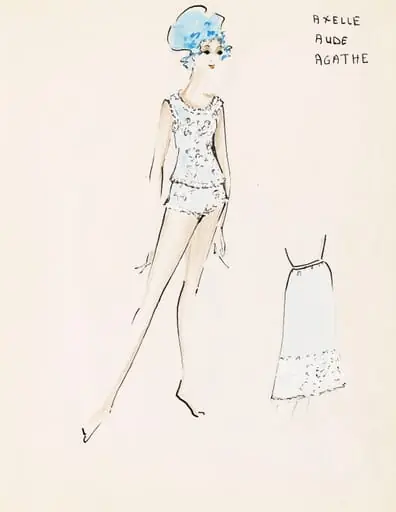
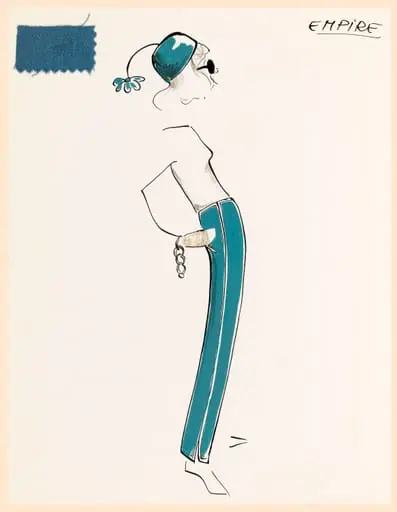
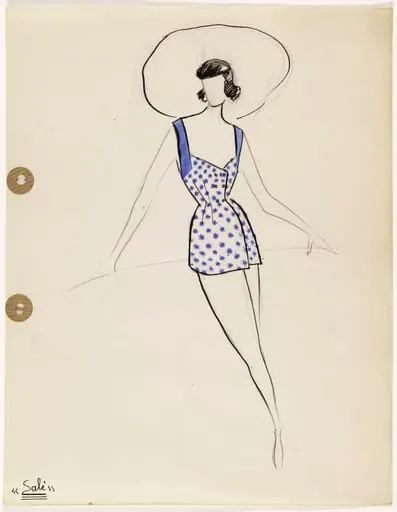
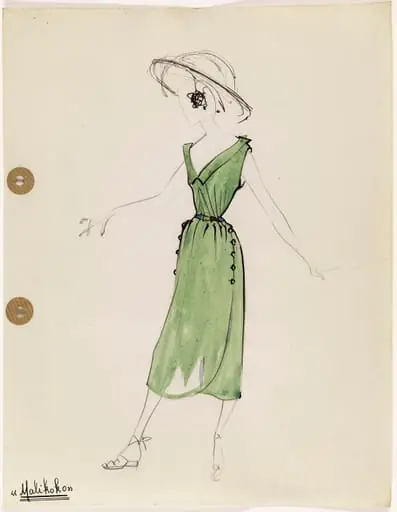
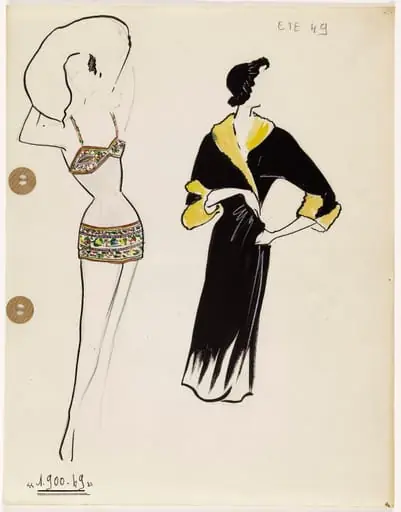
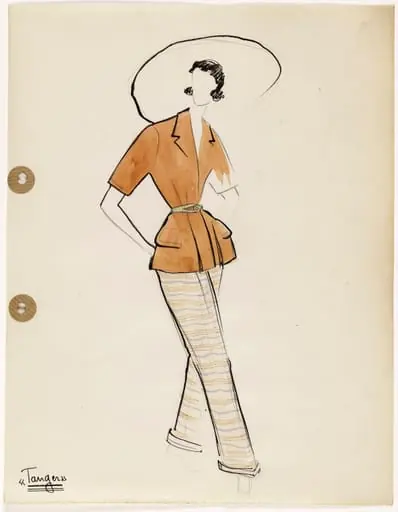
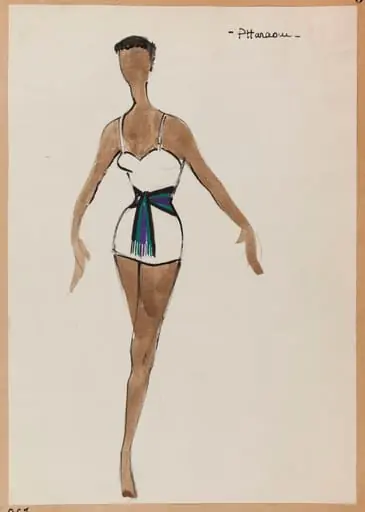
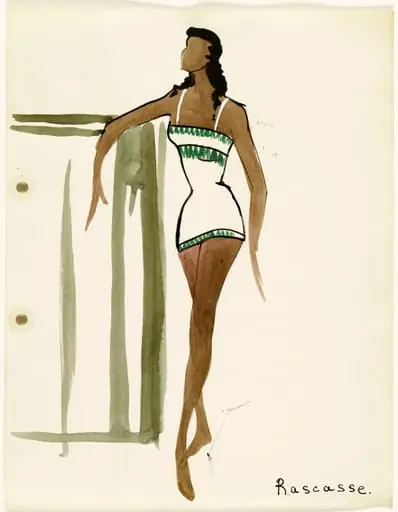
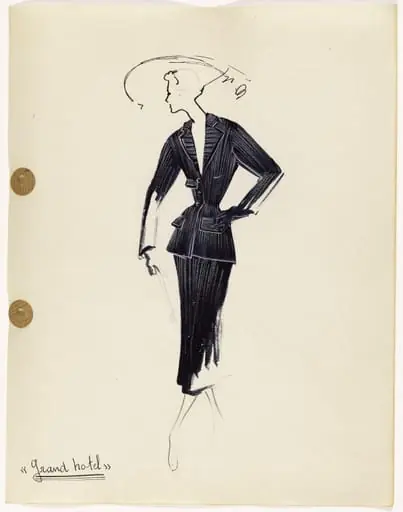
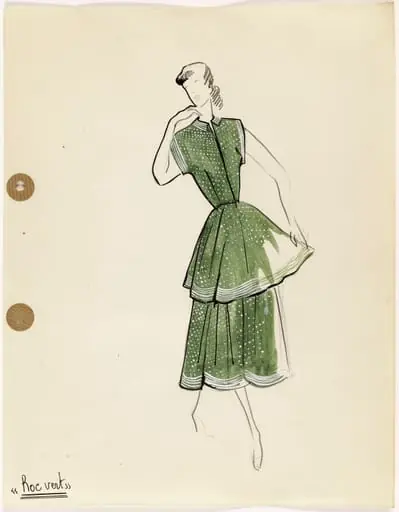
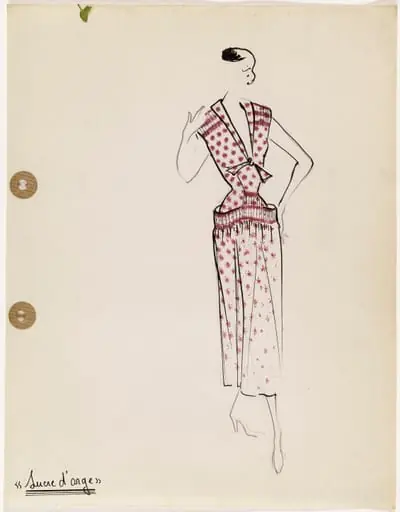
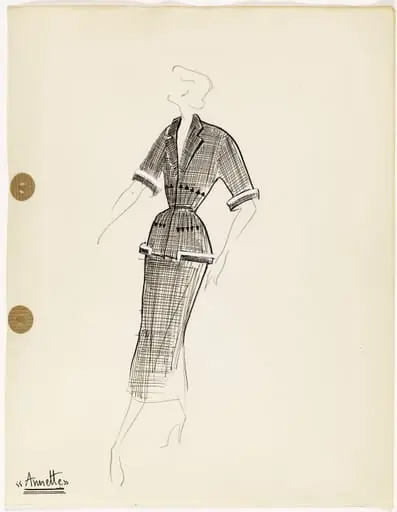
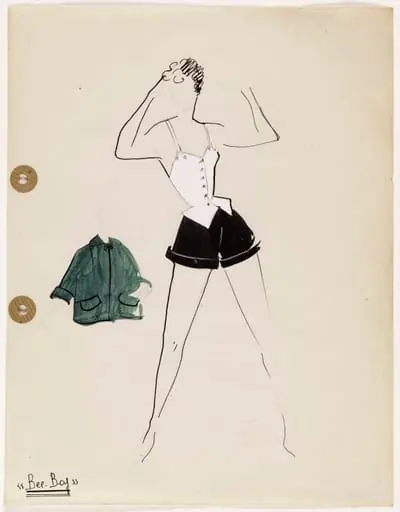
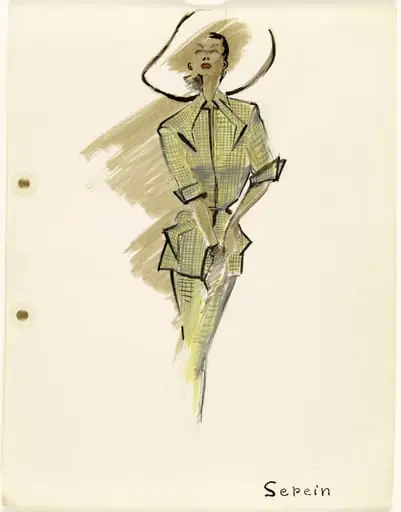
'Kankan' is a drawing by Carven. It dates from 1949 and is held in the collection of the Palais Galliera - Musée de la Mode de la Ville de Paris.
About this work
Overview
Created in 1949 by Carven, 'Kankan' is a pencil sketch depicting a woman in casual attire. The work resides in the Museum of Ethnography and exemplifies a spontaneous, observational approach. Its immediacy suggests it was made on-site, capturing a fleeting moment with economy of line. The absence of elaborate detail emphasizes gesture over realism.
Subject & Meaning
The figure is a woman dressed in a loose, checkered green-and-white dress and a broad-brimmed hat with a dark rim. Her posture—hand on hip, arm relaxed—conveys quiet composure. No narrative context is provided, but the depiction suggests everyday life in a specific cultural setting. The focus on ordinary dress and stance implies an interest in authentic, unposed presence.
Technique & Style
Carven employs bold, fluid lines with minimal shading, prioritizing form and movement over precision. The clothing’s folds are suggested through confident contours rather than detailed rendering. Subtle cross-hatching appears in shadowed areas, adding depth without disrupting the sketch’s spontaneity. The style reflects a direct, almost journalistic approach to drawing.
History & Provenance
The work entered the collection of the Museum of Ethnography shortly after its creation. Its origin as a personal sketch, likely made during fieldwork or travel, is inferred from its informal quality. No documentation of prior ownership exists, and it has remained in the museum’s care since acquisition, preserved as an ethnographic record.
Context
Made in the postwar period, 'Kankan' aligns with a broader interest among artists in documenting regional dress and daily life. Carven’s focus on unadorned attire and natural posture reflects ethnographic priorities of the time—recording cultural details without romanticization. The sketch may have served as reference material for larger studies or publications.
Legacy
Though not widely exhibited, 'Kankan' remains a representative example of mid-20th-century observational drawing in ethnographic practice. Its value lies in its unembellished record of a moment and a person, offering insight into how artists engaged with cultural documentation. It continues to inform studies of dress, posture, and visual anthropology.
Artist & collection
Artist
These delicate ink-on-paper drawings capture the quiet poetry of everyday things: pinecones, reeds, apples.
Museum
Palais Galliera - Musée de la Mode de la Ville de Paris
Continue through works from the same source collection.