Artwork
Katia
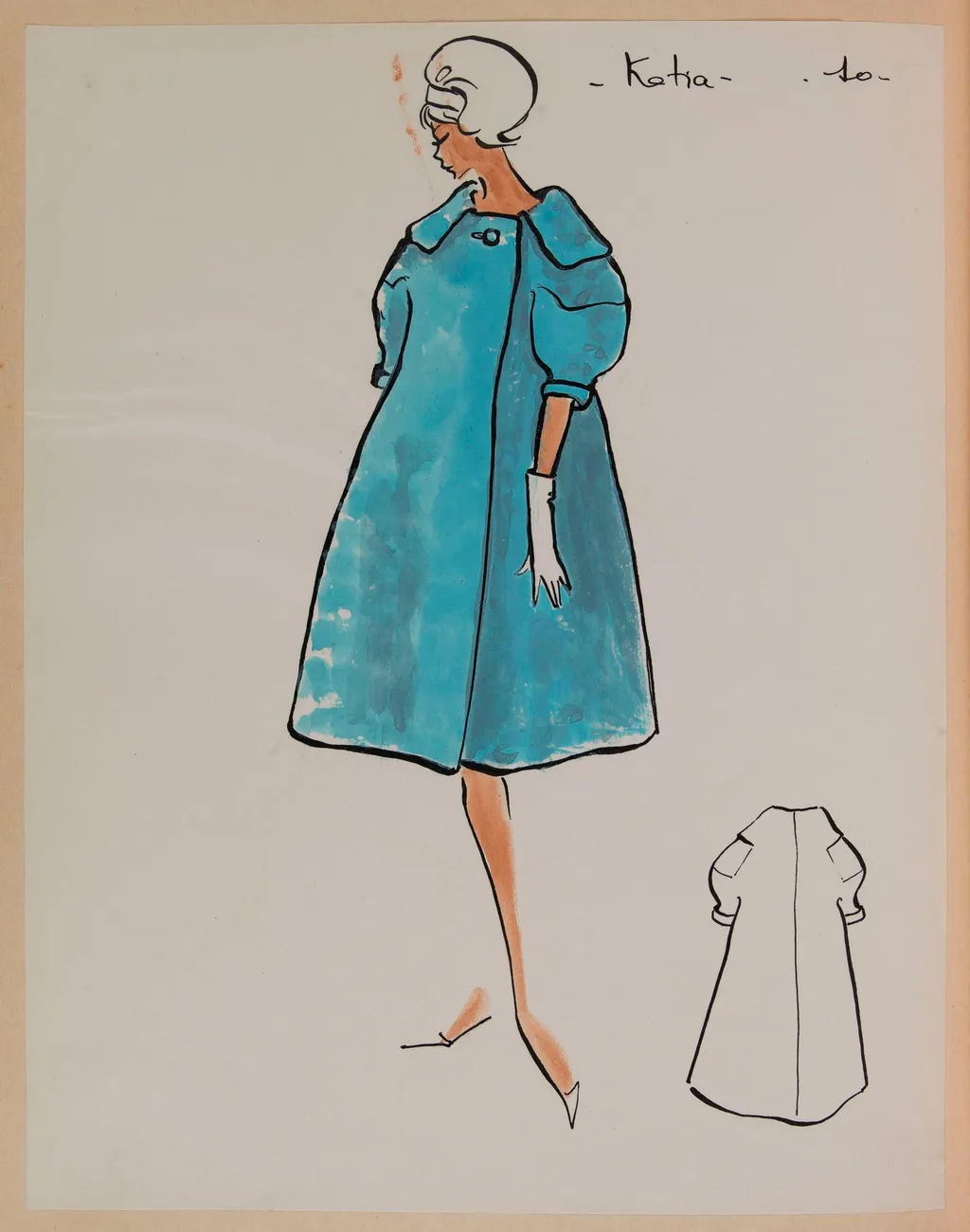
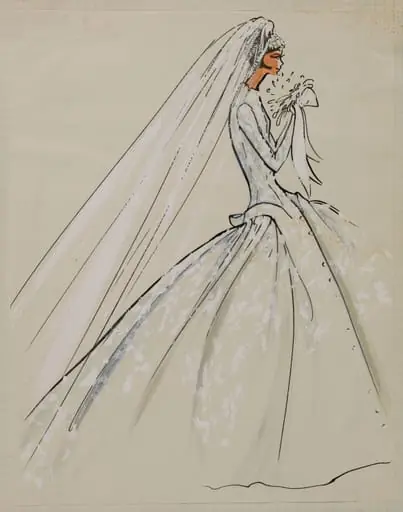
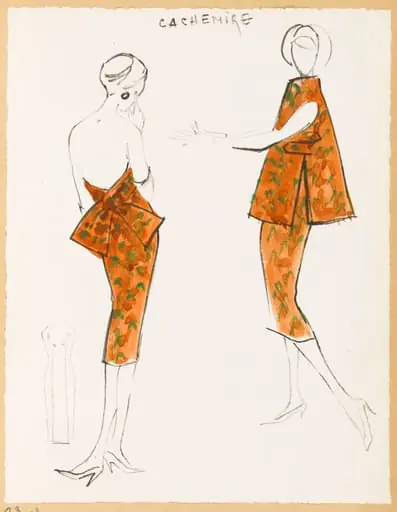
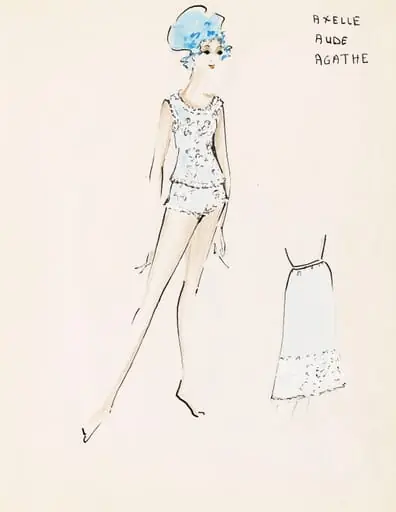
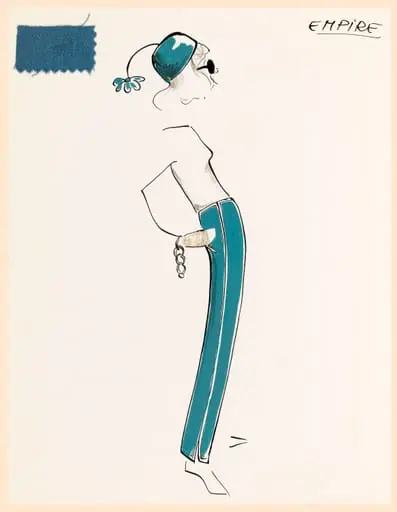
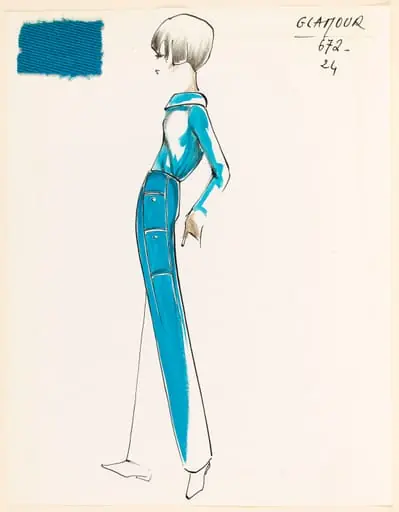
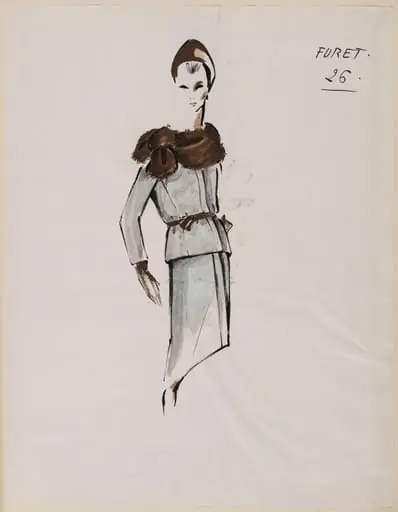
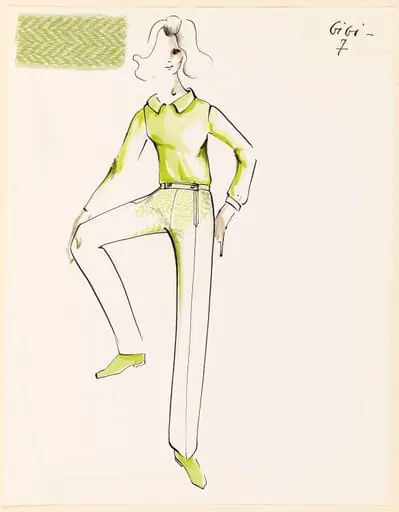
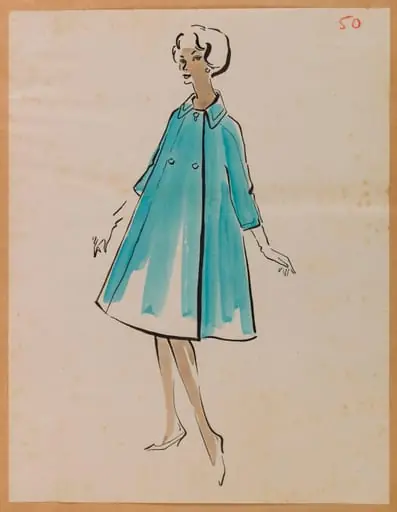
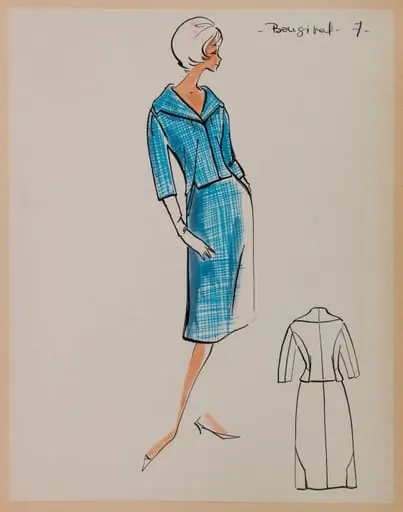
Katia is a drawing by Carven. It dates from 1958 and is held in the collection of the Palais Galliera - Musée de la Mode de la Ville de Paris.
About this work
Overview
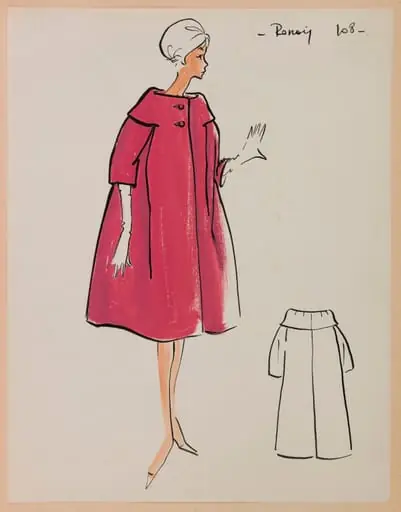
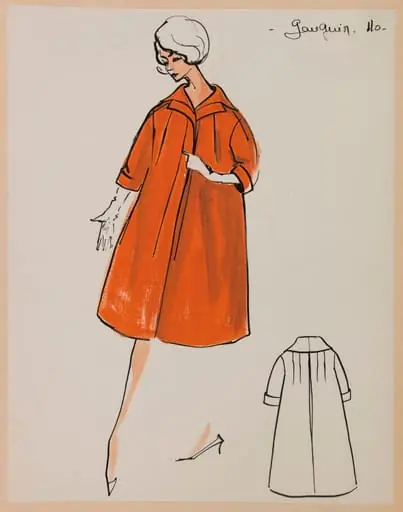
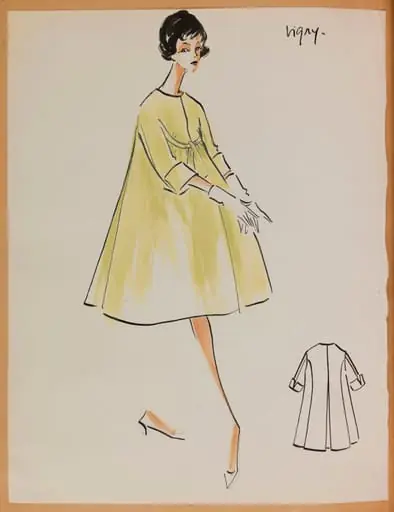
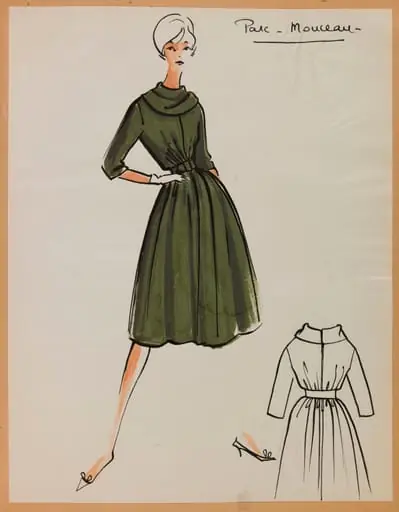
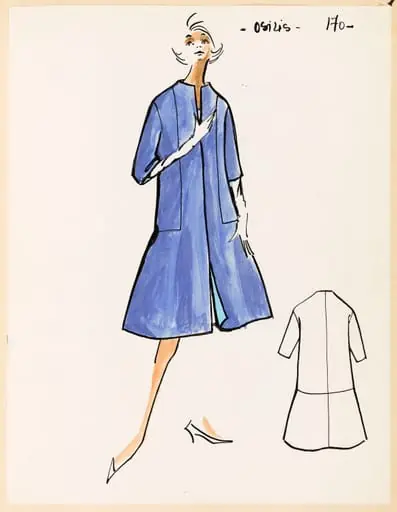
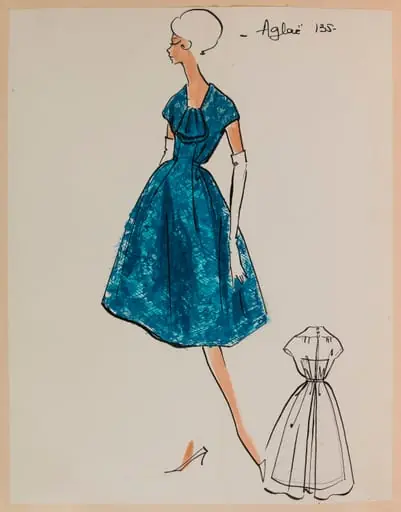
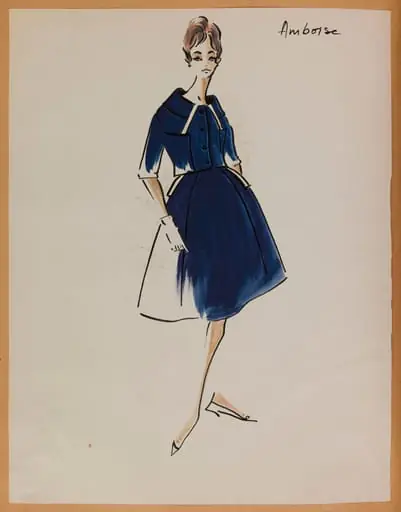
Rendered with restrained lines and minimal color, it functions as a technical record of garment design rather than a finished illustration.
Katia is a pencil and watercolor drawing attributed to the fashion designer Carven, dated around 1958. It is part of the collection at the Museum of Ethnography. The work presents a seated female figure in a detailed costume study, accompanied by a secondary sketch of the dress’s rear construction. Rendered with restrained lines and minimal color, it functions as a technical record of garment design rather than a finished illustration.
Subject & Meaning
The figure depicts a woman in a tailored blue dress with puffy sleeves, a high collar, and buttoned front, paired with white gloves and heels. Her short white hair and composed posture suggest an older, refined individual, possibly a client or muse. The inclusion of the rear view of the dress indicates a focus on structural accuracy, emphasizing the garment’s form and fit over narrative or emotional content.
Technique & Style
The drawing employs clean, precise linework with subtle watercolor washes to define the dress’s silhouette. A limited palette of blue and white, with faint gray accents, reinforces clarity and elegance. Shading is minimal, avoiding realism in favor of functional depiction. The composition balances the full figure with a detached study of the back, reflecting a designer’s methodical approach to garment construction.
History & Provenance
The drawing entered the Museum of Ethnography’s collection as part of a broader archive of mid-century fashion materials. Its origin traces to Carven’s atelier in Paris, where such studies were used to guide tailors and communicate design intent. Though not publicly exhibited for decades, its preservation reflects institutional interest in documenting the technical side of fashion design beyond final garments.
Context
Created in the late 1950s, Katia reflects a period when haute couture houses relied heavily on hand-drawn sketches to convey intricate details before production. Unlike mass-market illustrations, these studies prioritized accuracy and craftsmanship. Carven, known for understated elegance, used such drawings to maintain control over fit and proportion, distinguishing her work within the competitive Parisian fashion scene.
Legacy
Katia remains a quiet example of fashion’s behind-the-scenes process, preserving the hand of the designer in an era increasingly dominated by technical drafting. Its preservation in an ethnographic museum underscores the cultural value of design documentation. While not widely known, it contributes to scholarly understanding of how couture garments were conceived and refined before being brought to life.
Artist & collection
Artist
These delicate ink-on-paper drawings capture the quiet poetry of everyday things: pinecones, reeds, apples.
Museum
Palais Galliera - Musée de la Mode de la Ville de Paris
Continue through works from the same source collection.