Artwork
Libertine
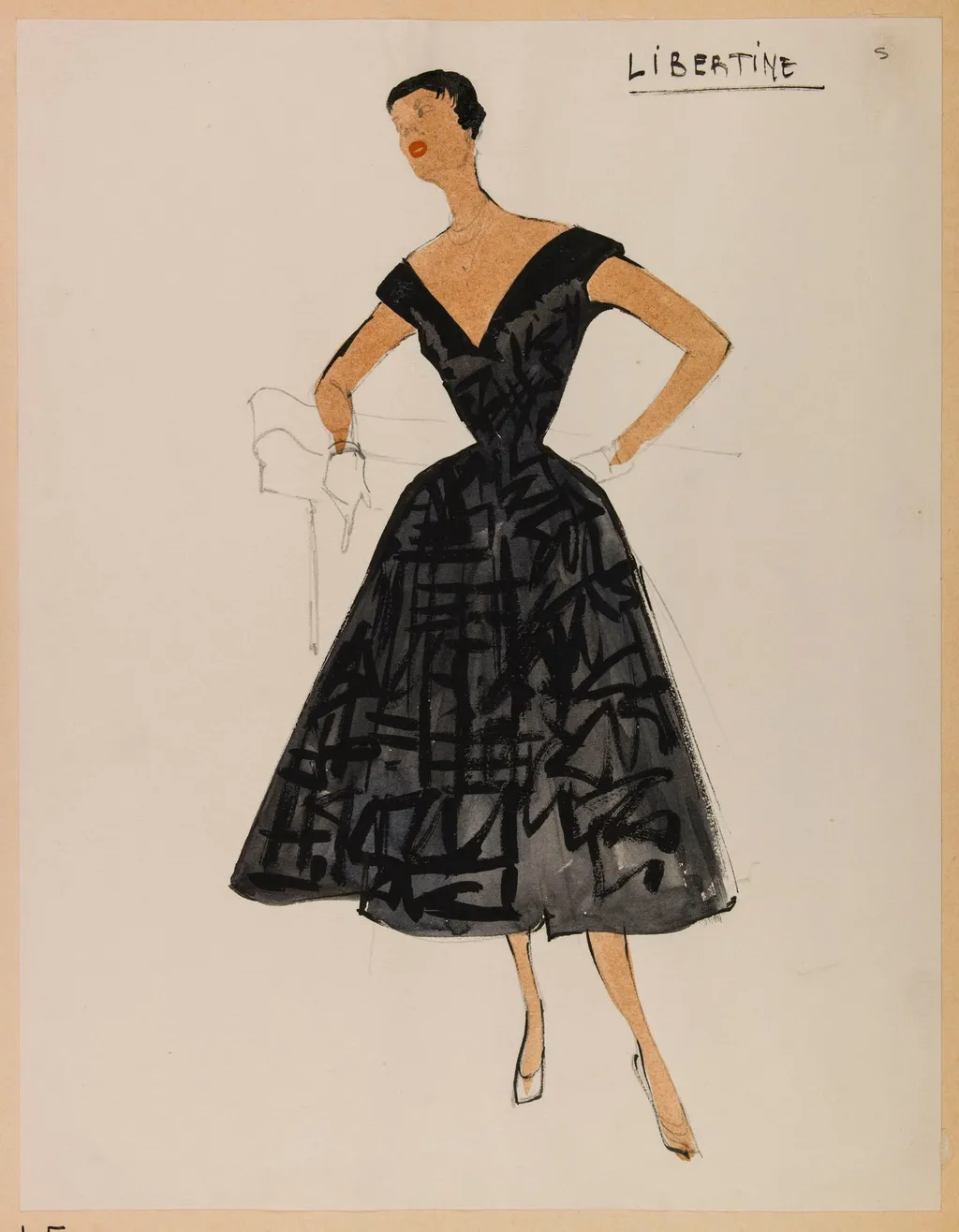
Libertine is a drawing by Carven. It dates from 1953 and is held in the collection of the Palais Galliera - Musée de la Mode de la Ville de Paris.
About this work
Overview
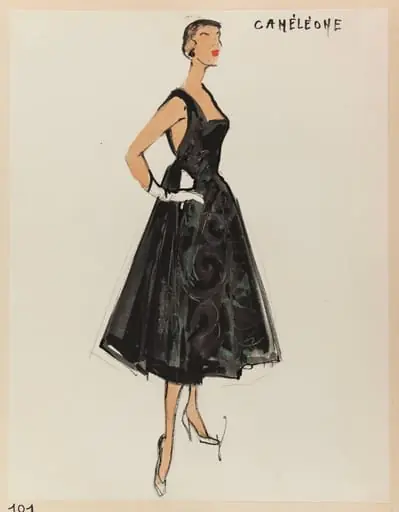
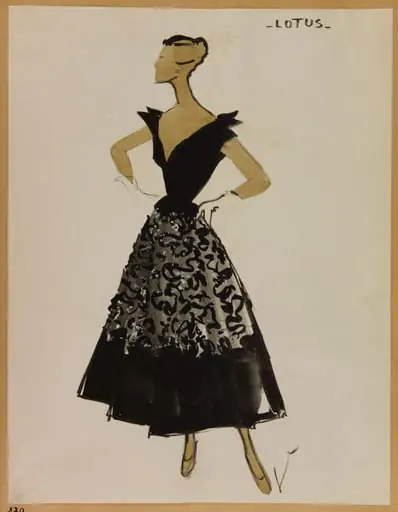
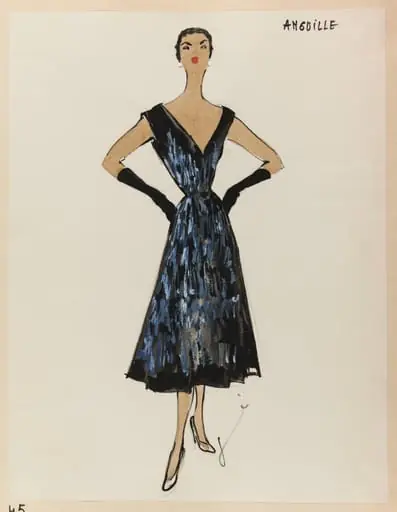
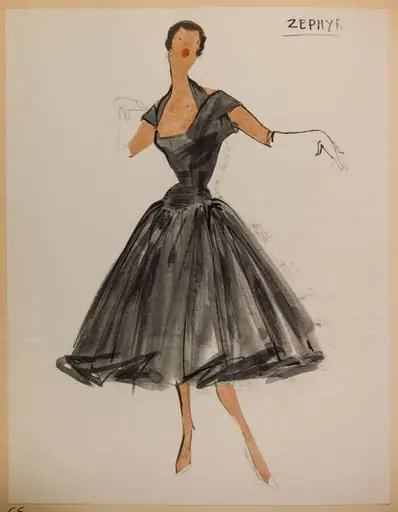
The work reflects Carven’s interest in translating fashion into graphic form, emphasizing silhouette and movement over detailed realism.
Libertine is a pencil sketch created around 1953 by the French fashion designer Carven. It depicts a woman in a stylized black dress and is part of the collection at the Museum of Ethnography. The work reflects Carven’s interest in translating fashion into graphic form, emphasizing silhouette and movement over detailed realism. Its informal, gestural lines suggest a study rather than a finished illustration.
Subject & Meaning
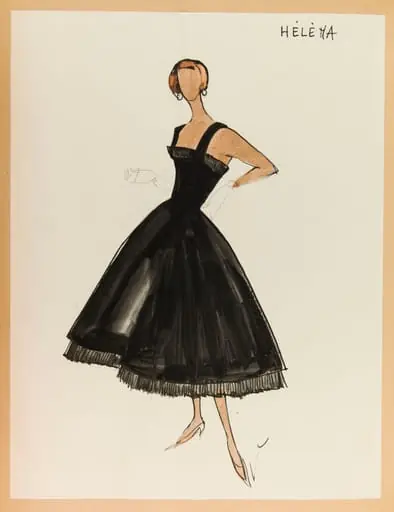
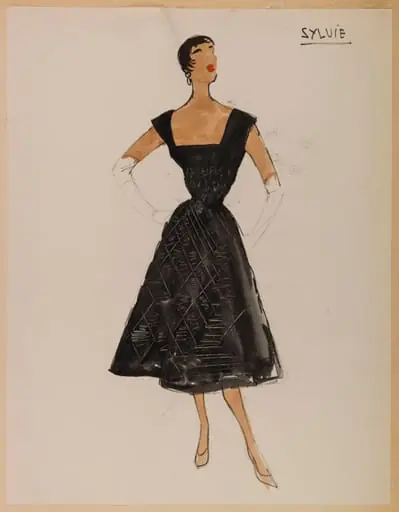
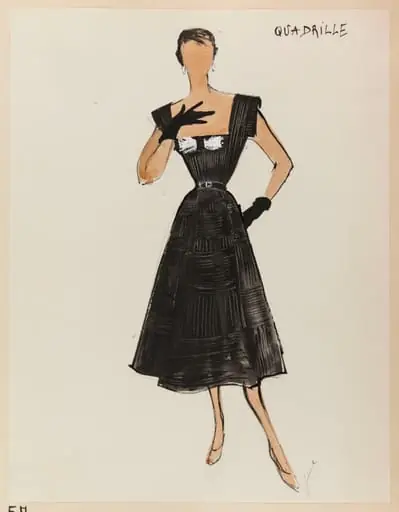
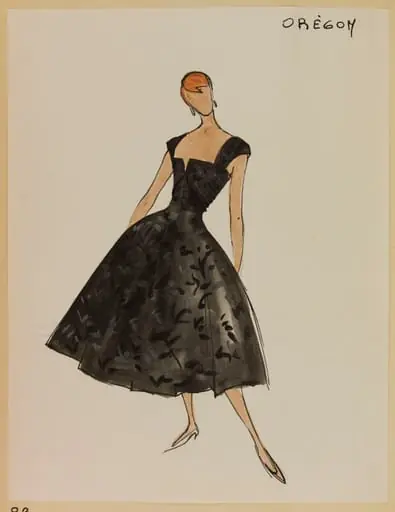
The figure wears a sleek, modern dress with a deep V-neck and flared skirt, suggesting a sense of ease and independence. Her posture—one hand on the hip, the other holding a purse—conveys quiet confidence. The title, Libertine, implies a departure from conventional restraint, aligning the figure with a spirit of personal freedom, though the image avoids overt narrative or symbolism.
Technique & Style
The drawing employs loose, fluid pencil lines to define the dress’s geometric patterns and flowing contours. Shading is minimal, and details like the heels and purse are suggested rather than rendered precisely. This sketchy approach prioritizes rhythm and form over finish, characteristic of fashion studies meant to capture the essence of a design rather than document it literally.
History & Provenance
Created in the early 1950s, the sketch entered the Museum of Ethnography’s collection as part of a broader acquisition of fashion-related materials. While Carven’s commercial work was widely published, this particular drawing remained in private hands until its institutional acquisition. Its provenance reflects growing interest in fashion as a cultural artifact rather than merely a commercial product.
Context
In postwar France, fashion design increasingly emphasized modernity and individual expression. Carven, known for her tailored yet playful silhouettes, often explored how clothing could convey autonomy. This sketch aligns with broader trends in mid-century fashion illustration, where designers used rapid drawing to communicate new ideas to clients and the public.
Legacy
Libertine stands as a quiet example of how fashion designers documented their creative process. Though not widely exhibited, it contributes to the understanding of Carven’s design philosophy and the role of sketching in mid-century fashion. Its presence in an ethnographic museum underscores the cultural significance attributed to everyday objects and their makers.
Artist & collection
Artist
These delicate ink-on-paper drawings capture the quiet poetry of everyday things: pinecones, reeds, apples.
Museum
Palais Galliera - Musée de la Mode de la Ville de Paris
Continue through works from the same source collection.