Artwork
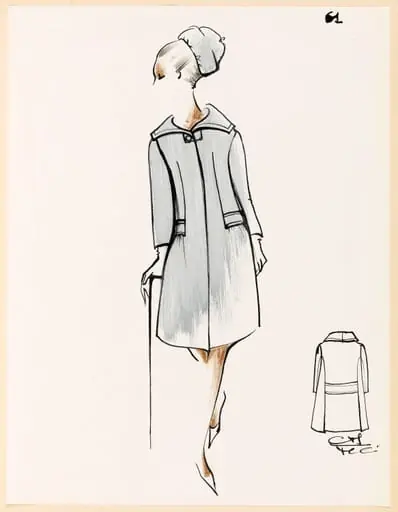
Manteau cintré évasé à carreaux bis à manches longues et descendant aux genoux et chapeau et gants vert asperge
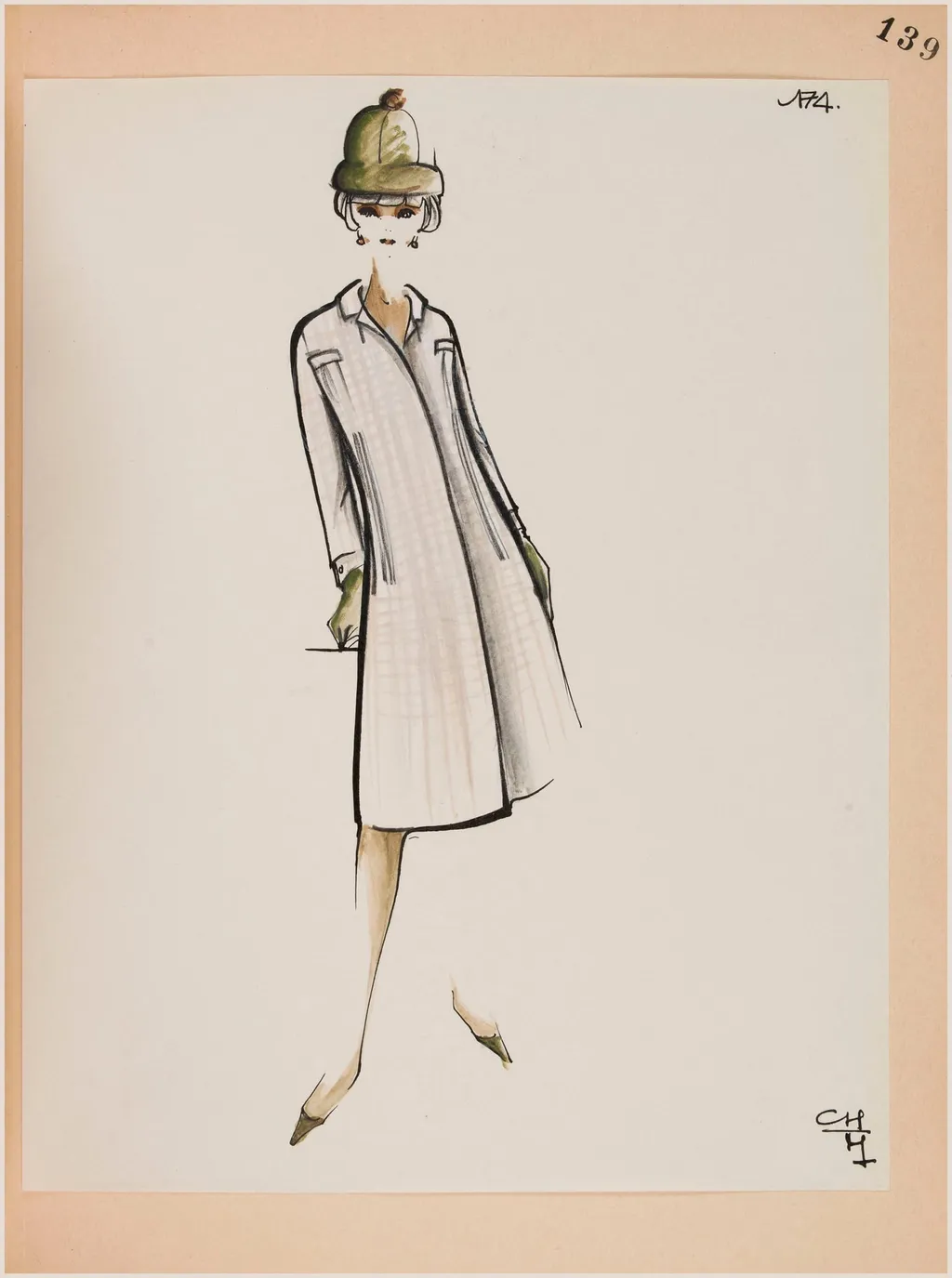
Manteau cintré évasé à carreaux bis à manches longues et descendant aux genoux et chapeau et gants vert asperge is a drawing by Carven. It dates from 1963 and is held in the collection of the Palais Galliera - Musée de la Mode de la Ville de Paris.
About this work
Overview
Created in 1963 by the French fashion house Carven, this image portrays a woman dressed in a white, plaid‑patterned coat that flares at the hips and reaches the knees. She accessorizes the ensemble with a green hat featuring a modest feather, matching gloves, and high‑heeled shoes, presenting a composed, mid‑century silhouette.
Subject & Meaning
The figure’s attire reflects the elegance of early 1960s women's fashion, emphasizing a balance between structured tailoring and playful accents. The green hat and gloves introduce a contrasting hue that draws attention to the coordinated accessories, suggesting an awareness of color coordination as a subtle statement of personal style.
Technique & Style
Rendered with clean, unembellished lines, the drawing relies on a restrained palette that highlights form over texture. Minimal shading and a focus on contours allow the viewer to discern the garment’s cut and details without distraction, embodying a graphic approach typical of fashion illustration of the period.
History & Provenance
The work entered the collection of the Museum of Ethnography, where it is catalogued as part of the institution’s holdings on contemporary fashion imagery. Its acquisition date is not publicly recorded, but the piece remains a documented example of Carven’s visual output from the early 1960s.
Context
Produced during a decade marked by rapid shifts in women's clothing, the image captures the transition from the conservative silhouettes of the 1950s to the more liberated, youthful designs that defined the 1960s. Carven, known for accessible yet sophisticated ready‑to‑wear, often employed such illustrations to communicate seasonal collections to a broader audience.
Artist & collection
Artist
These delicate ink-on-paper drawings capture the quiet poetry of everyday things: pinecones, reeds, apples.
Museum
Palais Galliera - Musée de la Mode de la Ville de Paris
Continue through works from the same source collection.