Artwork
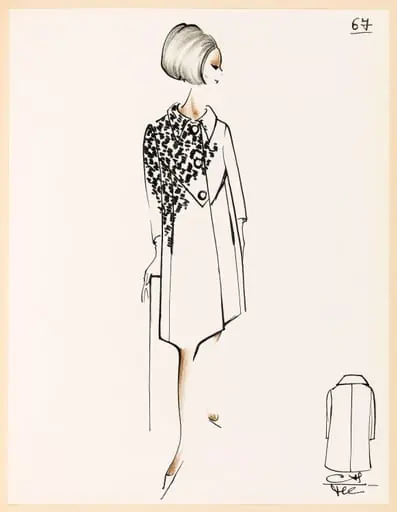
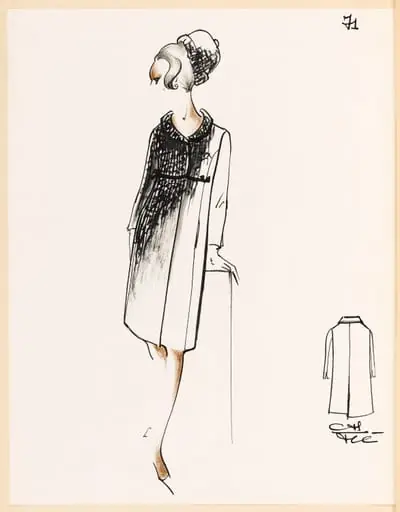
Manteau blanc à motif noir et chapeau assorti
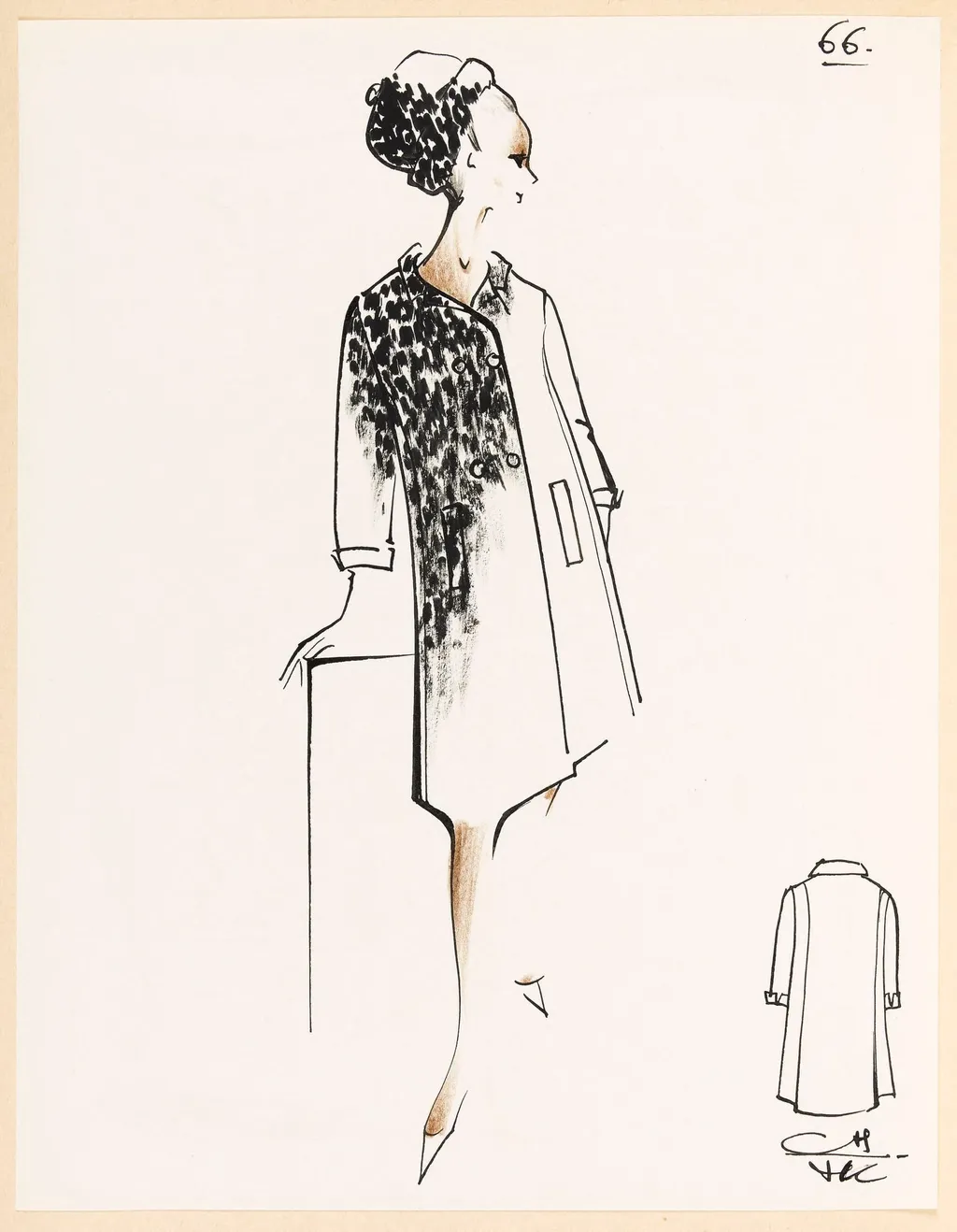
Manteau blanc à motif noir et chapeau assorti is a drawing by Marie-Louise Carven. It dates from 1967 and is held in the collection of the Palais Galliera - Musée de la Mode de la Ville de Paris.
About this work
Overview
The accompanying image includes a rear view of the coat, emphasizing the precision of its construction and the intentionality of its visual balance.
Created around 1967, this white coat with black decorative motifs and a coordinated hat was designed by Marie-Louise Carven, founder of the Parisian fashion house Carven established in 1945. The ensemble reflects her focus on refined, wearable designs suited to smaller frames. The accompanying image includes a rear view of the coat, emphasizing the precision of its construction and the intentionality of its visual balance.
Subject & Meaning
The outfit presents a quiet contrast between the purity of white fabric and the deliberate placement of black patterns, suggesting elegance without ostentation. The matching hat reinforces a sense of cohesion, typical of Carven’s approach to total look design. The figure’s poised stance and the inclusion of a rear detail imply an emphasis on functionality and aesthetic completeness, rather than theatrical display.
Technique & Style
Carven favored lightweight materials and clean lines, evident in the coat’s streamlined silhouette and subtle patterning. The black motifs are likely applied through embroidery or printed textile techniques, avoiding heavy embellishment. The inclusion of a rear illustration in the image underscores a design philosophy centered on structural integrity and attention to unseen details, aligning with her reputation for thoughtful construction.
History & Provenance
The ensemble resides in the collection of the Museum of Ethnography, indicating its recognition as a culturally significant artifact of mid-century French fashion. Carven’s early adoption of prêt-à-porter in the 1950s positioned her as a bridge between haute couture and accessible design. This piece, dated to 1967, reflects the mature phase of her career, when her brand had gained international recognition for its understated sophistication.
Context
In the 1960s, Parisian fashion was shifting toward youth-oriented styles and mass production. Carven’s work stood apart by maintaining tailored precision while embracing practicality for everyday wear. Her designs catered to women seeking elegance without constraint, distinguishing her from more dramatic contemporaries. The inclusion of a matching hat reflects a lingering couture tradition even as ready-to-wear gained dominance.
Legacy
Marie-Louise Carven’s influence endures in the normalization of petite sizing and the integration of functional design into women’s wear. Her patent for a push-up bra and early prêt-à-porter line helped democratize fashion. This ensemble, preserved in a museum context, illustrates how her quiet innovations contributed to broader shifts in how clothing was conceived, produced, and worn by modern women.
Artist & collection
Artist
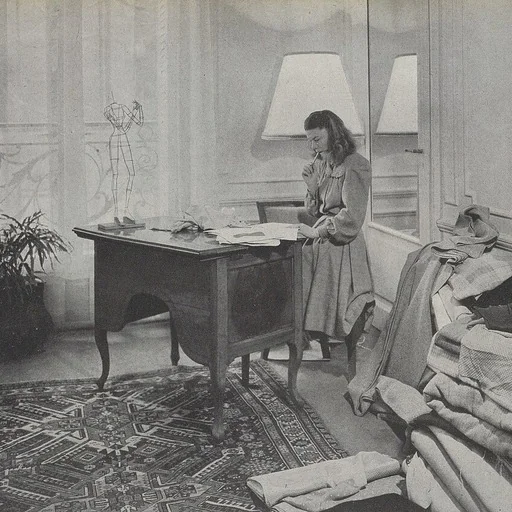
Marie-Louise Carven (31 August 1909 – 8 June 2015), born Carmen de Tommaso, was a French fashion designer who founded the house of Carven in 1945.
Museum
Palais Galliera - Musée de la Mode de la Ville de Paris
Continue through works from the same source collection.
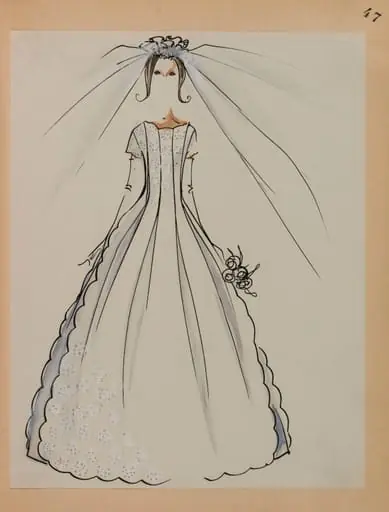 Robe de mariée festonnée et son voile
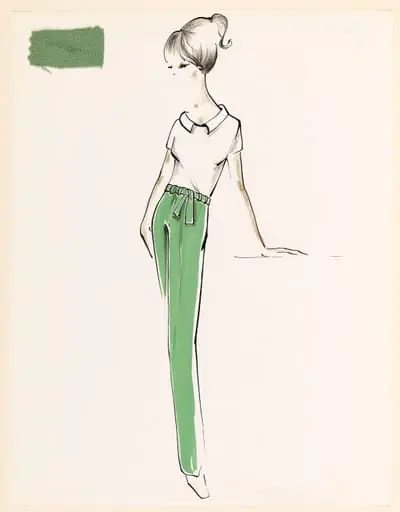 Haut blanc à manches courtes et pantalon vert à ceinture nouée
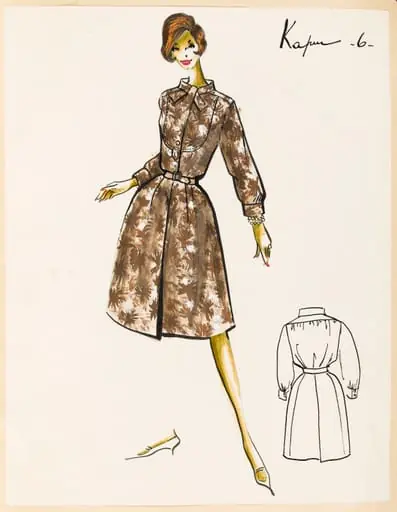 Kapur
Kapur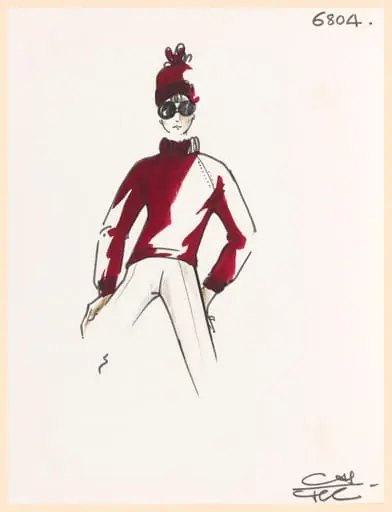 Pull-over à manches longues pourpre, bonnet assorti, pantalon et lunettes de soleil
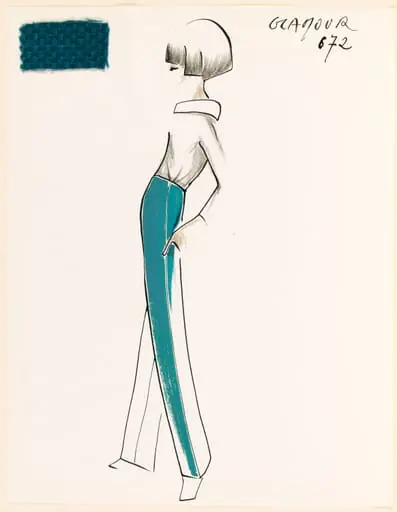 GLAMOUR
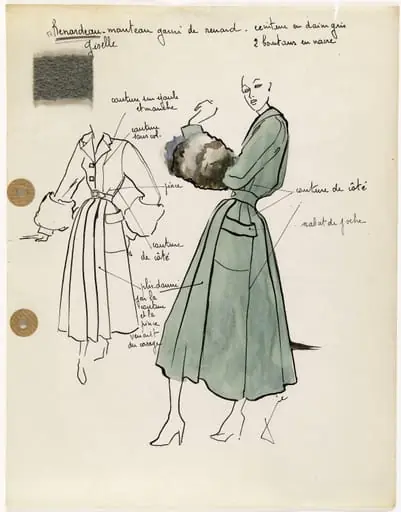 'Renardeau'
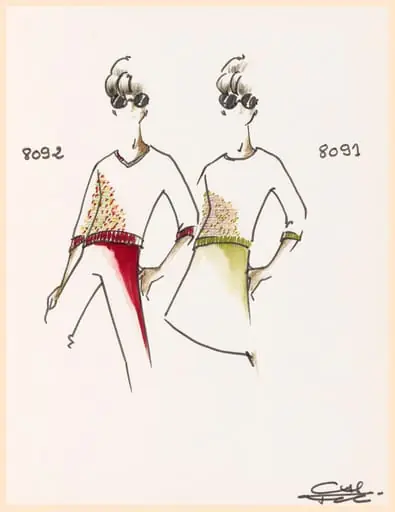 Pull-over à manches trois quarts et à encolure V à motifs multicolores, pantalon cerise et lunettes de soleil
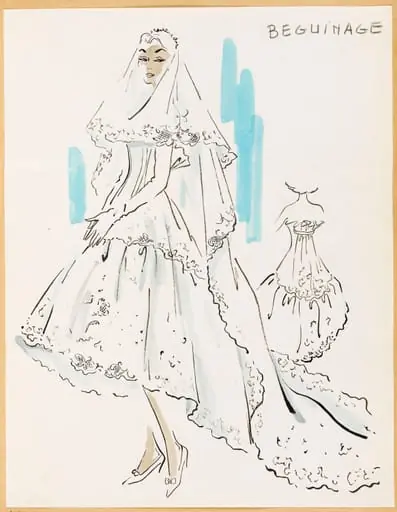 Béguinage
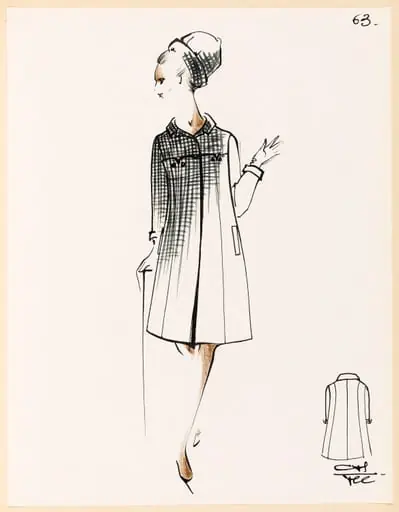 Manteau à petits carreaux noir et blanc et chapeau assorti
 Manteau blanc à motif noir
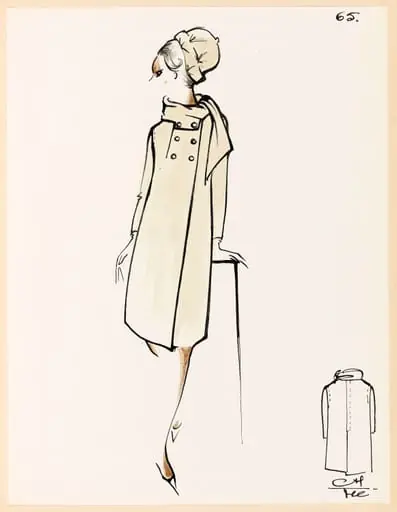 Manteau crème à col cravate et chapeau assorti
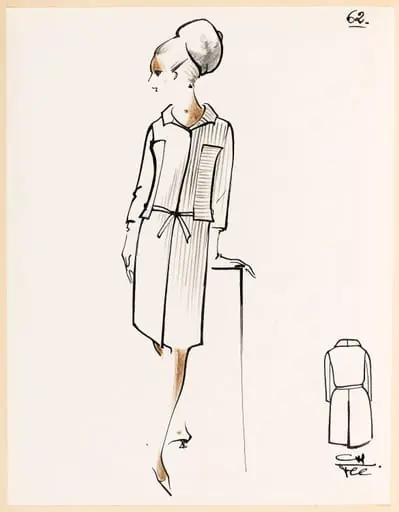 Manteau rayé à file ceinture et chapeau
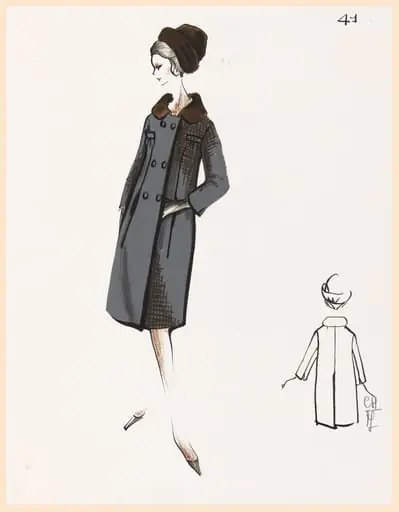 Manteau bleu ardoise à carreaux marron avec col marron et chapeau assorti
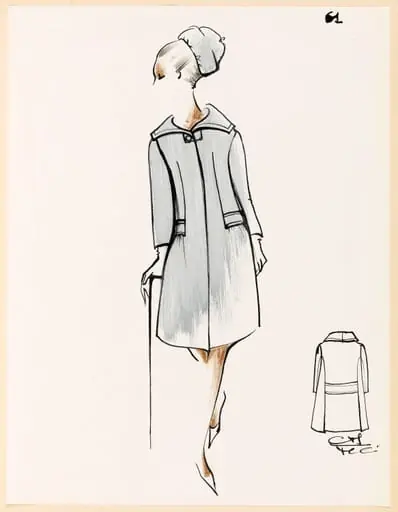 Manteau gris bleu et chapeau assorti
 Manteau ardoise et chapeau assorti
 Manteau gris noué au col et sur la poitrine
 Manteau noir et chapeau assorti
 Manteau fermé sous la poitrine avec chapeau
 Manteau noir
 Manteau marron à doublure et col blanc