Artwork
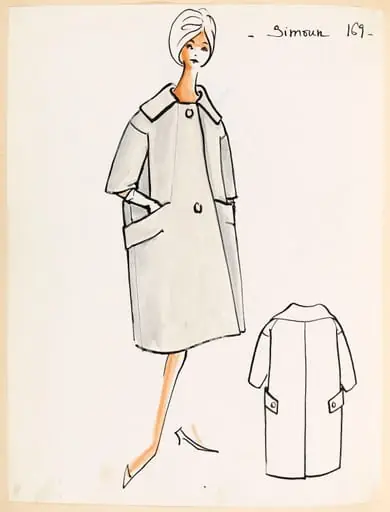
Manteau coupe droite gris clair
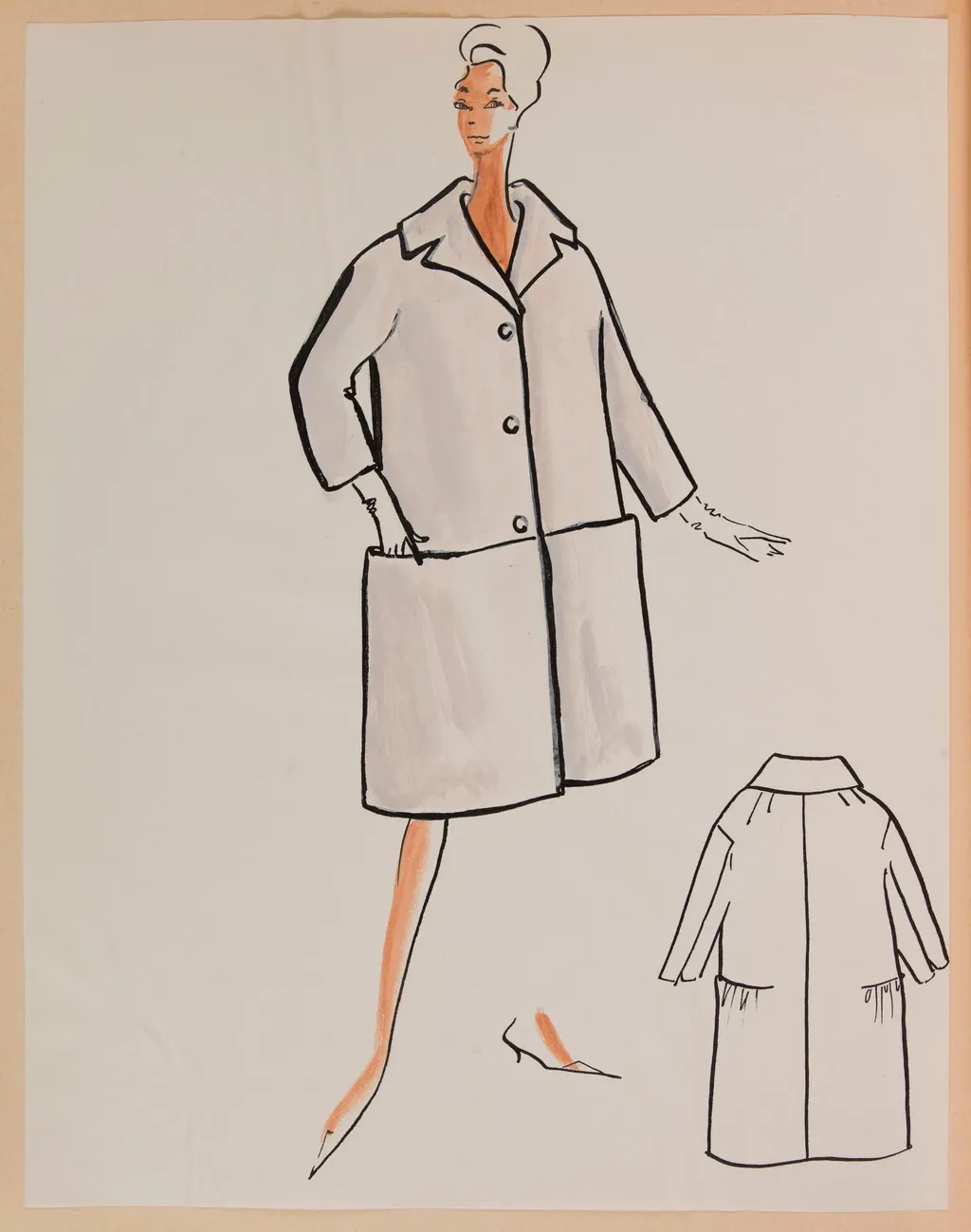
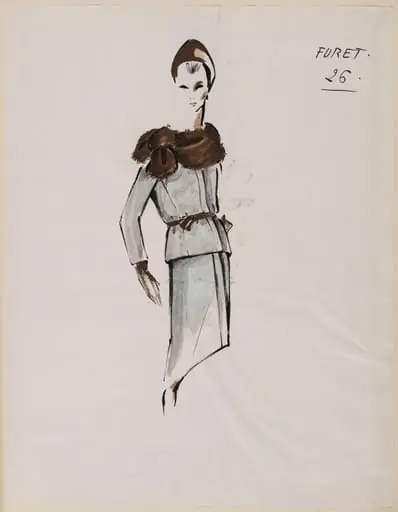
Manteau coupe droite gris clair is a drawing by Carven. It dates from 1959 and is held in the collection of the Palais Galliera - Musée de la Mode de la Ville de Paris.
About this work
Overview
This sketch, dated around 1959, depicts a women’s coat designed by the French fashion house Carven. Rendered in monochrome, it presents both a figure wearing the garment and a flat technical drawing of the same piece. The composition balances human form with structural clarity, emphasizing functionality over ornamentation. The work is held in the collection of the Museum of Ethnography.
Subject & Meaning
The figure, dressed in a simple knee-length coat and skirt, stands with relaxed posture—one hand on the hip—suggesting ease of movement and everyday wear. The absence of decorative elements and the neutral tone reinforce a practical, unadorned aesthetic. The image conveys a vision of modern femininity rooted in comfort and understated elegance, reflecting postwar shifts in women’s fashion.
Technique & Style
Details like pockets and seams are indicated without embellishment, prioritizing clarity for construction over artistic flourish.
The artist used clean, unembellished lines to define both the wearer and the garment’s structure. The coat’s silhouette is rendered with geometric precision, while the flat pattern on the right offers a technical counterpart. Details like pockets and seams are indicated without embellishment, prioritizing clarity for construction over artistic flourish. The style aligns with mid-century fashion illustration focused on form and function.
History & Provenance
Created during Carven’s active period in the late 1950s, the sketch likely served as a design proposal or production reference. It entered the Museum of Ethnography’s collection as part of a broader effort to document everyday clothing as cultural artifacts. Its preservation reflects an institutional interest in postwar domestic fashion, rather than haute couture spectacle.
Context
In the late 1950s, French fashion increasingly favored streamlined silhouettes and accessible designs, moving away from the structured forms of the 1940s. Carven, known for practical yet refined clothing, catered to a growing market of independent women. This sketch embodies that shift—prioritizing wearability and simplicity, aligning with broader societal changes in gender roles and daily life.
Legacy
The sketch remains a quiet example of how fashion design documentation evolved to reflect functional priorities. It contributes to historical records of mid-century ready-to-wear, illustrating how designers communicated ideas without reliance on elaborate illustration. Its presence in an ethnographic museum underscores its value as a cultural object, not merely a commercial product.
Artist & collection
Artist
These delicate ink-on-paper drawings capture the quiet poetry of everyday things: pinecones, reeds, apples.
Museum
Palais Galliera - Musée de la Mode de la Ville de Paris
Continue through works from the same source collection.