Artwork
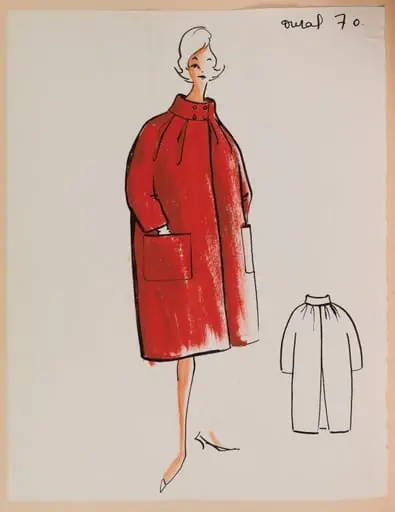
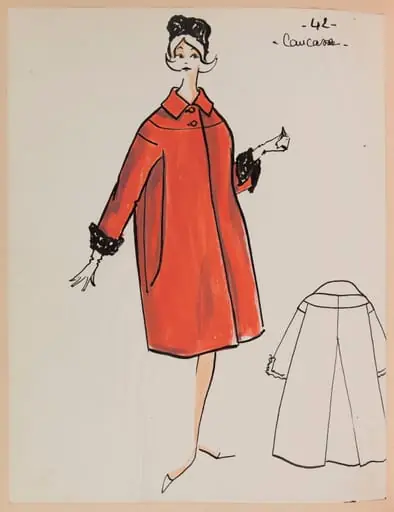
Manteau grenat
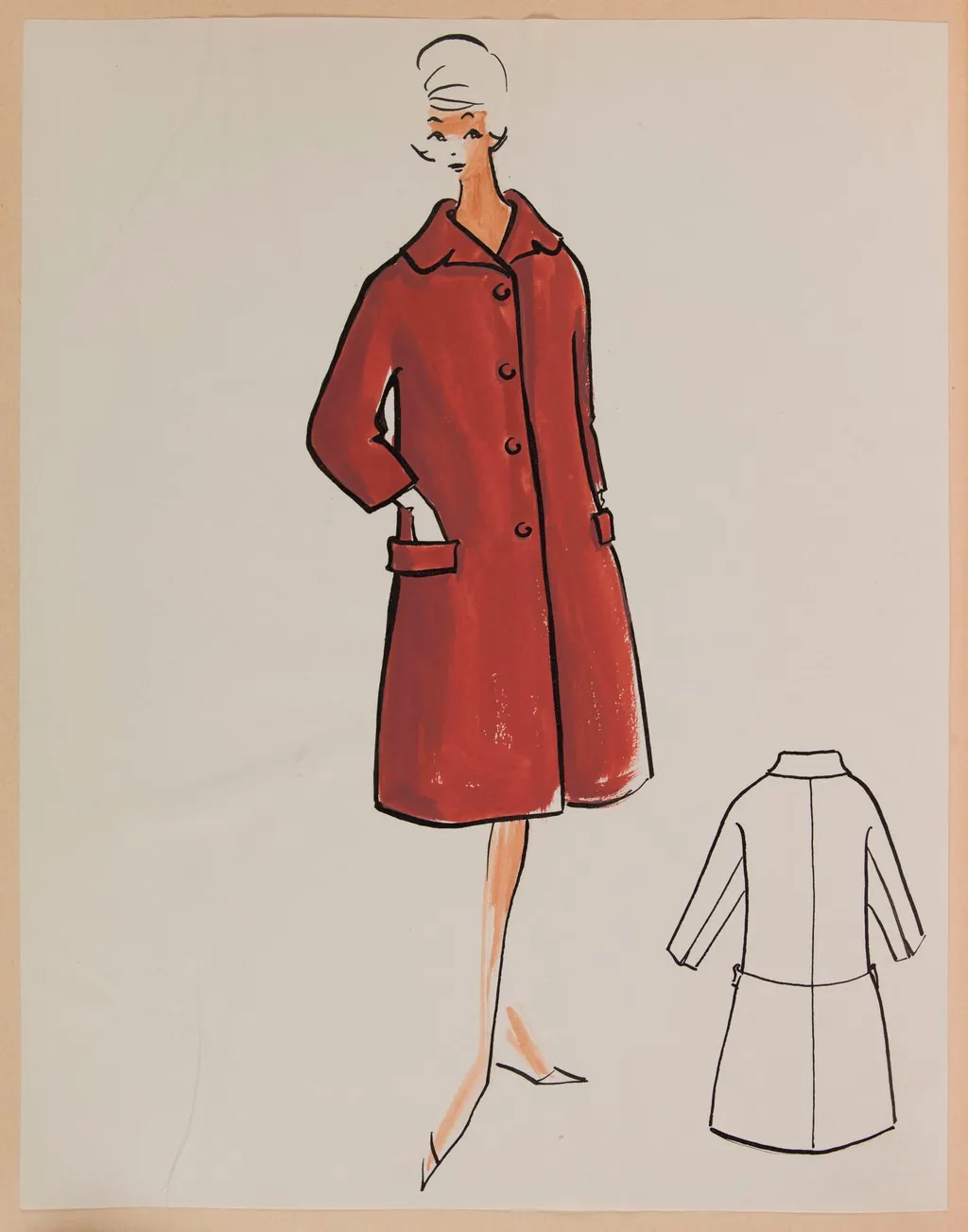
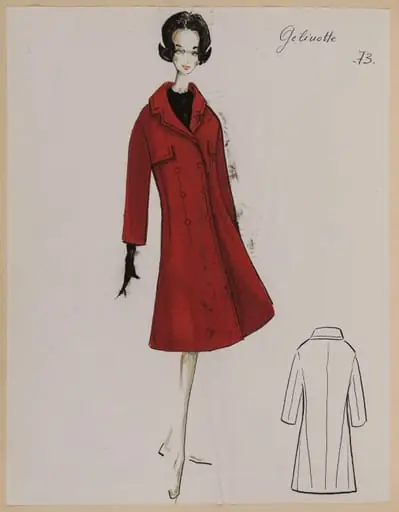
Manteau grenat is a drawing by Carven. It dates from 1959 and is held in the collection of the Palais Galliera - Musée de la Mode de la Ville de Paris.
About this work
Overview
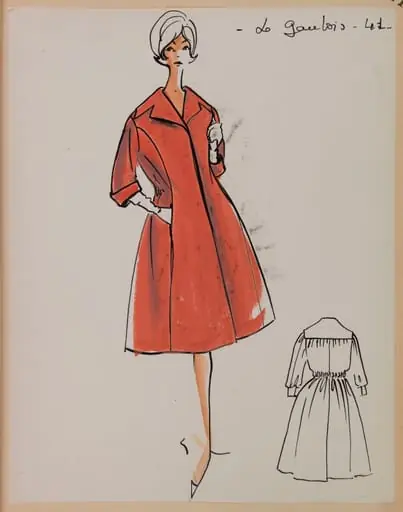
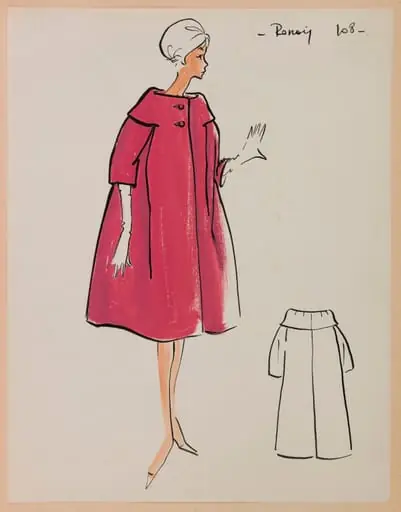
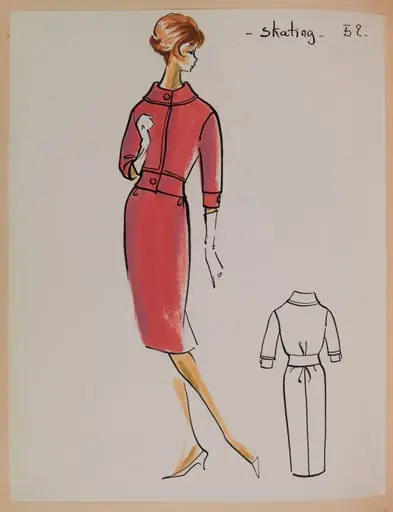
The drawing includes a front and rear view of the garment, suggesting its use in design development rather than as a finished illustration.
Manteau grenat is a fashion sketch from around 1959, attributed to the French designer Carven. Executed in ink or pencil, it captures a woman wearing a deep red coat with prominent front buttons and a fitted waist. The drawing includes a front and rear view of the garment, suggesting its use in design development rather than as a finished illustration. It resides in the collection of the Museum of Ethnography.
Subject & Meaning
The sketch presents a practical yet elegant ensemble: a long, dark red coat worn over a matching dress, designed for both warmth and poise. The slight opening of the coat reveals the inner garment, emphasizing cohesion in layering. The belt accentuates the silhouette, reflecting mid-century ideals of structured femininity. The drawing’s immediacy suggests it was made for internal design review, not public display.
Technique & Style
Rendered with loose, confident lines, the sketch conveys movement and form without fine detail. The front and back views are rendered in minimal strokes, focusing on silhouette and proportion. Shading is sparse, and contours are fluid, typical of fashion designers’ working drawings. The absence of facial features or background directs attention entirely to the garment’s structure and drape.
History & Provenance
Created circa 1959, the sketch entered the Museum of Ethnography’s collection as part of a broader archive of mid-century fashion documentation. Its preservation reflects institutional interest in everyday design practices rather than haute couture. No record of public exhibition or commercial use is known, suggesting it remained within Carven’s design studio during its creation.
Context
In late 1950s Paris, fashion houses like Carven emphasized wearable elegance for middle-class women. This sketch aligns with trends favoring tailored coats and coordinated separates, balancing practicality with refined aesthetics. Unlike runway-focused designs, such sketches were tools for production, often made quickly to test proportions before fabric selection.
Legacy
Manteau grenat endures as an example of the quiet, functional drawings that underpinned postwar fashion design. It offers insight into how garments were conceived before mass production, revealing the designer’s process rather than the final product. Its presence in an ethnographic museum underscores its value as cultural artifact, not merely aesthetic object.
Artist & collection
Artist
These delicate ink-on-paper drawings capture the quiet poetry of everyday things: pinecones, reeds, apples.

Museum
Palais Galliera - Musée de la Mode de la Ville de Paris
Continue through works from the same source collection.