Artwork
Manteau noir et chapeau assorti
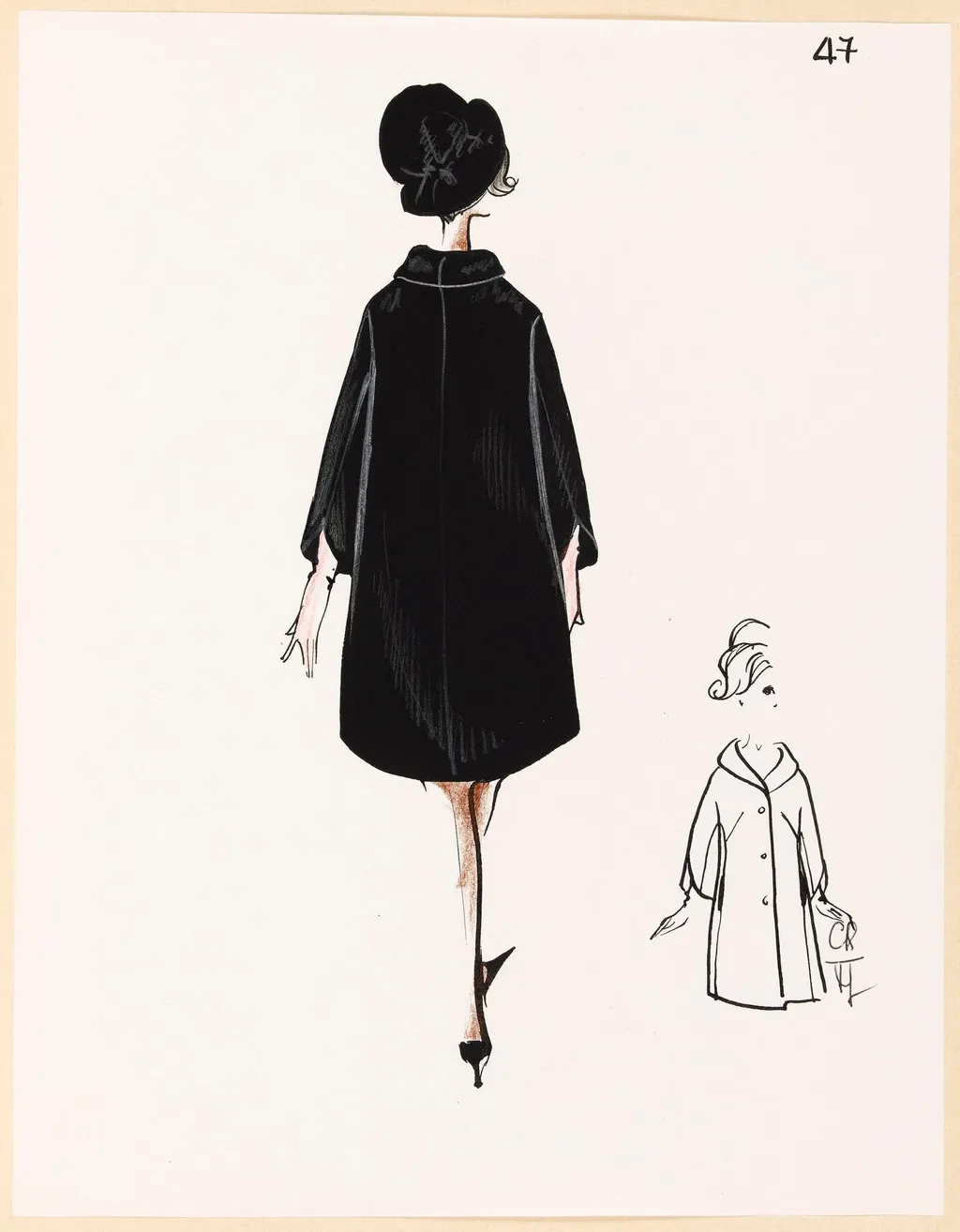
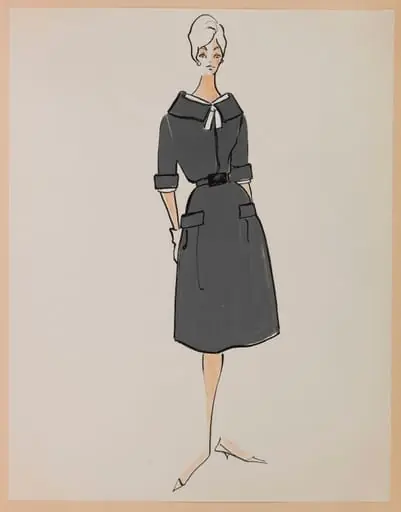
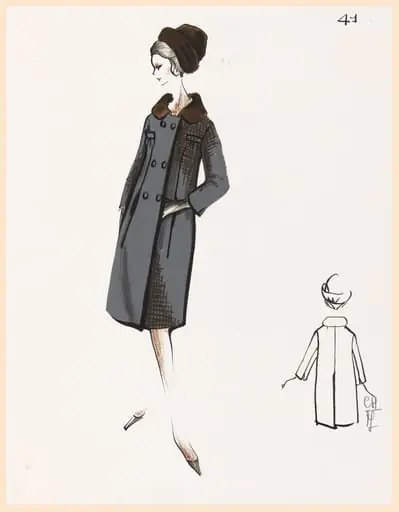
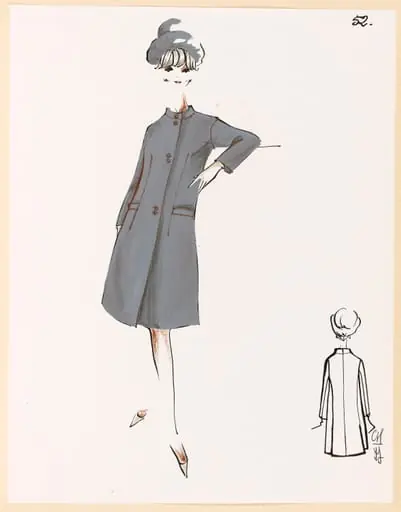
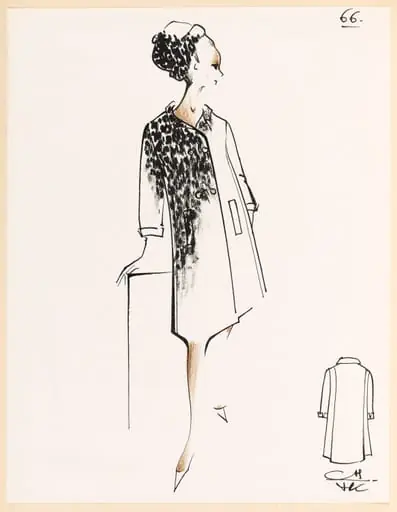
Manteau noir et chapeau assorti is a drawing by Carven. It dates from 1967 and is held in the collection of the Palais Galliera - Musée de la Mode de la Ville de Paris.
About this work
Overview
Created around 1967, this ink drawing by the French fashion house Carven depicts a woman viewed from behind, dressed in a long black coat and matching hat.
Created around 1967, this ink drawing by the French fashion house Carven depicts a woman viewed from behind, dressed in a long black coat and matching hat. The work is part of the Museum of Ethnography’s collection and exemplifies the studio’s approach to fashion documentation—prioritizing silhouette and structure over individual identity or setting. It functions as a design record rather than a portrait.
Subject & Meaning
The figure is anonymous, with no facial features or environmental context, emphasizing the garment as the central subject. The coat’s straight, flowing lines and wide sleeves suggest a modernist sensibility in postwar French fashion. The inclusion of a front view sketch highlights the designer’s interest in three-dimensional form, revealing how the garment behaves from multiple angles without relying on human detail.
Technique & Style
Rendered with precise, confident lines and subtle tonal shading, the drawing captures the weight and drape of fabric through minimal means. The absence of background or ornamentation focuses attention on the coat’s geometry. The front view sketch, smaller and simpler, serves as a technical supplement—offering clarity on closure and neckline without decorative embellishment.
History & Provenance
The drawing originated in Carven’s design studio during the late 1960s, likely used internally to communicate garment construction. It entered the Museum of Ethnography’s collection as part of a broader effort to preserve fashion as cultural artifact. Its preservation reflects institutional recognition of fashion design as a form of material culture worthy of archival attention.
Context
In the 1960s, Parisian fashion houses increasingly documented designs with schematic drawings to standardize production and communicate with ateliers. Carven’s approach aligned with this trend, favoring clarity and functionality. Unlike haute couture illustrations that emphasized glamour, this work reflects a pragmatic, almost anthropological interest in clothing as object and structure.
Legacy
This drawing contributes to the understanding of how fashion studios systematically recorded design intent before mass production. Its inclusion in a museum of ethnography signals a shift in how fashion is studied—not merely as art or commerce, but as a cultural practice embedded in daily life and material technique. It remains a quiet testament to the discipline behind fashion creation.
Artist & collection
Artist
These delicate ink-on-paper drawings capture the quiet poetry of everyday things: pinecones, reeds, apples.
Museum
Palais Galliera - Musée de la Mode de la Ville de Paris
Continue through works from the same source collection.