Artwork
Marsouin
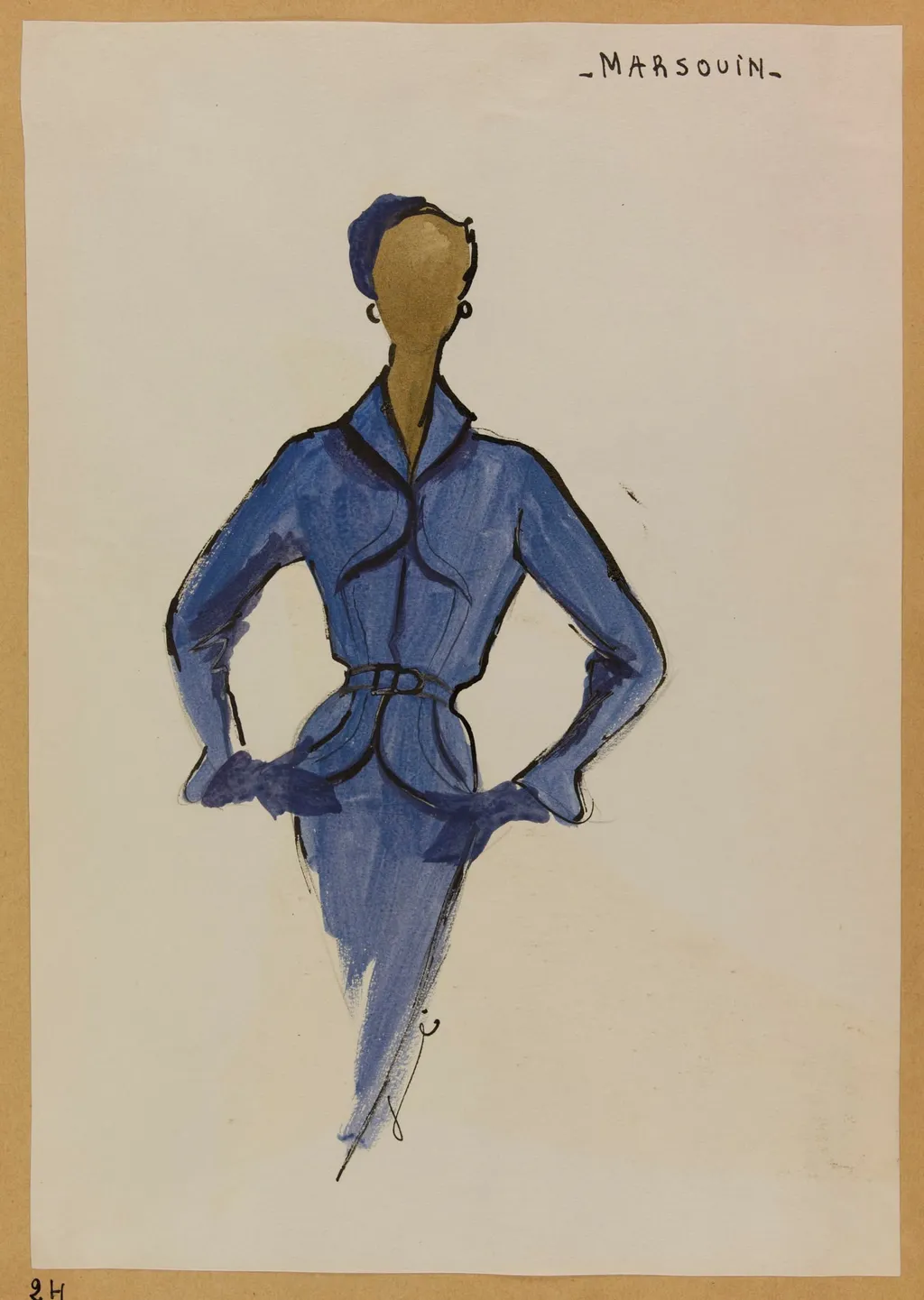
Marsouin is a drawing by Carven. It dates from 1952 and is held in the collection of the Palais Galliera - Musée de la Mode de la Ville de Paris.
About this work
Overview
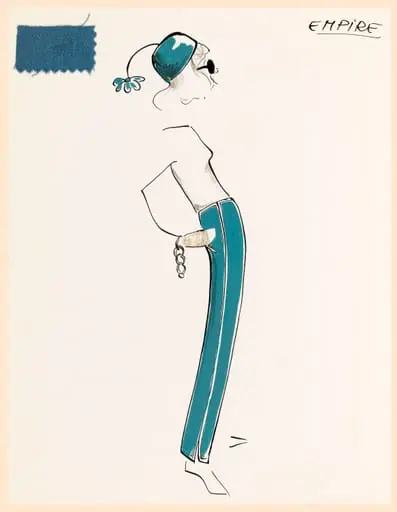
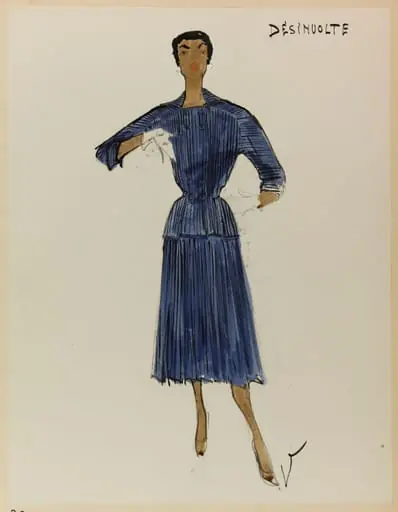
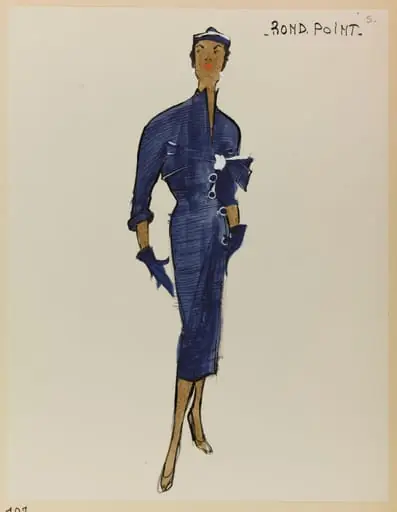
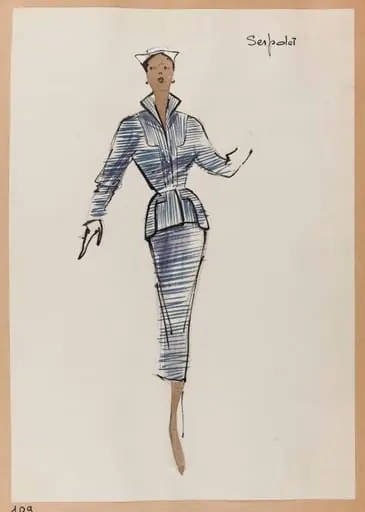
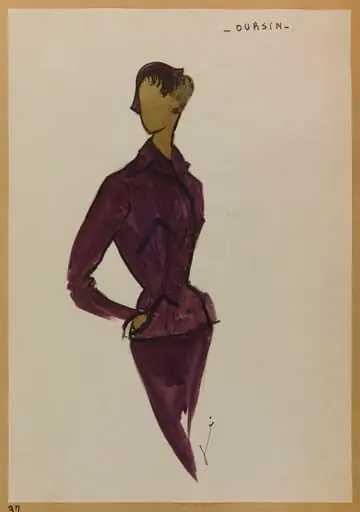
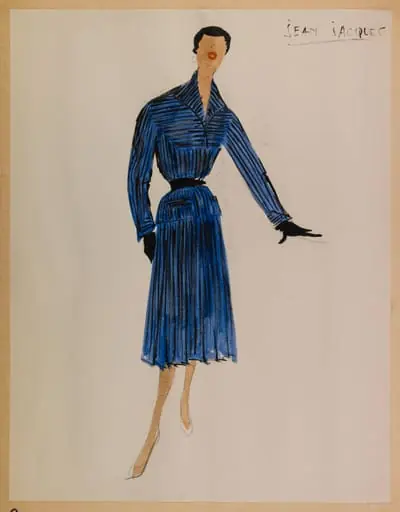
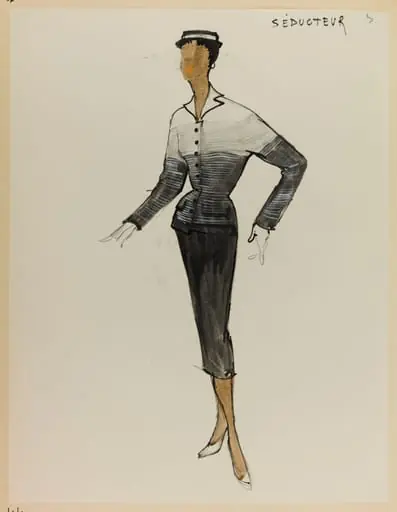
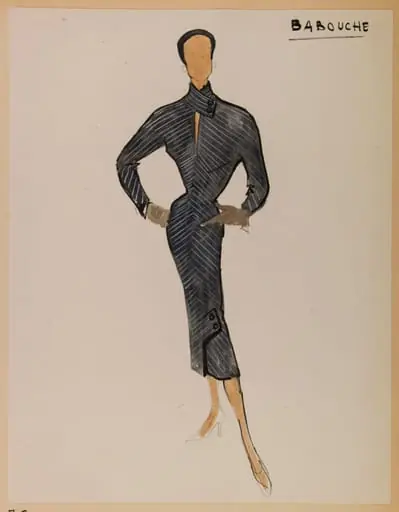
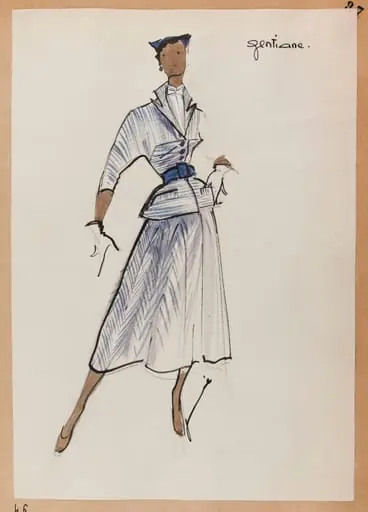
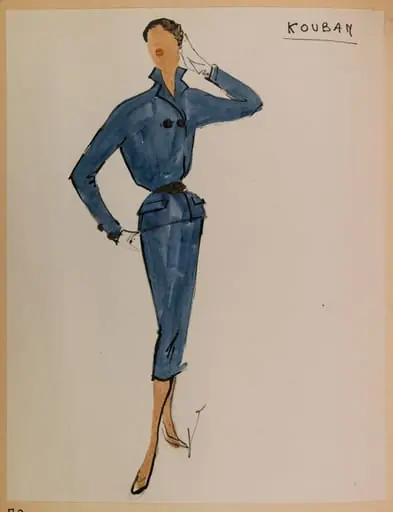
Marsouin is a 1952 ink drawing by the French designer Carven, held in the collection of the Museum of Ethnography. Executed with swift, confident strokes, the work depicts a woman in a dark blue ensemble, including a belted jacket and matching hat. The sketch’s energetic lines and subtle smudging suggest it was made rapidly, possibly as a study for fashion design rather than a finished artwork.
Subject & Meaning
The figure stands with hands on hips, conveying a relaxed yet assured posture. The clothing, rendered with minimal detail, emphasizes silhouette over ornamentation, reflecting mid-century French fashion’s lean toward practical elegance. The title 'Marsouin'—a French naval term for a sailor—may reference the subject’s unadorned, functional attire, though its exact connection remains unconfirmed.
Technique & Style
Carven used bold, fluid ink lines to define form, allowing some areas to blur where pigment met paper. The contrast between the dark blue garment and the pale background enhances volume without shading. The sketch’s spontaneity suggests it was made in real time, prioritizing movement and structure over precision, characteristic of fashion designers’ preparatory studies.
History & Provenance
Created in 1952, the drawing entered the Museum of Ethnography’s collection as part of a broader acquisition of fashion-related materials. Its origin as a personal study by Carven is inferred from its informal quality and lack of commercial finish. No documentation confirms its initial purpose, but it aligns with the designer’s known practice of sketching garments for her collections.
Context
In early 1950s Paris, fashion design emphasized tailored simplicity and wearable elegance. Carven, known for her feminine yet understated silhouettes, often sketched garments to explore form before construction. Marsouin reflects this approach, capturing the essence of a garment’s structure rather than its decorative details, mirroring broader postwar trends toward functional design.
Legacy
Though not widely exhibited, Marsouin contributes to the understanding of Carven’s design process and the role of sketching in mid-century fashion. It stands as a quiet example of how designers translated everyday wear into visual language—valued not for its finish, but for its insight into the relationship between body, cloth, and movement.
Artist & collection
Artist
These delicate ink-on-paper drawings capture the quiet poetry of everyday things: pinecones, reeds, apples.
Museum
Palais Galliera - Musée de la Mode de la Ville de Paris
Continue through works from the same source collection.