Artwork
Rond-point
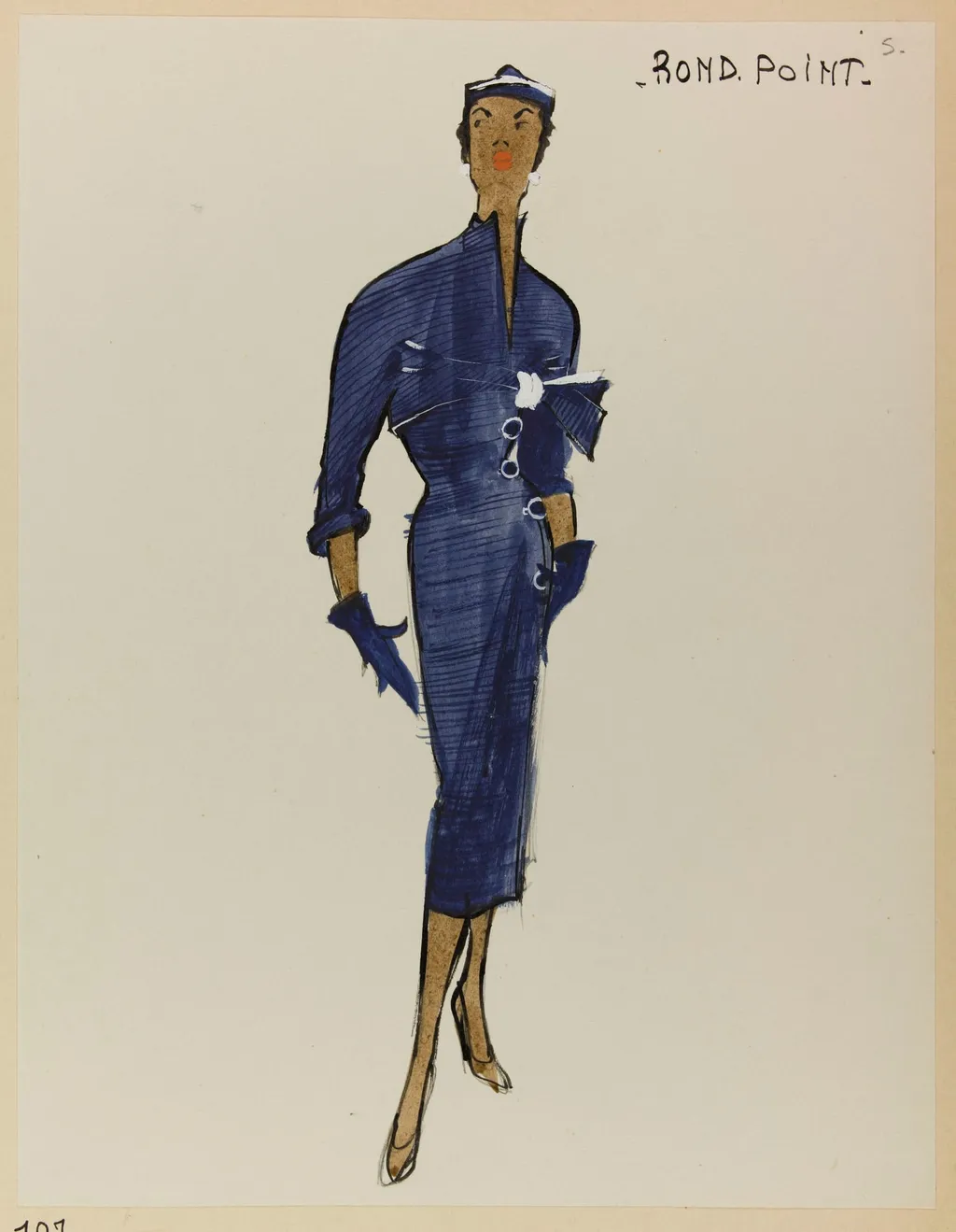
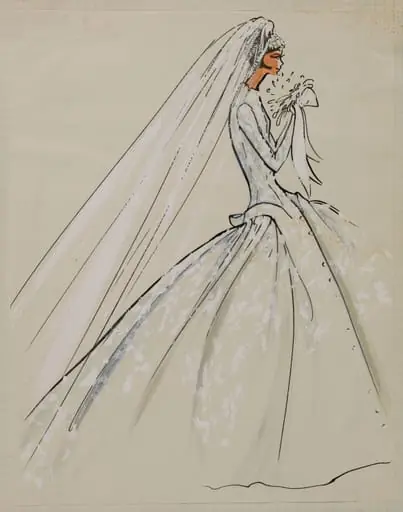
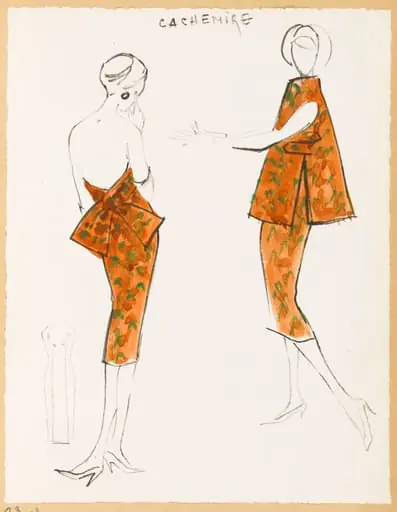
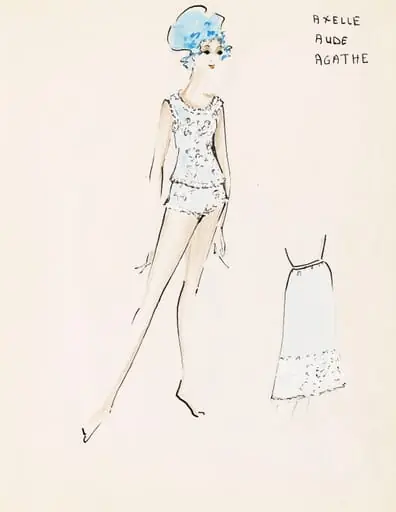
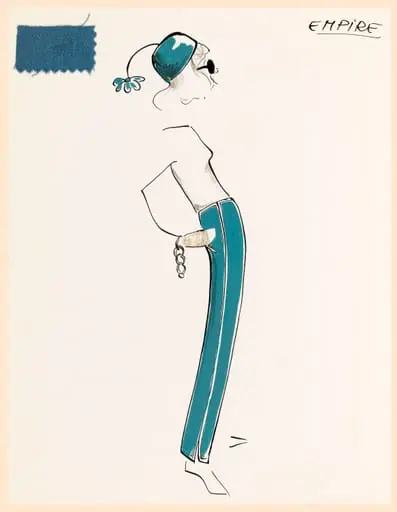
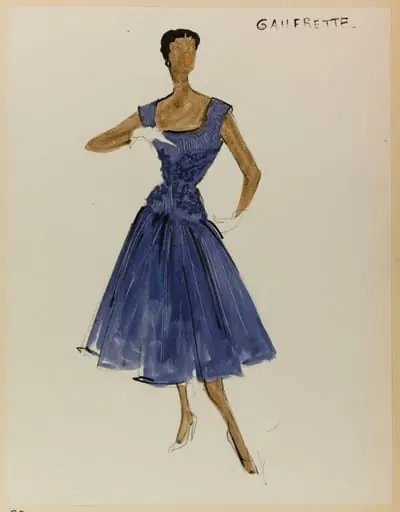
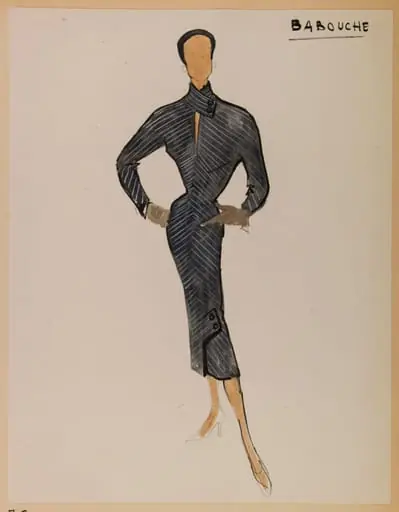
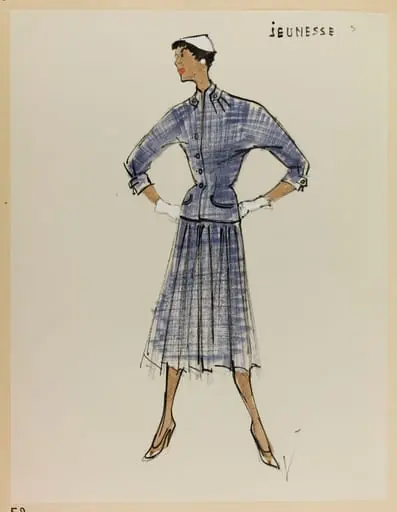
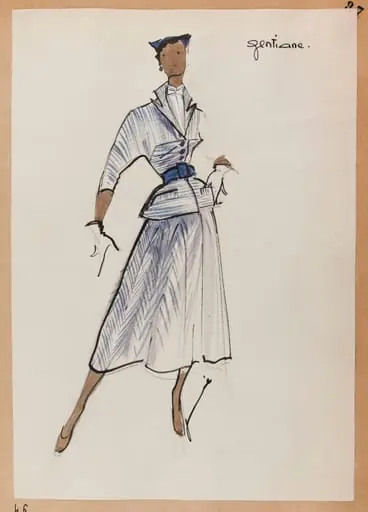
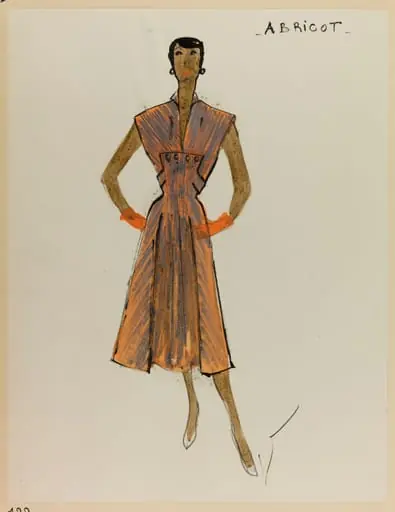
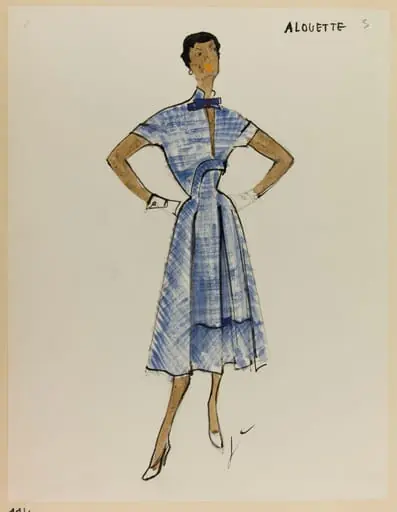
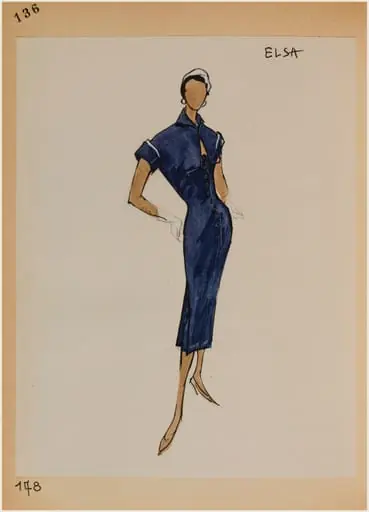
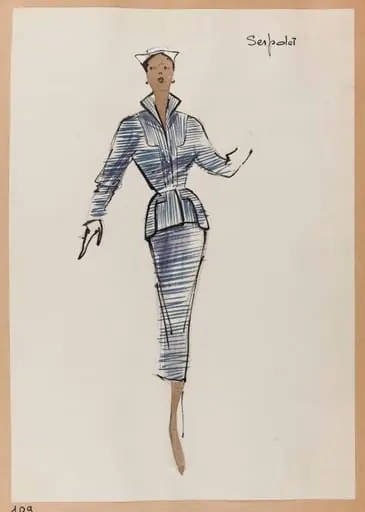
Rond-point is a drawing by Carven. It dates from 1953 and is held in the collection of the Palais Galliera - Musée de la Mode de la Ville de Paris.
About this work
Overview
The work resides in the Museum of Ethnography, where it is preserved as part of a collection documenting mid-century fashion design practices.
Rond-point is a pencil sketch from around 1953 by the French fashion house Carven. Executed with minimal lines, it captures a woman’s outfit without environmental context. The work resides in the Museum of Ethnography, where it is preserved as part of a collection documenting mid-century fashion design practices. Its simplicity suggests it was intended as a preliminary study rather than a finished illustration.
Subject & Meaning
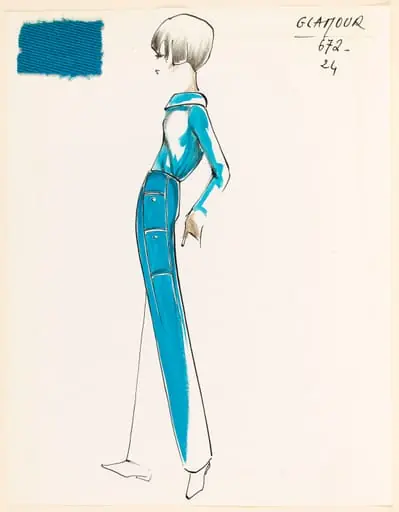
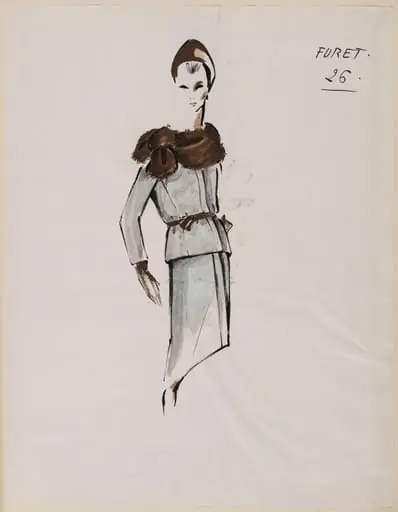
The figure depicts a woman wearing a navy-blue, loose-fitting dress and jacket, unified by a waist belt and front pockets. The attire reflects postwar French design values emphasizing practicality and clean silhouettes. The title, Rond-point, may reference a circular urban space, possibly alluding to the rounded contours of the garment or suggesting movement, though no explicit narrative is conveyed. The focus remains on form, not identity or setting.
Technique & Style
The drawing employs swift, flat strokes with no shading or background, reducing the figure to essential contours. Fabric texture is implied through smooth, continuous lines rather than detailed rendering. The hat, with its narrow brim, is rendered with equal economy. This restrained approach prioritizes the garment’s structure over individual features, aligning with fashion sketch conventions of the era that favored clarity and reproducibility.
History & Provenance
Created circa 1953, the sketch entered the collection of the Museum of Ethnography at an unspecified date, likely through acquisition from Carven’s design archives. Its preservation suggests institutional recognition of its value as a record of mid-century French fashion methodology. No public records detail its original commission or use in production, but its existence implies it was part of a broader set of design studies.
Context
In the early 1950s, Parisian fashion houses like Carven emphasized tailored yet wearable designs for a growing middle-class clientele. Rond-point reflects this trend, balancing elegance with functionality. The absence of background and detail aligns with industry practices where sketches served as templates for patternmakers. Such drawings were tools of production, not public displays, underscoring their role within the hidden labor of fashion creation.
Legacy
Rond-point survives as a quiet artifact of mid-century fashion design, illustrating how form was prioritized over ornamentation. It contributes to scholarly understanding of how garments were conceptualized before mass production. While not widely exhibited, its presence in a museum of ethnography signals its value as a cultural object representing everyday aesthetics of its time, rather than haute couture spectacle.
Artist & collection
Artist
These delicate ink-on-paper drawings capture the quiet poetry of everyday things: pinecones, reeds, apples.
Museum
Palais Galliera - Musée de la Mode de la Ville de Paris
Continue through works from the same source collection.