Artwork
'Mazagan'
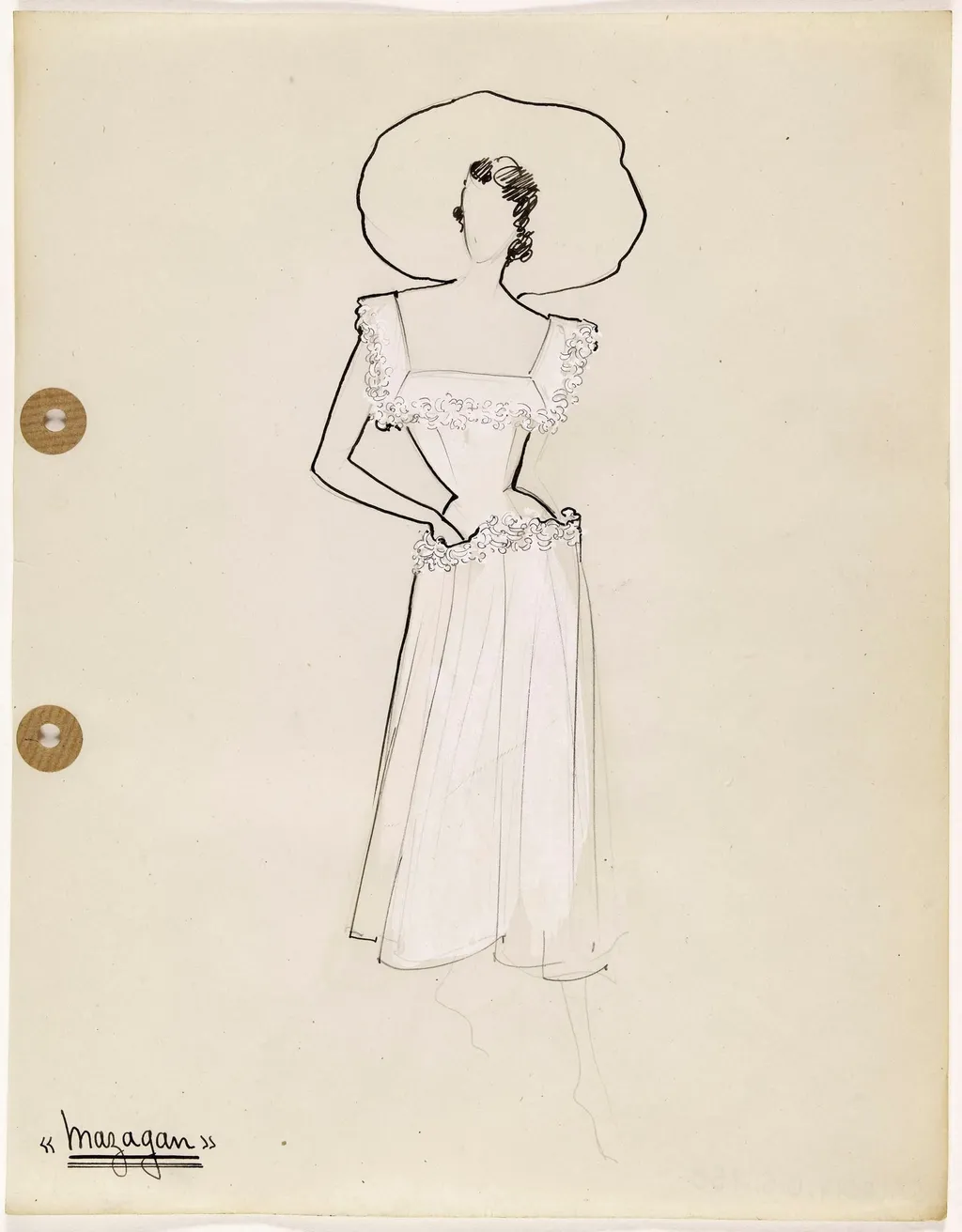
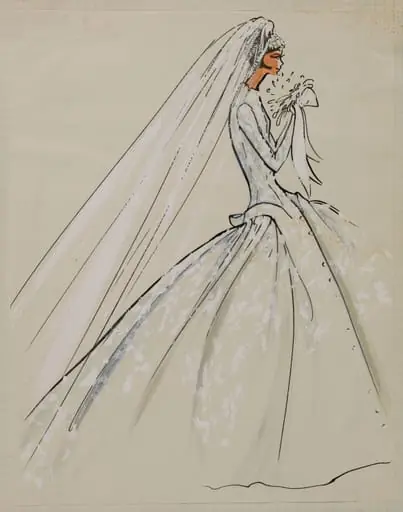
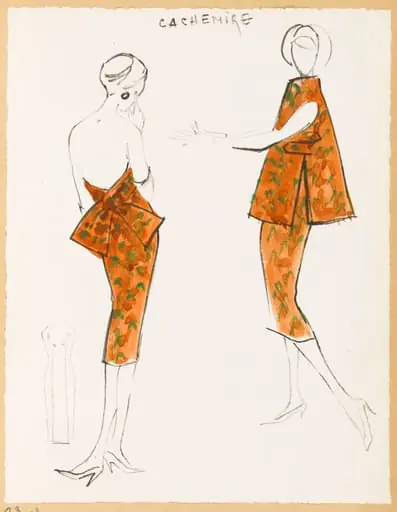
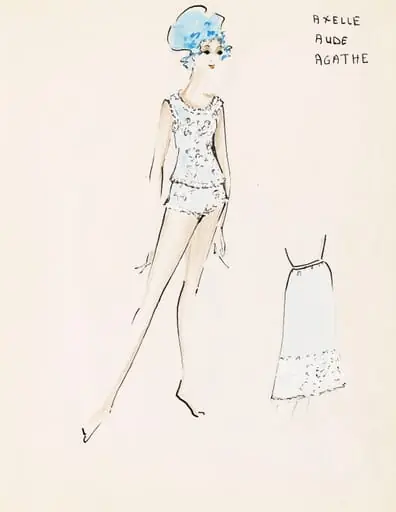
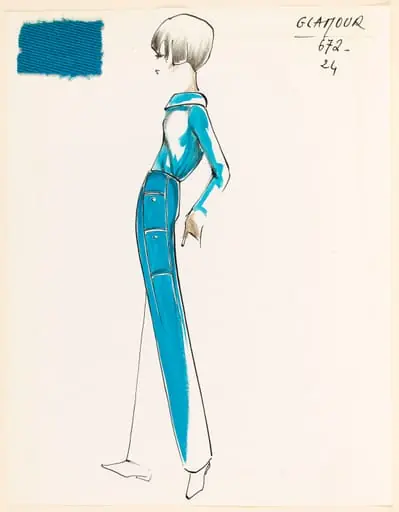
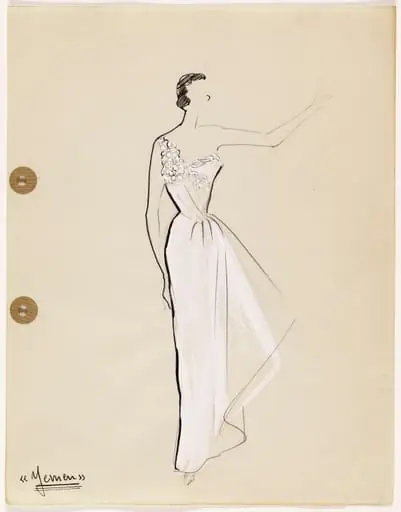
'Mazagan' is a drawing by Carven. It dates from 1949 and is held in the collection of the Palais Galliera - Musée de la Mode de la Ville de Paris.
About this work
Overview
The artist's signature, 'Mazagan,' appears in the lower corner, possibly referencing a location or garment name, though its precise meaning remains unconfirmed.
Created in 1949, 'Mazagan' is a pencil sketch by French designer Jean Carven. It resides in the collection of the Museum of Ethnography. The work presents a single female figure in a flowing dress, rendered with swift, delicate lines that suggest spontaneity rather than finality. The artist's signature, 'Mazagan,' appears in the lower corner, possibly referencing a location or garment name, though its precise meaning remains unconfirmed.
Subject & Meaning
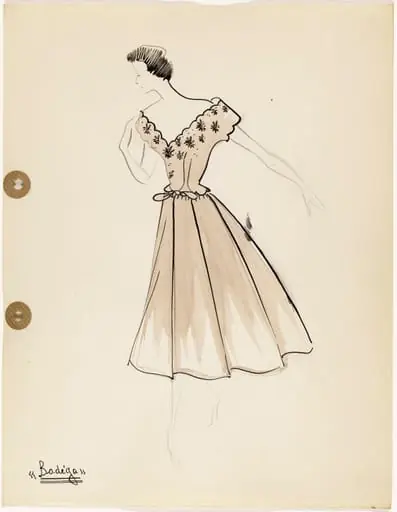
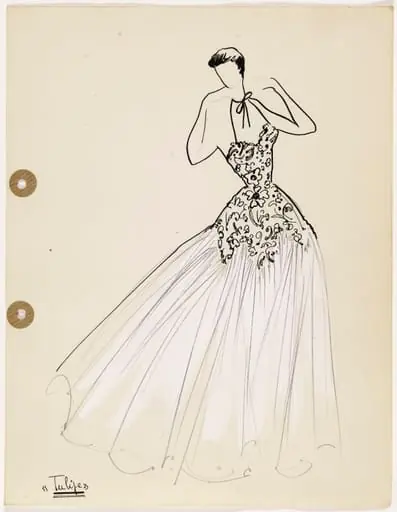
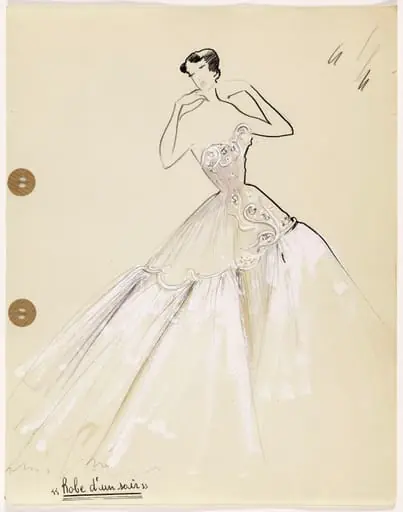
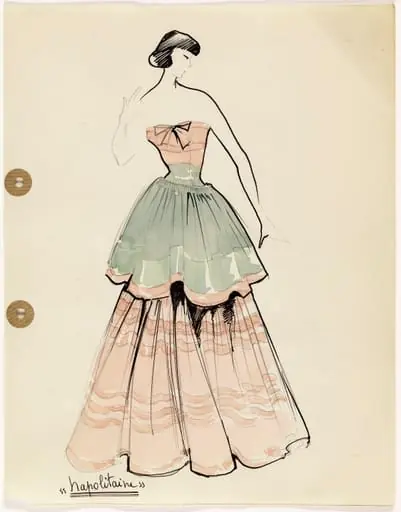
The figure depicted wears a dress with a high collar and full, puffed sleeves, its skirt falling in soft, unstructured folds. The hairstyle, rounded and voluminous, reflects mid-century silhouettes. Though the drawing lacks detail, the posture and garment suggest an idealized femininity aligned with postwar fashion ideals. The title 'Mazagan' may allude to the Moroccan city, hinting at exoticism as a subtle influence in Carven’s design vocabulary.
Technique & Style
Carven employed light, rapid pencil strokes to capture the essence of the garment rather than its precise construction. The lines are fluid and tentative, conveying movement and immediacy. Shadows and contours are suggested with minimal pressure, avoiding heavy shading. This approach reflects a designer’s preliminary study—focused on form and drape rather than finish—typical of fashion sketches intended as conceptual starting points.
History & Provenance
The drawing entered the Museum of Ethnography’s collection after Carven’s career peak in the 1950s. Its preservation suggests institutional interest in fashion as cultural artifact rather than fine art. No documentation confirms whether 'Mazagan' was ever produced as a finished garment. The sketch’s survival implies its value as a record of Carven’s design process, even if unexecuted in fabric.
Context
In postwar France, fashion design emphasized elegance and craftsmanship amid material scarcity. Carven, known for refined, wearable silhouettes, often drew inspiration from travel and historical dress. 'Mazagan' aligns with this trend, blending European tailoring with subtle North African references. The sketch reflects a broader cultural fascination with exotic locales, filtered through the lens of Parisian haute couture.
Legacy
Though not widely exhibited, 'Mazagan' contributes to understanding Carven’s design methodology and the role of sketching in mid-century fashion. Its preservation in an ethnographic museum underscores shifting perceptions of fashion as cultural expression. The work remains a quiet example of how designers used drawing to explore identity, place, and form beyond the runway.
Artist & collection
Artist
These delicate ink-on-paper drawings capture the quiet poetry of everyday things: pinecones, reeds, apples.
Museum
Palais Galliera - Musée de la Mode de la Ville de Paris
Continue through works from the same source collection.