Artwork
'Yemen'
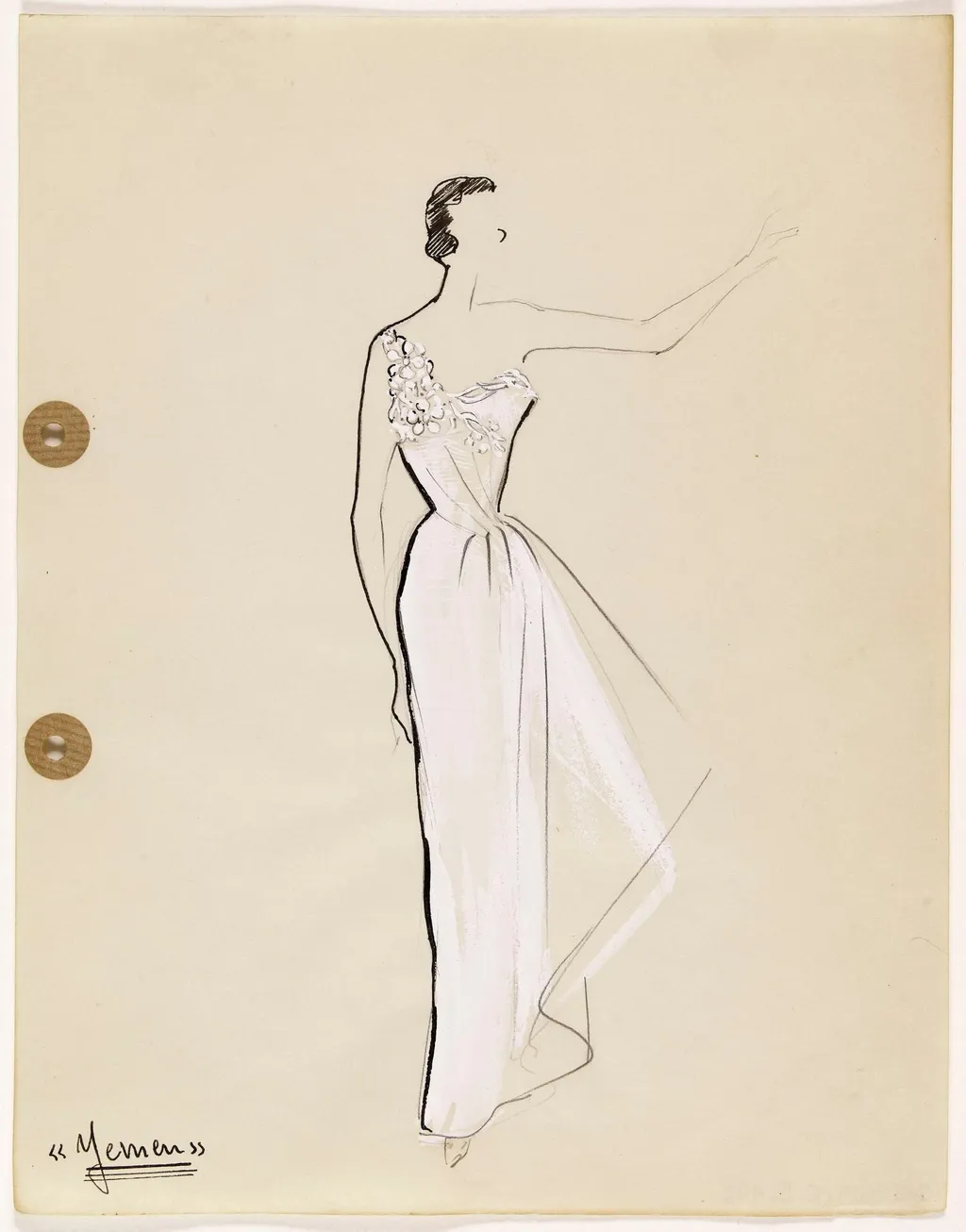
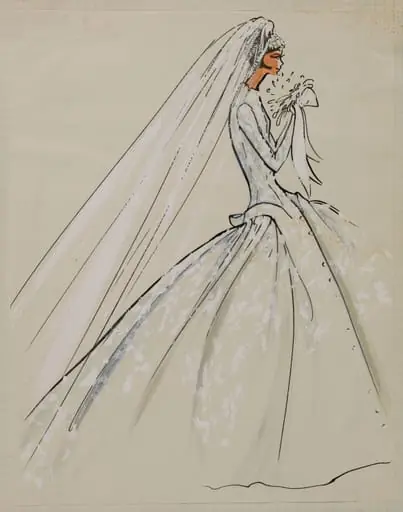
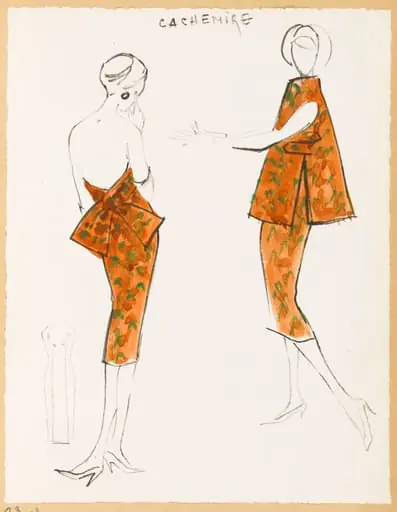
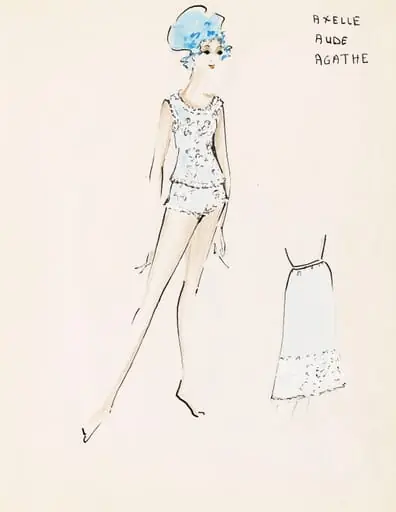
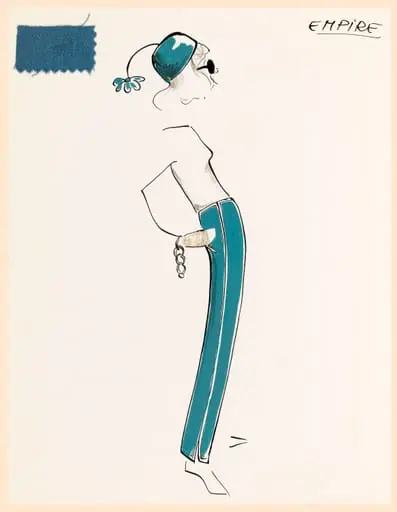
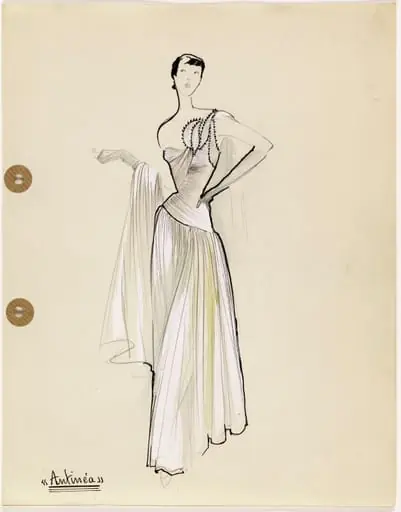
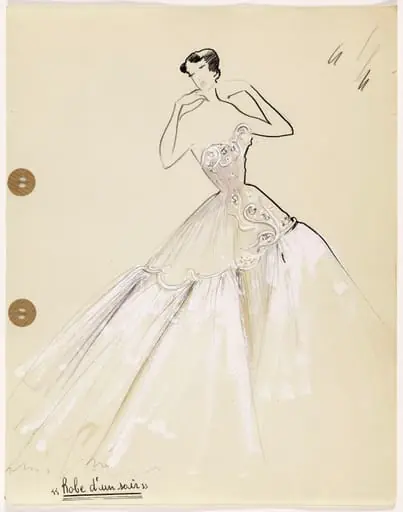
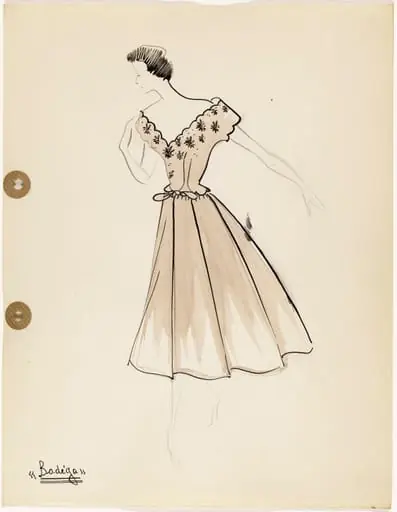
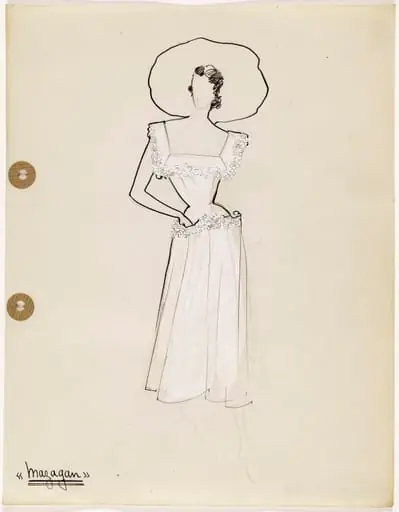
'Yemen' is a drawing by Carven. It dates from 1949 and is held in the collection of the Palais Galliera - Musée de la Mode de la Ville de Paris.
About this work
Overview
Created in 1949, this ink sketch is attributed to the designer Carven and resides in the Museum of Ethnography. Though labeled 'Yemen,' the figure depicted bears no clear cultural markers of that region. The work appears to be a fashion study rather than an ethnographic record, emphasizing textile flow and silhouette over geographic or social context.
Subject & Meaning
The subject is a woman in a tailored bodice and draped skirt, her hair neatly gathered and adorned with a floral brooch. The absence of regional indicators—such as traditional headwear or jewelry—suggests the figure is a stylized ideal rather than a specific cultural type. The title 'Yemen' may be arbitrary, possibly reflecting the designer’s personal reference or a misattribution.
Technique & Style
Executed with swift, assured lines, the drawing captures the movement of fabric through fluid contours and minimal detail. The artist prioritizes form and drape over anatomical precision, aligning with fashion illustration practices of the era. The loose brushwork conveys elegance and dynamism, typical of mid-century design sketches.
History & Provenance
The sketch entered the Museum of Ethnography’s collection as part of a broader acquisition of fashion-related materials. Its attribution to Carven is documented, though its origin as a preparatory study or personal exercise remains unclear. The mislabeling of its geographic context was noted early in its archival history but was not corrected.
Context
In the late 1940s, Parisian fashion houses frequently drew inspiration from global textiles and silhouettes, often abstracting them into modern designs. This sketch reflects that trend: a generalized feminine form, rendered with the precision of a couturier’s sketchbook, detached from any specific cultural source.
Legacy
The work stands as an example of how fashion designers engaged with global aesthetics without direct ethnographic intent. It reveals the era’s tendency to treat cultural motifs as formal elements rather than meaningful symbols. Today, it prompts questions about attribution, representation, and the boundaries between design and documentation.
Artist & collection
Artist
These delicate ink-on-paper drawings capture the quiet poetry of everyday things: pinecones, reeds, apples.
Museum
Palais Galliera - Musée de la Mode de la Ville de Paris
Continue through works from the same source collection.