Artwork
Mer Rouge
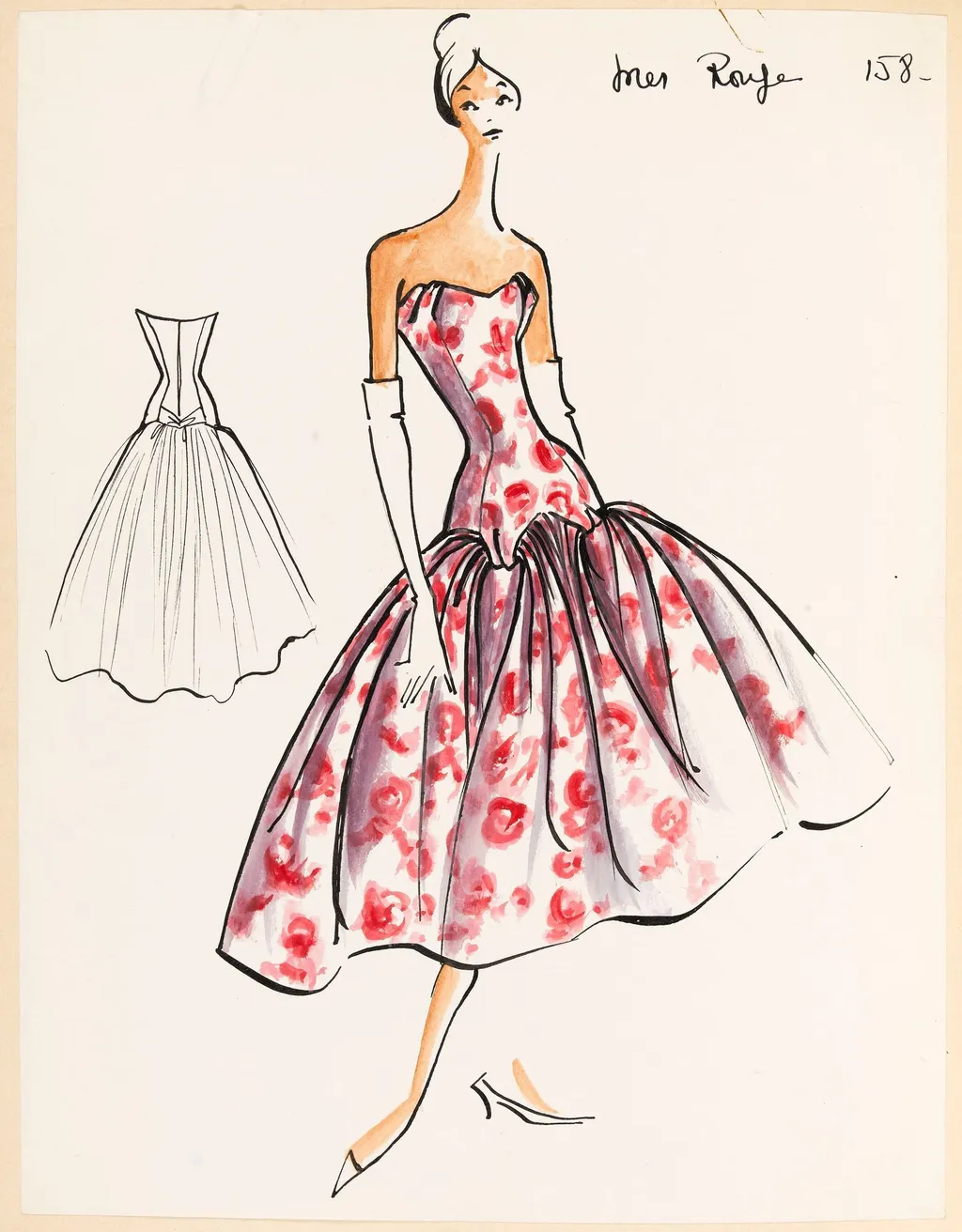
Mer Rouge is a drawing by Carven. It dates from 1959 and is held in the collection of the Palais Galliera - Musée de la Mode de la Ville de Paris.
About this work
Overview
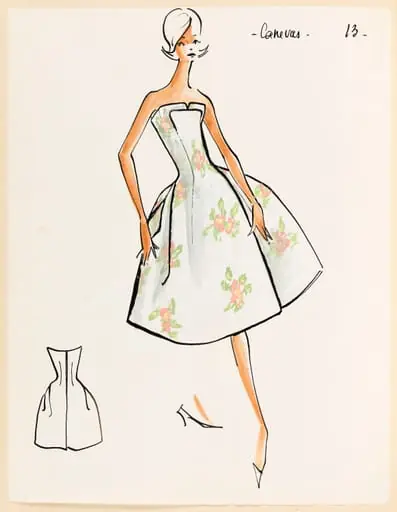
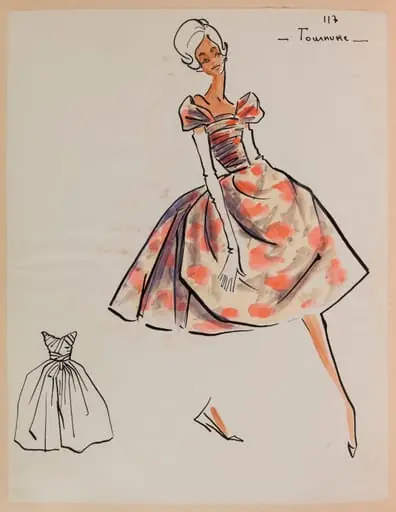
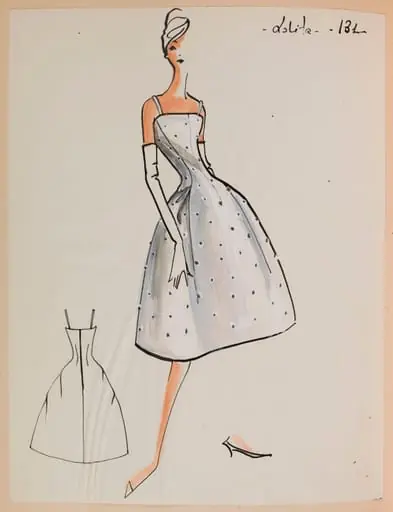
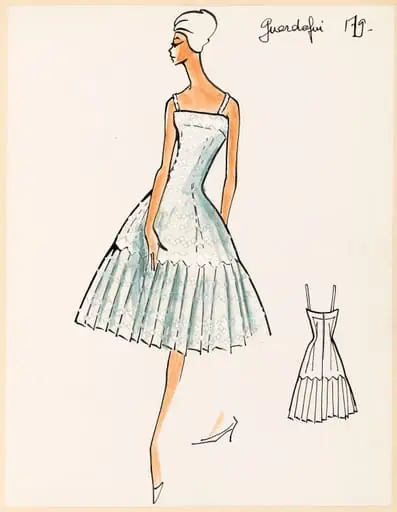
Mer Rouge, created around 1959 by the French designer Carven, is a painted representation of a floral evening dress.
Mer Rouge, created around 1959 by the French designer Carven, is a painted representation of a floral evening dress. The work is part of the collection at the Museum of Ethnography. Rather than depicting a full portrait, the composition centers on the garment itself, with a woman’s figure rendered in subtle detail to frame and contextualize the dress. The background is plain white, drawing attention to the textile’s pattern and structure.
Subject & Meaning
The painting focuses on a strapless dress adorned with red floral motifs and a sweetheart neckline, worn by a woman with an updo, white gloves, and high heels. The figure’s face and form are minimized, suggesting the dress is the true subject. This approach reflects mid-century fashion design’s emphasis on clothing as an autonomous object of art and identity, where attire conveys status, taste, and femininity without reliance on facial expression.
Technique & Style
The painting employs a flat, stylized approach with clean lines and minimal shading. The dress is rendered with precision, its floral pattern rendered in vivid red against a neutral ground. The woman’s body is softly outlined, lacking detailed anatomy, while the gloves and heels are rendered with sharp clarity. This selective realism prioritizes textile detail over psychological depth, aligning with fashion illustration traditions of the period.
History & Provenance
Created in the late 1950s, Mer Rouge emerged during a period when fashion houses increasingly collaborated with visual artists to elevate design as cultural artifact. The work entered the Museum of Ethnography’s collection as part of a broader effort to document fashion as material culture. Its provenance traces to Carven’s atelier, where garments were often documented through painted studies to preserve design intent beyond physical wear.
Context
In postwar France, haute couture was both an industry and an art form, with designers like Carven shaping ideals of elegance through fabric and silhouette. Mer Rouge reflects this era’s fascination with the dress as a symbol of refined femininity. The painting’s emphasis on the garment over the wearer mirrors contemporary fashion magazines and design sketches, where clothing was presented as an idealized object, detached from individual identity.
Legacy
Mer Rouge endures as a quiet testament to the intersection of fashion and fine art in the mid-20th century. It exemplifies how couture houses used visual media to immortalize their designs beyond runway or retail. Today, it contributes to scholarly understanding of how clothing was conceptualized as cultural expression, influencing later museum practices that treat garments as artifacts worthy of artistic study.
Artist & collection
Artist
These delicate ink-on-paper drawings capture the quiet poetry of everyday things: pinecones, reeds, apples.

Museum
Palais Galliera - Musée de la Mode de la Ville de Paris
Continue through works from the same source collection.