Artwork
Guardafui
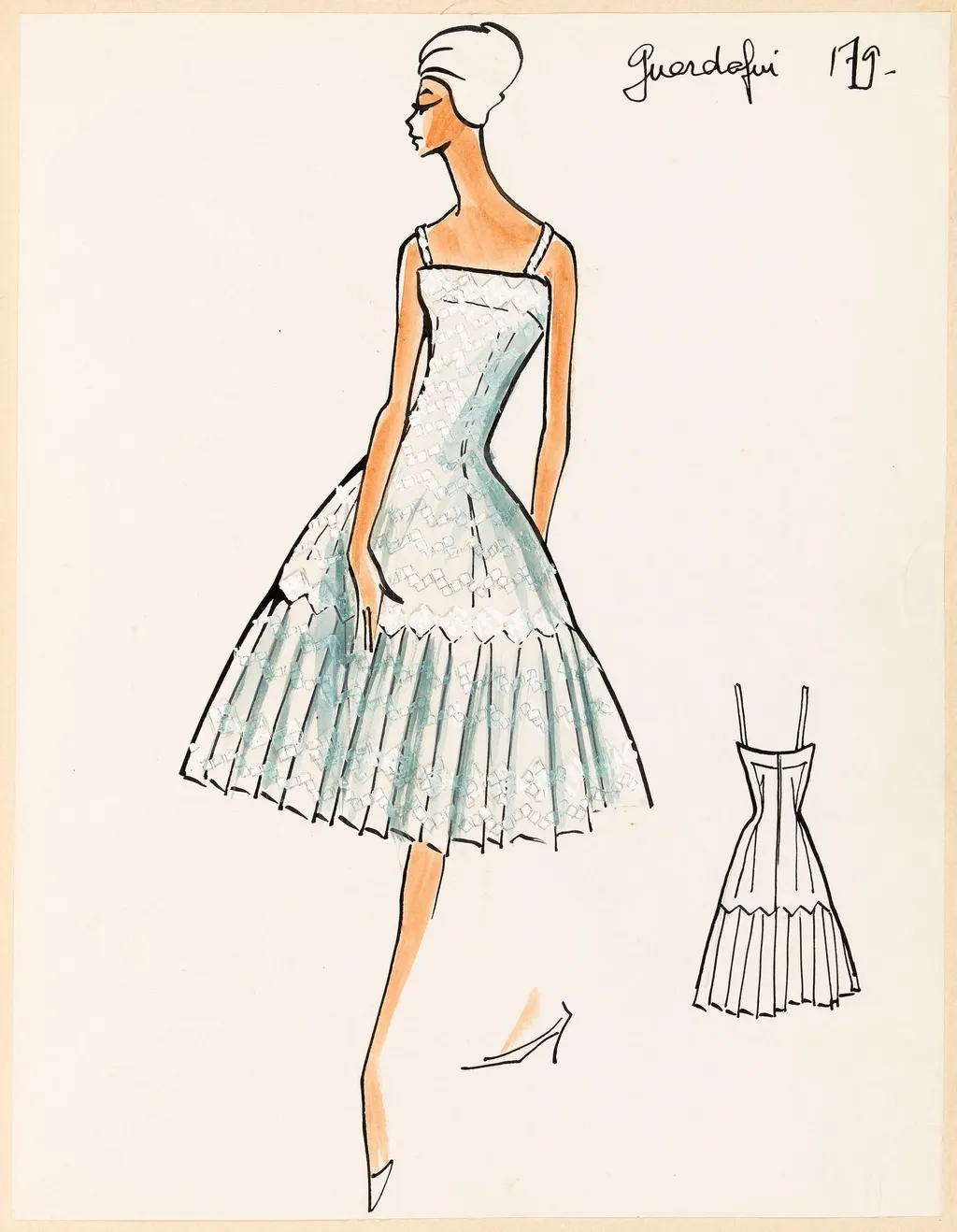
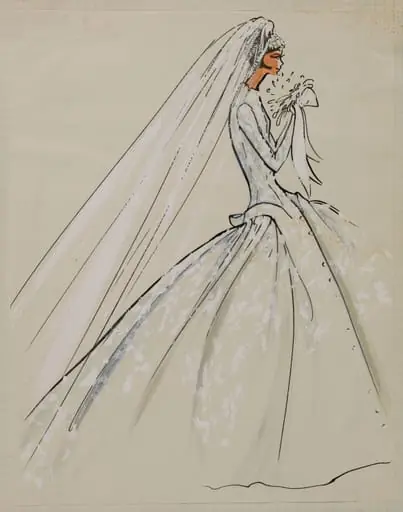
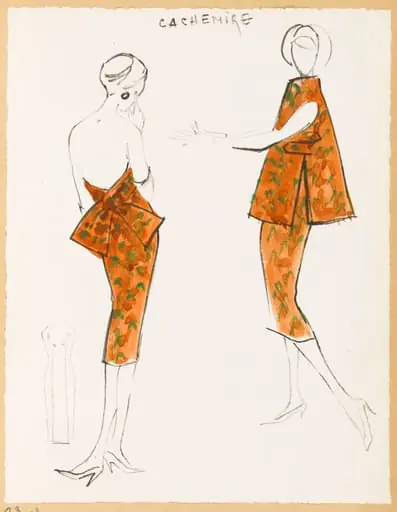
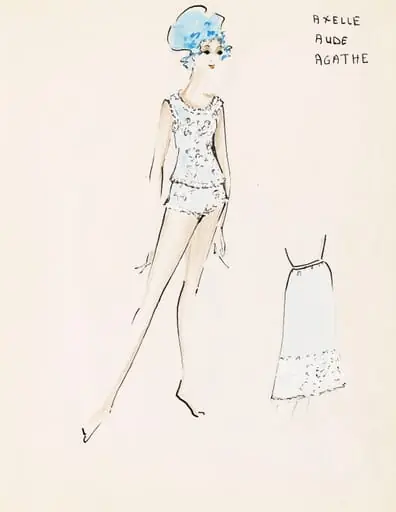
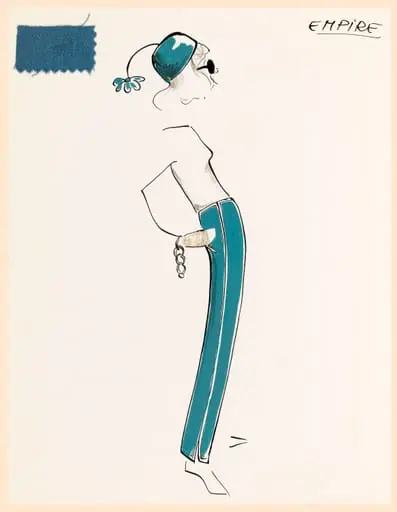
Guardafui is a drawing by Carven. It dates from 1959 and is held in the collection of the Palais Galliera - Musée de la Mode de la Ville de Paris.
About this work
Overview
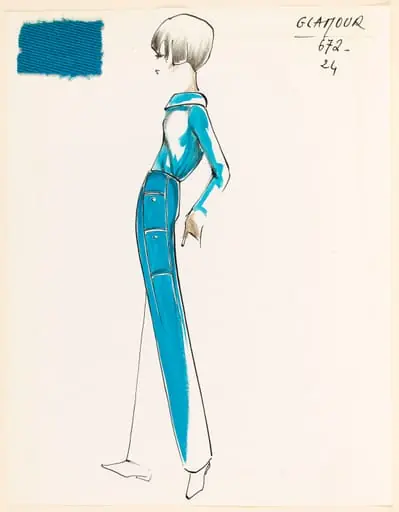
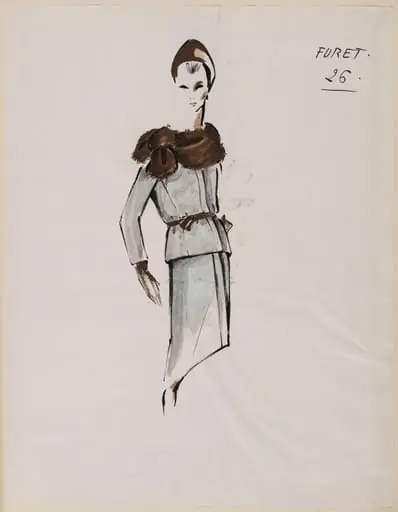
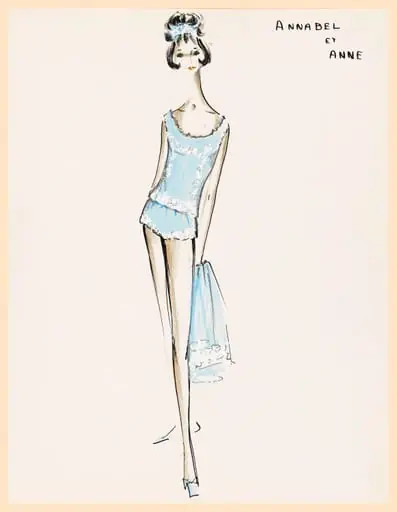
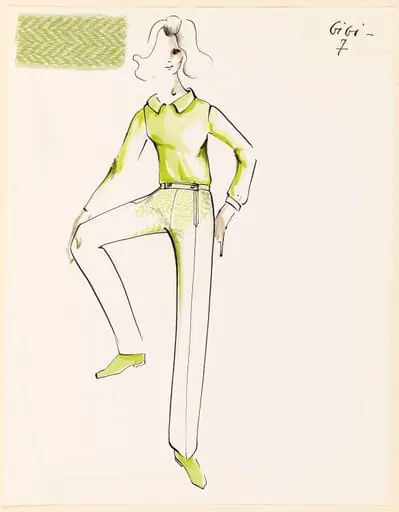
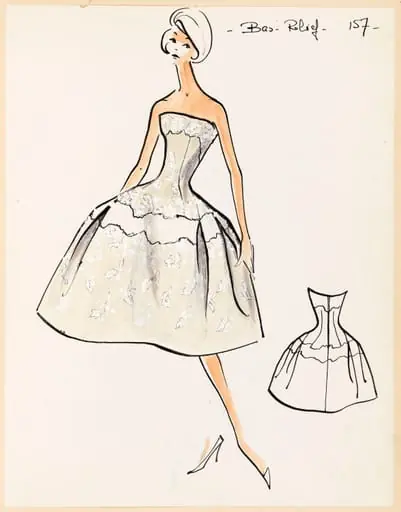
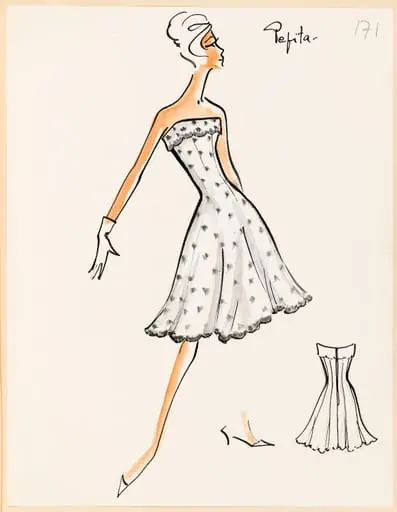
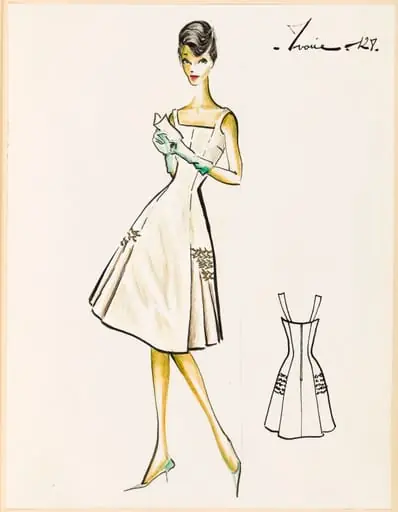
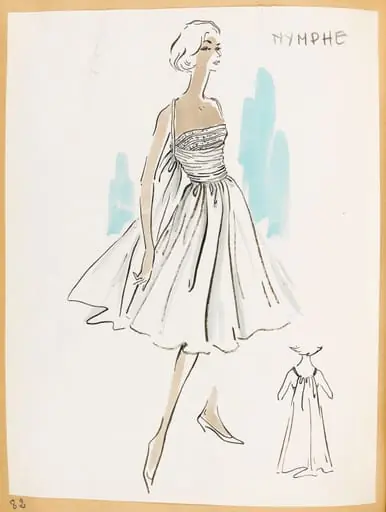
Created around 1959, Guardafui is a draft-style drawing attributed to the fashion house Carven. It resides in the collection of the Museum of Ethnography as a record of mid-century garment design. The piece combines figure study with technical illustration, presenting both a full-body pose and a detached pattern sketch, suggesting its function as a design reference rather than a finished artwork.
Subject & Meaning
The inclusion of a separate pattern diagram implies the drawing served a practical purpose in garment development, emphasizing construction over narrative.
The figure depicts a woman in a modest, tailored dress with a fitted bodice and layered, flared skirt. Her neat hairstyle and low-heeled shoes reflect a restrained, everyday elegance. The inclusion of a separate pattern diagram implies the drawing served a practical purpose in garment development, emphasizing construction over narrative. The subject’s anonymity reinforces its role as a prototype rather than a portrait.
Technique & Style
The drawing employs fine, precise lines to define form and structure. Fabric texture is suggested through subtle, repetitive patterns, while the skirt’s layered cut is rendered with sharp, even contours. The accompanying pattern sketch on the right is drawn in simplified outlines, stripped of detail, highlighting its utilitarian function. The artist’s signature in the upper right confirms authorship within the Carven atelier.
History & Provenance
The work entered the Museum of Ethnography’s collection as part of a broader acquisition of fashion documentation from the mid-20th century. Its origin within Carven’s design studio is supported by stylistic consistency with known garments from the period. No earlier ownership records are publicly documented, suggesting it was produced for internal use before being preserved as a cultural artifact.
Context
In the late 1950s, fashion houses like Carven relied on detailed sketches to communicate design intent to tailors and patternmakers. Guardafui reflects this workflow, where aesthetic and technical considerations were integrated into a single sheet. The emphasis on clean lines and structured silhouettes aligns with postwar European fashion trends favoring tailored simplicity over ornamentation.
Legacy
Guardafui survives as a representative example of how fashion design was documented before digital tools. Its preservation in an ethnographic museum underscores the cultural value placed on the mechanics of clothing production. The drawing offers insight into the quiet, methodical labor behind mid-century fashion, beyond the glamour often associated with the industry.
Artist & collection
Artist
These delicate ink-on-paper drawings capture the quiet poetry of everyday things: pinecones, reeds, apples.
Museum
Palais Galliera - Musée de la Mode de la Ville de Paris
Continue through works from the same source collection.