Artwork
Messidor
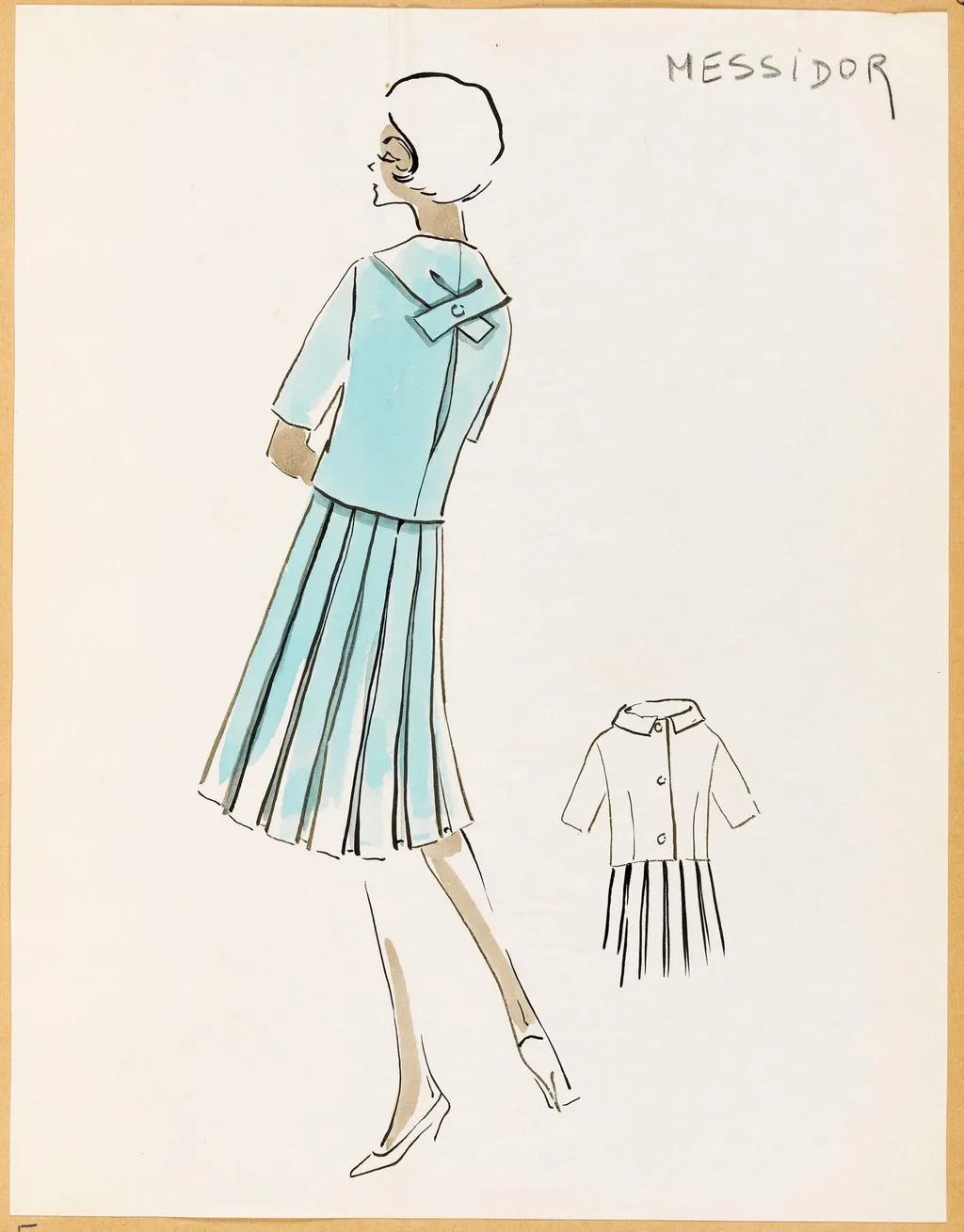
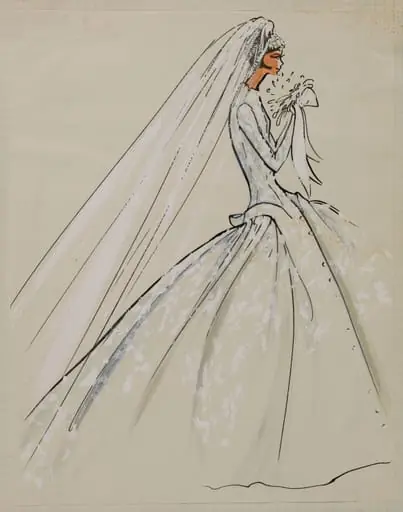
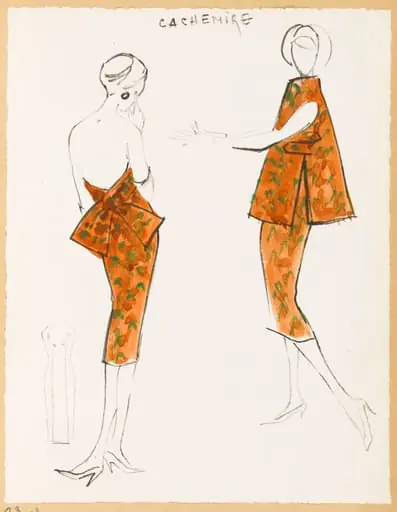
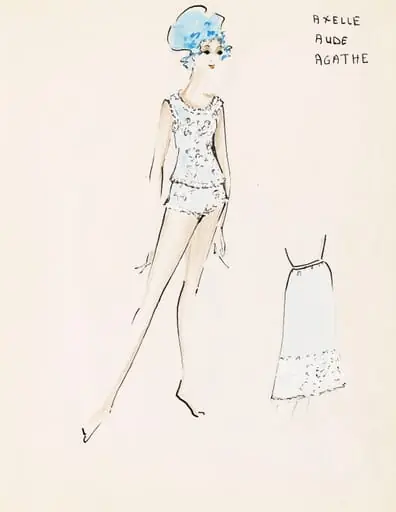
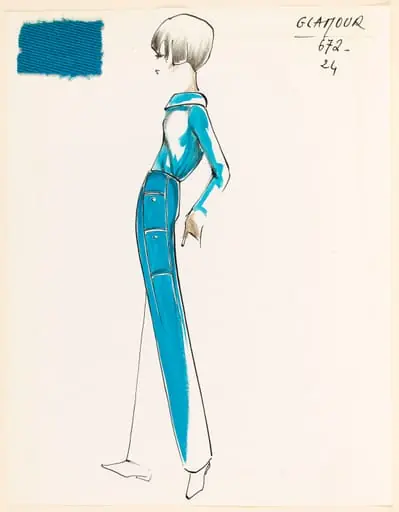
Messidor is a drawing by Carven. It dates from 1957 and is held in the collection of the Palais Galliera - Musée de la Mode de la Ville de Paris.
About this work
Overview
The signature 'Messidor' in the corner suggests a personal or professional alias, possibly tied to the artist’s fashion identity.
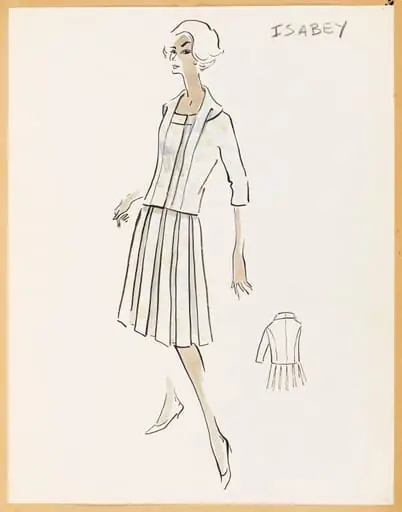
Created around 1957, Messidor is a pencil drawing attributed to the designer Carven. It resides in the collection of the Museum of Ethnography. The work presents a single figure in motion, rendered with minimal yet assured lines. A secondary, smaller sketch of the same garment appears beside the main figure, offering a frontal view. The signature 'Messidor' in the corner suggests a personal or professional alias, possibly tied to the artist’s fashion identity.
Subject & Meaning
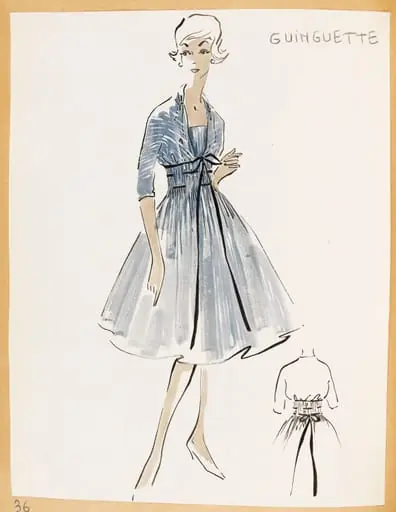
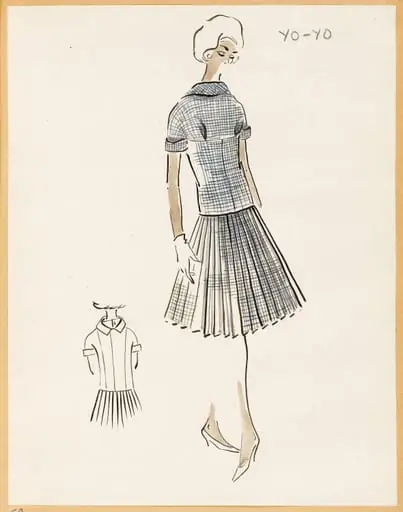
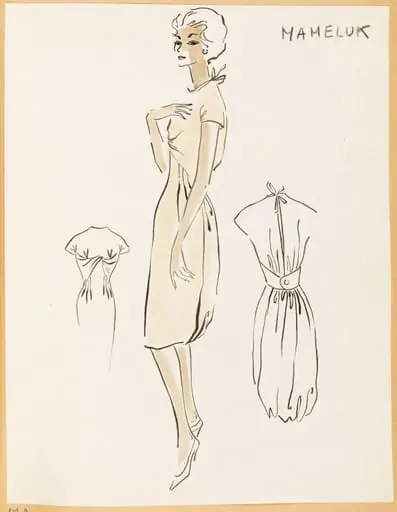
The drawing depicts a woman in motion, wearing a light blue ensemble consisting of a short jacket with a bow collar and a flared skirt. The figure walks sideways, emphasizing the dynamic flow of fabric. The inclusion of a secondary, static view of the outfit suggests an interest in garment structure and spatial presentation. The work functions less as a portrait and more as a study of clothing in movement, reflecting design thinking rather than narrative storytelling.
Technique & Style
The drawing employs clean, unembellished lines to define form and movement. The artist prioritizes silhouette and fabric flow over detail, using light, confident strokes to suggest texture and volume. The absence of shading or background elements directs focus entirely to the garment’s shape. The repeated depiction of the outfit in two orientations indicates a methodical approach to visualizing clothing design, typical of fashion illustration from the period.
History & Provenance
The drawing entered the Museum of Ethnography’s collection as part of a broader acquisition of mid-20th-century fashion materials. Its origin is linked to Carven, a French fashion house known for its tailored yet fluid designs. While the artist’s full identity remains unclear, the signature 'Messidor' is believed to be a pseudonym or internal designation used within the studio. The work’s preservation suggests it was valued as a design artifact rather than a fine art piece.
Context
In the 1950s, fashion houses often produced hand-drawn sketches to communicate design ideas to ateliers and clients. Messidor reflects this practice, aligning with the era’s emphasis on craftsmanship and manual illustration before the rise of photographic documentation. The focus on a single outfit, viewed from multiple angles, mirrors the way designers tested garment dynamics in motion—particularly relevant to postwar women’s wear emphasizing elegance and ease.
Legacy
Messidor remains a quiet example of mid-century fashion documentation, preserved for its insight into design processes rather than its artistic fame. It contributes to scholarly understanding of how clothing was conceptualized before digital tools. While not widely exhibited, its presence in an ethnographic context underscores the cultural significance of fashion as material culture, bridging art, labor, and daily life in postwar Europe.
Artist & collection
Artist
These delicate ink-on-paper drawings capture the quiet poetry of everyday things: pinecones, reeds, apples.
Museum
Palais Galliera - Musée de la Mode de la Ville de Paris
Continue through works from the same source collection.