Artwork
Tivoli
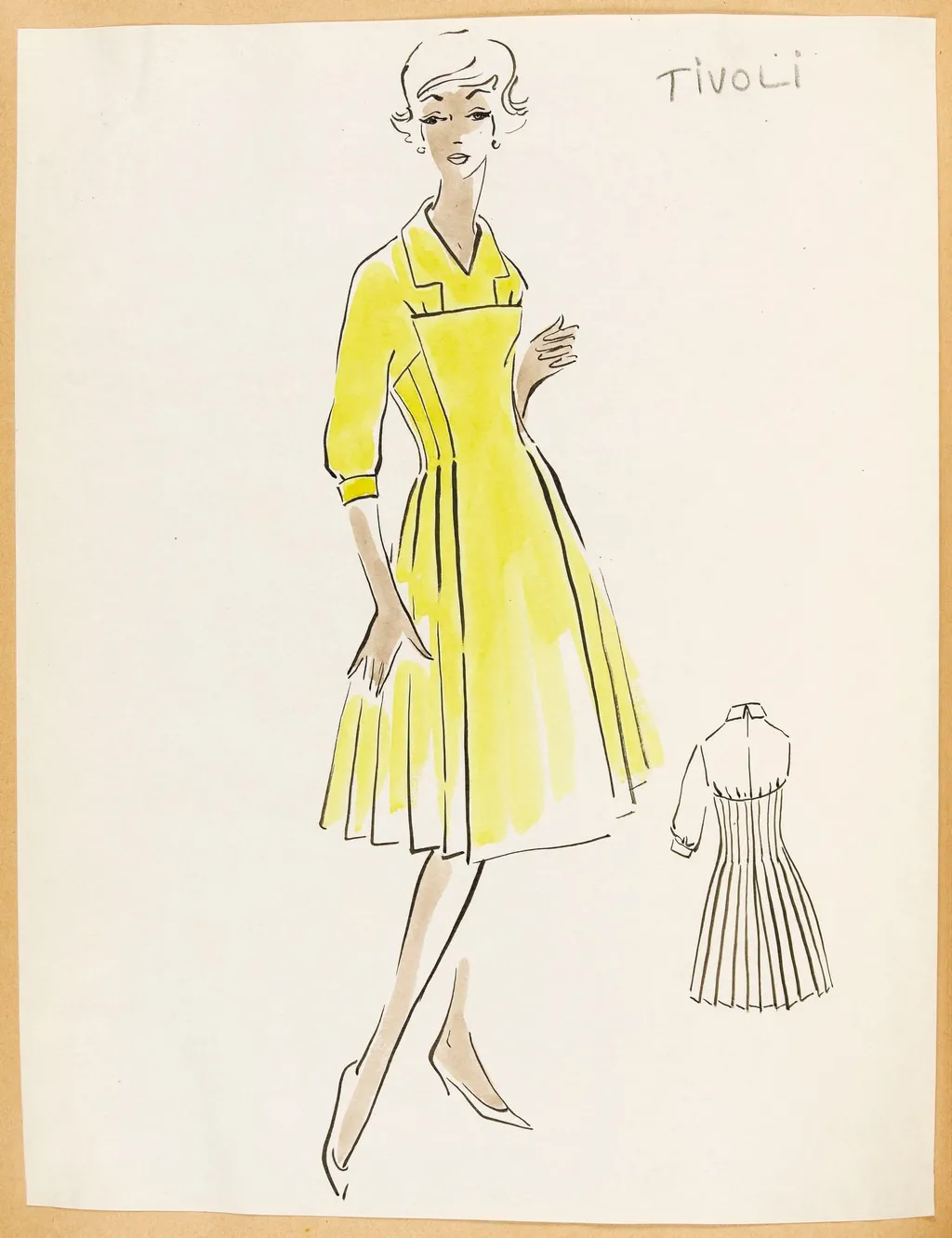
Tivoli is a drawing by Marie-Louise Carven. It dates from 1957 and is held in the collection of the Palais Galliera - Musée de la Mode de la Ville de Paris.
About this work
Overview
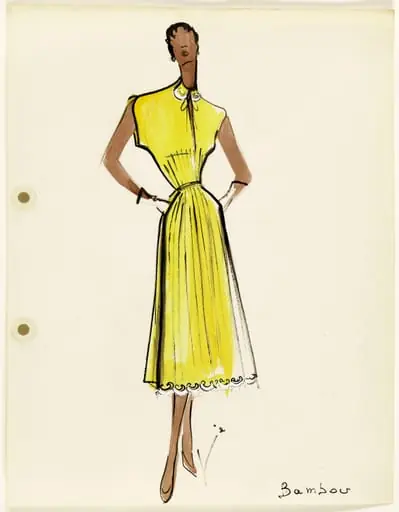
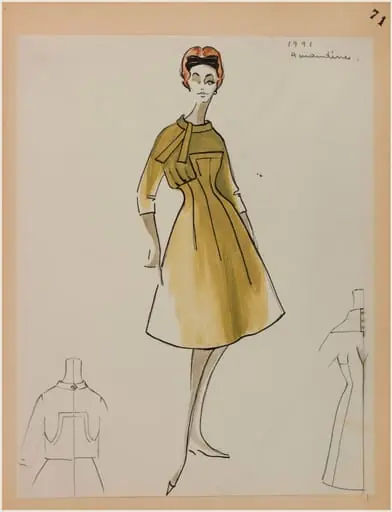
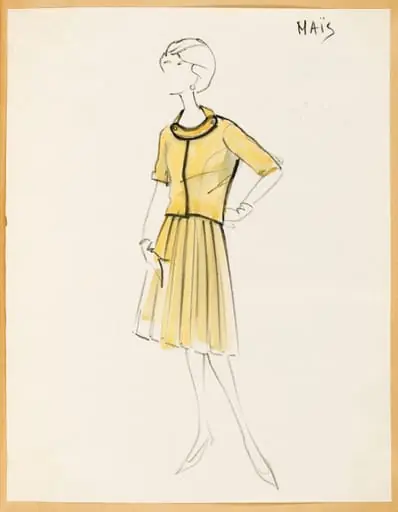
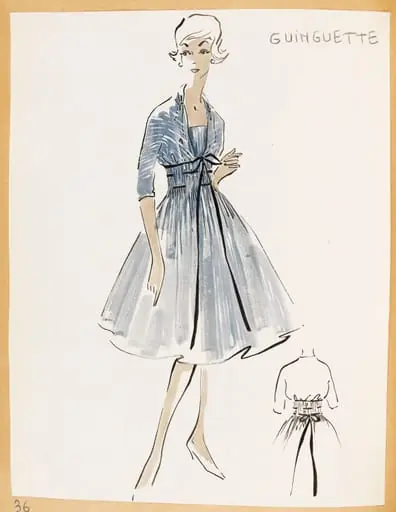
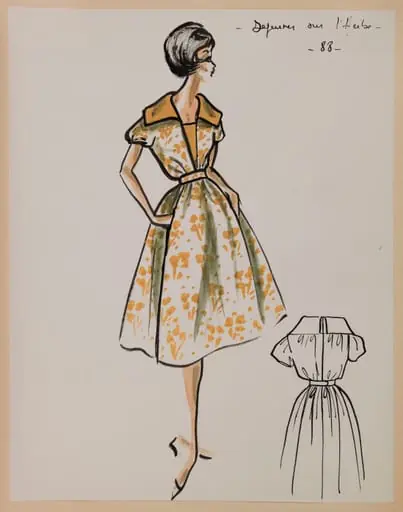
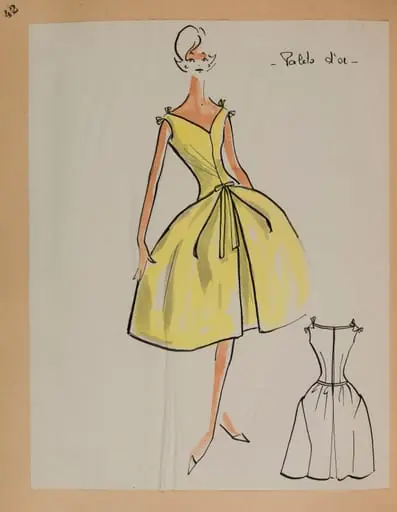
It depicts a woman dressed in a tailored yellow ensemble with a white underskirt, rendered in the clean, stylized manner typical of mid-century fashion visuals.
Tivoli is a painted fashion illustration from approximately 1957, created by French designer Marie-Louise Carven. It depicts a woman dressed in a tailored yellow ensemble with a white underskirt, rendered in the clean, stylized manner typical of mid-century fashion visuals. The work is part of the Museum of Ethnography’s collection, reflecting its role as a cultural artifact rather than a fine art piece. Carven, known for democratizing fashion, used such imagery to promote her designs to a broader audience.
Subject & Meaning
The figure in Tivoli embodies an idealized yet approachable femininity of the late 1950s. Her poised, mid-stride posture and subtle smile convey quiet confidence, aligning with the era’s emphasis on elegant, active womanhood. The inclusion of a scaled-down duplicate of the dress beside her functions as a design reference, emphasizing the garment’s structure and silhouette. The neutral expression avoids theatricality, reinforcing the practical, wearable nature of Carven’s aesthetic.
Technique & Style
Tivoli employs flat planes of color and precise linework, characteristic of fashion illustration from the period. The dress’s V-neck and three-quarter sleeves are rendered with clarity, highlighting Carven’s signature attention to proportion and tailoring. The background is minimal, focusing attention on the figure and garment. The slight asymmetry in the pose and the presence of the duplicate dress suggest a functional purpose: to communicate design details to clients or manufacturers.
History & Provenance
Created around 1957, Tivoli emerged during Carven’s expansion into prêt-à-porter, a pioneering move among Parisian couturiers. As founder of her eponymous house since 1945, she sought to make fashion accessible beyond haute couture clients. The work’s presence in the Museum of Ethnography indicates its recognition as a cultural document of postwar French fashion production, preserving the visual language of commercial design rather than fine art.
Context
In the postwar years, Parisian fashion houses increasingly turned to illustrated portfolios to market garments to department stores and international buyers. Tivoli reflects this shift, blending artistic presentation with commercial intent. Carven’s focus on petite figures and lightweight fabrics distinguished her from contemporaries, and this illustration served as both advertisement and archive, capturing the evolving relationship between design, gender, and consumer culture in 1950s Europe.
Legacy
Tivoli stands as a quiet testament to Carven’s role in reshaping fashion’s accessibility. While not widely exhibited as fine art, its preservation in an ethnographic collection underscores its value as a material record of mid-century design practices. The illustration continues to inform studies on how fashion was visually communicated to the public, bridging the gap between haute couture and ready-to-wear in a period of rapid social and industrial change.
Artist & collection
Artist
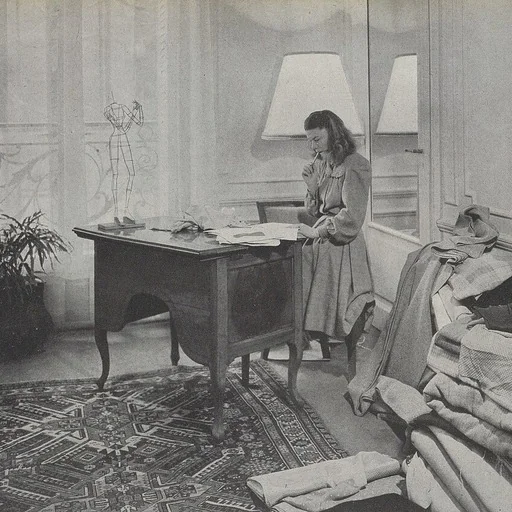
Marie-Louise Carven (31 August 1909 – 8 June 2015), born Carmen de Tommaso, was a French fashion designer who founded the house of Carven in 1945.
Museum
Palais Galliera - Musée de la Mode de la Ville de Paris
Continue through works from the same source collection.
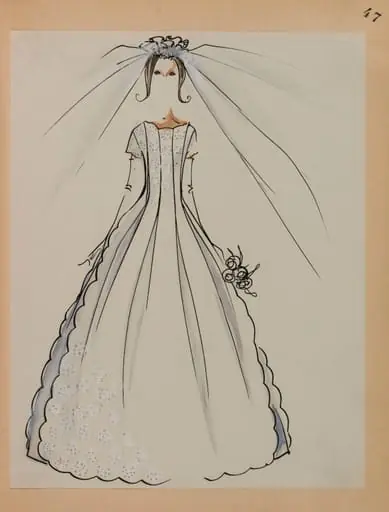 Robe de mariée festonnée et son voile
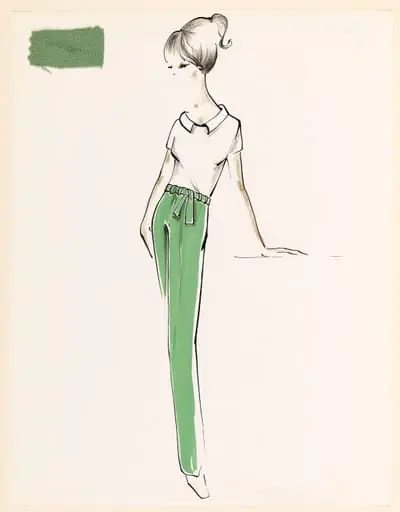 Haut blanc à manches courtes et pantalon vert à ceinture nouée
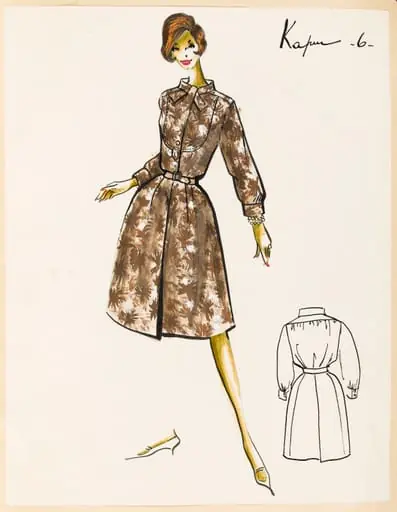 Kapur
Kapur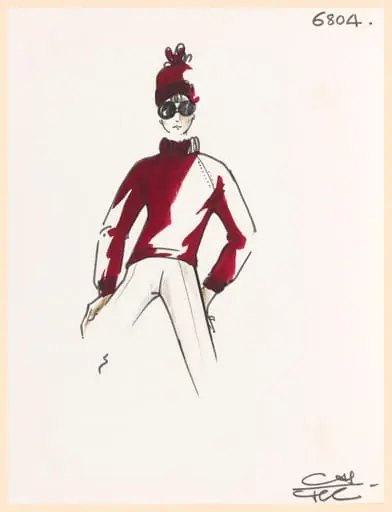 Pull-over à manches longues pourpre, bonnet assorti, pantalon et lunettes de soleil
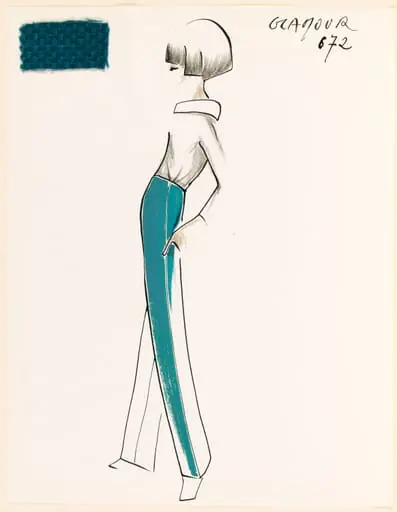 GLAMOUR
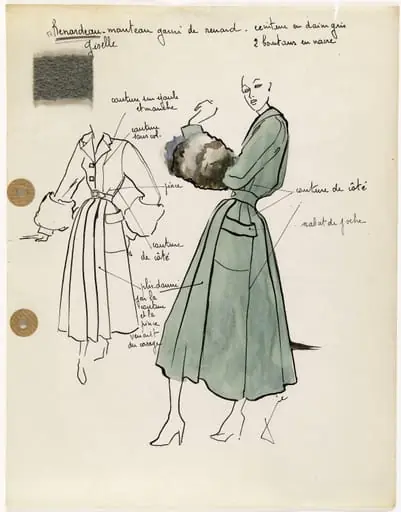 'Renardeau'
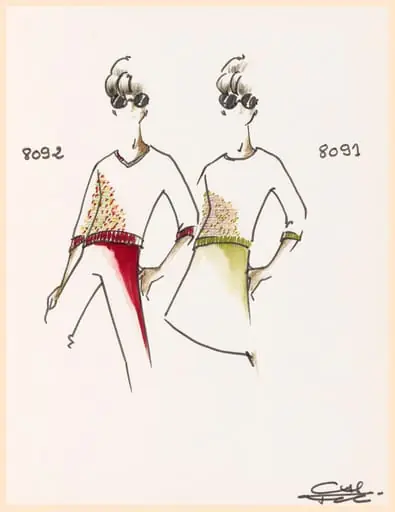 Pull-over à manches trois quarts et à encolure V à motifs multicolores, pantalon cerise et lunettes de soleil
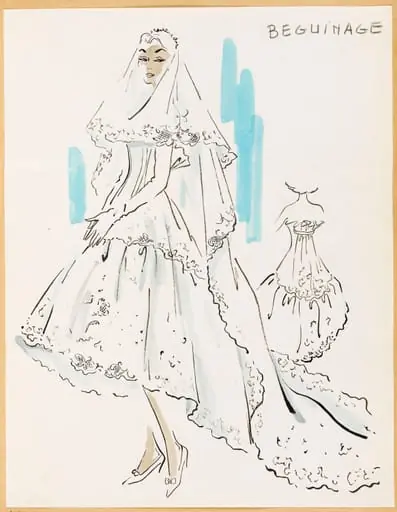 Béguinage