Artwork
Ming
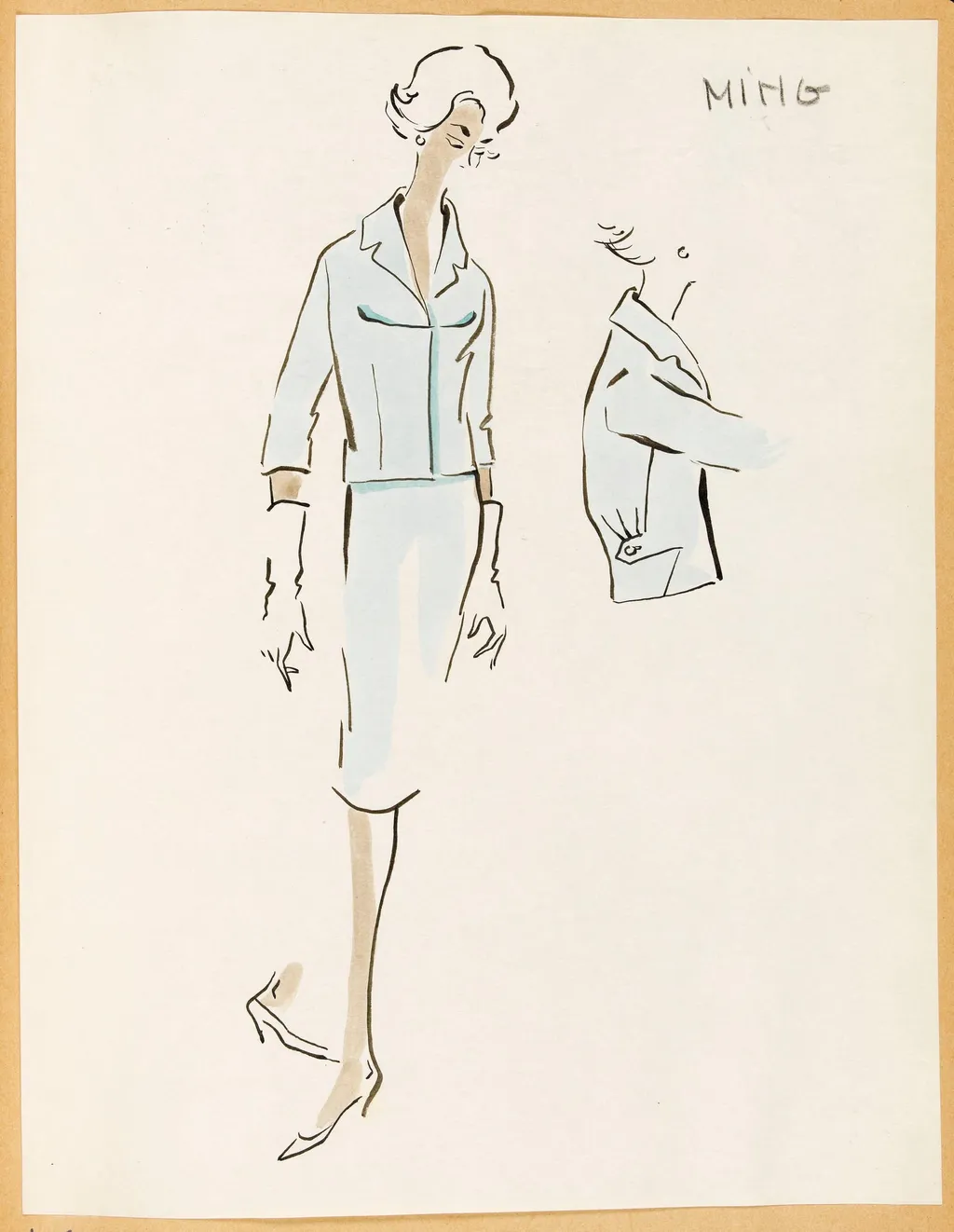
Ming is a drawing by Carven. It dates from 1957 and is held in the collection of the Palais Galliera - Musée de la Mode de la Ville de Paris.
About this work
Overview
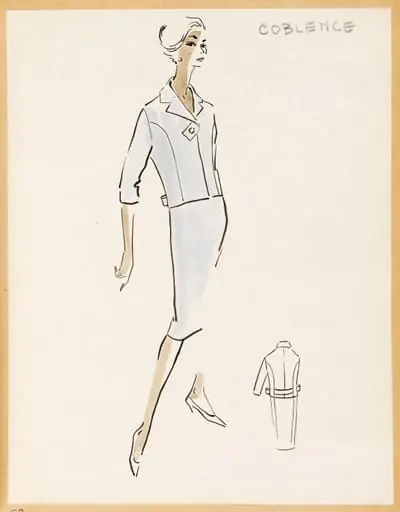
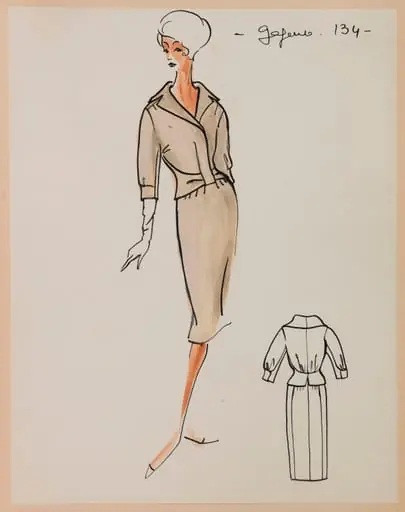
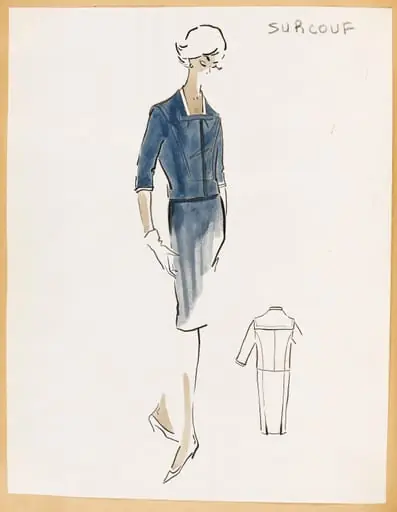
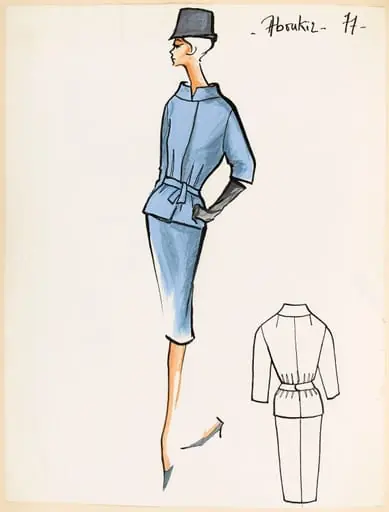
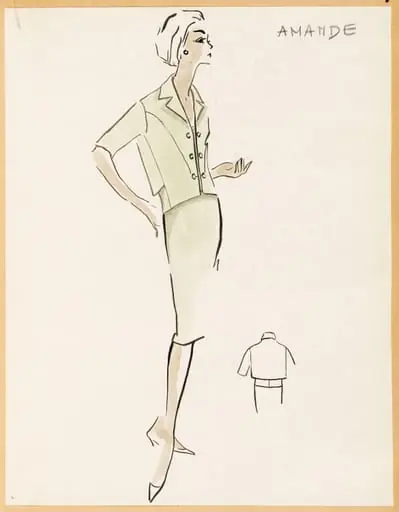
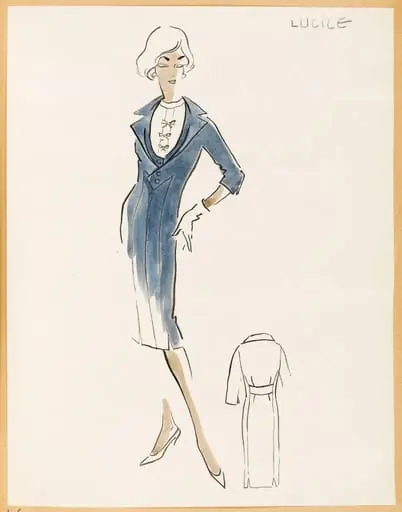
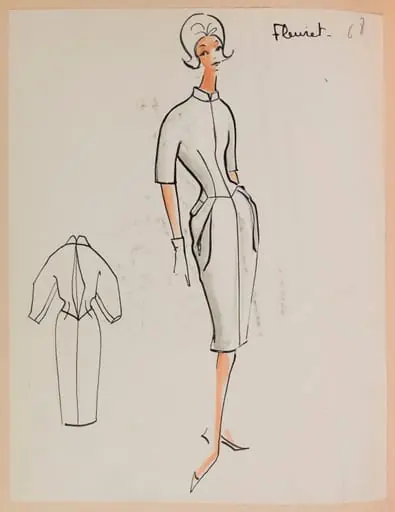
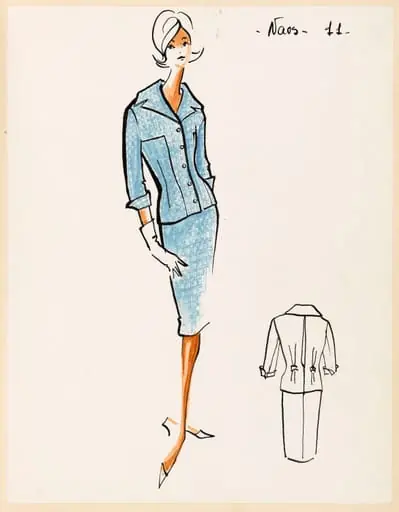
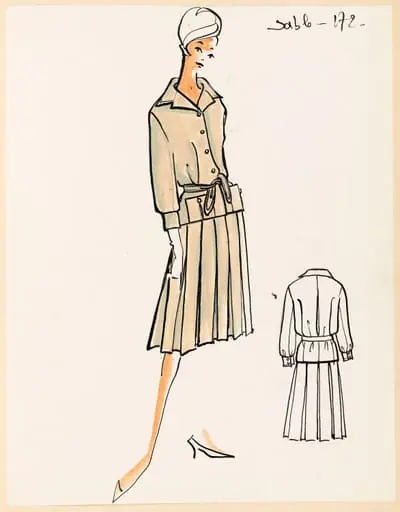
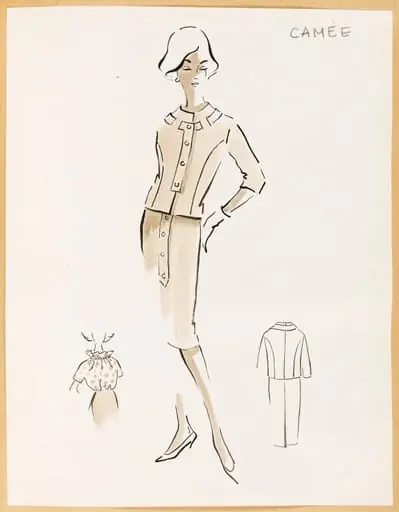
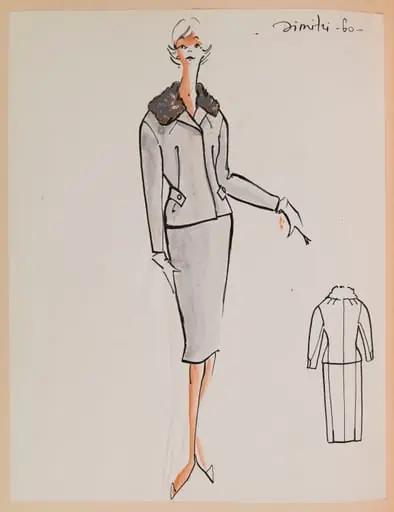
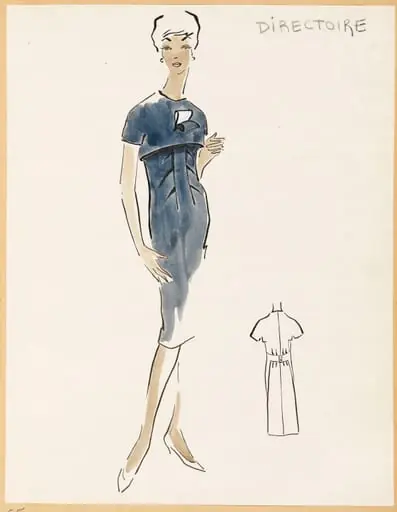
The composition includes a secondary, isolated rendering of the jacket to the right, emphasizing its structural and decorative details.
Created around 1957 by the designer Carven, this drawing is part of the Museum of Ethnography’s collection. It depicts a woman dressed in a coordinated white ensemble—jacket and skirt—with matching heels and short hair. The composition includes a secondary, isolated rendering of the jacket to the right, emphasizing its structural and decorative details. The work functions as a design study rather than a portrait.
Subject & Meaning
The figure represents a modern woman of the mid-20th century, dressed in minimalist, tailored attire. The inclusion of the detached jacket suggests an interest in garment construction over personal identity. The focus on clean lines and neutral color reflects a design philosophy centered on form and function, aligning with postwar ideals of practical elegance in women’s fashion.
Technique & Style
Rendered in fine-line drawing, the work employs precise contours and subtle shading to define fabric folds and silhouette. The woman is rendered with restrained detail, while the jacket is drawn with greater attention to seams, buttons, and texture. This contrast highlights the garment as the primary subject, using draftsmanship typical of fashion illustration from the period.
History & Provenance
The drawing entered the Museum of Ethnography’s holdings in the latter half of the 20th century, likely as part of a broader acquisition of design materials related to European fashion. Its origin as a working sketch by Carven’s studio indicates it was used for internal reference or client presentation, later recognized for its archival value in documenting mid-century design practices.
Context
In the 1950s, Paris remained a center for couture, where designers like Carven emphasized tailored silhouettes and understated luxury. This drawing reflects a shift away from ornate decoration toward clean, wearable forms. The inclusion of a detached garment detail mirrors the industry’s growing emphasis on technical documentation, bridging fashion design and ethnographic record-keeping.
Legacy
The drawing endures as a quiet testament to the craftsmanship behind everyday fashion. It contributes to scholarly understanding of how design studios documented their work before digital tools. Its presence in an ethnographic museum underscores the cultural significance of clothing as material culture, beyond mere aesthetics or celebrity.
Artist & collection
Artist
These delicate ink-on-paper drawings capture the quiet poetry of everyday things: pinecones, reeds, apples.
Museum
Palais Galliera - Musée de la Mode de la Ville de Paris
Continue through works from the same source collection.