Artwork
Musset
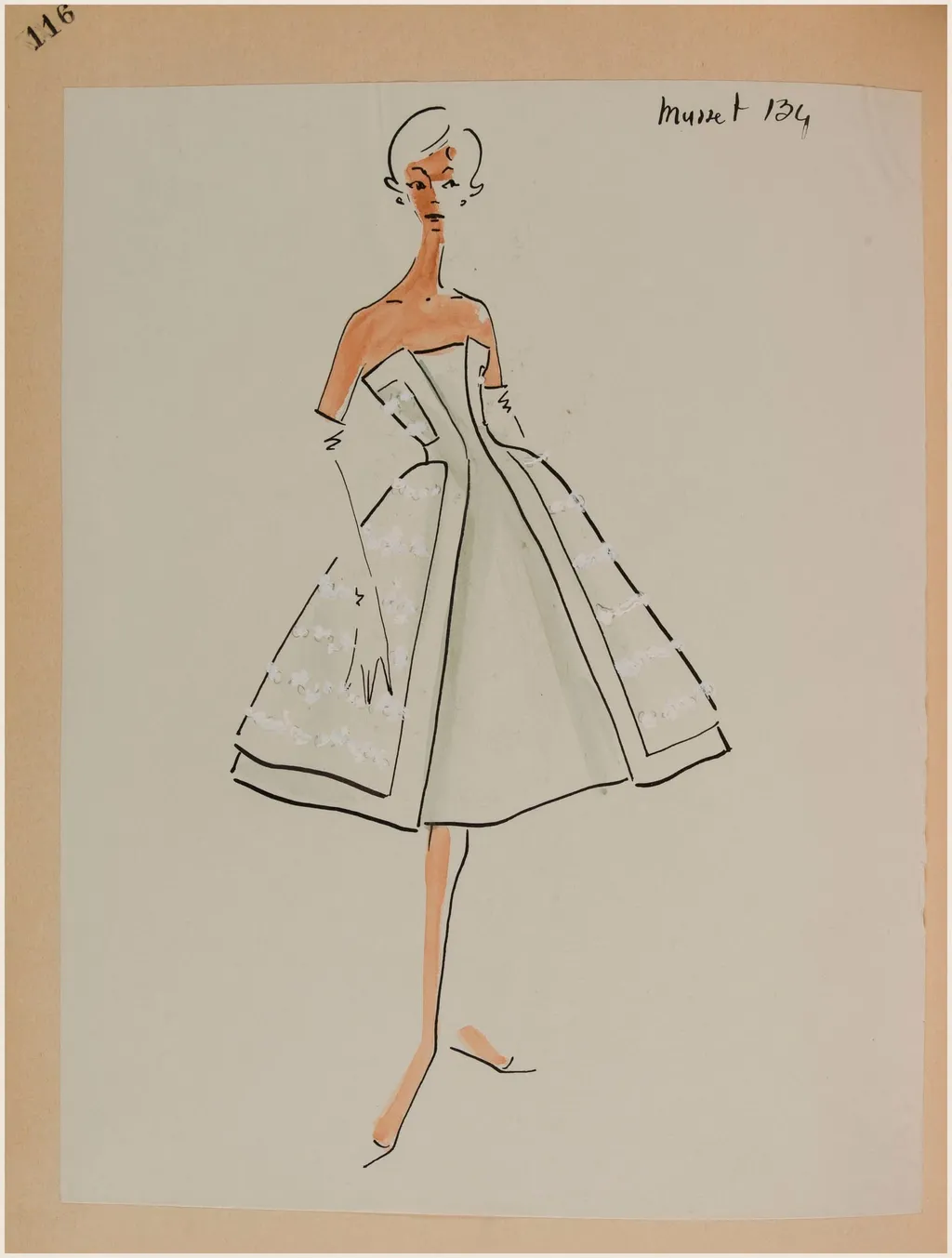
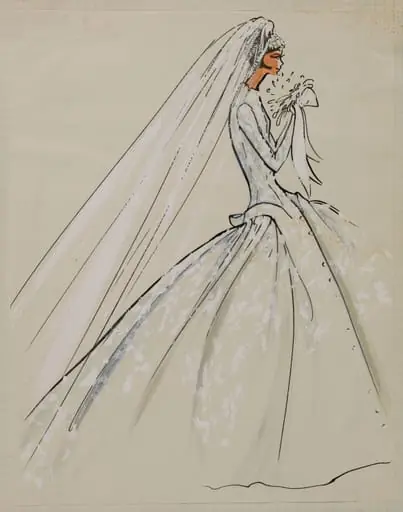
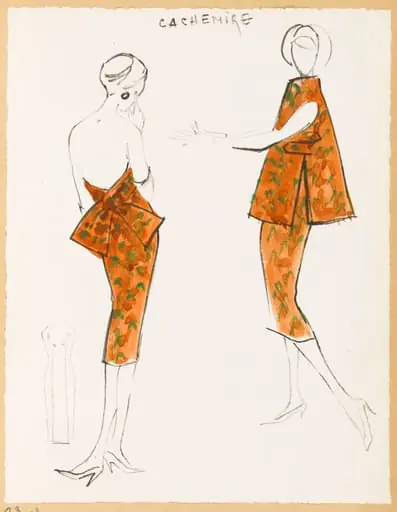
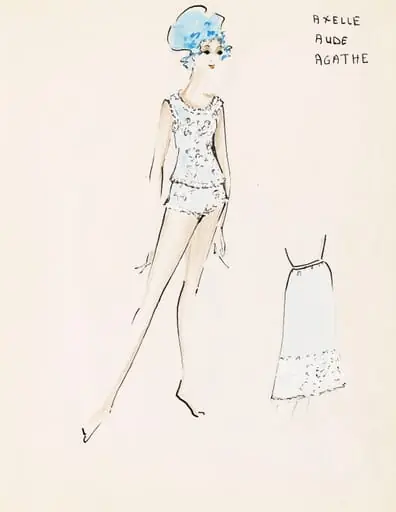
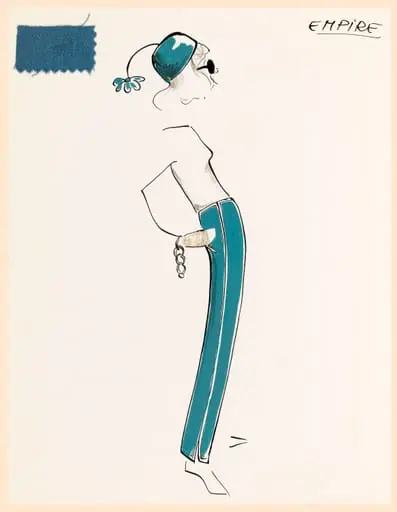
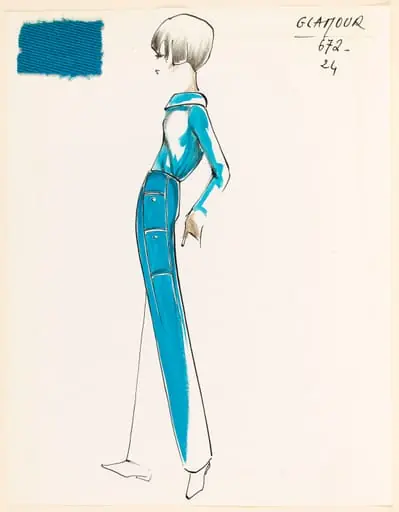
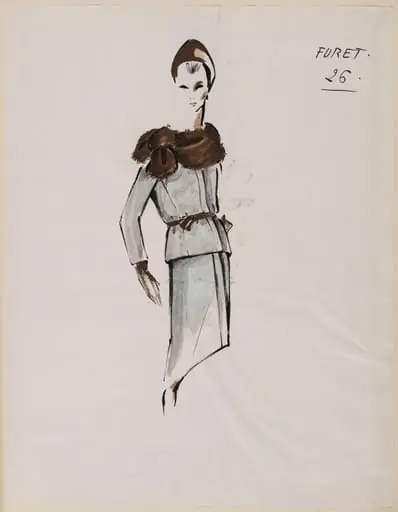
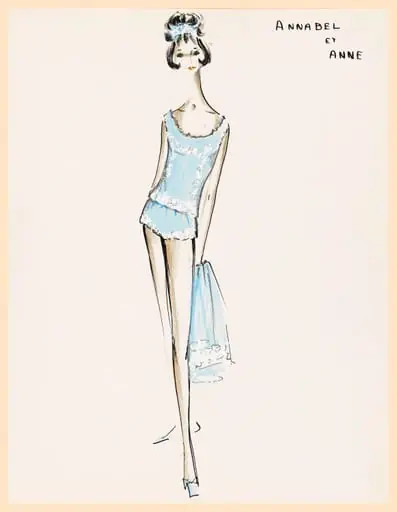
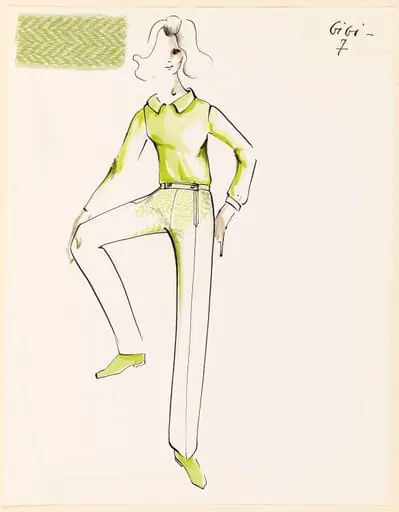
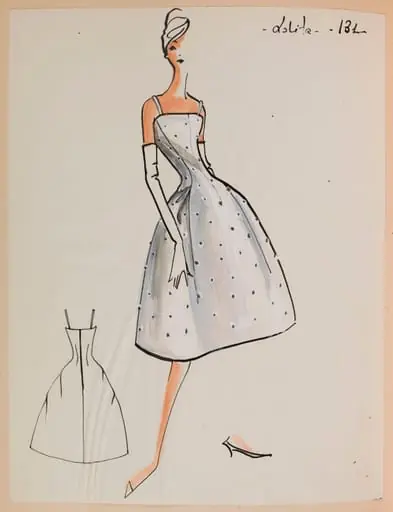
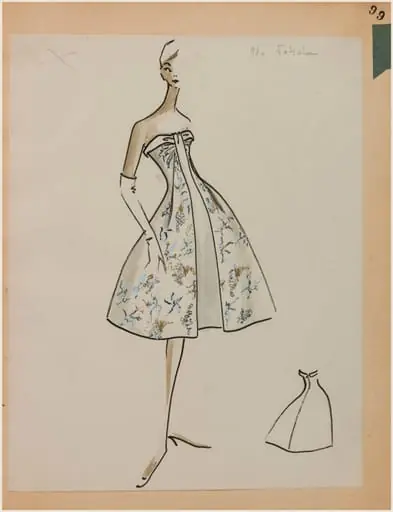
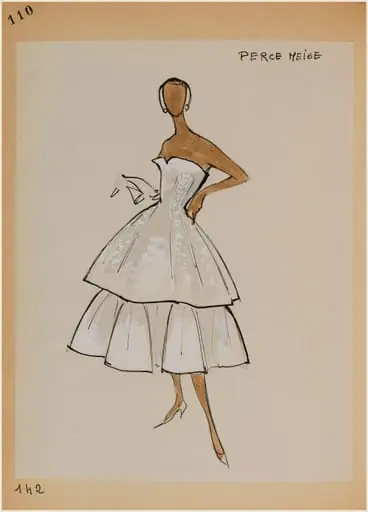
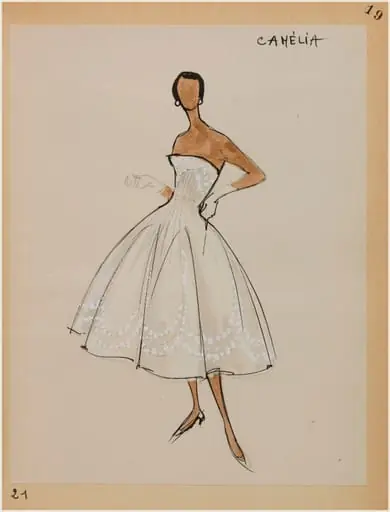
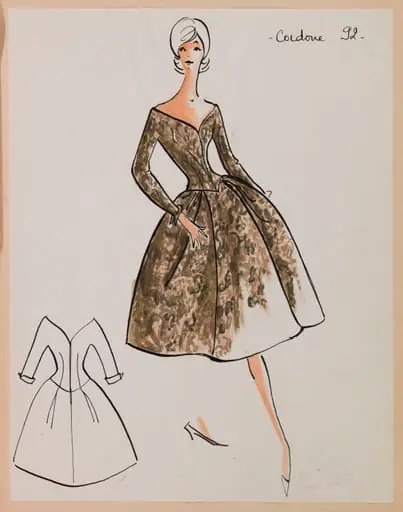
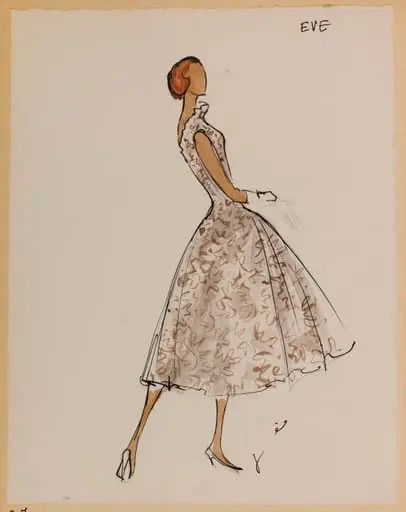
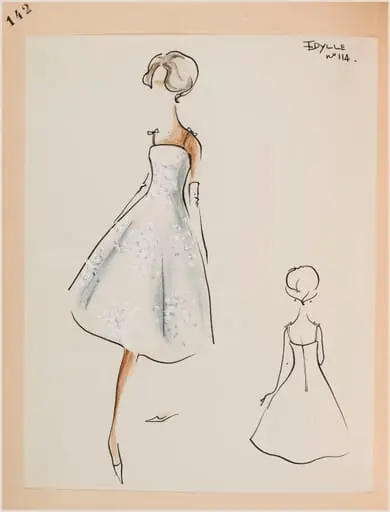
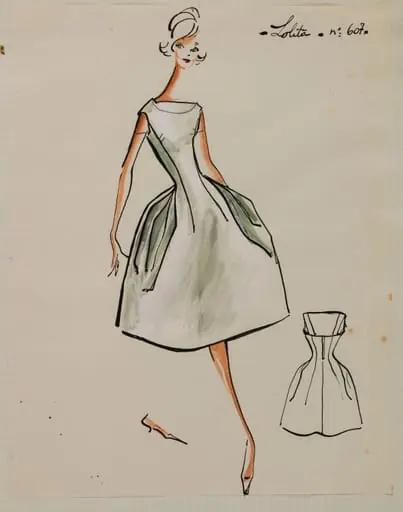
Musset is a drawing by Carven. It dates from 1958 and is held in the collection of the Palais Galliera - Musée de la Mode de la Ville de Paris.
About this work
Overview
The work reflects Carven’s broader engagement with fashion as a cultural artifact, translating garment design into graphic notation.
Created around 1958 by the French designer Carven, this ink drawing is part of the Museum of Ethnography’s collection. It captures a single figure in a restrained, linear style, emphasizing form over detail. The work reflects Carven’s broader engagement with fashion as a cultural artifact, translating garment design into graphic notation. Its modest scale and quiet composition invite close observation rather than dramatic display.
Subject & Meaning
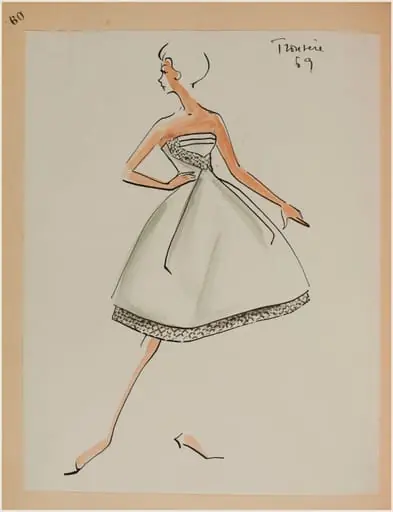
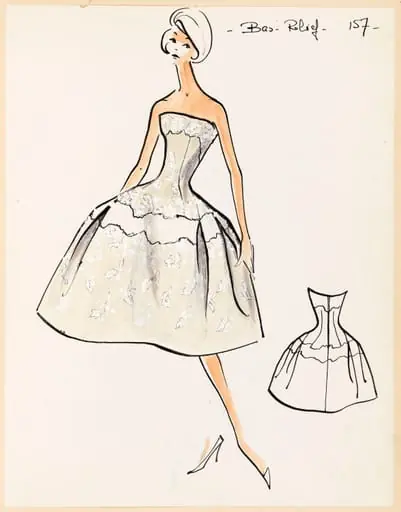
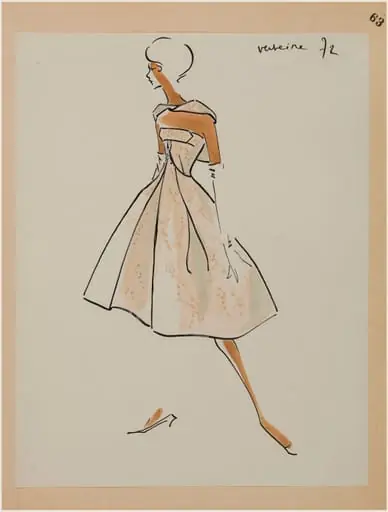
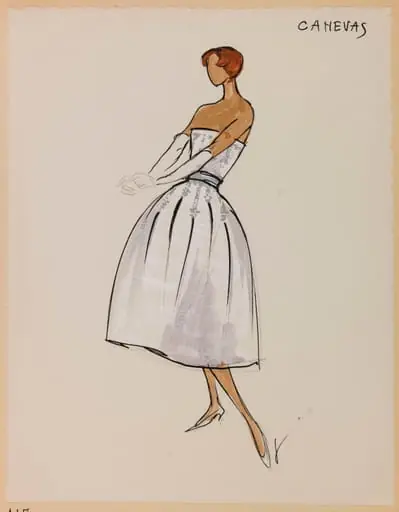
The figure is a woman dressed in a strapless, knee-length white dress, her posture composed yet informal: one arm bent, the other hanging loosely. Her updo and high heels suggest a moment of transition—perhaps between public presentation and private repose. The absence of facial features and background elements shifts focus to the silhouette and movement, implying an idealized yet anonymous femininity tied to mid-century fashion norms.
Technique & Style
Rendered in fine, unbroken lines with minimal shading, the drawing employs economy of mark to define volume and drapery. The dress’s full skirt is suggested through flowing contours, while the heels and updo are indicated with precise, angular strokes. The lack of texture or tonal variation reinforces a sense of clarity and restraint, aligning with mid-century modernist aesthetics that valued simplicity and structural elegance.
History & Provenance
The drawing entered the Museum of Ethnography’s holdings in the late 1950s, likely acquired as part of a broader effort to document fashion as cultural expression. Carven, primarily known as a couturier, produced such sketches as design records or promotional materials. Its preservation in an ethnographic context signals a shift in institutional priorities, recognizing fashion as worthy of anthropological study.
Context
In postwar France, fashion design was increasingly viewed as a reflection of social change. Carven’s work, including this drawing, emerged during a period when women’s attire was becoming more practical yet still ceremonial. The figure’s poised stance and minimalist dress echo the era’s blend of elegance and modernity, aligning with broader cultural movements that redefined femininity through streamlined forms.
Legacy
Though not widely exhibited, this drawing contributes to the archival record of Carven’s design philosophy and the institutional recognition of fashion as material culture. It remains a quiet example of how haute couture sketches, once functional tools, were later repositioned as artifacts of aesthetic and social history, influencing how museums interpret everyday dress.
Artist & collection
Artist
These delicate ink-on-paper drawings capture the quiet poetry of everyday things: pinecones, reeds, apples.
Museum
Palais Galliera - Musée de la Mode de la Ville de Paris
Continue through works from the same source collection.