Artwork
Lolita
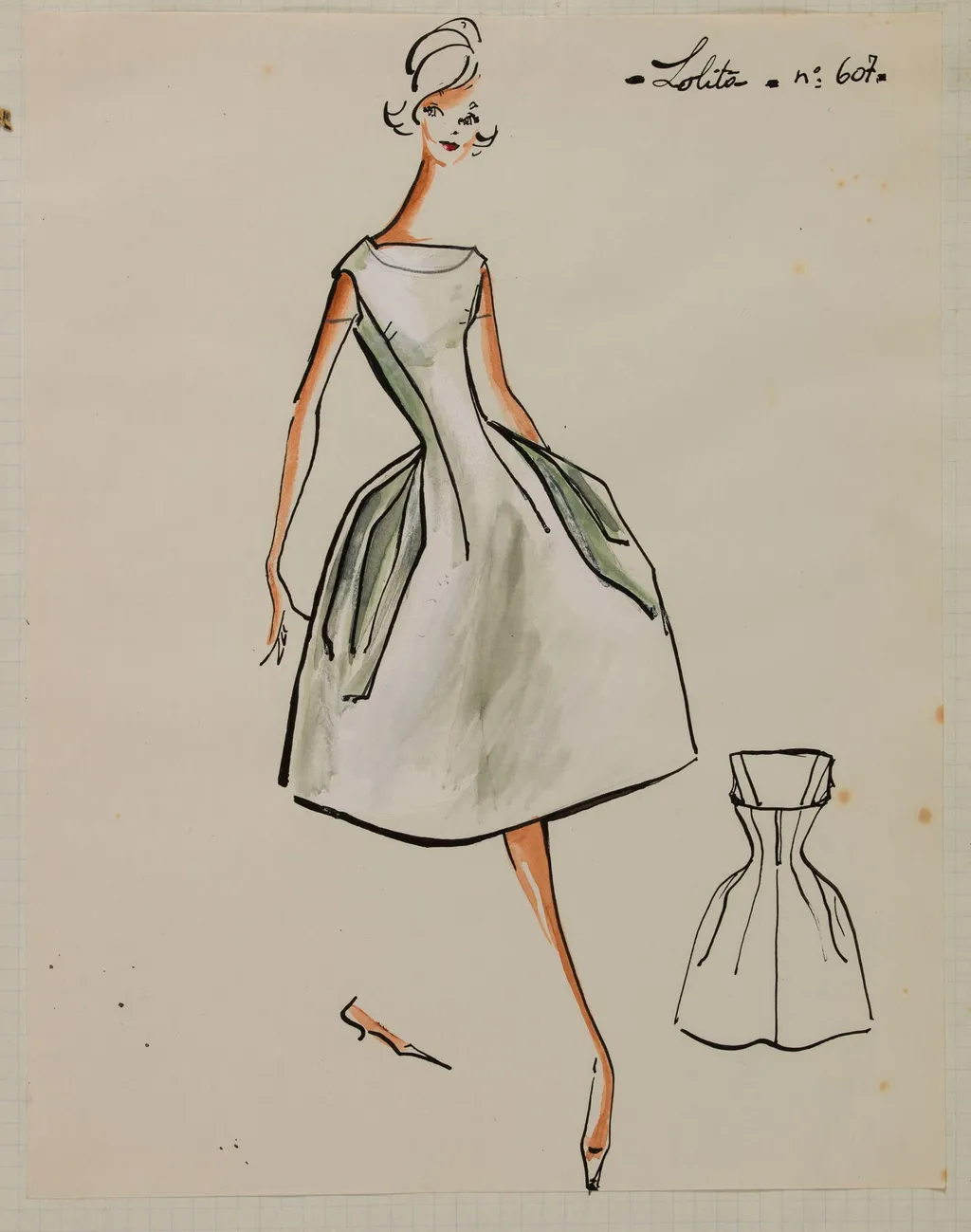
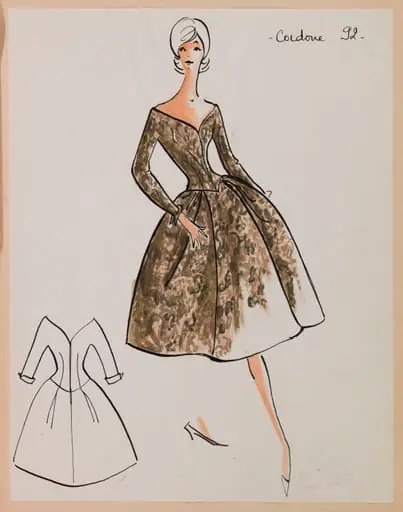
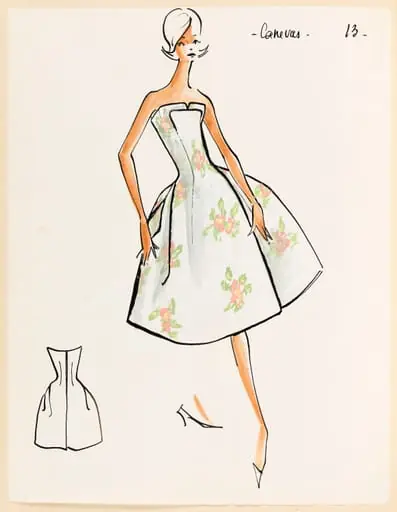
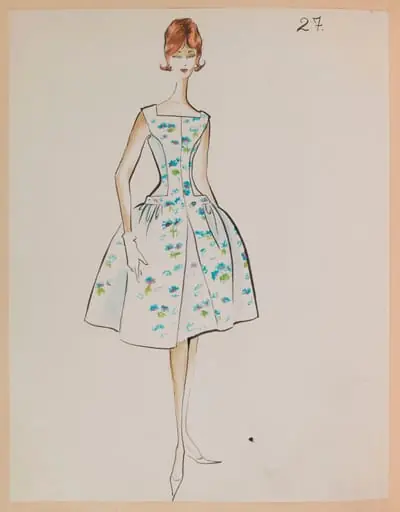
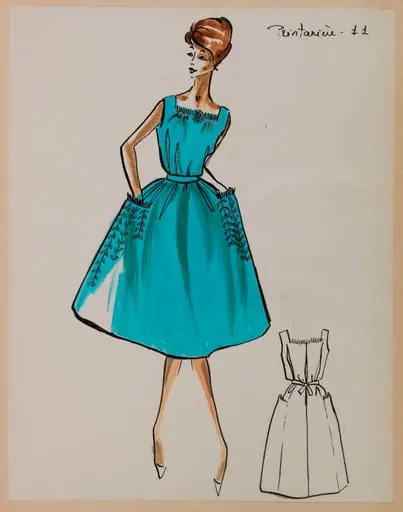
Lolita is a drawing by Marie-Louise Carven. It dates from 1958 and is held in the collection of the Palais Galliera - Musée de la Mode de la Ville de Paris.
About this work
Overview
It resides in the collection of the Museum of Ethnography, where it serves as a record of mid-century French ready-to-wear development.
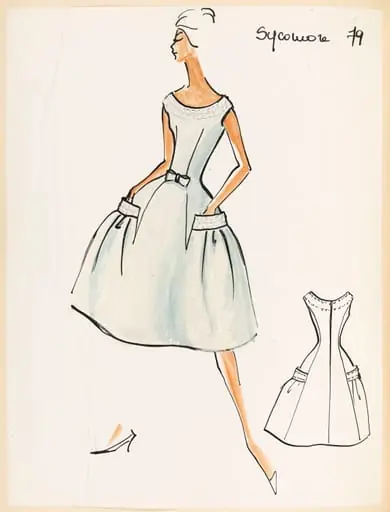
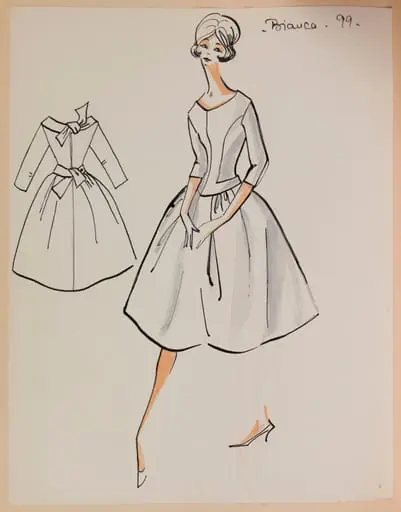
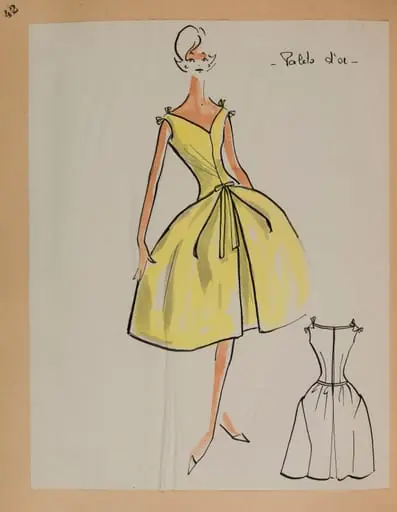
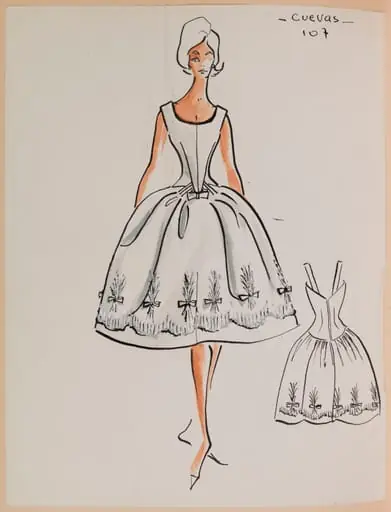
Created around 1958, *Lolita* is a fashion sketch by Marie-Louise Carven, founder of the French design house Carven. Executed in ink and watercolor, it captures a casual, walking figure in a sleeveless dress. The drawing’s spontaneity reflects Carven’s approach to design as both art and practical craft. It resides in the collection of the Museum of Ethnography, where it serves as a record of mid-century French ready-to-wear development.
Subject & Meaning
The figure in *Lolita* embodies a youthful, unpretentious femininity, dressed in a simple, flared dress that suggests movement and ease. The title references a literary archetype, but the sketch avoids overt narrative, instead focusing on silhouette and wearability. Carven’s choice of a relaxed pose and modest detailing signals a shift toward everyday elegance, aligning with her vision of fashion for the modern, active woman.
Technique & Style
Carven rendered *Lolita* with swift, confident lines and minimal watercolor washes to suggest form and texture. The dress is rendered in light gray with faint green accents along the seams, hinting at fabric drape. A small inset sketch in the corner shows a pattern draft for the back, revealing her methodical process. The loose, unpolished quality reflects the sketch’s function as a working tool, not a finished presentation.
History & Provenance
The sketch was produced during Carven’s peak years as a designer, shortly after she pioneered one of France’s first prêt-à-porter lines. It entered the Museum of Ethnography’s collection as part of a broader effort to document fashion as cultural artifact. Its preservation underscores its value not as a celebrity garment, but as a representative example of postwar French design practice.
Context
In the late 1950s, Parisian couture was transitioning toward accessible fashion. Carven, known for designing for petite figures and favoring light fabrics like gingham and lace, positioned her work at this intersection. *Lolita* reflects a broader industry shift: from exclusive tailoring to wearable, mass-producible designs. The sketch captures this moment before ready-to-wear became dominant.
Legacy
Though not widely exhibited, *Lolita* remains a quiet testament to Carven’s influence on democratizing fashion. Her emphasis on proportion, comfort, and subtle detail informed later generations of designers focused on wearable elegance. The sketch’s survival in a museum of ethnography highlights how fashion sketches are now recognized as cultural documents, not merely preparatory studies.
Artist & collection
Artist
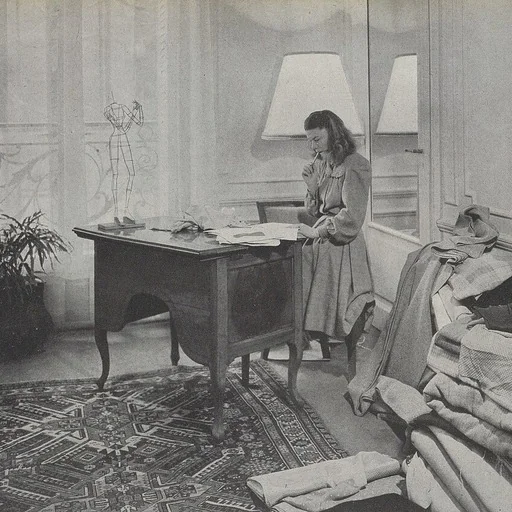
Marie-Louise Carven (31 August 1909 – 8 June 2015), born Carmen de Tommaso, was a French fashion designer who founded the house of Carven in 1945.
Museum
Palais Galliera - Musée de la Mode de la Ville de Paris
Continue through works from the same source collection.
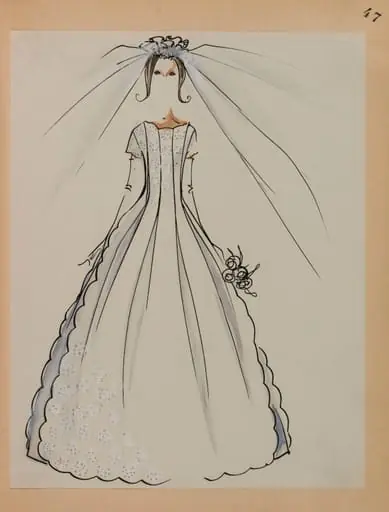 Robe de mariée festonnée et son voile
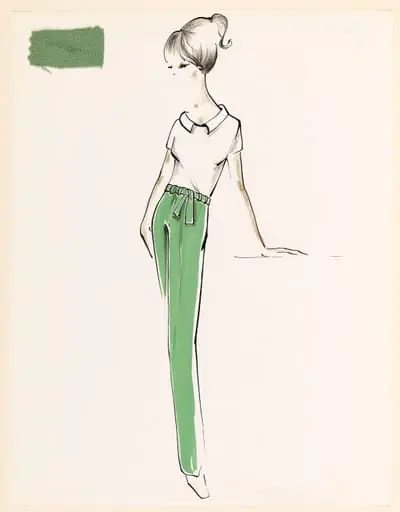 Haut blanc à manches courtes et pantalon vert à ceinture nouée
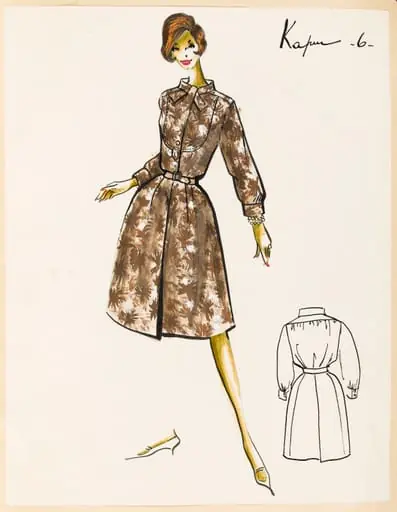 Kapur
Kapur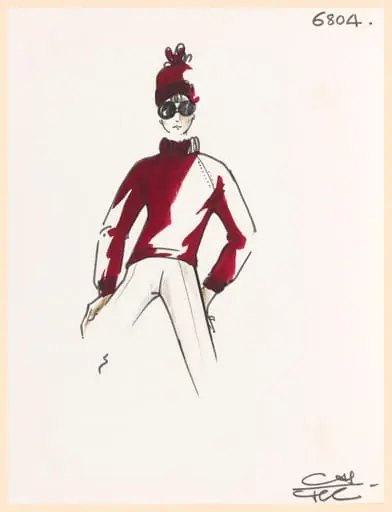 Pull-over à manches longues pourpre, bonnet assorti, pantalon et lunettes de soleil
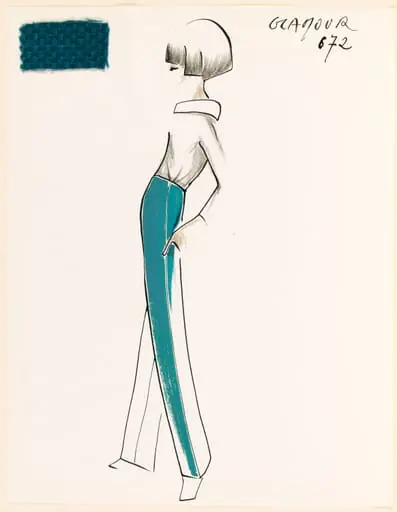 GLAMOUR
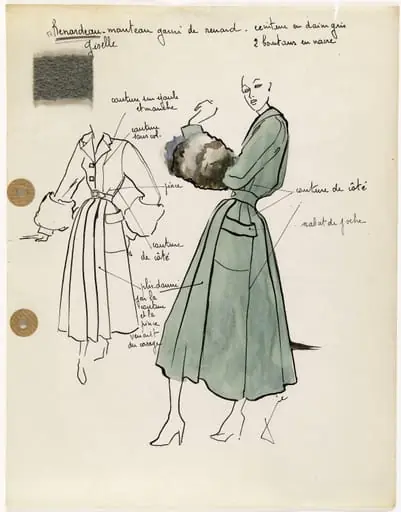 'Renardeau'
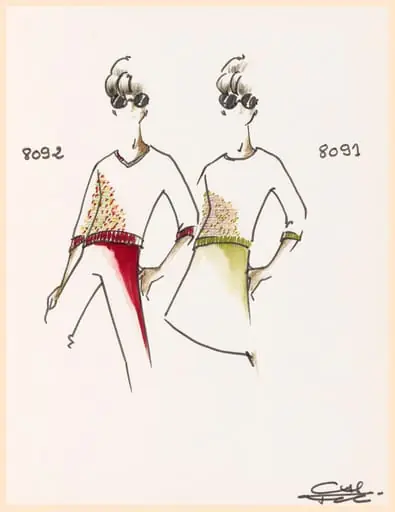 Pull-over à manches trois quarts et à encolure V à motifs multicolores, pantalon cerise et lunettes de soleil
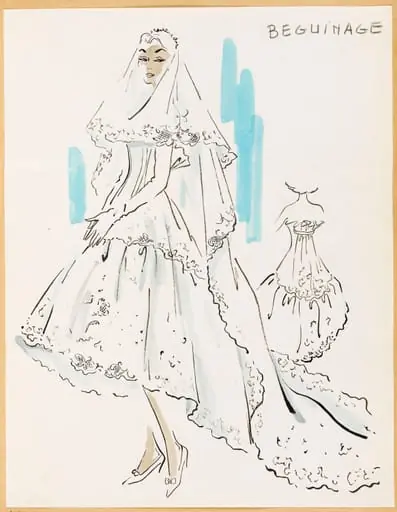 Béguinage