Artwork
Nénuphar
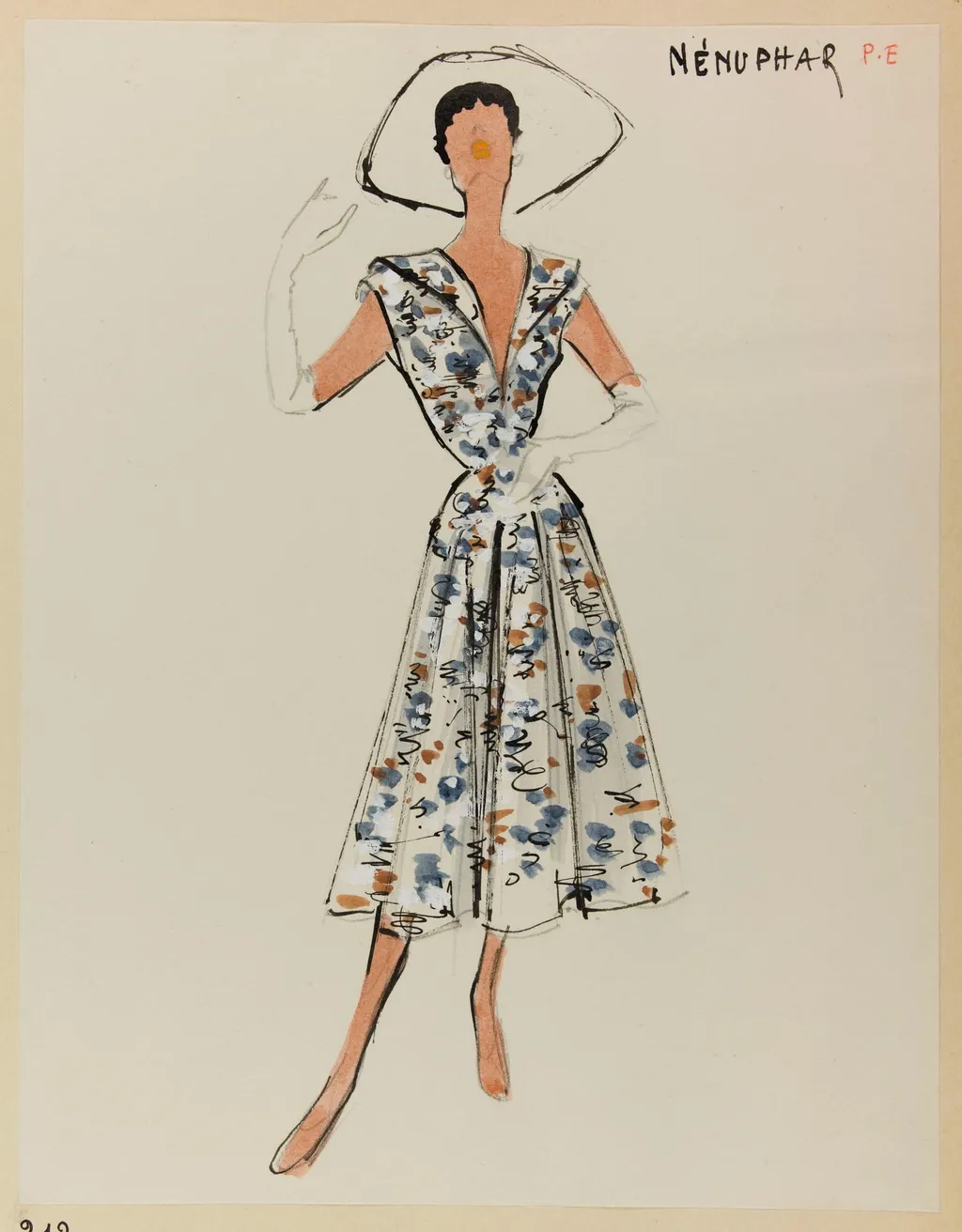
Nénuphar is a drawing by Carven. It dates from 1953 and is held in the collection of the Palais Galliera - Musée de la Mode de la Ville de Paris.
About this work
Overview
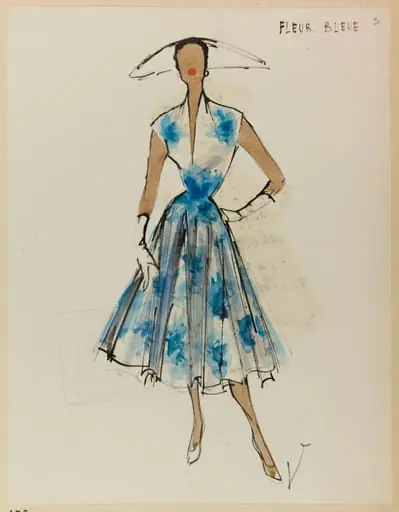
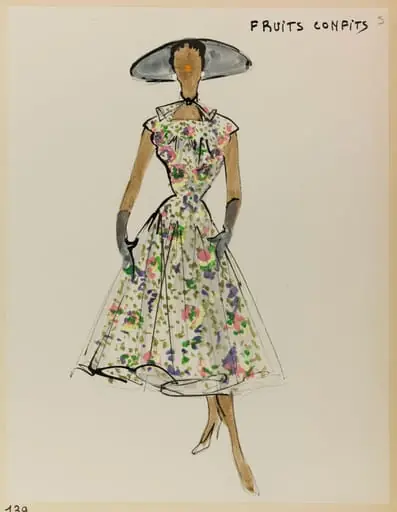
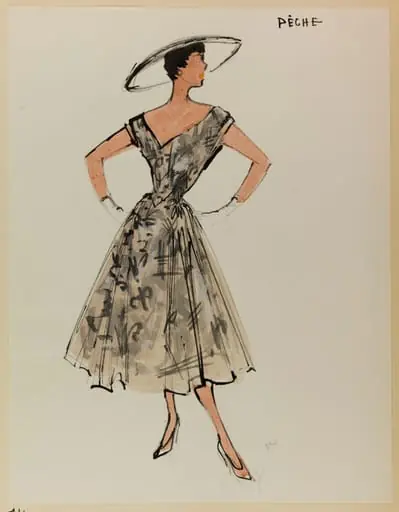
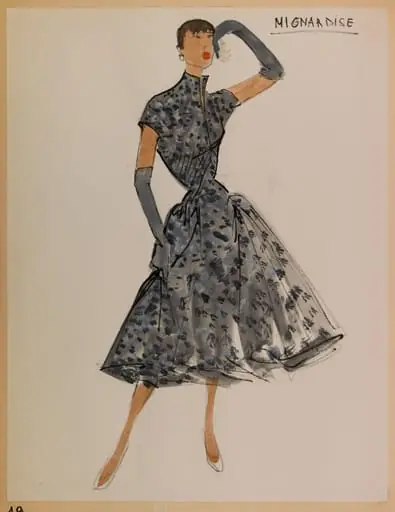
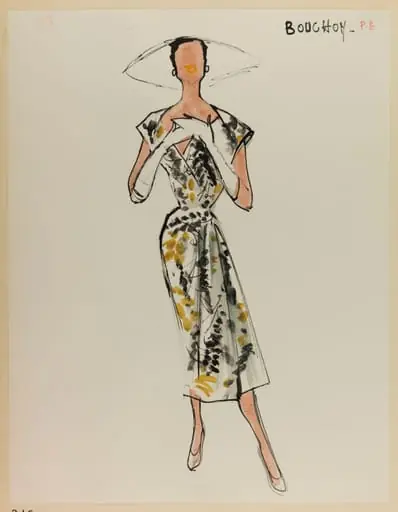
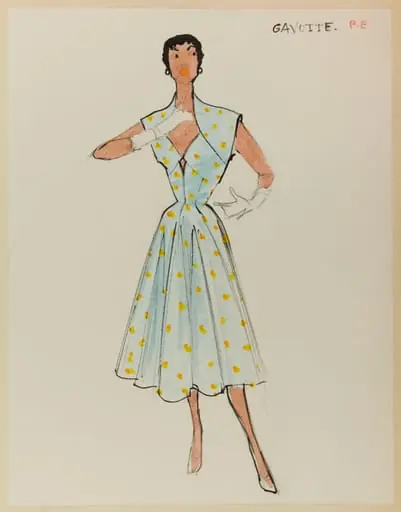
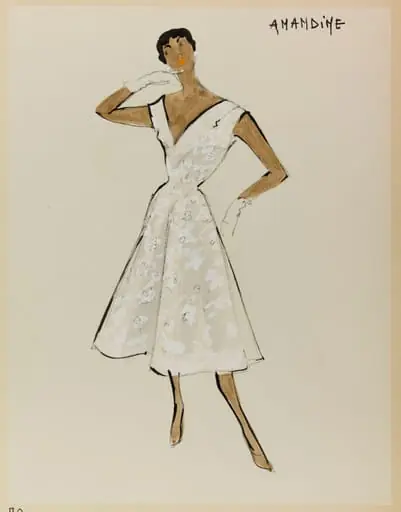
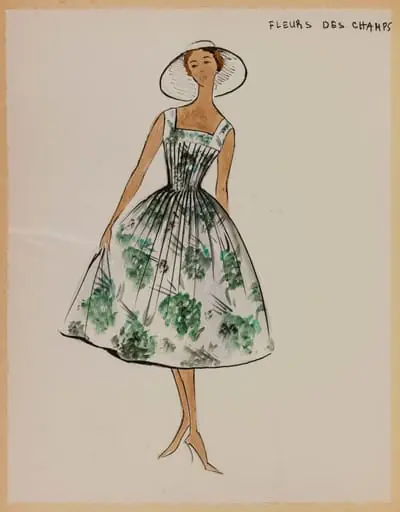
The work captures a momentary impression rather than a finished illustration, suggesting its function as a design study or personal note.
Created around 1953, Nénuphar is a sketch by the French fashion designer Carven, executed in pencil with minimal color accents. It resides in the collection of the Museum of Ethnography. The work captures a momentary impression rather than a finished illustration, suggesting its function as a design study or personal note. Its informal execution contrasts with the polished garments Carven was known for in haute couture.
Subject & Meaning
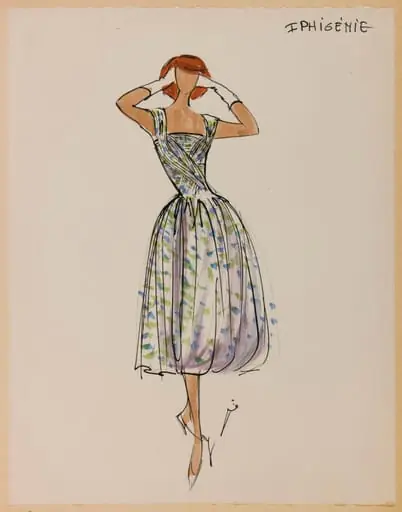
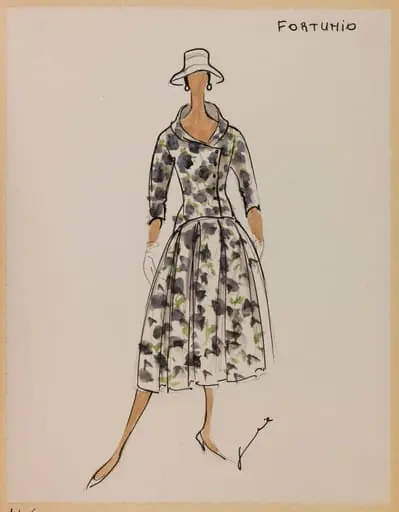
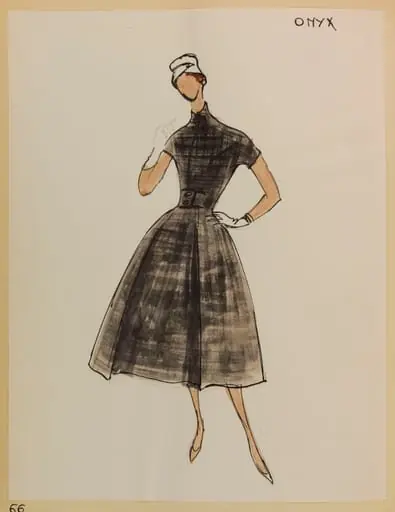
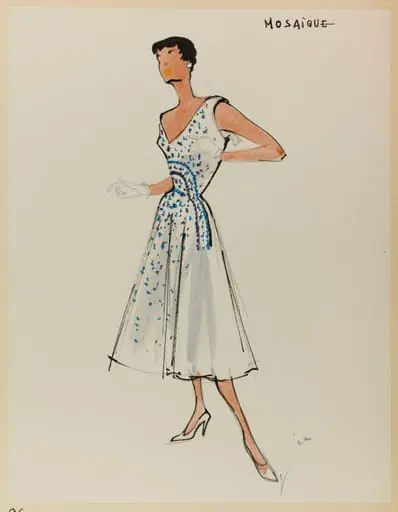
The figure depicts a woman wearing a knee-length dress adorned with a bold, abstract floral pattern in blue, orange, and white. Her wide-brimmed hat and relaxed posture convey an air of casual elegance. The title, Nénuphar—French for water lily—may reference the dress’s motif, linking the design to natural forms. The sketch implies an idealized, everyday wearer rather than a formal portrait.
Technique & Style
The drawing employs light, fluid pencil lines with sparse, dabbed color—likely watercolor or gouache—to suggest fabric texture and pattern. The loose handling and lack of detail indicate spontaneity, characteristic of fashion sketches used to capture initial ideas. The artist prioritized movement and silhouette over precision, reflecting a designer’s quick visual thinking rather than a finished artwork.
History & Provenance
The sketch entered the Museum of Ethnography’s collection as part of a broader acquisition of mid-20th-century fashion materials. Its origin as a personal design study by Carven is inferred from its informal nature and the handwritten title. No documentation confirms its exact creation context, but it aligns with Carven’s practice of sketching garments for her boutique clientele during the 1950s.
Context
In postwar France, fashion design increasingly emphasized accessibility and liveliness. Carven’s work stood out for its playful use of color and relaxed silhouettes, appealing to a new generation of women. This sketch reflects that ethos—its floral motif and casual pose echo the era’s shift from rigid formality toward effortless, personal style in everyday dress.
Legacy
Though not a finished garment, Nénuphar preserves the creative process behind Carven’s influential designs. It offers insight into how fashion ideas were conceived outside the atelier, through rapid, intuitive drawing. As a preserved artifact, it contributes to understanding the intersection of personal expression and commercial design in mid-century French fashion.
Artist & collection
Artist
These delicate ink-on-paper drawings capture the quiet poetry of everyday things: pinecones, reeds, apples.
Museum
Palais Galliera - Musée de la Mode de la Ville de Paris
Continue through works from the same source collection.